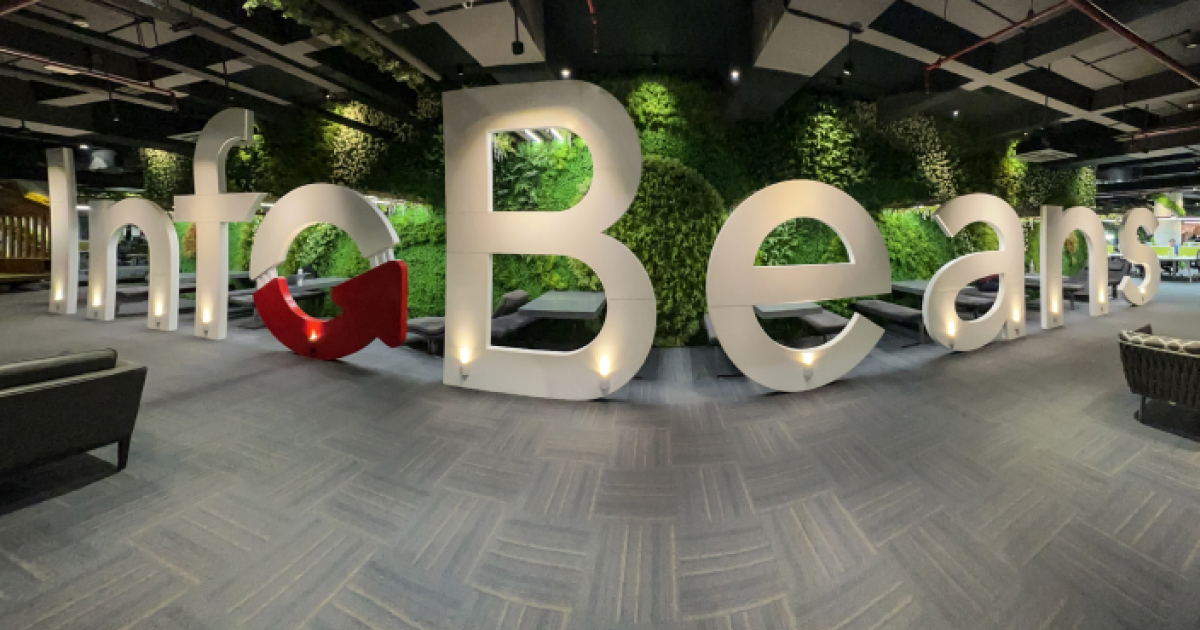
The Indore firm that says starting an AI project is easy - and finishing one is the real business.
InfoBeans is a digital transformation and product engineering company - the kind of firm enterprises hire when a software initiative is important, complicated, and stuck. It designs, builds and manages enterprise-grade software across the full lifecycle, and in 2026 it has organized nearly everything it says publicly around a single, plain claim: getting artificial intelligence past the pilot stage and into production.
The company describes itself as "a global team of makers that helps companies unstick their most important digital initiatives." In practice that means custom software for web and mobile, cloud migration and modernization, UX and product design, QA automation, and deep platform work on Salesforce, ServiceNow and Microsoft.
What is newer is the framing. InfoBeans' current tagline - "Last mile AI delivery, built for enterprise outcomes" - is paired with an unusually honest line for a services website: "Starting an AI implementation is easy. Finishing it isn't." That is a pitch aimed squarely at buyers whose proof-of-concept has been stuck at eighty percent for six months.
The numbers behind that positioning are the interesting part. InfoBeans reports that AI-augmented software now accounts for roughly 43% of its revenue - not a marketing slide, but a business quietly reorganizing itself around where the demand is going.
None of this arrived overnight. InfoBeans is 26 years old, listed on Indian exchanges, and it grew the slow way - a fact its founders tend to mention before they mention anything else.
The origin story is almost defiantly unglamorous. In 2000, just after the dot-com bust, three childhood friends from Indore - Siddharth Sethi, Avinash Sethi and Mitesh Bohra - each put in about $3,000 of seed capital and started a software company in their hometown, not in a metro tech hub.
They grew organically - no blitzscaling, no crash. Then it compounded. Since 2010, InfoBeans has roughly doubled its revenue every three years, moving from a small services shop into a publicly listed company with about 1,600 employees.
Today the three founders run the company they built: Siddharth Sethi as CEO, Avinash Sethi as CFO, and Mitesh Bohra as President. The headquarters is still in Indore, now a strategic center for the firm's global delivery model - a deliberate bet that talent is not only where the towers are.
Delivery centers reach beyond India into the USA, Germany and the UAE, giving InfoBeans a global footprint from a distinctly Central-Indian base.
The public listing was its own milestone: InfoBeans debuted on NSE Emerge, the exchange's SME platform, in an offering reported to be among the largest that platform had seen.
InfoBeans says close to half its revenue now flows through AI-augmented delivery - a striking figure for a firm whose roots are in conventional custom software and platform integration.
Figures are company-reported and approximate; bars are indexed to the largest value for scale.
The core is services; the newer edge is turning consulting knowledge into repeatable products. A services firm that builds tools is usually packaging what it already knows.
End-to-end design, development and management of enterprise-grade software across the full product lifecycle.
Summit Partner covering consulting, architecture, implementation and support across Sales, Service, Data Cloud, Revenue Cloud, MuleSoft and Agentforce.
ITSM, ITOM and HRSD work with 310+ specialists and 550+ certifications - named APAC Partner of the Year 2024.
Enterprise-grade development and deployment of scalable AI agents, with GenAI engineering via Microsoft Copilot and AI-first tooling.
AI-driven tool that assesses and optimizes Salesforce orgs - consulting IP turned into a repeatable product.
AI rules-based tool that cuts ServiceNow data storage costs for large deployments.
The customers. InfoBeans works with small and large enterprises across financial services, healthcare, insurance, retail, telecom, manufacturing, logistics, government and legal. It serves a global clientele from delivery centers in India, the USA, Germany and the UAE; through its Philosophie acquisition, past design clients included Google.
The problem it solves. Enterprises rarely lack ideas - they lack finished software. InfoBeans positions itself at the point where initiatives stall: the migration that never completes, the AI pilot that never ships, the platform rollout that stops halfway. Its "last-mile" language is a direct answer to that pain.
How it's different. Two things stand out. First, depth of platform certification - hundreds of certified specialists on ServiceNow and thousands of Salesforce builds are hard to fake and slow to accumulate. Second, its size: big enough to deliver enterprise programs, small enough to stay hands-on, without the scale-driven distance of the largest integrators.
Where it fits. InfoBeans sits in the mid-tier digital-engineering band - alongside firms like Persistent Systems, Coforge, Zensar, Happiest Minds and Grid Dynamics - and competes with the specialized Salesforce and ServiceNow system integrators on platform depth rather than sheer headcount.
InfoBeans runs a B2B model: project-based and managed-services engagements with mid-to-large enterprises, built on top of platform partnerships and, increasingly, proprietary AI tools. Revenue comes from software design/build/run work, platform implementations, and ongoing support and maintenance - now layered with AI-augmented delivery.
Two acquisitions shaped the current shape of the firm: Philosophie (Los Angeles, 2019) added UX and design engineering and a US foothold; Eternus Solutions (Pune, 2021) roughly quadrupled the Salesforce practice, from about 100 to 400 people.
Salesforce - Summit Partner across the ecosystem.
ServiceNow - APAC Partner of the Year 2024.
Microsoft - GenAI & Copilot-based engineering.
UiPath - robotic process automation.
Creatio / Automattic (WPVIP) - low-code & enterprise WordPress.
InfoBeans builds its culture on four stated pillars - Excellence, Ownership, Compassion and Openness - and the outside signals back it up.
Certified in India for four consecutive years, and a repeat "Dream Companies to Work For" honoree.
Excellence, Ownership, Compassion, Openness - described by employees as caring, collaborative and experimental.
HQ stays in Central India as a talent and delivery hub, not as an afterthought.
Three friends start InfoBeans with modest seed capital after the dot-com bust.
After a decade of organic growth, the founders remain hands-on as the business stabilizes.
InfoBeans Technologies lists on the NSE SME platform in a heavily subscribed IPO.
Buys the Los Angeles design engineering firm, adding UX muscle and US presence.
All-cash deal for a Pune-based Salesforce platinum partner expands the practice roughly fourfold.
Recognized as Consulting & Implementation Partner of the Year for the region.
Brands itself around finishing AI implementations, with AI-augmented software at ~43% of revenue.
InfoBeans is a digital transformation and product engineering company that designs, builds and manages enterprise software, with a growing focus on delivering AI into production for large organizations.
It was founded in 2000 in Indore, India by three childhood friends: Siddharth Sethi (CEO), Avinash Sethi (CFO) and Mitesh Bohra (President).
Yes. InfoBeans Technologies Limited is listed on Indian stock exchanges, having debuted on the NSE Emerge SME platform.
It is a Salesforce Summit Partner and an award-winning ServiceNow partner, and also works with Microsoft, UiPath and low-code / enterprise WordPress ecosystems.
The company has roughly 1,600 employees with offices and delivery centers in India, the USA, Germany and the UAE, and reports revenue in the ~₹539 crore range.
Sources include infobeans.ai, InfoBeans press releases, Forbes, Tracxn, Business Today, Great Place to Work India and public exchange filings. Financial figures are company-reported and approximate.