In 1989, artificial intelligence was a colder phrase. It belonged to university laboratories, expert systems and films in which computers acquired suspiciously polished voices. David Hamilton went to the University of Sussex to study it anyway. His master’s work joined artificial intelligence with computational psychology, following an undergraduate degree in psychology and philosophy at the University of Ulster. Before he learned how to market technology, he had studied the awkwardly intimate question beneath it: how do minds, human or otherwise, make sense of things?
More than three decades later, Hamilton works amid another AI season. The vocabulary is warmer now, perhaps too warm. Every product wants to be intelligent; every company wishes to sound transformed. Hamilton’s public language remains notably mechanical in the best sense. Technology connects parts of a business. It automates repetitive tasks. It makes information visible. It gives a growing company room to move. He describes what the machinery does after the applause ends.
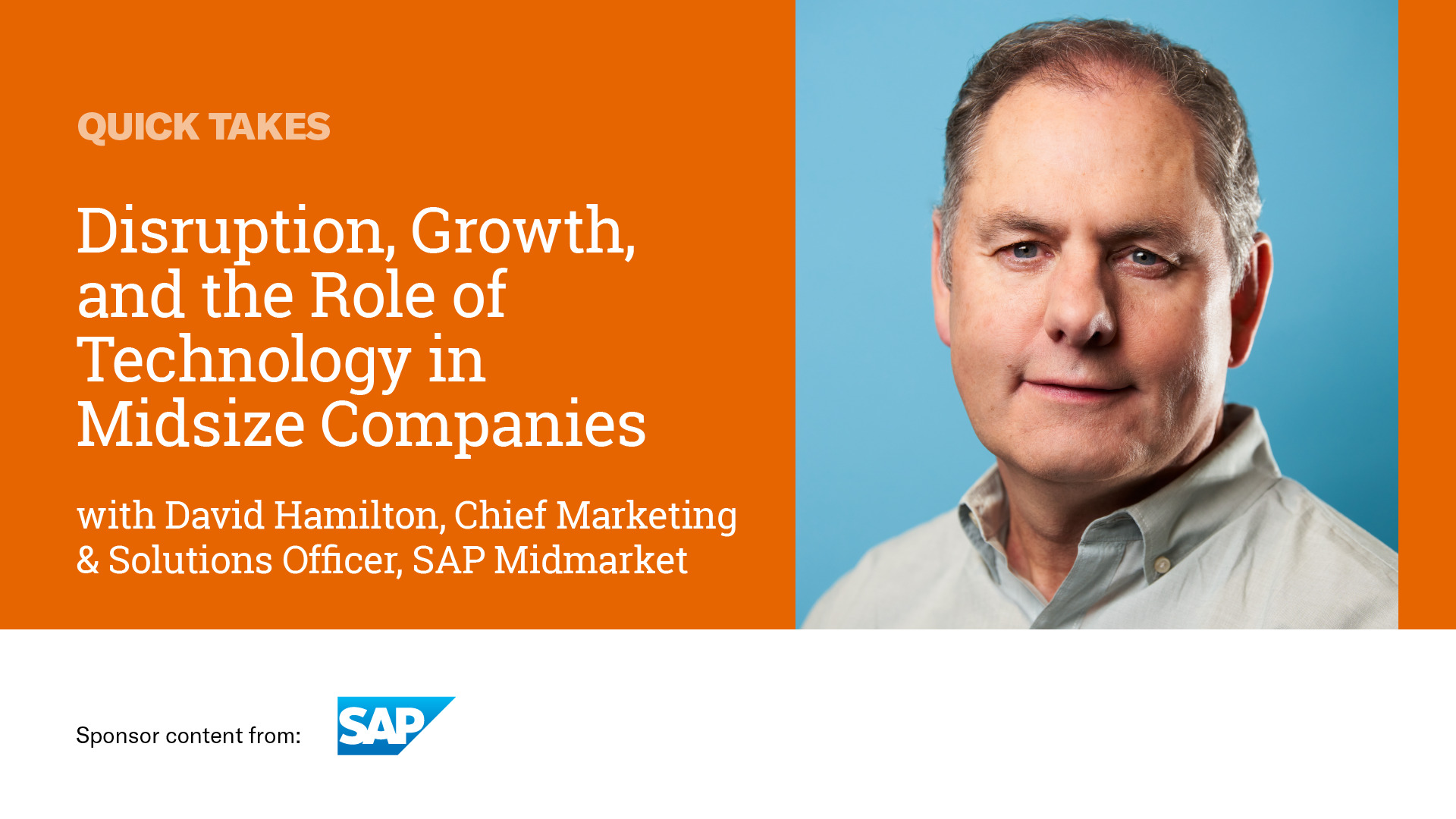
That is useful preparation for his present job. As chief marketing officer of SAP Concur, based in Bellevue, Washington, Hamilton oversees the entire marketing organization: field and corporate marketing, brand and events, digital demand generation, customer marketing and partner marketing. The official arithmetic is roughly 300 full-time employees and responsibility for a €1 billion pipeline. Marketing, here, is not the frosting department. It is an operating system with a rather serious revenue target.
The breadth of that list reveals the difficulty. Field teams must understand local markets while a global brand remains recognizable. Demand generation must produce a measurable commercial result without reducing every conversation to a form fill. Customer and partner marketers must represent people already living with the product, including the useful complaints that glossy campaigns tend to misplace. Hamilton’s remit requires those disciplines to behave like one organization. The pipeline number supplies the pressure; the end-to-end structure supplies the possibility of coherence.
The translator in the server room
Hamilton spent 20 years at Microsoft, a tenure long enough to watch enterprise computing change costumes several times. In 2001 he was director of product marketing for management technologies. By 2004 he was described as director of the Windows and Enterprise Management Division, speaking about Microsoft Operations Manager and the company’s effort to make sprawling systems more manageable. These were products with names that arrived wearing sensible shoes. Their value lived backstage: keeping servers, applications and operations legible to the people responsible for them.
The work established a recurring theme. Hamilton markets things that help organizations see themselves. A management console shows what a network is doing. A website shows what customers seek. A cloud expense system shows where money travels. The product may change, but the drama is consistently the same: disorder becomes visible enough to manage.
His later Microsoft roles moved closer to the public face of the machine. He ran Microsoft.com in 2009 and 2010, then led marketing transformation and Dynamics integrated marketing. The sequence matters. It took him from explaining how systems are managed to managing one of the busiest digital doorways in software, then into the business applications where technology and organizational behavior meet daily.
“The first thing I really recommend is companies do an internal review of their biggest pain points.”David Hamilton, 2023
Start where it hurts
Hamilton joined SAP Concur in 2016 as global vice president of digital marketing and campaigns management. Five years later he became CMO. Concur’s territory can sound mundane: trips, receipts, invoices and reimbursements. Anyone who has lost an hour to an expense report knows that mundane is merely chaos in office clothes. The software sits where policy, money, travel and human memory collide. Its promise is not glamour. Its promise is that a receipt captured on Tuesday will not become an archaeological expedition on Friday.
When Hamilton discussed technology adoption for midsize companies in 2023, his advice began before any product demo. Review the company’s largest pain points, he said. Perhaps remote employees are difficult to support. Perhaps the supply chain needs diversity. Only after naming the trouble should a company choose the technology that meets it. It is an unfashionably orderly process in a market that often begins with the newest tool and works backward toward a reason.
His case for cloud computing is similarly concrete. Cloud delivery lets smaller companies use capabilities once reserved for businesses with large server rooms and larger IT departments. Embedded AI and machine learning can improve without every customer hiring an army of specialists. Automation frees teams from repetitive jobs. Connected data supplies the visibility needed to make decisions, respond to demand and enter new markets. Hamilton does not ask the technology to impersonate destiny. He gives it a job description.
A listener with a large microphone
Executive biographies adore scale. Colleagues tend to remember smaller things. One former Microsoft colleague described Hamilton as fair and willing to listen when information ran against his original direction. A former intern remembered how Hamilton helped turn a complicated project into workable scope and deliverables. The praise was not for having the loudest answer. It was for helping another person make progress.
That temperament fits the way Hamilton talks about live events. When SAP Concur Fusion met in person after a nearly three-year interruption, he wrote that customers, partners and employees were “positively giddy.” The important part of the gathering, in his telling, was hearing what customers were excited about and where they needed help. More recently, he has praised industry events for the chance to compare notes with leaders confronting similar problems, study real cases and maintain long-running relationships. A conference badge is useful chiefly because there is another person wearing one.
For a leader with responsibility spanning brand, demand and partnerships, listening is not a soft ornament. It is how a complicated marketing system keeps contact with reality. Buyers now arrive in groups. Consumer expectations leak into enterprise software. New technology changes what customers imagine and what competitors promise. A global team needs a shared direction without becoming deaf to the inconvenient signal. Hamilton has said external research became a rallying call inside his marketing organization, creating alignment even beyond Concur and into SAP.
“It’s pragmatic and practical. I feel like I can use it in very real terms immediately.”David Hamilton on the research he values
The old question inside the new machine
Hamilton’s biography makes for a tidy technological arc: London childhood, psychology and philosophy, an AI master’s, Microsoft, cloud software, generative AI. Real careers are usually less tidy from inside. The interesting continuity is not prediction. A student in 1990 could not have mapped today’s cloud architecture, buyer committees or receipt-scanning phone apps. What endured was an appetite for the border between a system and the person using it.
At SAP Concur, that border appears everywhere. A traveler wants a booking that follows policy without requiring a policy seminar. A finance team wants to find risk without reading every line by hand. A manager wants to understand spend while there is still time to change it. The marketer’s task is to explain those outcomes honestly, across countries, functions and levels of technical patience.
Hamilton says he wants his marketers to be innovators and help lead their industry. The aspiration could easily drift into corporate vapor. His other remarks anchor it. Innovation must be actionable. Technology must answer a diagnosed need. Automation must return time to people. Visibility must improve a decision. The test is not whether the machine sounds intelligent. It is whether the organization behaves more intelligently after switching it on.
In 2026, a decade after he joined Concur, Hamilton was still on the Fusion keynote roster. By then, the corporate conversation had advanced from cloud adoption to AI assistants capable of helping with travel, expenses and finance work. His own résumé makes the moment amusingly circular. The former AI student now markets software in an age when artificial intelligence has become ordinary office vocabulary. Yet his emphasis on evidence, customer pain and immediate usefulness prevents the circle from becoming a victory lap.
There is a pleasing modesty in that standard. Enterprise software rarely gets the closing scene. When it works, the receipt is captured, the invoice matches, the employee gets reimbursed and everyone goes home. Hamilton has spent his career giving this invisible competence a vocabulary. He learned the language of minds, then the language of machines, and built a profession in the translation.