k-12
(55)
At Burton School District, one size doesn't fit 4,829 students
In Porterville, California, Burton pairs neighborhood schools with a charter pathway through high school. Its more revealing experiment is how to give different students different kinds of help - inside one public district.

Edlio wants to end the hunt for school updates
A canceled basketball game should not require a phone call at work. Edlio’s expansion from school websites into messages, payments, and AI is a bet that the school office has enough to do already.
Bulb wants your schoolwork to outlive your school email
The digital portfolio company turns class projects into evidence for college and work. Its toughest lesson: getting a school to buy software is only the beginning.
TeachTown Started With Autism Software. The Bigger Business Was the Whole Classroom.
The Woburn-born edtech company found its real market by moving beyond screen time: scripted lessons, physical books, teacher training and automatic data for the students general-ed publishers tend to overlook.

Robin Sykes Still Counts in Bear Bucks
Before she led global brand and growth at Securly, Robin Sykes ran an elementary school's reward economy with hand-cut paper. Her career is a lesson in carrying classroom evidence into the boardroom.

Jeff Scheur Graded 15,000 Papers. Then He Rebuilt the Feedback Loop.
A Chicago English teacher turned a 2 a.m. grading ritual into NoRedInk. His enduring idea is disarmingly practical: software should give students room to practice and give teachers more time to teach.

Aaron Feuer Turned a Student Survey Into a 15-Million-Student Company
A bill he helped pass as a teenager changed little. So the Los Angeles student organizer learned a durable founder lesson: institutions often move when someone gives them a tool, not merely an argument.

The Texas Family Shop That Wires Up Classrooms One School District at a Time
Founded in 1981, VTI turns a pile of screens, speakers, and cables into working classrooms - and has quietly kept East Texas schools online for four decades under one stubborn motto: technology changes, values do not.
The Quiz App That Ate 90% of American Schools Just Changed Its Name
Two Indian engineers built a math game nobody could keep fed with content. So they handed the tools to teachers instead - and accidentally built one of the most-used classroom platforms on Earth.
The Vermont couple who quit teaching to grade the thing school forgot to measure: skills
Two rural-Vermont teachers who married, raised three kids, and got tired of watching school reward compliance over ability built software that swaps letter grades for a portfolio of proof.

The Survey That Grew Up: How a Yale Dorm Project Reads 15 Million Kids
It began as a way to ask students what they thought of school. A decade and $105 million later, Panorama reads the data of 15 million American kids - and now wants its AI to write the next move.
The Boston Tutoring Company That Bet 50,000 Kids on One Idea: Send the Teacher to the Kitchen Table
Rich Enos and Greg Zumas skipped the storefront, sent tutors into living rooms, and turned a one-to-one hunch into a 23-city, 50,000-student business. In April 2026, Intrax bought the whole thing.

The 138-Year-Old Publisher That Learned to Think in Software
McGraw Hill spent more than a century putting knowledge between covers. Its next act is turning that trusted catalog - and billions of student interactions - into adaptive software for classrooms that cannot afford to get the answer wrong.

DonorsChoose
A Bronx history teacher wanted books his students couldn't afford. Twenty-five years later, the website he built has moved more than $1.6 billion into America's classrooms - one crayon, microscope and field trip at a time.
Cengage Group
The company that once filed for bankruptcy owning the textbook now rents you every book it makes for the price of one - and it is quietly rewiring how students, libraries, and job-seekers learn.
Gravyty
The Boston company teaching universities and nonprofits how to raise more money with less busywork - by handing fundraisers an AI that writes the first draft.

Edunation LTD
Edunation LTD is a Jordan-founded education technology company behind EdunationOS, a cloud-based platform that consolidates a school's academic, administrative, financial and wellbeing systems into one connected ecosystem. Built for K-12 and higher-education institutions across the Middle East, it supports multiple campuses, multiple curricula and 24 languages, blending physical and virtual learning. Founded in 2013 by Firas Jabbour and Mahmud Gabareen, the company raised a $3 million round in 2021 and serves schools across Jordan, Palestine, the Gulf and beyond.
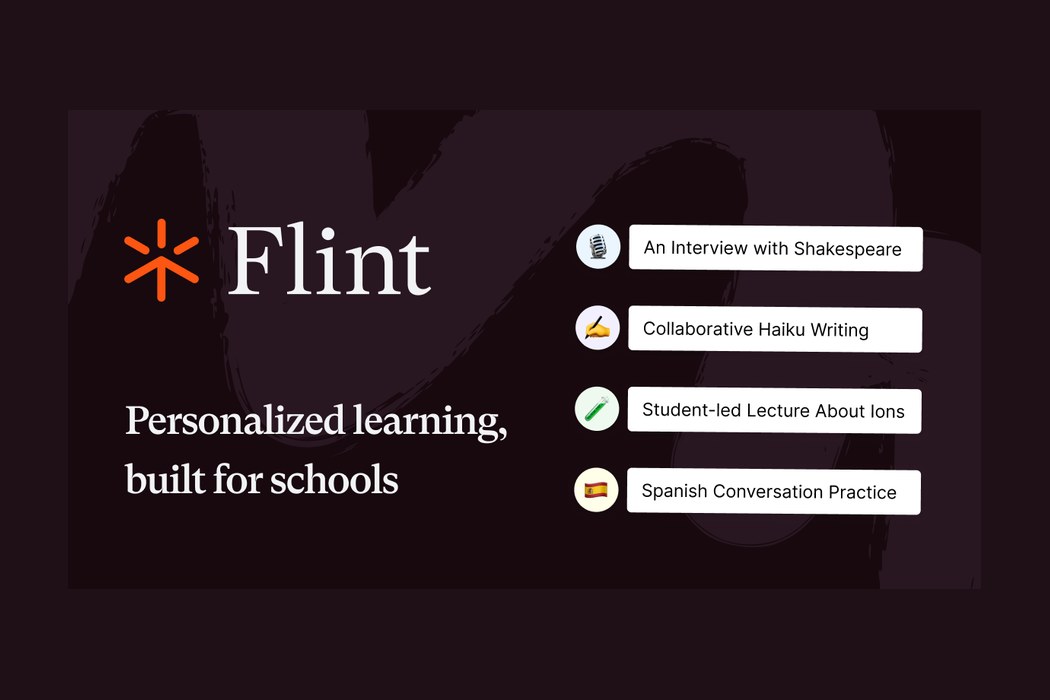
Flint
Flint is an AI-powered personalized learning platform built for K-12 schools. It lets teachers design AI tutors, activities, and assessments that adapt to each student across every subject - from language speaking practice to guided science labs - while giving educators real-time visibility into student progress without adding to their workload. Founded in 2023 and backed by Y Combinator, Flint raised a $15M Series A in November 2025 and serves hundreds of schools and hundreds of thousands of students worldwide.
Claude for Teachers
On July 14, 2026, Anthropic launched Claude for Teachers, giving verified K-12 educators in the United States a full year of free premium access to its AI assistant. The offer bundles teaching skills built with learning scientists, a Learning Commons connector carrying academic standards for all 50 states, nine classroom tool integrations, and FERPA-aligned data terms. It arrives amid a scramble among Google, OpenAI and Khan Academy for the American classroom, and reopens an old debate: what happens to a generation that grows up asking instead of searching.

Classera
Classera is an edtech company that runs a cloud-based Learning Super Platform used across K-12 schools, universities, and corporate and government training programs. Founded in 2011 and headquartered in San Francisco with deep roots in the MENA region, it pairs a core learning management system with gamification, AI-driven personalization, virtual-reality content, an educational marketplace (Edumalls), and embedded payments (C-Pay). The platform serves more than 12 million users in over 40 countries and, in October 2022, raised a $40M Series A led by Sanabil Investments - reportedly the largest edtech funding round in MENA and most of Africa.

Matt Rubinstein
Matt Rubinstein is the founder and CEO of LiveSchool, a Nashville-born K-12 behavior and school-culture SaaS platform used by more than 1,200 schools across 48 states and 10+ countries. A former KIPP Nashville teaching fellow, he built the first LiveSchool prototype on an iPad to replace his own school's paper 'paycheck' behavior system, and has run the company since 2011.

Clayful
Clayful is a tech-enabled mental health company that gives K-12 students on-demand, chat-based coaching with a certified coach in about 60 seconds, across 133 languages. Founded in 2021 by Maria Barrera and Melissa Pelochino, the platform is purchased by school districts and free for students, aiming to make proactive mental health support a right rather than a privilege.

Gooroo
Gooroo is a New York-based education technology company founded in 2015 by Scott Lee that pairs students with vetted tutors through personalized matching and pairs that with a library of self-paced online courses and small-group clubs. Built to make one-on-one tutoring affordable and to celebrate individual learning styles, Gooroo grew a network of NYC tutors, ran a 'Gooroo Gives Back' nonprofit arm for underserved students and seniors, and raised roughly $14M across seed rounds. As of 2026 the company paused consumer enrollments while it evaluates a pivot toward trustworthy, accountable AI for learning and student protection.

Homeroom
Homeroom is a San Francisco software company that runs the back office for school auxiliary programs - after-school enrichment classes, extended care, summer camps, leagues and tutoring. Founded by Stanford classmates Casandra Espinoza Stewart and Christina Walker, it started as a three-sided marketplace connecting parents, schools and class vendors, then grew into an all-in-one platform handling registration, rosters, attendance check-in/out, contractor payments, compliance and financial reporting. It raised $3.5M in seed funding led by Forerunner Ventures in 2019 to chase a roughly $23 billion U.S. after-school market where more than 40% of children are not enrolled in any program.

Inspirit
Inspirit is a Palo Alto-based education technology company building a spatial-computing platform that brings virtual and augmented reality into STEM, career, and workforce learning. Its no-login library of 270+ interactive 3D models and simulations runs across VR headsets like Meta Quest and Pico as well as ordinary Chromebook browsers, letting teachers and trainers plan, run, and track immersive lessons without heavy hardware budgets. Founded by Stanford Graduate School of Education researchers, Inspirit grounds its content in learning science and is used across hundreds of school districts and, increasingly, in workforce and justice-reentry programs.

Letterly
Letterly is an AI-powered writing education platform that pairs students ages 8-18 with human coaches to build literacy through daily writing, structured feedback, and real publishing. Founded by former Wall Street analyst Jane Chen, the company runs multi-week bootcamps where students draft, revise, and publish articles - and even ship a physical copy of a book they author. Letterly reports serving more than 3,000 students across 30 states and seven countries, with students improving roughly half a grade level in eight weeks.

Lauren Dachille
Lauren Dachille is the founder and CEO of Nimble, a Y Combinator-backed edtech company building data-driven applicant tracking software that helps K-12 school districts identify, hire, and retain effective teachers. A former DC Public Schools recruiter and StudentsFirst policy hand, she built the system she wished she'd had when sorting through thousands of teacher applications by hand.

Sown To Grow
Sown To Grow is a K-12 platform that helps students set goals, reflect on their learning, and check in on how they're feeling - giving teachers and district leaders the real-time signal they need to support student well-being and academics through Multi-Tiered Systems of Support (MTSS).

Tim Novikoff
Tim Novikoff is the founder and CEO of Super Teacher, an AI tutoring app for elementary students that has reached roughly 20,000 families and public schools in New York, New Jersey, and Hawaii. A former NYC math teacher with a PhD in applied mathematics from Cornell, he co-authored a PNAS paper on the math of spaced repetition, built and sold the video-editing startup Fly Labs to Google in 2015, then worked on Google Photos and ran Google Colab before returning to education. As a kid he voiced Jeffy on MTV's animated series Daria.

Classtime
Classtime is a Zurich- and US-based education technology company building a web-based platform for formative and summative assessments. Teachers use it to create and grade quizzes, run collaborative challenges, and watch student understanding update in real time across any device. Founded in 2016, it serves hundreds of thousands of teachers and learners in more than 60 countries, with a free library of 30,000+ standards-aligned questions and a focus on grounding its design in learning science.