workday
(32)
Vanessa Danziger Has Been Asking What People Would Do Since the Sixth Grade
Long before she marketed workforce technology, Danziger won a science fair by studying how children make ethical choices. The same curiosity now runs through a career built around people, data, and purpose.
Contracts Are Finally Ready to Confess
Evisort turns the contract archive from a digital attic into a working source of answers. Now inside Workday, its AI reads the fine print, cites the evidence, and routes the chores - but serious buyers should budget for enterprise pricing and a real implementation.
Deb Wolf Knows What to Build When the Playbook Runs Out
Across 35-plus years in technology marketing, she has learned to prefer the difficult middle: the moment when a promising company needs a system, a team, and an honest answer about what comes next.
Carl Madaffari Learned the Database, Then Learned to Tell Its Story
After two decades inside Epsilon's data machinery, Carl Madaffari took a breath, changed lanes, and found a second act translating complex products into plain business value.
Angela Stark Knows the Brand Is Only as Strong as the Work Behind It
After nearly three decades shaping enterprise technology brands, Angela Stark has arrived at a smaller, faster company with a very large question: can disciplined marketing help turn hourly jobs into good jobs? Her answer begins with clarity, connection and a willingness to do the unglamorous miles.

Athena Karp Put a Conscience in the Hiring Machine
A bathroom line on Wall Street exposed a workforce imbalance. Eleven years later, the company she built from that observation joined Workday - and her argument for explainable AI moved into the center of enterprise software.

Workday or Oracle Is Really a Choice About Your Company
The HCM contest looks like a feature comparison. Underneath, it is a decision about architecture, purchasing power and how much of the enterprise one vendor should own.
HiredScore Sold the Queue-Cutting Machine Workday Needed for $530 Million
Athena Karp spent 11 years turning overloaded applicant tracking systems into ranked, explainable to-do lists. Workday's $530 million purchase shows the prize was never another HR database - it was the intelligence layer that makes the database move.

SonicJobs Wants to Kill the Redirect - the 12 Seconds Where Job Hunts Go to Die
Ninety-five percent of job seekers quit before they finish applying. SonicJobs built an AI agent to do the quitting-worthy part for them - and turned the recruitment industry's worst funnel into its pitch.

Alex Yakubovich and the Business of Removing Friction
After two acquisitions and years inside enterprise software, the Levelpath CEO returned to the same deceptively hard problem: making necessary work feel easier to do.

Your ERP Is Quietly Choosing Your HR Software
Workday and SAP SuccessFactors sell similar HR outcomes, but their architectures ask companies to make very different bets. The real choice is between a unified cloud operating model and the pull of an existing SAP estate.

Your ERP Choice Was Made Before the Demo
NetSuite, Sage Intacct and Business Central divide the mid-market by ecosystem, while Workday and Odoo make sense at opposite edges. The useful question is not which platform wins, but which disruption your company can afford.

Your HCM Vendor’s Owner Is Part of the Product
Workday, SAP SuccessFactors, Oracle HCM Cloud and UKG sell overlapping promises. Their ownership structures reveal which compromises buyers are actually choosing.
Insperity
Insperity built a $6.8 billion business by taking on the work small companies cannot afford to get wrong. Now its service-heavy PEO model is being rebuilt for a Workday world.

Terrell Marshall
Terrell Marshall is the founder and CEO of Passage (YC S24), a San Francisco startup building an AI co-pilot for customs brokers and trade compliance teams. Before Passage, he worked on AI products used by more than a billion people at Google, including Google Photos, Google Payments, and Hotels Search, and was a software engineer at Workday. He co-founded Passage with Aditya Nadkarni, a college friend with whom he also holds a patent for an AI physical therapy platform. Passage automates the manual data entry and email correspondence that customs teams spend hours on, pulling data from commercial invoices, bills of lading, and packing lists to pre-fill entry filings and validate compliance.
Lab0
Lab0 is a Y Combinator (P26) startup building AI forward-deployed engineers (AI FDEs) that automate the entire post-sales delivery process for enterprise software - discovery, configuration, integration, testing and go-live. By running these phases inside the systems customers already use, such as ServiceNow, SAP, Salesforce, Workday and Jira, Lab0 aims to compress deployments that normally take six months into about ten days, turning consulting-heavy rollouts into a self-serve product.

Eight Companies Fighting to Run Your Company
Eight companies - ADP, Paradox, Deel, HiBob, Workday, RemoFirst, UKG and Rippling - are competing to own the software layer that hires, pays, manages and offboards nearly everyone who works for a living. This is the story of the seventy-five-year-old incumbent, the enterprise giant born of a grudge, the fast-growing global-payroll rivals now locked in a corporate espionage lawsuit, and the newcomers trying to make hiring anyone, anywhere, feel like ordering takeout.
Workday
Workday is a Pleasanton, California cloud software company that runs the core people and money systems for large organizations. Founded in 2005 by PeopleSoft veterans Dave Duffield and Aneel Bhusri after Oracle's hostile takeover of PeopleSoft, Workday built a single-code-base, subscription-delivered platform for human capital management, financial management, planning, and analytics. It has grown into one of the largest enterprise SaaS vendors, serving thousands of organizations - including a large share of the Fortune 500 - and is now pushing agentic AI deep into HR and finance workflows.
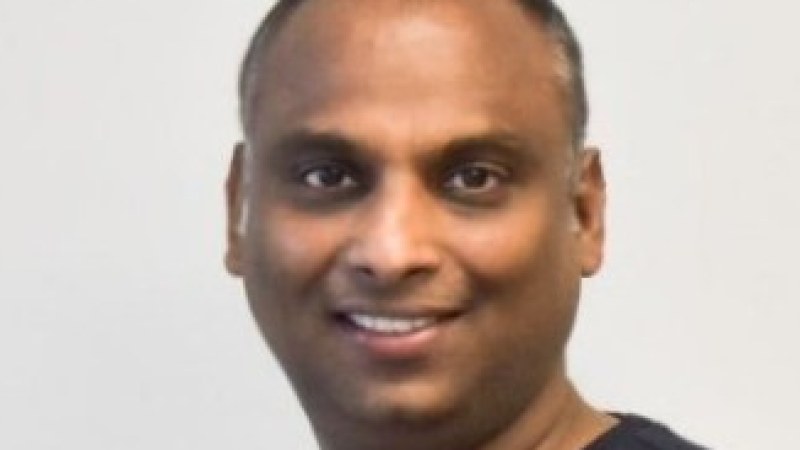
Pankaj Goel
Pankaj Goel is the co-founder and CEO of Opkey, a no-code, AI-driven test automation platform used by more than 250 enterprises to keep cloud ERP systems - Oracle, Workday, SAP, Salesforce, Coupa - from breaking on every quarterly update. He founded Opkey in 2016 after spending a decade running Crestech Software Systems, and before that worked on the automation teams behind Adobe InDesign and Illustrator. In August 2024 Opkey raised a $47M Series B led by PeakSpan Capital.

Cascade AI
Cascade AI is a Bellevue/Seattle-based startup building an agentic AI platform for HR and IT operations. Its AI teammates sit across systems of record like Workday, ADP, UKG and ServiceNow to answer employee questions and resolve requests across benefits, leave, compensation, policy and IT - executing workflows in real time rather than just surfacing information. Founded in 2022 by former Microsoft engineers Ana-Maria Constantin and Pulak Goyal, the company raised a $3.75M seed round led by Gradient, Google's AI-focused venture fund, and says customers see roughly a 50% drop in HR ticket volume after deployment.
Skillcentrix
Skillcentrix is a Boston-based consultancy and Workday services partner focused exclusively on helping Workday customers build skills-centric talent strategies. Founded in 2022, it advises, deploys, innovates and manages HR technology across the talent lifecycle - planning, acquisition, development, mobilization and retention - for enterprises modernizing their workforce.
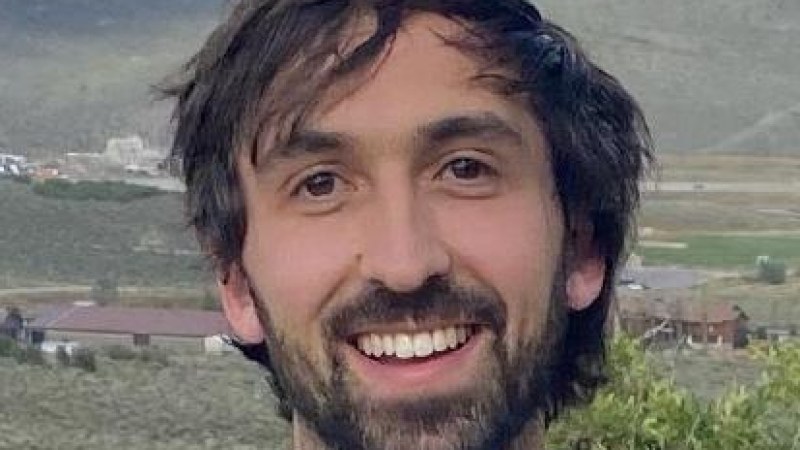
Charlie Stigler
Charlie Stigler is the co-founder and CEO of Tenor, a San Francisco startup building voice-AI role-play simulations that let managers rehearse hard conversations and get instant feedback. He first made his mark at 16 by writing SelfControl, one of the earliest open-source distraction blockers for the Mac, downloaded by millions. He dropped out of Columbia to become a 2012 Thiel Fellow, founded the video-learning company Zaption (acquired by Workday in 2016), led engineering teams at Workday, and landed on Forbes' 30 Under 30 in 2016. Off the clock he is a steel sculptor with the Flaming Lotus Girls, a competitive punner, and a songwriter.

Alex Bradford
Alex Bradford is the co-founder and CEO of Rain, a Santa Monica fintech that lets hourly and frontline workers tap wages they have already earned before payday instead of turning to payday loans or overdrafts. A former McKinsey, Goldman Sachs and SAC Capital analyst with a Stanford degree and a Harvard MBA, Bradford launched Rain in 2019 after spotting that payroll and timekeeping systems had finally opened their APIs. The company plugs into employers' payroll and HCM systems (including a native Workday integration), has connected millions of workers and distributed more than $2 billion in earned wages, and has raised capital from investors including QED, Invus and Prosus. Bradford's pitch is personal: he grew up with a single mother in the 1980s and built Rain to kill predatory lending and give workers control over their own money.
Pipedream
Pipedream is a developer-first integration and automation platform that lets engineers connect more than 3,000 APIs and 10,000+ pre-built actions to build workflows, products, and AI agents without managing infrastructure. Founded in 2019 in San Francisco, it grew to more than one million users on the strength of a serverless model that mixes drag-and-drop triggers with full Node.js, Python, Go, and Bash code. In 2025 it became the connective tissue for AI agents through its Model Context Protocol (MCP) servers, and in late 2025 it agreed to be acquired by Workday.
Rain
Rain is a Santa Monica fintech that lets employees tap the wages they've already earned before payday. It plugs directly into employer payroll and time-and-attendance systems to calculate real-time earnings, then pairs instant access with budgeting tools, free tax filing, financial coaching, an AI financial assistant and a debit card. Since 2019 it has reached over 3.5 million workers and moved more than $2 billion in wages, positioning earned wage access as an employer benefit that cuts turnover and financial stress.

WalkWater Technologies
WalkWater Technologies is a San Jose-based IT services and consulting firm founded in 2010. It began as an ERP and CRM system integrator specializing in Oracle, SAP, Workday, and Salesforce, and has grown into a cloud-first practice spanning cloud migration, AI/ML, data analytics, ServiceNow, and Oracle Cloud IoT. An Oracle Gold Partner and Google Cloud partner, WalkWater helps enterprises 'make the cloud yours' by ingesting, curating, visualizing, and monetizing data as a strategic asset.
Tod Sacerdoti
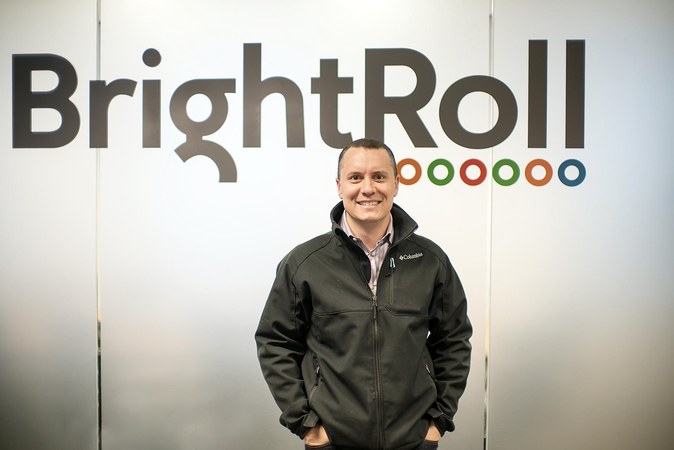
Tod Sacerdoti is a two-time founder and prolific seed investor. He built BrightRoll into a video ad-tech powerhouse that Yahoo bought for $640 million in 2014, then reassembled the band to start Pipedream, a developer integration platform that Workday acquired in early 2026. As a general partner at Flex Capital he has backed 400-plus companies at the seed stage, including Chime, Vercel, Replit and Mercury.

Atom
Atom is a San Francisco-based enterprise transformation company that helps mid-size and Fortune 500 organizations move to the cloud and modernize on platforms like Oracle, Salesforce, Workday, SAP and ServiceNow. Founded in 2020 by Zain Aziz, it pitches an asset-based 'Living Services' model with packaged accelerators (Atom CORE) that compress traditional multi-year transformations into 3-6 month rollouts.

Zain Aziz
Zain Aziz is the Founder and CEO of Atom, a San Francisco-based enterprise cloud and digital transformation company. A former Marine and Harvard alumnus, he built Atom in 2020 to tackle the gap between how people live and how enterprises work - delivering cloud transformations across HR, Finance, Sales, and Supply Chain in 26 weeks or less. Atom has raised $15.8M in total funding, including a $6.8M Series A in October 2022, and serves clients ranging from startups to Fortune 500 companies across 6 continents with ~220 employees.

Joshua Barrow
Joshua Barrow is a serial entrepreneur and CEO of Skillcentrix, the only consultancy 100% focused on Workday customers' entire talent lifecycle. With a Harvard CS background and 25+ years building and selling tech companies - from Breakaway Solutions' 1999 IPO to selling Third Sky to VMware in 2014 - he now sits at the intersection of HR strategy and enterprise software, helping healthcare organizations make skills data safety-critical rather than just strategic.