He builds developer software that big companies eventually decide they have to own - then he goes and does it again.
In 2019, Tod Sacerdoti did not start a company with strangers. He started it with seven people who had already built one with him. They had a name for the new thing - Pipedream, an integration platform for developers who want APIs to talk to each other without the duct tape. In February 2026, Workday closed its acquisition of that company. The band, it turns out, still knew how to play.
Rewind to 2014. The first act, BrightRoll, was a video advertising company that Yahoo bought for $640 million. Sacerdoti had founded it in 2006 with Dru Nelson and run it as CEO straight through the exit. After the sale he stayed on as Yahoo's vice president of display and video advertising products, learning the inside of a giant from the inside.
Most people would file that under "enough." Sacerdoti filed it under "again." He gathered the BrightRoll alumni, pointed them at a different problem - the unglamorous plumbing between cloud services - and built Pipedream into something a public software company decided it needed to own.
The throughline is not the ad-tech or the dev-tools. It is the instinct: assemble a tight team, build the connective tissue other software depends on, and sell it to the acquirer who realizes they can't live without it. He has now done that with two different public companies, Yahoo and Workday, a decade apart.
When he is not founding, he is funding. As a general partner at Flex Capital, Sacerdoti has made seed-stage bets on more than 400 companies. The roster reads like a syllabus for the current software era: Chime, Vercel, Replit, Mercury, AppLovin, LiveRamp. He has a thesis about it, too - that seed is the stage where the math actually works in the investor's favor, and that a lot of SaaS has been mispriced along the way.
The resume is decorated. San Francisco Business Times named him to its Forty Under 40 in 2012. A bronze Stevie Award for innovator of the year in computer software arrived in 2013. EY named him Entrepreneur of the Year for media, entertainment and communications in 2014 - all before the second company even existed.
"Traditional media is unable to keep up with digital media in terms of ad revenue, largely because of software that automates ad selling and buying." - Tod Sacerdoti
Read that quote again and you have the whole worldview in one sentence. The bet behind BrightRoll was not that video ads were the future - everyone could see that. The bet was that software, not salespeople, would decide which ad ran where. Automate the buying and selling, and the dollars follow the code. He was early, and Yahoo paid $640 million to catch up.
Pipedream is the same bet pointed at a different target. Instead of automating the ad transaction, it automates the integration - the workflows, triggers and connections between the hundreds of APIs a modern company stitches together. Developers reach for it when they need two services to talk without writing and maintaining the glue by hand. The product lives where the unglamorous work happens, which is exactly where acquirers eventually go shopping.
The investing carries the same fingerprint. Sacerdoti has been public about a contrarian-sounding view: that seed has the best risk-adjusted returns of any venture stage, and that swaths of later-stage SaaS have been mispriced. He also talks about the "founder code" - the unwritten rules founders are expected to keep - and about the tax mechanics, like QSBS, that quietly shape who keeps what after an exit. For a man with two exits, those are not abstractions.
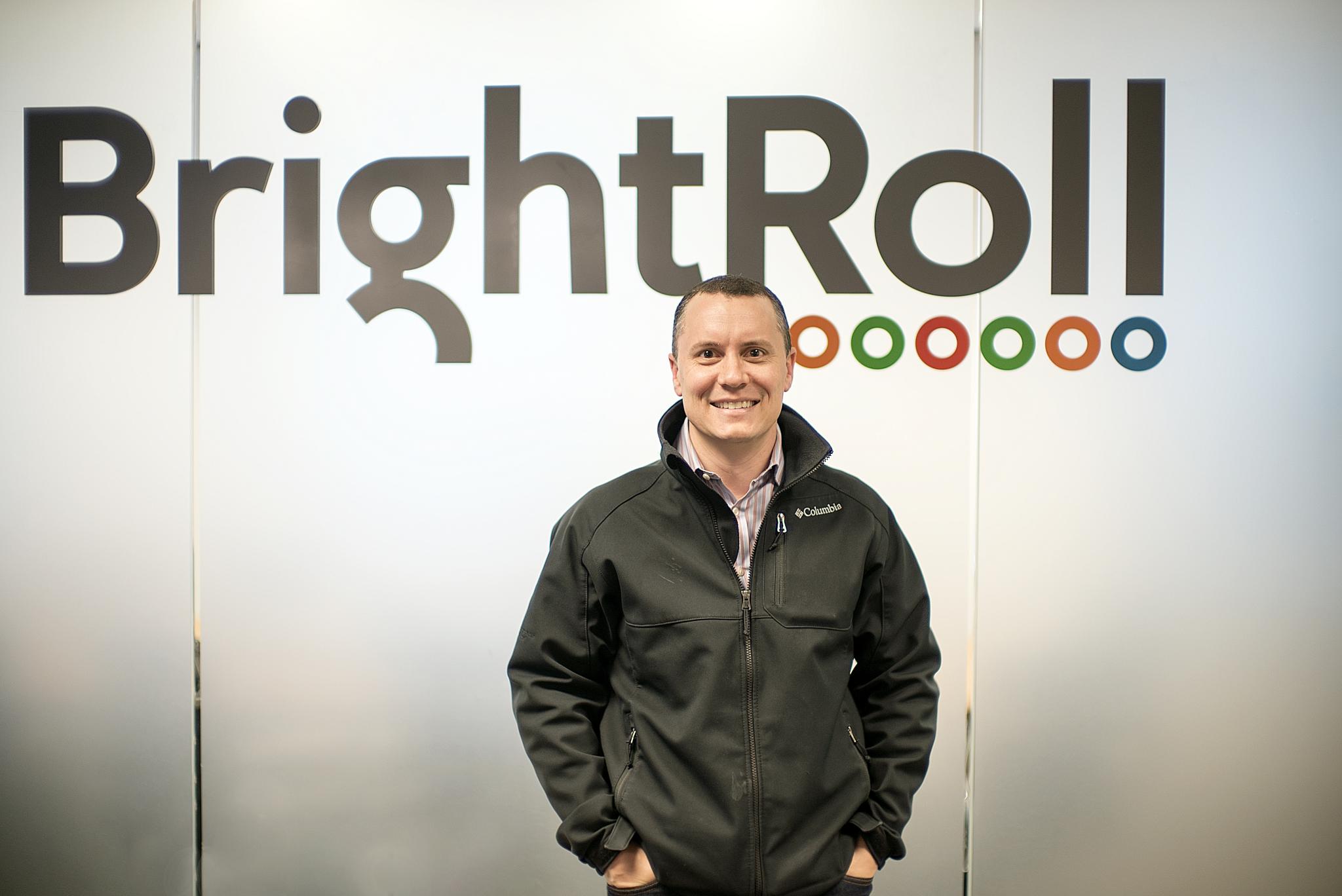
Before he was a founder, he was a finance kid. Sacerdoti started as an investment banking analyst at Robertson Stephens - the San Francisco firm that lived and died with the dot-com era. It is where you learn how deals actually get done, which is useful knowledge for a man who would later be on the selling side of two of them.
From banking he moved into business development - Spoke Software, then Plaxo, where he ran revenue and partnerships. These were the kinds of roles where you learn to sell software to people who already think they have enough of it. By 2006 he had seen enough of other people's companies to start one of his own.
The detail that says the most about him is not on the resume in the usual way. When he left Yahoo and decided to build again, he did not hire a fresh team or chase the hottest available talent. He went back to the people he had already won with. Seven BrightRoll alumni followed him into Pipedream. You do not get that twice by accident - people re-enlist for leaders, not for ideas.
It is a quiet kind of edge. Plenty of founders can describe a market. Far fewer can call their old colleagues a decade later and have them say yes to doing it all again, knowing exactly how hard the first time was.
A video advertising platform built on the bet that software would automate the selling and buying of ads faster than traditional media could adapt. The bet paid: Yahoo acquired it for $640 million, and Sacerdoti stayed to run display and video ad products inside the company.
An integration platform for developers - the connective tissue that lets APIs and cloud services trigger one another and run workflows. Founded with a core of BrightRoll alumni, raised a $20M Series A in 2022, and was acquired by Workday in a deal that closed in early 2026.
As a general partner at Flex Capital, Sacerdoti writes checks at the seed stage - where the failure rate is brutal and, he argues, the risk-adjusted returns are the best in venture. A sampling of the names he got in early on:
Pay attention to when Workday struck. The agreement landed in late 2025 and closed in early 2026 - dead center in the scramble to make AI agents do real work inside enterprise software. Agents are only as useful as the systems they can reach, and reaching systems is precisely what Pipedream was built to do.
An integration platform that already speaks fluent API is not a nice-to-have in that world. It is the part that lets an agent actually trigger a workflow, move data between services, and act rather than just talk. A public software company buying that capability at that moment is a tell about where the puck is headed.
Which closes a neat loop. The first company rode the shift from human ad sales to automated software. The second rode the shift from human workflows to automated ones. Sacerdoti keeps finding the layer where software quietly takes over a job people used to do by hand - and keeps being there first.
On the Summation podcast with Auren Hoffman, Sacerdoti gets into seed-stage returns, SaaS mispricing, the unwritten founder code, and why QSBS may be the tax benefit nobody talks about.
Undergraduate at Yale University, where he led his fraternity, followed by an MBA from the Stanford Graduate School of Business.
CEO and founder of Pipedream (acquired by Workday) and general partner at Flex Capital, based in San Francisco.