critical-infrastructure
(53)
The Three-Minute Grid
Utilities still study a changing electric grid at human speed. ThinkLabs AI is betting that a machine taught the laws of physics can turn a month of engineering into minutes - without asking operators to trust a black box.
The Lobbying Firm That Put Its Employees Inside the Venn Diagram
Venn Strategies sells access, policy fluency and persuasion. Then its founder made an unusually literal bet on alignment: she gave the people doing the work a stake in the firm.

Claroty Secures the Machines You Can’t Just Reboot
Factories, hospitals, and airports need cybersecurity that respects the machinery. Claroty has built its business around a difficult promise: find the risk without stopping the work.

OSC Top Solutions Group Wants Your Network to Earn Its Keep
The Colombian integrator grew by following its customers across borders. Now it is selling a harder promise: making the networks, security systems and people behind critical infrastructure work together.

Hanwha Vision Europe wants your cameras to earn their keep
A warehouse conveyor, an airport checkout and a Finnish substation explain Hanwha Vision Europe’s bet: cameras become more useful when they help people act on what they see.
The 37-Year-Old Telecom Engineer Teaching AI to Watch Every Packet
Telesoft spent decades learning how carrier networks behave. Now it is turning that hard-won packet craft into an on-premise security stack for organisations that cannot afford blind spots - or send their most sensitive traffic to somebody else’s cloud.

Journeo Makes the Bus Stop Talk - and the Depot Listen
The British transport-tech group found a profitable place between the bus, the screen and the cloud. Its best trick is making equipment bought in different decades behave like one system.
The Grid's Boring Bottleneck Is Worth Billions. SBS Automated It.
Utilities do not lose weeks only in the field. They lose them while engineers redraw the same pole, reconcile the same spreadsheet, and retype the same bill of materials. SBS built a business by making that expensive middle disappear.

Modius Is Betting the Data Center’s First Failure Is the Spreadsheet
AI racks are making power and cooling harder to predict. Modius sells the operational layer that lets facility teams see the trouble - and the stranded capacity - before either becomes expensive.

EPIC iO Bet the Camera Was Never the Point
The Fort Mill company is stitching cameras, sensors and wireless links into one operating layer for remote sites - a useful idea whose economics depend less on magical AI than on good placement, clean signals and humans who still make the call.

Michael Plante Learned to Market What Nobody Wants to Think About
The Nozomi Networks CMO has spent a career turning invisible technology into an urgent story. Now AI is shortening the clock, and the systems at stake run far beyond the screen.
Appgate Escaped the VPN Bottleneck - Then Had to Escape Its Own Balance Sheet
Its direct-routed Zero Trust software promised to remove the chokepoints created by legacy VPNs. After a public-market detour ended in Chapter 11, Appgate is testing whether a cleaner balance sheet can do the same for the business.

Nozomi Networks Found a $1 Billion Business in the Networks Factories Were Afraid to Touch - Here’s the Playbook
Two researchers built a security company around an awkward industrial truth: you cannot defend machines you cannot see, and you cannot casually probe machines that keep cities running. Their passive-first wedge became a global platform, more than $100 million in annual revenue, and a $1 billion acquisition.

Bryson Bort Wants Cybersecurity to Rehearse the Fire
The SCYTHE founder’s career runs from Cold War childhood curiosity to Army communications, national-security research and a cheerful campaign to make cyber defense more measurable - unicorn headband included.

Benny Czarny Built a Cybersecurity Company Around One Annoying Question
He began by translating the unruly dialects of antivirus software. Twenty-four years later, Benny Czarny is still asking an unfashionable question: why let a suspicious file in at all?

The Grid Has a User Interface. Michael Legatt Wants It to Remember the Human.
A quarter-fed dryer, a continent-scale blackout and two doctorates led Michael Legatt to a stubborn idea: the safest power grid is designed around the people watching it.
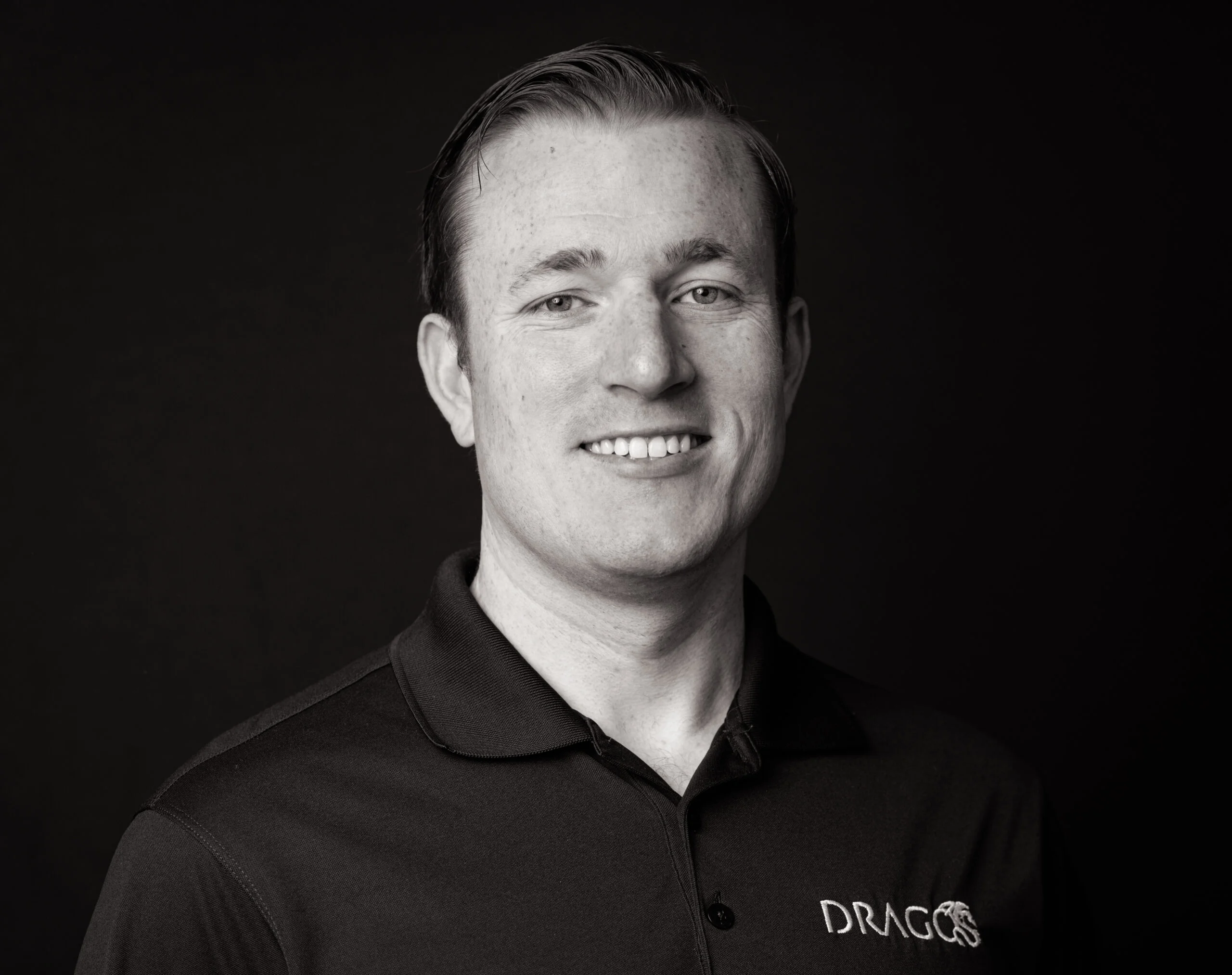
Robert M. Lee Is Building Cybersecurity for the Machines That Keep Civilization Running
Before industrial cybersecurity had a common language, Lee was helping invent one. Now the Dragos co-founder is trying to turn hard-won lessons from grids, pipelines and factory floors into a durable system of defense.
The 65-Person Engineering Firm That Gets the Call When a Cell Tower Starts to Move
Varcon built a national business around an unglamorous truth: towers age, bolts crack, and paperwork can be as dangerous as wind. Its advantage is closing the gap between the engineer who finds the problem and the crew that fixes it.
Dragos Turned a Three-Person Side Project Into Security for the Machines Nobody Can Reboot
Dragos began with three practitioners, a packet-capture tool, and a founder who did not want to become a software vendor. A decade later, its field notes defend grids, factories and water systems - and explain why industrial security cannot be treated like office IT.

Dronehub Crashed the Demo. Then It Built the Part of Drone Autonomy Everyone Else Forgot
A failed flight nearly emptied the order book. The comeback was a sharper idea: stop selling every part of the drone dream and own the two-minute turnaround that makes autonomous inspection practical.

Merlin Group Built a Three-Engine Shortcut Into Government Cybersecurity
Most cyber investors write checks. Merlin Group pairs capital with a FedRAMP platform and a federal sales engine - an unusually literal attempt to turn promising security software into government-ready products.

The Small New York Fund Betting the Next Tech Boom Will Be Built in Concrete, Code and Salt Water
Danu Venture Group is assembling an unusually literal infrastructure portfolio: robots that wash buildings, boats that map oceans, software that audits cyber controls and machines designed to cut underground power corridors. Its wager is that the next technology cycle will be measured not only in model parameters, but in what gets built, secured and kept running.

The Venture Firm Betting the Next Tech Boom Will Be Built From Atoms
8090 Industries is wagering that the next generation of valuable technology companies will sell electrons, molecules, machines and infrastructure - and that old industrial networks can help new founders build them faster.
AICE
AICE is a San Francisco defense-tech startup building autonomous swarms of modular underwater drones to monitor and protect naval assets and coastal infrastructure. Backed by Y Combinator (P26), the company was founded by ex-NASA MIT aerospace engineer Gregoire Chomette and European robotics champion Remi Bouteiller, who pivoted from commercial-building energy sensors to subsea defense after talking to submariners about the gaps in current underwater robotics.
Neara
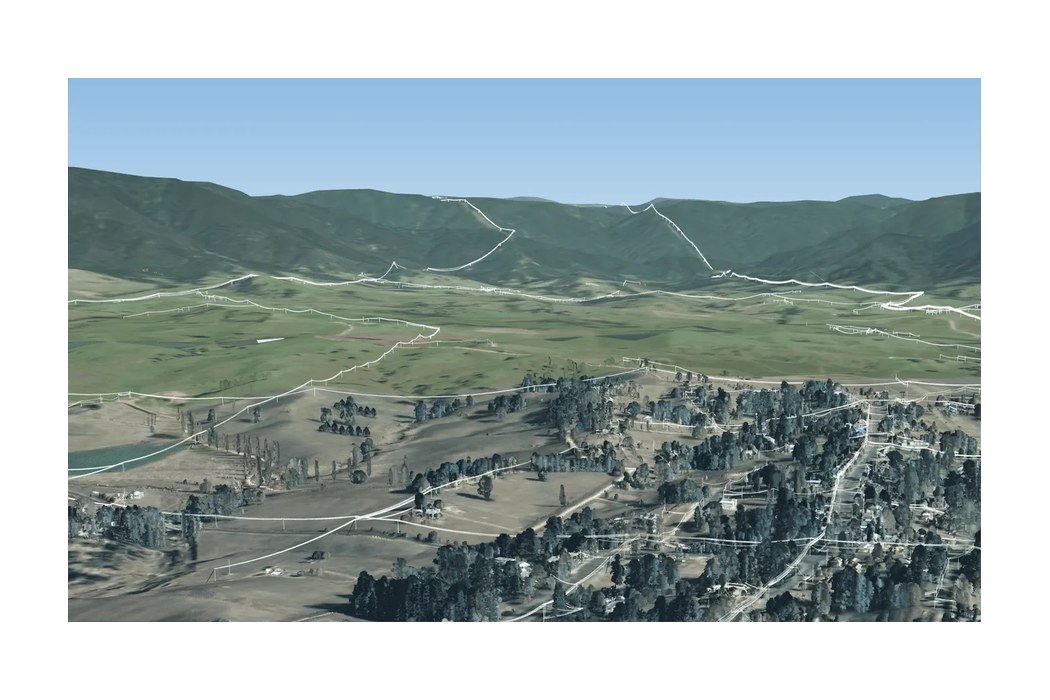
Neara is a Sydney-founded software company that builds physics-enabled digital twins of utility networks. By combining LiDAR, satellite imagery, sensor data, AI and engineering-grade physics simulation, it creates geometrically accurate 3D replicas of power grids so utilities can model how their assets behave under real-world stress - wildfires, floods, storms, heat and rising demand. The platform lets operators find spare grid capacity, mitigate risk, plan maintenance and connect renewables faster, often replacing months of manual field inspection with analysis that runs in minutes. In February 2026 Neara raised an AUD $90 million Series D, reaching a roughly AUD $1.1 billion valuation to become one of Australia's newest unicorns.

Trendspek
Trendspek is a Sydney-based software company that turns drone and reality-capture imagery into exact 3D digital models of buildings and infrastructure. Its Structural Lifecycle Management System (SLMS), built on the Precision Asset Intelligence (PAI) platform, lets asset owners, engineers and contractors inspect, measure, report on, remediate and monitor structures from a single living record - replacing scattered PDFs and site visits with traceable, measurable digital evidence used across 45+ countries.
Vault Cloud
Vault Cloud is a 100% Australian-owned and operated hyperscale cloud provider built exclusively for security. Founded in 2012 by Rupert Taylor-Price, it was the first cloud certified by the Australian Signals Directorate for classified government workloads. Running on an OpenStack architecture across sovereign data centres in Sydney and Canberra, Vault serves federal and state government, defence, and critical-infrastructure customers with PROTECTED, SECRET and TOP SECRET-grade cloud services, all staffed by security-cleared personnel under Australian jurisdiction.

DeNexus
DeNexus is a Boston-based cyber risk company that quantifies the financial impact of cyber threats to industrial and operational technology (OT) environments. Its DeRISK platform uses AI, machine learning and simulation to predict where breaches are likely in OT/ICS networks, express that risk in dollar terms, and prioritize mitigation by ROI. The company serves CISOs, boards, risk managers and cyber insurers across data centers, energy, manufacturing and transportation, and has expanded into agentic-AI underwriting automation for the industrial cyber insurance market.
Intellicene
Intellicene is a Melville, New York-based security software company that builds Symphia, a unified, video-centric platform for physical security operations. Spun out of Verint and Cognyte's Situational Intelligence Solutions business and acquired by Canada's Volaris Group in December 2022, the company connects and correlates data from cameras, access control, intrusion detection and other networked devices so security teams can detect threats and respond to mission-critical events in real time. With roughly 25 years of heritage, it serves retail, airports, transportation, healthcare, safe cities, higher education and industrial customers worldwide.

Meriton
Meriton is an Irving, Texas-based national alliance of independent commercial HVAC manufacturer representatives. Founded in 2019 and led by Chairman & CEO Jerry Braun, it unites market-leading rep firms under a shared-services model - giving local businesses access to national scale, engineering depth, and corporate support in finance, HR, IT, safety, training, and marketing while letting them keep their names and local autonomy. Through more than two dozen acquisitions, Meriton now spans 19 operating brands, 44 locations, roughly 26 states, and 2,100+ employees serving manufacturers, contractors, engineers, and building owners across commercial, industrial, and institutional markets.