In 2006, when the cybersecurity business was still deciding what to call half its products, Benny Czarny asked a question so plain it sounded almost impolite: “What is anti-virus?” The answer, he explained, was not a tidy noun. It was a thicket of configurations, signature files, patches, product versions, and vendor-specific behavior. Every security company had invented its own dialect. Czarny’s young company made a business out of translation.
OPSWAT was four years old then, a San Francisco operation with eight engineers and a peculiar assignment. Its team kept track of more than 400 versions of security software from over 35 vendors so that other companies would not have to. Cisco, F5, Symantec, and Juniper were among the vendors embedding its code. OPSWAT sat inside other products, checking whether a device had the right defenses before it entered a network. It was infrastructure in the least theatrical sense: important precisely because most users never saw it.
The founder was 34, a computer science graduate of the Technion, and cheerfully willing to describe himself as “a bit nerdy” about code. He had started programming at eleven. Before OPSWAT he worked as an engineering manager at BindView. His advantage was not a mystical view of the future. It was a tolerance for software inconsistency that bordered on affection.
The business hidden inside a nuisance
Czarny founded OPSWAT in 2002 with his own money, working from a small apartment in San Francisco. The original idea was interoperability: create a common way for security applications to report what they were and whether they were working. That sounds obvious after someone has done it. Beforehand, it looked like a swamp of APIs, product licenses, version changes, and vendors with varying enthusiasm for cooperation.
“Sometimes vendors are open, sometimes they hide things,” Czarny said in that early profile. Then came the drier punch line: “Sometimes they just don’t have them.” When an API was missing, OPSWAT’s engineers found another route into the product. The work was fussy, specific, and difficult to fake. The company became a security vendor to security vendors.
There is a founder lesson in the annoyance. Markets advertise their exciting problems and conceal their durable ones. Compatibility was not glamorous. It was expensive, repetitive, and universal. That made it useful. Czarny stayed close to it long enough to watch the boundary grow: from checking devices, to inspecting files, to managing how data enters critical networks.
He also stayed independent. OPSWAT took no outside investment for nearly two decades. Customers financed the iteration. By the time Czarny chose Brighton Park Capital’s $125 million growth investment in 2021, the company had close to 400 employees, ten offices, and more than 1,000 organizational customers across 70 countries. Czarny said more than twenty offers had been bidding for OPSWAT. He picked Brighton Park for its experience with public companies and its market connections. Capital arrived after the operating model had survived nineteen years of contact with reality.
From checking devices to distrusting files
OPSWAT’s current philosophy fits on a sticker: trust no file, trust no device. Behind the slogan is Czarny’s argument that critical infrastructure has a timing problem. A bank, power facility, transport system, government network, or production line may not be able to wait for a suspicious file to reveal itself. Detection followed by response can still mean the dangerous thing already ran. In systems where downtime carries physical or economic consequences, an alarm may arrive promptly and still arrive late.
Czarny favors file regeneration. The process treats an incoming document as potentially hostile, breaks it into its constituent pieces, removes risky active content, and produces a clean version for use. “You achieve prevention through file regeneration, not through detection,” he said at Black Hat USA in August 2026. The principle moves the argument upstream. Instead of asking how quickly a system can recognize an attack, ask what can be neutralized before execution becomes possible.
treated as untrusted
active risks removed
regenerated for use
The argument also reaches beyond files. Czarny has urged critical-infrastructure operators to inspect every route by which data travels: uploads, downloads, email attachments, USB drives, contractor laptops, storage media, and peripheral devices. In August he posed an even more austere question about network design: if a critical system does not need a return path, why have one? The data diode, which permits information to move in only one direction, is the architectural form of that skepticism.
A founder discovers the camera again
The technical severity comes with an unexpectedly playful streak. Czarny made his first film in eighth grade. It was about a child addicted to his computer, which he now calls “probably more autobiography than fiction.” Decades later he returned to video, producing company films and serving as executive producer of Into the Breach, a docuseries that uses demonstrations, interviews, and cinematic storytelling to make critical-infrastructure security understandable beyond the conference hall.
The connection is practical. Cybersecurity language often protects its experts from being understood. Czarny wants the subject to be visual enough for a general audience to follow. “We make cybersecurity fun and exciting and visual to a point that anybody can understand,” he said while discussing the series. The first episode challenges the comforting idea that a firewall is sufficient. A complicated diagram becomes a scene. An abstract threat gets an object, a route, and a consequence.
MetaDefender Kiosk Mini Goes to the Edge of SpaceA 2026 OPSWAT production · 3:01 Watch ↗One recent stunt began with a celebrity encounter. Czarny met Jeff Goldblum in Rome, thought of Independence Day, and wandered from aliens to malware to space security. OPSWAT then sent thousands of malware samples toward space with a MetaDefender Kiosk Mini, testing whether offline prevention could operate through changes in force, pressure, and temperature. The premise was odd enough to travel. The serious point followed behind it: satellites and spacecraft cannot always connect back, patch later, or rely on a rapid response team.
Czarny is also an instrument-rated pilot. Aviation, investing, filmmaking, and cybersecurity share a taste for systems whose small parts matter. He has run the New York marathon, too. In 2006, the reporter covering OPSWAT noted the hobby just before quoting Czarny saying he was in the company “for the long run.” The metaphor is almost offensively neat, but twenty years later it has earned the right to remain.
The long run changes shape
Endurance did not mean preserving the original product in amber. OPSWAT expanded into multiscanning, content disarm and reconstruction, secure file transfer, sandboxing, network isolation, operational technology protection, and cybersecurity training. It moved its headquarters from San Francisco to Tampa in late 2020. The official company biography now describes an organization of more than a thousand employees serving customers in more than one hundred countries.
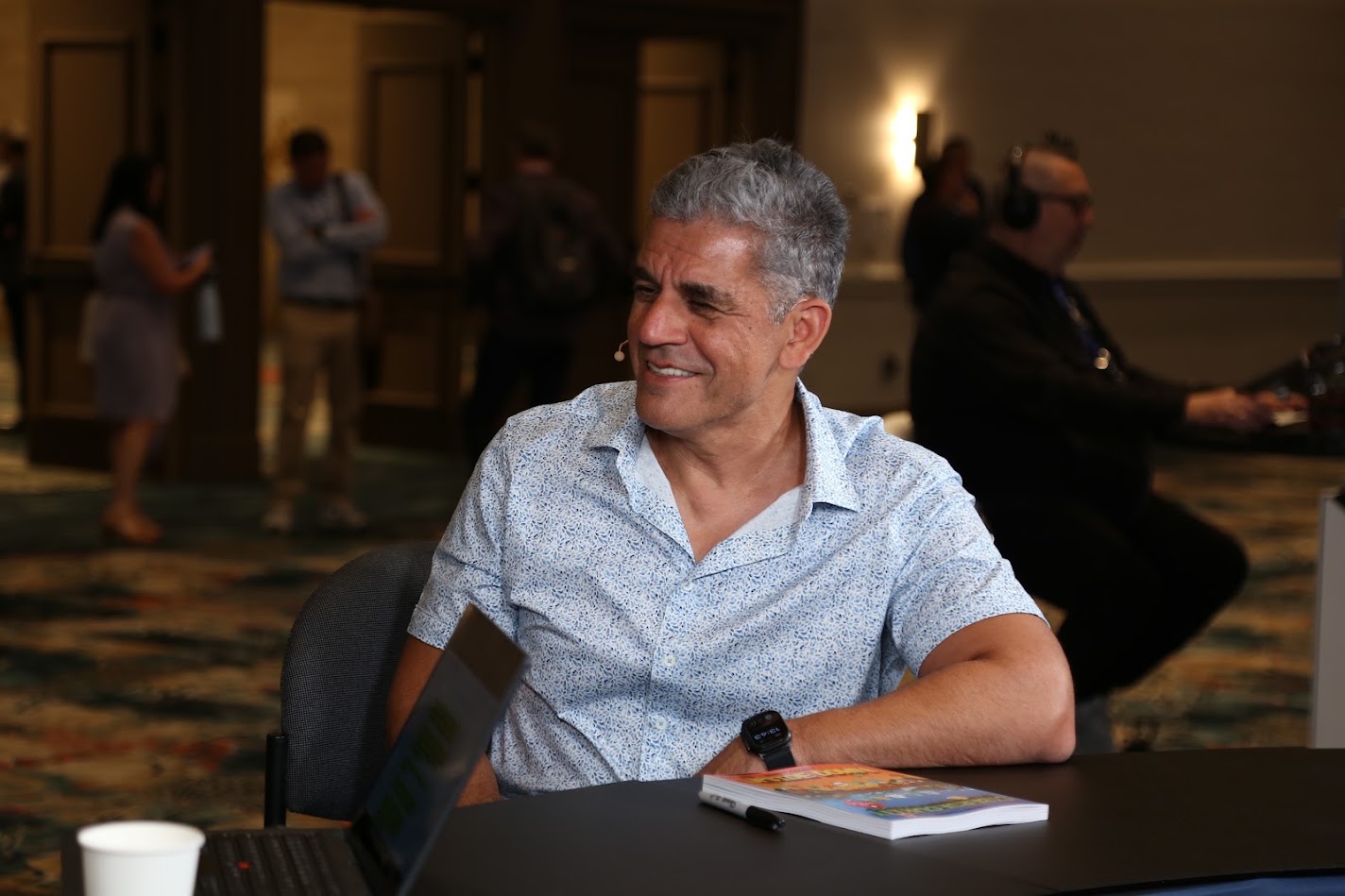
The founder’s role expanded with it: CEO, chairman, author, investor, and producer. His first book, Cybersecurity Upside Down, was released in January 2026. It combines the OPSWAT story with his case for a prevention-first strategy. The title performs the useful service of admitting that Czarny enjoys turning accepted wisdom on its head, though the philosophy itself is more disciplined than rebellious. It asks security teams to inventory what enters, decide what truly needs a connection, and remove trust where verification can take its place.
He remains attached to education as the bridge between the principle and the work. By August 2026, OPSWAT Academy had certified nearly 289,000 professionals. Czarny points practitioners there when asked how to begin. The ambition is expansive, but the recommended first steps are characteristically concrete: map the file flows, inspect the transfer paths, understand the devices, and question each opening.
Czarny’s career has been a sequence of boundaries. The antivirus product that would not identify itself cleanly. The endpoint requesting network access. The file approaching a critical system. The return path that exists because nobody has removed it. His instinct is to pause at each border and ask what everyone else has decided to wave through.
That instinct can be commercially useful and personally inconvenient. It turns ordinary software integration into years of maintenance. It turns a harmless-looking document into a bundle of objects requiring inspection. It turns a firewall from an answer into another question. Yet it also explains how a programmer working in an apartment found a problem large enough to occupy twenty-four years without becoming the same problem twice.
The boy making a movie about a computer-obsessed child eventually built a company inside the computer industry’s least visible seams. Now he is putting those seams on camera. Somewhere between the code and the film set, the enterprise has stayed remarkably consistent: take the thing people trust by habit, open it carefully, and see what is actually inside.