Breaking
UNICORN Neara reaches ~AUD $1.1B valuation, Feb 2026 SERIES D AUD $90M led by TCV SCALE ~15M grid assets modeled across 4 continents SPEED 21,000 line spans analyzed in 15 minutes REACH works with ~90% of Australia's network utilities FOUNDED Sydney, 2016 - by ex-Google engineer Daniel Danilatos UNICORN Neara reaches ~AUD $1.1B valuation, Feb 2026 SERIES D AUD $90M led by TCV SCALE ~15M grid assets modeled across 4 continents SPEED 21,000 line spans analyzed in 15 minutes REACH works with ~90% of Australia's network utilities FOUNDED Sydney, 2016 - by ex-Google engineer Daniel Danilatos
The Infrastructure Dispatch  /  Company Profile Sydney, Australia  •  Est. 2016
Physics-Enabled Digital Twins
Company • SaaS / AI / Climate

Neara.

The Sydney software company building a physics-accurate 3D twin of the power grid - so utilities can test reality before reality tests them.

~AUD $1.1BValuation, 2026
15MAssets modeled
4Continents
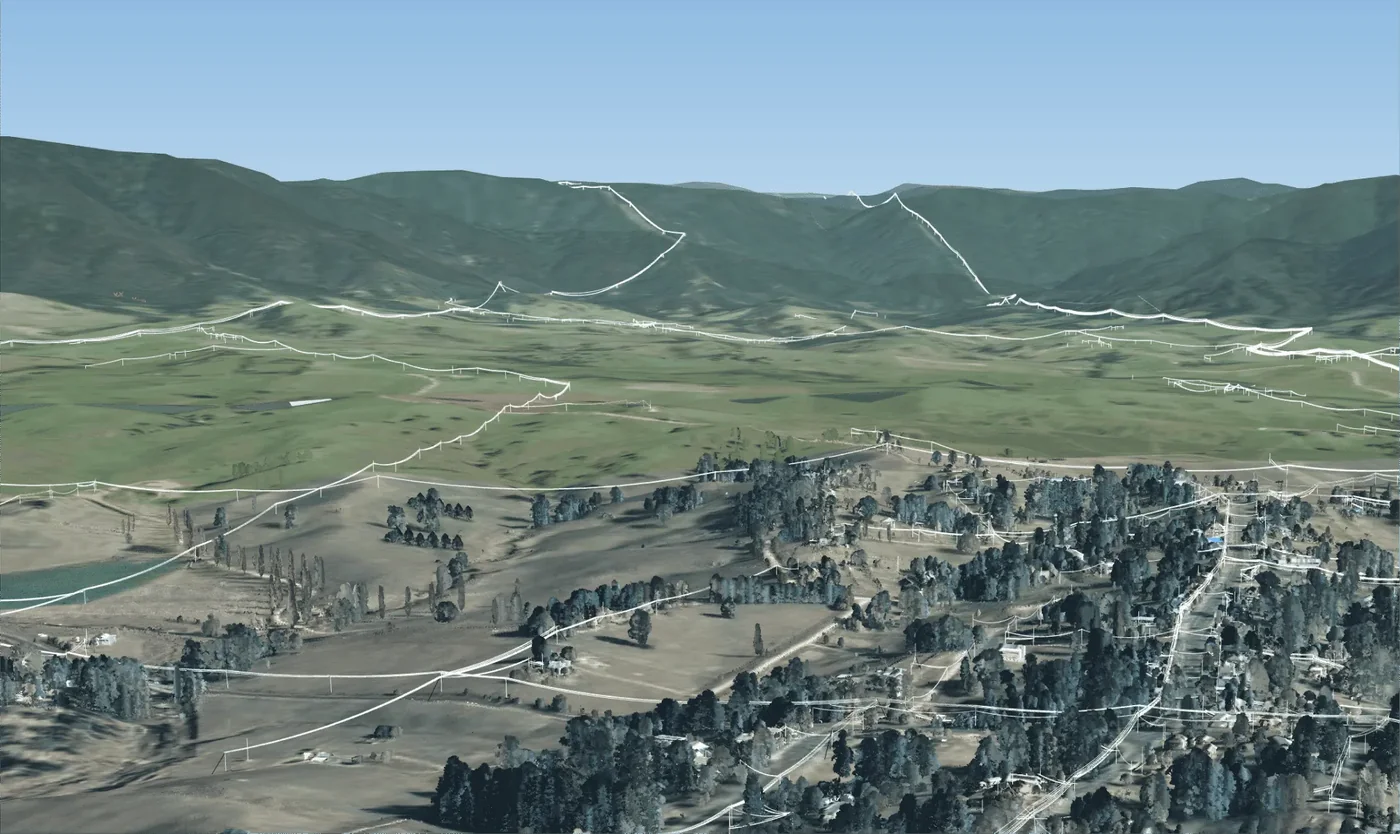
Neara physics-enabled digital twin of an electricity network showing grid capacity analysis
Neara's platform renders an entire network as an engineering-grade digital twin - conductors, poles and clearances included.
The Story

A model of the grid that can fail the way the real grid fails.

Most software that claims to "digitize" infrastructure produces a pretty picture - a 3D render you can spin around but not trust. Neara set out to build something harder: a digital twin that obeys physics. In a Neara model, conductors sag with heat, poles carry load, and floodwater rises to the correct elevation. When the model breaks, it breaks where the real network would. That distinction, dry as it sounds, is why close to 90% of Australia's network utilities and a growing roster of overseas operators now run their grids through it.

Founded in Sydney in 2016 by former Google software engineer Daniel Danilatos alongside Karamvir Singh and Jack Curtis, Neara began life as a humble line-design tool called "Power Lines Pro." A decade later it models roughly 15 million assets across more than three million kilometers of network on four continents - and in February 2026 it raised an AUD $90 million Series D that pushed its valuation to about AUD $1.1 billion, making it one of Australia's newest unicorns.
What It Does

Turning wires and poles into something you can simulate.

Neara ingests LiDAR scans, satellite imagery and sensor data, then uses AI and machine learning to reconstruct a network as a geometrically accurate 3D model. On top of that geometry it runs asset-level, engineering-grade physics. The result is a working replica an engineer can interrogate: How much more load can this line carry on a 42-degree day? Which spans will a one-in-fifty-year flood reach? Where is a tree close enough to a conductor to start a fire?

The company's models are trained on over a million miles of diverse network territory, which is what lets them resolve the small elevation differences that decide whether a flood forecast is useful or useless.

The Problem

Grids built for another era, under new pressure.

The electricity grid is being squeezed from several directions at once: AI data centers and electrification are driving demand that fifty-year-old infrastructure was never designed for, while wildfires, floods and storms grow more frequent and severe. Traditionally, understanding a network meant sending crews to walk it - slow, expensive and, in fire and flood zones, dangerous.

"We're allowing utilities to stay a step ahead of extreme weather by understanding exactly how it will affect their network."

Jack Curtis, Co-founder
By The Numbers
85%Faster to bring new infrastructure online
15 minTo analyze 21,000 spans (was months)
5 daysFlood restoration vs. an est. 3 weeks
~90%Of AU network utilities as customers

FIGURES REPORTED BY NEARA AND CUSTOMER SA POWER NETWORKS. APPROXIMATE.

Products & Services

One twin, many jobs.

Wildfire Mitigation

See the risk before the crew does

Automatically flags vegetation and clearance-driven fire risk across the network and routes inspectors to the highest-risk spans - the workflow behind Neara's Southern California Edison partnership.

Severe Weather & Flood

Simulate the storm first

Models how floods, hurricanes, snow and ice will hit the network, using precise elevation data to prioritize response and speed restoration.

Network Capacity

Find the room you already have

Surfaces underutilized grid capacity so utilities can connect more solar, wind and load without unnecessary rebuilds - accelerating the energy transition.

Asset Management

Maintain by evidence

Models pole loading, conductor clash and asset health to support proactive maintenance and replacement planning.

Design & Construction

Engineer it in software

Engineering-grade design and analysis for distribution and transmission projects, helping utilities build faster and with fewer surprises.

Resilience Planning

Stress-test the network

Runs scenario after scenario against a real model of the grid, so operators know where it will hold and where it won't.

Who Uses It

Utilities, on four continents.

Neara's customers are electric utilities and transmission-and-distribution operators. It dominates its home market - working with close to 90% of Australia's network utilities - and has expanded across the US, UK, Ireland and Greece.

AU Essential Energy AU Endeavour Energy AU Ausgrid AU AusNet AU Powercor AU SA Power Networks US Southern California Edison US CenterPoint Energy IE ESB Networks UK Scottish Power / SSEN GR Hedno
Why It's Different

Physics, not just pixels.

Rivals in geospatial and grid analytics - from Bentley Systems and AiDash to Overstory, Sharper Shape and Unleash live - often center on imagery, inspection or visualization. Neara's wedge is the engineering layer underneath: an asset-level physics engine that turns a static scan into a model you can actually load-test.

That is why a utility can replace weeks of field walking with a simulation, and why the same twin serves wildfire, flood, capacity and design teams instead of one narrow use case.

In The Field

The flood that took 15 minutes instead of months.

When flooding hit the River Murray in 2022-2023, SA Power Networks faced a network partly underwater and a recovery estimated in weeks. Using Neara, the utility analyzed roughly 21,000 power line spans in about 15 minutes - work that would have taken months on foot - and restored power in around five days rather than an estimated three. It is the clearest illustration of what an accurate model buys you: not just speed, but the confidence to send crews to the right places.

"The increasing frequency and severity of severe weather motivates our product development more than any one event."

Jack Curtis, Co-founder
Business Model

Enterprise SaaS for critical infrastructure.

Neara sells its cloud platform to utilities and infrastructure owners, typically through multi-year subscriptions, with services to onboard network data and stand up each digital twin. The value proposition is concrete: consolidating fragmented inspection and engineering workflows into one model, which the company says can deliver eight- and nine-figure savings for large operators.

~150Employees
~AUD $180MRaised to date
The Founders

Three roles, one company.

Daniel Danilatos - Founder & CEO. A former Google software engineer whose frustration with clunky line-design tools produced "Power Lines Pro," the seed of Neara.

Karamvir Singh - Co-founder & Chief Product Officer, steering how the physics and product come together.

Jack Curtis - Co-founder & Chief Commercial and Operations Officer, leading the company's go-to-market with utilities worldwide.

Funding

The road to a billion.

Series B
AUD $20M • 2022
Series C
AUD $45M • 2024
Series D
AUD $90M • 2026

The February 2026 Series D was led by TCV, with returning backers Partners Group, EQT, Square Peg Capital and Skip Capital. Earlier rounds drew Square Peg, Skip Capital and Prosus Ventures. The round valued Neara at roughly AUD $1.1 billion.

Timeline

From Power Lines Pro to unicorn.

2016

Founded in Sydney

Danilatos, Singh and Curtis build on the "Power Lines Pro" line-design tool to start a network digital-twin company.

2019

Commercial launch

Neara begins selling its physics-enabled platform to utilities.

2022

AUD $20M Series B

Square Peg Capital and Skip Capital back the platform's expansion.

2023

Southern California Edison

A multi-year deal targets wildfire risk mitigation and vegetation management.

2024

AUD $45M Series C

Prosus Ventures joins as extreme-weather use cases drive international growth.

2026

AUD $90M Series D, unicorn status

TCV leads a round valuing Neara near AUD $1.1 billion.

Where It Fits

Sitting between the grid and the energy transition.

Neara occupies a specific and increasingly crowded corner of climate-infrastructure software: the layer that helps existing grids do more without being rebuilt. As renewables need connecting, data centers need feeding, and weather keeps testing old assets, the constraint is rarely a shortage of ambition - it is a shortage of accurate information about what the network can actually take.

That is the gap Neara fills. Its engineering-grade twin lets planning, resilience, wildfire and design teams work from one shared model of reality. For investors, that breadth is the appeal: not a single feature, but a platform positioned under the whole energy transition. For utilities, the pitch is simpler - understand the grid you have before you spend to change it.

Watch

Interviews & product demos.

FAQ

Questions, answered.

What does Neara do?

Neara builds physics-enabled digital twins of utility networks - geometrically accurate 3D models of power grids that let operators simulate how their assets behave under wildfires, floods, storms and rising demand, then plan design, maintenance and risk mitigation in software.

Who founded Neara and when?

Neara was founded in Sydney in 2016 by Daniel Danilatos (Founder & CEO, a former Google engineer), Karamvir Singh (Chief Product Officer) and Jack Curtis (Chief Commercial and Operations Officer).

How much has Neara raised and what is it worth?

Neara has raised roughly AUD $180 million to date, including an AUD $90 million Series D in February 2026 led by TCV, reaching a valuation of about AUD $1.1 billion and unicorn status.

Who uses Neara?

Electric utilities and network operators. Neara works with close to 90% of Australia's network utilities and international operators including Southern California Edison, CenterPoint Energy, ESB Networks, Scottish Power and Hedno, modeling around 15 million assets across four continents.

How is Neara different from other digital-twin tools?

Its twins are physics-enabled and engineering-grade - conductors sag, poles load and floodwater rises to the correct elevation - so the model reflects how the real grid would actually behave and fail, rather than being a static 3D visualization.

Connect

Find Neara.

Share This Profile
NEARA • SYDNEY, AUSTRALIA • PHYSICS-ENABLED DIGITAL TWINS FOR CRITICAL INFRASTRUCTURE