utility-software
(12)
Ani Adzhemyan Makes the Invisible Infrastructure Interesting
After 19 years marketing industrial technology across four regions, Ani Adzhemyan has arrived at a wonderfully difficult brief: make utility-pole data matter before anybody notices the pole.

Terry Rohrer Spent a Career Teaching the Grid to Listen
From enterprise software to farm pumps and smart thermostats, the Ohio technologist built a career around making scattered machines behave like one dependable power plant.

Andy Mott Took the Long Way Into Marketing - and Learned to Make Technical Work Human
A submarine electrician talked his way past a degree requirement, built a 14-year Autodesk career, and arrived at SBS with a durable idea: infrastructure technology matters most when people can see themselves in the story.

Brian Carr Sells the Software Behind the Switch
His career began in banking and retail. It found its long game in the quiet, consequential business of helping electric utilities understand their networks, answer outages, and talk to customers.

The Software Company Trying to Put Every Utility on One Screen
SEW.AI began by making utility self-service less painful. Now it wants to connect the customer, the field crew and the grid - without asking a century-old industry to rip out everything underneath.
Connected Energy Outlived Its First Big Bet - Then Turned 4,500 Farm Pumps Into a Virtual Power Plant
A Pittsburgh smart-grid company survived the collapse of its original broadband thesis by learning to control the least glamorous machines on the grid. Its reward: a utility software business built around farm pumps, real-time measurement and a newly acquired second act inside CLEAResult.

The Software Company Utilities Call When the Lights Go Out
Milsoft began with a pencil, a calculator and one engineer’s circuit model. Thirty-seven years later, more than 1,000 utilities use its software to find faults, dispatch crews, answer anxious callers and keep the grid’s many databases speaking the same language.

Ahmed Ashour Is Teaching Old Grids New Tricks
He spent years watching water, electricity and revenue disappear through aging networks. Then he built Pylon around a stubborn idea: the smartest grid may be the one a utility can actually afford.
VertexOne
The company most people have never heard of is quietly running the app, the bill and the payment page behind millions of power and water accounts. VertexOne sells utilities the one thing they rarely build well themselves: a modern customer experience.
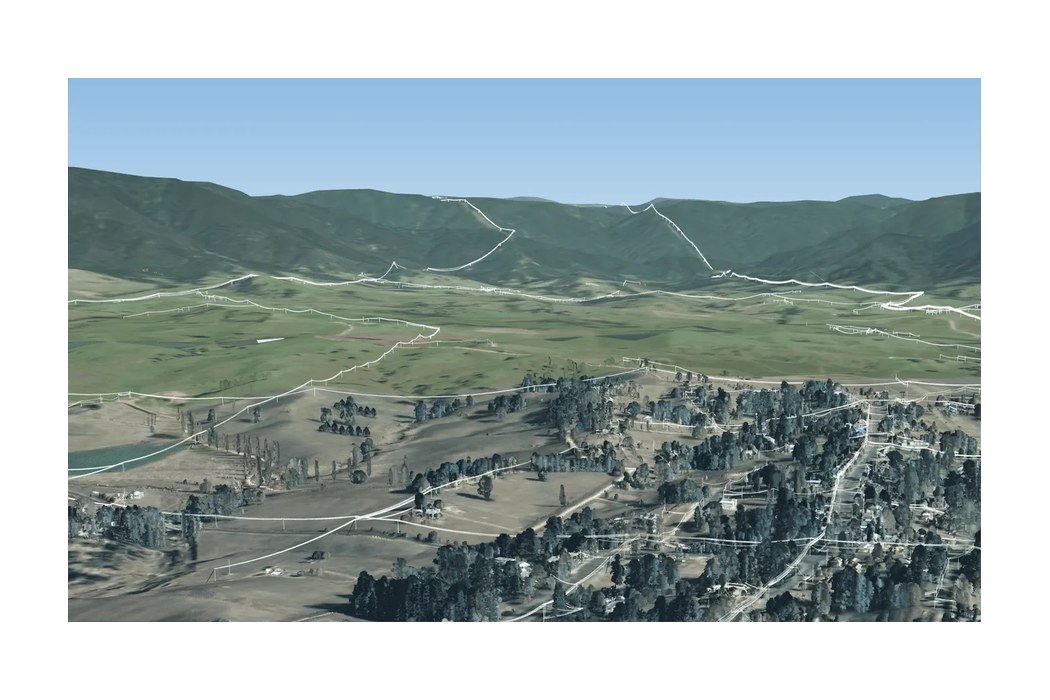
Neara
Neara is a Sydney-founded software company that builds physics-enabled digital twins of utility networks. By combining LiDAR, satellite imagery, sensor data, AI and engineering-grade physics simulation, it creates geometrically accurate 3D replicas of power grids so utilities can model how their assets behave under real-world stress - wildfires, floods, storms, heat and rising demand. The platform lets operators find spare grid capacity, mitigate risk, plan maintenance and connect renewables faster, often replacing months of manual field inspection with analysis that runs in minutes. In February 2026 Neara raised an AUD $90 million Series D, reaching a roughly AUD $1.1 billion valuation to become one of Australia's newest unicorns.

Nate Owen
Nate Owen is the founder and CEO of Ampion, a Boston-based Public Benefit Corporation that acquires and manages community solar subscribers across the country. He started Ampion in 2014 after two decades running Energy Services Group, the back-office software company he founded in 1996 to serve the newly deregulated electric and gas markets. Under Owen, Ampion has grown to roughly 120 employees, manages about 1.5 GW of community solar capacity, and says it has saved subscribers more than $42 million on their electricity bills.
Sun-Net Inc.
Sun-Net Inc. is a San Jose, California software company that has built outage-coordination and operations-logging software for electric, gas, and water utilities since 1999. Its flagship iTOA suite (integrated Tools for Operations Application) is a web-based, HTML5 system of record that handles outage request scheduling, switching order management and tagging, electronic logging, automatic outage reporting, event analysis, and NERC compliance reporting. The platform runs in more than 100 control centers across 80+ utility companies, including Fortune 500 operators like Duke Energy, American Electric Power, and FirstEnergy, helping grid operators work safely, reliably, and with less paperwork.