Most people do not think about utility software until something has gone wrong. The bill looks strange. The power is out. A move requires a phone call with hold music apparently selected by a minor committee. Behind that small aggravation sits an impressive maze: meters, billing systems, customer records, outage maps, work orders, field crews, payment processors and regulators. Smart Energy Water - now branded SEW.AI - has spent 14 years trying to make the maze behave like one product.
The Irvine, California company sells cloud software to electric, gas and water providers. Its original center of gravity was digital customer engagement: portals and mobile apps where people could pay, start service, report trouble and understand their consumption. The catalog kept spreading. SmartWX handles field work. SmartPX handles payments. SmartiX handles analytics. SmartGX reaches toward grid operations. SmartBiTs connects the old machinery underneath. COSMOS, the newest umbrella, presents all of it as a vertical-AI operating layer.
That alphabet soup is easier to understand as a single promise: a customer request should not die when it crosses an organizational boundary. If someone reports a leak, the contact center should see it, the right crew should receive it, the route should update, the asset record should change and the customer should get a useful message. The software is less about making another screen than keeping every screen in agreement.
Scale figures are reported by SEW.AI. “Reached” describes people served by participating providers, not direct software users.
The product is the handoff
Founder Deepak Garg started Smart Energy Water in 2012 after a career building enterprise technology. The mission he repeats is unusually plain for infrastructure software: engage, empower and educate people to save energy and water. It sounds consumer-friendly because the first problem was consumer-facing. Utilities had websites, but too many ordinary tasks still required calls, duplicate data entry or several disconnected systems.
A public example came from Southwest Gas, which serves more than two million customers in Arizona, Nevada and California. Working with SEW.AI and Amazon Web Services, it launched a self-service platform with web, native mobile and omnichannel support. The app reached a reported 4.9 average rating, while the utility reduced pressure on its call center. A star rating does not prove that the underlying transformation was cheap or painless. It does show that utility software need not feel like a filing cabinet with a password.
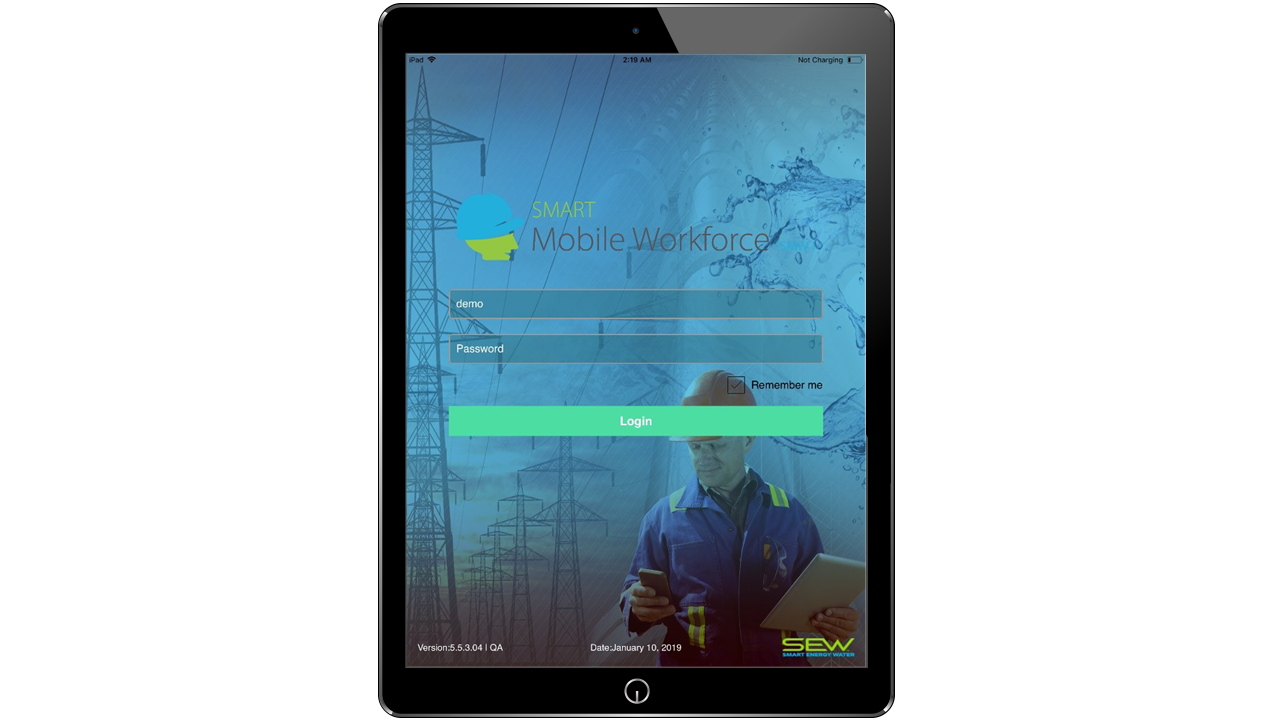
The platform now covers far more than the front door. SmartCX manages account service, billing, usage, outages and communications. SmartWX schedules and dispatches crews, tracks work and assets, and supplies mobile information in the field. SmartPX joins payments to the customer journey. SmartiX analyzes usage, revenue, demand, electric vehicles and solar. SmartGX deals with distributed energy resources, demand response and two-way energy markets. The less glamorous SmartBiTs may be the hinge: APIs and microservices that connect this new layer to the billing, meter, asset and enterprise systems a utility cannot casually replace.
“We can't live without water, and we can't innovate without energy.”Deepak Garg, founder, chairman and Group CEO
What changed: the portal stopped being enough
A decade ago, a polished customer portal could count as transformation. Today the harder questions sit behind it. Can the utility predict a high bill before it arrives? Can it route a crew around a storm? Can it explain an outage consistently across the app, call center and field? Can millions of electric vehicles charge without turning the evening peak into a cliff?
SEW.AI's product evolution suggests what changed its mind: experience could not remain a surface treatment. The customer, workforce and grid had to share context. COSMOS is the company's answer, a common intelligence layer for data, models, workflows and decisions. The “vertical” in vertical AI matters here. Generic software knows how to summarize text. Utility software must understand rate plans, meters, outages, work orders, safety rules, payment assistance and the difference between a kilowatt and a kilowatt-hour. It also needs an audit trail.
This is where SEW.AI fits in the market. Oracle, SAP, Salesforce and IBM offer broad enterprise and utility stacks. Uplight, EnergyHub, Kaluza and Kraken Technologies attack overlapping pieces of engagement, demand management, billing or operations. Systems integrators can assemble custom programs. SEW.AI's distinction is breadth inside one narrow vertical: customer experience, workforce, payment, analytics and grid workflows, with prebuilt connections to more than 100 industry systems.
These are “up to” figures promoted by the company, not promises for every deployment. Baselines, modules and implementation conditions vary.
The price is a project, not a plan
SEW.AI does not put a monthly price beside a Buy button. This is negotiated enterprise software, sold through demos and scoped around modules, integrations, users, geography, security and implementation services. The real cost is wider than the license. A utility may need to clean data, map business processes, connect legacy systems, retrain employees, redesign customer communications and satisfy procurement and regulatory reviews. Those costs can exceed whatever appears on the subscription line.
The business model rewards expansion. A provider can enter through customer self-service, a workforce deployment or analytics, then add adjacent modules. Partnerships help it travel: AWS supplies cloud scale; Wipro brings transformation capacity; Itron brings advanced-meter data; Esri contributes mapping; Siemens connects the grid-software ecosystem; SAP integrations meet utilities where much of their core data already lives.
SEW.AI is privately held and has not announced a conventional venture-funding history. A third-party estimate placed 2024 revenue at $81.8 million, but the company does not publish audited revenue. Its LinkedIn profile places headcount between 1,001 and 5,000, while the current leadership page says the global team is more than 2,000 strong. The footprint includes offices across the United States, India, Canada, Europe, Singapore, the UAE and Latin America.
The company dresses its culture in five words: sustainability, integrity, innovation, compassion and performance. Offices supply the physical punctuation. Irvine has standing desks, dry-erase walls, a game room and an interconnecting slide; the India operation includes an Energy Tech AI and Innovation Hub. Fun furniture is not evidence of a healthy workplace, but the emphasis on shared spaces fits a company whose product thesis is that isolated teams make worse decisions.

What failed first - and what usually fails next
In utility digitization, the first failure is often the handoff. A clean app accepts a request, but the old work-management system does not update. A crew closes a job, but the contact center still sees it as open. An outage estimate changes, but one channel keeps publishing the stale time. SEW.AI has published an anonymous customer testimonial praising a complex delivery that landed on schedule “after a challenging start.” The useful clue is not the unnamed drama. It is that integration and coordinated delivery are the work.
That creates a less flattering test of the platform. It will not rescue a utility that has no owner for customer data, cannot agree on its workflows or treats implementation as an IT handoff. AI predictions will be weak when meter and asset data are late or inconsistent. Automation will move the wrong process faster if nobody redesigns it. A broad suite can also be too much for a small provider that needs one simple portal and has limited capacity to absorb organizational change.
Do not buy a connected platform merely to repaint the customer portal. It needs executive sponsorship across customer service, operations and IT; reliable data; access to legacy systems; clear outcome metrics; and teams willing to change the process behind the screen.
The part worth copying
SEW.AI's most portable lesson is not to paste AI onto everything. It is to choose a specific industry where broken coordination is expensive, learn the nouns and constraints better than a generic vendor, then turn repeated work into modules. The company did not begin by promising an operating system. It began with recognizable jobs for utilities and their customers, accumulated integrations and moved sideways into the next broken handoff.
- Start with a visible pain. Bill payment, outage communication and service requests are easy for a buyer to recognize and measure.
- Integrate before expanding. The new experience matters only when it can reach billing, meter, asset and work systems.
- Sell outcomes already on the dashboard. Call volume, digital adoption, payment completion, field productivity and restoration communication need no new corporate religion.
- Package the repeats. Prebuilt use cases and connectors convert one expensive project into a reusable platform.
- Keep humans in the operating loop. Critical infrastructure needs explainable recommendations, permissions and accountability, not autonomous theater.
The ambition is large, and some of the language has grown large with it. “Connected OS” and “industry's first” are marketing claims, not neutral categories. Yet the underlying problem is real. Utilities are being asked to electrify transport, integrate rooftop solar, respond to extreme weather, protect scarce water, support vulnerable customers and deliver app-level service, often on systems assembled over decades.
SEW.AI's bet is that the winner will not be the company with the cleverest isolated model. It will be the one that can carry useful context from a household tap to a field truck to a control room, then return a trustworthy answer. That is not one screen, exactly. It is the much harder trick of making a thousand screens tell the same story.