A power line photograph is an exercise in false calm. Blue sky. Steel lattice. A few ceramic discs. Perhaps a branch leaning where no branch should. To an untrained eye, the scene is mostly geometry. To a utility inspector, one blurred fitting can be the beginning of an outage, an expensive repair, or a spark in dry country. Kaitlyn Albertoli has spent nine years building a company around the difference between looking and seeing.
Her company, Buzz Solutions, lives in the unglamorous middle of an important system. Drones, helicopters, fixed-wing aircraft, and ground crews collect vast numbers of pictures. Engineers and field technicians need to decide what deserves attention. Buzz uses computer vision and machine learning to help convert those pictures into organized, prioritized findings. The promise is practical: less time hunting through imagery and more time planning the work.
The origin story begins far from a Palo Alto server rack. Albertoli grew up in a beach community in Southern California and spent much of her free time near the water. When the nearby San Onofre nuclear plant shut down in 2013, energy policy became neighborhood conversation. The closure carried environmental and economic consequences that were visible from home. Friends were also evacuated during California wildfires. Infrastructure had stopped being scenery.
“I’ve always been really entrepreneurially-focused.”Kaitlyn Albertoli, on the instinct that arrived early
The jewelry counter before the control room
Albertoli’s first education in business involved locally sourced materials, not machine learning. In high school, she started a jewelry venture and became absorbed by pricing, margins, product lines, and the awkward art of asking someone to pay. A second venture sold pre-packaged food. Later, she ran a sustainable-food nonprofit, managing a team of 60 that served roughly 300 people. Each effort nudged commerce and consequence closer together.
At Stanford, she studied international relations and psychology, with finance woven through her academic and professional interests. She worked as a wealth-management analyst at JPMorgan Chase and once expected to return to banking after graduation. The sensible route was waiting. So was a project from CEE 246, a course about creating ventures in energy and sustainability.
That class introduced her to Vikhyat Chaudhry, an engineer who had led machine-learning and AI teams at Cisco. Their backgrounds were mismatched in a useful way: she brought business, policy, and human behavior; he brought deep technical experience. They first explored using AI to inspect wind turbines. Then they did the least cinematic and most useful part of company building. They asked questions.
Using the Stanford alumni network, Albertoli and Chaudhry interviewed 35 utility companies across the United States. The same imbalance appeared again and again. New cameras and drones allowed utilities to capture five to ten times as much imagery as before. Analysis remained largely manual. Better collection had created a larger queue.
There, in the handoff between an aircraft and an engineer, was the business. The founders pivoted from wind turbines toward transmission and distribution infrastructure. For the first two years, the team concentrated on algorithms that could be retrained for different utilities and geographies. PowerAI formally entered the utility market in August 2019.
A young founder in an old industry
Utilities are cautious for good reason. Their equipment must work through fire, ice, wind, salt, heat, and decades of deferred replacement. A clever demonstration carries less weight than reliable performance inside an existing workflow. Albertoli had another credibility problem: she had graduated only recently.
A month or two after Stanford, while negotiating a partnership involving a large company and a major utility, she received an urgent phone call. The partner asked her to remove references to her age and graduation year from LinkedIn, worried that stakeholders would dismiss her youth. She complied, but the episode revealed the strange bargain often offered to young founders: arrive with a fresh idea, then conceal your freshness.
Her answer was accumulated proof. Buzz made its software hardware-agnostic so utilities could keep their chosen cameras and collection providers. It designed around utility asset systems rather than asking customers to abandon them. Its learning process kept subject-matter experts involved. The company’s pitch matured from the broad enchantment of AI into questions a field team could answer: Which component? Where is it? How urgent is the repair?
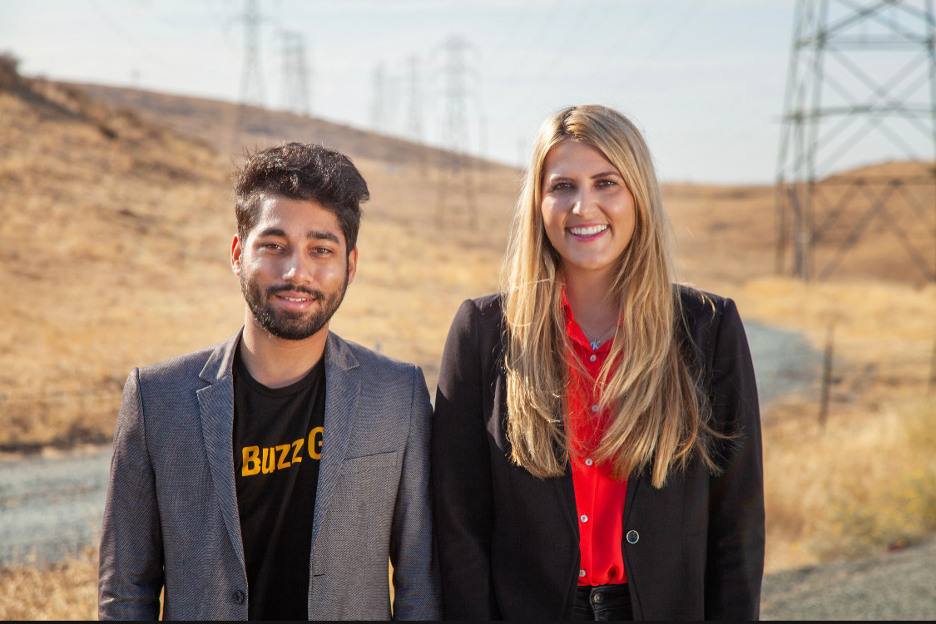
The co-founders also learned to translate between groups that can look at the same pole and see different things. A machine-learning team sees labels and model performance. A utility engineer sees an asset class and a maintenance history. An executive sees reliability, risk, and budget. Good infrastructure software must survive all three readings.
“We are not building generic AI algorithms or a generalized platform.”Albertoli, explaining the utility-specific approach
The intelligence layer gets larger
By 2025, Buzz was working with organizations including Dominion Energy and the New York Power Authority. In one Dominion project, its AI analyzed tens of thousands of transmission assets in a few hours. Work with NYPA pushed the product toward tighter connections with geographic and asset-management systems. The experience helped shape PowerAI 2.0, organized around the way utilities already identify structures and manage inspection results.
The company expanded across transmission, distribution, and substations, then into utility-scale solar. That expansion follows a simple product logic. A utility may gather imagery with many devices across many asset types, but it still needs one coherent view of condition and risk. Albertoli has described the ambition as becoming a central brain for infrastructure inspection data. The metaphor is grand; the daily work remains stubbornly specific.
On August 4, 2026, Buzz announced an oversubscribed $20 million Series A led by S3 Ventures, with GoPoint Ventures, HearstLab, and Blackhorn Ventures participating. The company said it had tripled its customer count and increased revenue by 400 percent over the prior year. The funding brought its reported total raised to $29.5 million and was earmarked for product development, commercial expansion, and deeper customer deployments.
Timing matters. Electricity demand is climbing as data centers, electrification, and new industrial loads arrive. Renewable generation adds assets that must also be inspected. Severe weather and aging equipment put more pressure on what is already in service. New steel and wire will be essential, but existing equipment cannot wait politely for a rebuild. Better knowledge of its condition buys time and directs money.
Albertoli has argued that software belongs closer to the center of grid modernization policy. Inspection rules built around annual visual checks do not reflect what frequent imaging and condition-based monitoring can provide. She also calls for clearer ways to evaluate AI in utility settings: standards for data quality, model performance, and system integration. Adoption becomes easier when the measurement of trust is shared.
The useful kind of ambition
Away from the funding announcements, Albertoli’s public advice has the texture of someone who has spent years inside long sales cycles. Understand the pain before polishing the solution. Teach customers what the technology can and cannot do. Bring different backgrounds into the room. Celebrate the small wins before the next operational problem swallows them.
She has also been candid about the less photogenic requirements of leadership. Transparency matters when introducing AI to an industry that cannot treat failure as a software inconvenience. Mentors matter when a founder is learning unfamiliar rules at speed. So does a team willing to explain the same system in technical, operational, and financial terms. Albertoli’s training in psychology and international relations looks unexpectedly at home here. The machinery is complicated, but adoption is a human negotiation: people must understand what the model sees, where it can be wrong, and how their own expertise improves the answer.
Her own biography contains a few pleasing counterweights to the utility-boardroom seriousness. A Stanford profile recorded that she liked deep-sea fishing with her father. Her LinkedIn honors preserve a previous life as a competitive swimmer and scholar-athlete. Both pursuits reward quiet repetition, weather awareness, and respect for forces larger than oneself. The comparison is almost too neat, which does not make it less charming.
Buzz’s larger aspiration is to help safeguard energy infrastructure beyond a single category of poles and wires. The nearer goal is more modest and more measurable: take a mass of images, find the damaged insulator or encroaching branch, place it in context, and help someone decide what to do next. The grid will always be partly physical labor conducted in difficult places. Albertoli’s wager is that the people doing that labor deserve a sharper map.
There is a founder lesson hiding here, too. New technology often creates a secondary bottleneck that receives less attention than the breakthrough itself. Drones made inspection imagery abundant. Abundance made interpretation scarce. Albertoli listened for the work that had become newly impossible, and built in that gap. Nine years later, the gap has become a company - and millions of quiet photographs have begun to speak.