grid-modernization
(18)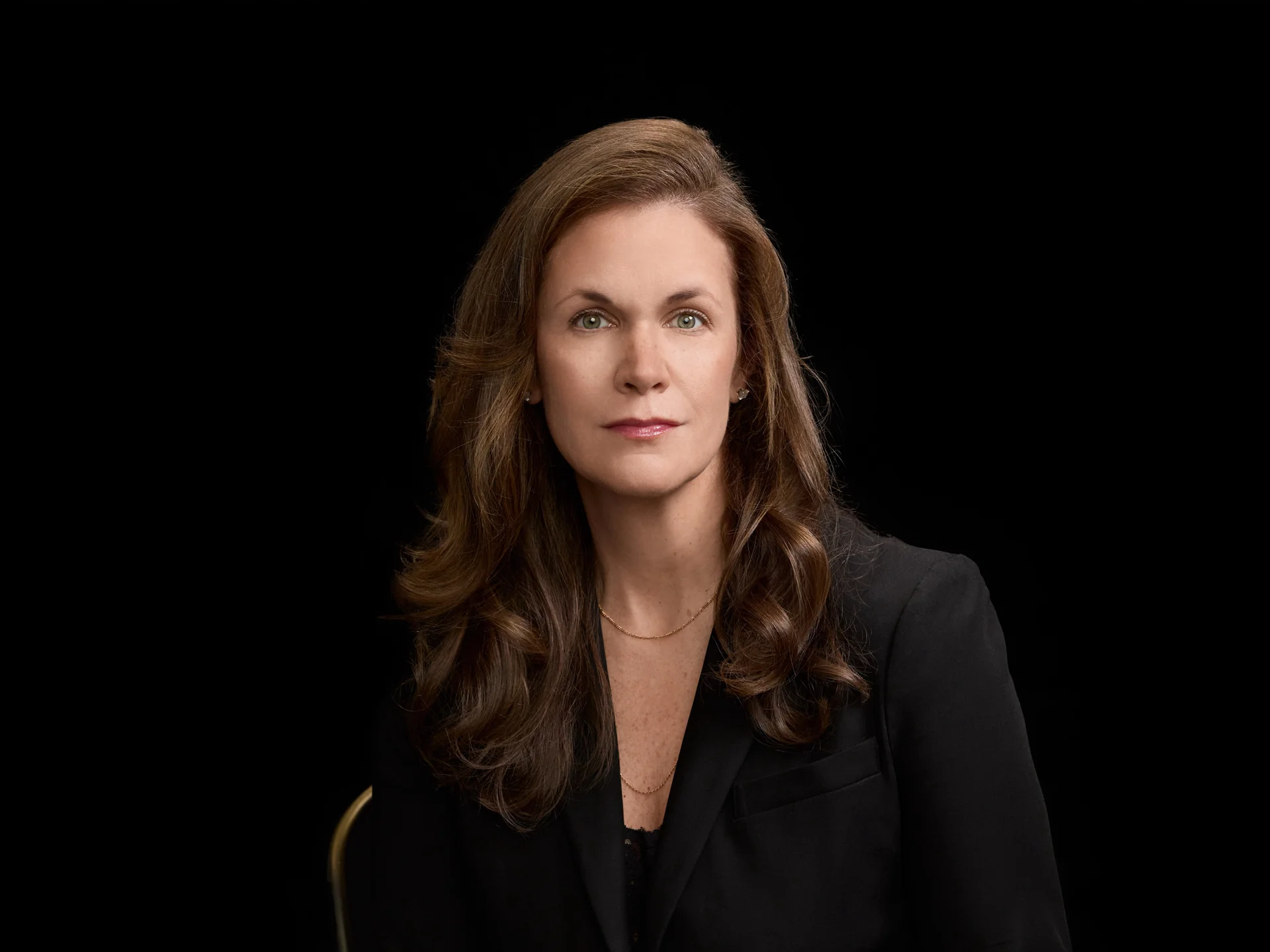
Heather Martin Makes the Invisible Infrastructure Impossible to Ignore
After two decades turning complicated systems into clear stories, the Maine-based executive has arrived at the grid's least glamorous - and most consequential - layer: the network underneath it all.
The Software Company Trying to Put Every Utility on One Screen
SEW.AI began by making utility self-service less painful. Now it wants to connect the customer, the field crew and the grid - without asking a century-old industry to rip out everything underneath.

The Pole Is the Product: How ikeGPS Turned the Grid’s Dullest Asset Into a Recurring Software Business
A hungry lion helped inspire the first device. Two decades later, ikeGPS has narrowed its sights to an unglamorous object with enormous consequences - the utility pole - and built a high-margin software business around it.
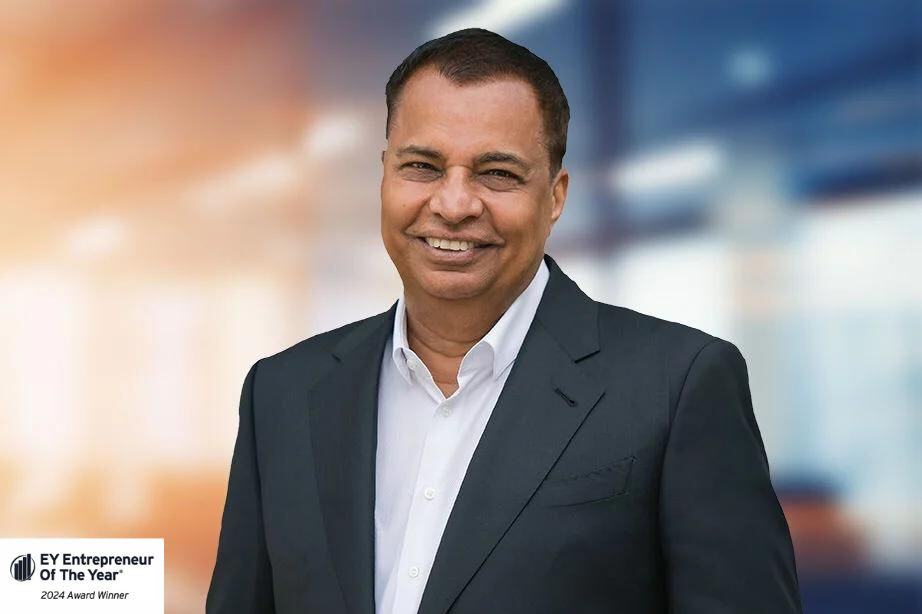
Hersh Saluja Built E2 One Practical Problem at a Time
He started as E2’s only engineer in 1988. Nearly four decades later, the firm had become an 800-plus-person infrastructure business - and its founder was learning how to hand the controls forward without walking away.
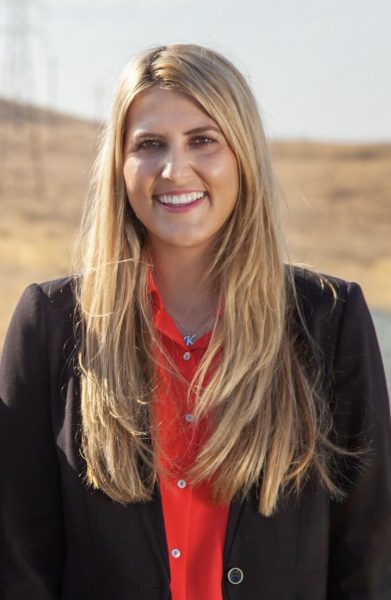
Kaitlyn Albertoli Is Teaching the Grid to See Trouble Coming
She began with a jewelry business, a sustainability course, and 35 conversations with utilities. Now her company is turning inspection images into early warnings for the infrastructure that keeps the lights on.

Jim Murphy Built for the Grid's Long Game
After 25 years beside founder Michael Polsky, Invenergy's finance-minded co-founder has taken the CEO seat. His operating idea is simple: relationships compound, execution matters, and the power grid cannot run on slogans.

FortisBC’s $697.6 Million Bet: Can a Gas Utility Reinvent the Pipe Before the Rules Reinvent It?
FortisBC is trying to modernize a century-old energy system without making reliability or affordability the collateral damage. The playbook is unusually practical: blend cleaner fuels, fund many small experiments, partner early and let regulators kill the ideas that cannot yet carry their cost.

Buzz Solutions Found the Grid’s Most Expensive Bottleneck: The Human Eyeball
Utilities learned how to photograph every pole and tower. Then the pictures piled up. Buzz Solutions built the software layer that turns that visual backlog into repair orders - and a wind-turbine class project into a utility business.
The Climate Investor With an Unfair Advantage: Its Customers Are Already in the Room
Energy Impact Partners built a venture firm around a stubborn fact: energy startups do not scale on capital alone. Its coalition model puts the utilities and industrial companies that might buy, test and deploy new technology inside the investment platform.

The Humble Power Meter Is Learning to Think
For 130 years, Landis+Gyr has counted electricity. Its next act is to turn the meter on your wall into a sensor, a computer and a traffic cop for an increasingly unruly grid.
The Utility Betting $11 Billion That the Wind Off Virginia Beach Can Power a Data-Center Boom
It started as a Richmond streetcar company in 1909. Today Dominion Energy runs power plants, gas lines and a 176-turbine wind farm 27 miles out to sea - and the fastest-growing customers on its grid are warehouses full of servers.
LineVision
LineVision is a Boston-based grid intelligence company that helps electric utilities get more capacity, reliability, and safety out of existing transmission lines. Its patented non-contact sensors mount on transmission towers - not the live wires - and pair LiDAR-based measurements of conductor position with AI-driven, hyperlocal wind forecasting and computational fluid dynamics to calculate a line's real-time thermal capacity. Through its Dynamic Line Rating, situational awareness, and asset-health products, LineVision typically unlocks 30%+ additional capacity on monitored lines at a fraction of the cost and time of building new transmission, supporting faster renewable integration and a more resilient grid.
E2 Consulting Engineers, Inc.
E2 Consulting Engineers is a multidisciplinary engineering and technical consulting firm founded in 1988 and headquartered in Emeryville, California. It delivers project management, engineering and design, construction management and inspection, environmental permitting and remediation, and federal support services to investor-owned utilities, government agencies, and infrastructure operators across North America. With more than 800 professionals in 11 U.S. offices, E2 supports grid modernization, wildfire mitigation, pipeline safety, and water infrastructure programs. In June 2026 it was acquired by EIP-backed Guardian Infrastructure Services.

Vishal Kapadia
Vishal Kapadia is the Chief Executive Officer of LineVision, a Boston-based company that bolts non-contact sensors to high-voltage power lines and, through dynamic line rating, squeezes as much as 40% more capacity out of wires already in the ground. He took the top job in June 2025 after co-founder Hudson Gilmer moved to chairman. Before LineVision he ran energy transformation at Walmart, where he built a coast-to-coast EV fast-charging plan and oversaw more than 2 GW of clean energy; earlier he was CFO and CCO of Orsted's onshore renewables business and led renewable-energy investing at Morgan Stanley. Across his career he has financed or developed over 15 GW of energy and mobility infrastructure.
Heron Power
Heron Power is a Scotts Valley, California company building solid-state transformers - power electronics purpose-built for the modern electrical grid. Founded in 2025 by former Tesla powertrain and energy chief Drew Baglino, its flagship Heron Link converts medium-voltage electricity to usable low-voltage power in a modular, software-integrated package, replacing the century-old iron-core transformer. The company targets utility-scale solar, grid-scale batteries, and hyperscale AI data centers, and is building a 40-gigawatt US factory to meet a backlog of orders.

Drew Baglino
Drew Baglino spent 18 years at Tesla building the guts of the electric age - the Model S powertrain, the Powerwall and Megapack, the 4680 battery cell and a clean-sheet 50 GWh factory in Texas. In 2024 he walked away as Senior Vice President of Powertrain and Energy and aimed his next act at the one piece of grid hardware almost nobody had touched in a century: the transformer. His startup, Heron Power, builds software-controlled solid-state transformers and in February 2026 raised a $140 million Series B co-led by Andreessen Horowitz and Breakthrough Energy Ventures to build a 40 GW U.S. factory. He also quietly founded a residential heat-pump company, Sadi Thermal Machines.

Arch Rao
Arch Rao is the Founder and CEO of SPAN, a San Francisco-based clean energy hardware company that reinvented the home electrical panel. A Stanford-trained mechanical engineer and former Tesla Energy leader who helped launch Powerwall, Powerpack, and SolarCity products, Rao founded SPAN in 2018 with a singular mission: rapidly decarbonize American homes by making the century-old electrical panel smart. SPAN's intelligent panels enable circuit-level control, real-time energy monitoring, solar and battery integration, and grid demand response - turning a neglected utility box into the command center for home electrification. With over $522M in total funding and backing from Wellington Management, Fifth Wall, Robert Downey Jr.'s FootPrint Coalition, and Amazon's Alexa Fund, SPAN is building the grid-edge infrastructure layer for the coming decades of home electrification.

Sam D'Amico
Sam D'Amico is the founder and CEO of Impulse Labs, a San Francisco-based startup building the world's most powerful and precise home appliances. A Stanford-trained electrical engineer who cut his teeth writing battery firmware for a solar car, then spent a decade building AR/VR hardware at Google Glass, Oculus, and Meta, D'Amico founded Impulse in 2021 after eating a pizza in 45 seconds at a wood-fired restaurant in Tokyo and deciding he needed to bring that power home. The result: a $5,999 battery-integrated induction cooktop that plugs into a standard outlet, boils a liter of water in under 40 seconds, and moonlights as a distributed grid storage node. Impulse has raised $25 million from Lux Capital, Fifth Wall, Lachy Groom, and Construct Capital.