NOW Vishal Kapadia named CEO of LineVision, June 2025 +40% capacity unlocked on existing lines via dynamic line rating 15 GW of energy & mobility assets financed or developed PRIOR Energy transformation lead at Walmart DEPLOYED AES · Dominion · Exelon · National Grid · Southern Company ROOTS Orsted · Morgan Stanley · NYU · UCLA NOW Vishal Kapadia named CEO of LineVision, June 2025 +40% capacity unlocked on existing lines via dynamic line rating 15 GW of energy & mobility assets financed or developed PRIOR Energy transformation lead at Walmart DEPLOYED AES · Dominion · Exelon · National Grid · Southern Company ROOTS Orsted · Morgan Stanley · NYU · UCLA
Chief Executive Officer / LineVision

Vishal
Kapadia

He runs a company that never touches the power line it watches. The wind does the rest.

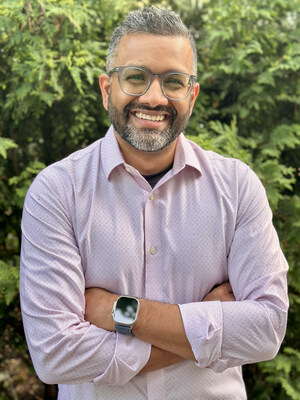
Vishal Kapadia, CEO of LineVision

Vishal Kapadia. He spends his days getting cautious utilities to trust a sensor that hangs near the wire and never quite reaches it.

40%
More line capacity
15 GW
Assets financed
2+ GW
Clean energy at Walmart
2025
Took the CEO seat

Reading the wire, not building it

Vishal Kapadia became chief executive of LineVision on June 10, 2025, taking over from co-founder Hudson Gilmer, who moved up to chairman. LineVision sells a specific and slightly counterintuitive product: sensors that hang near a high-voltage transmission line, never touch it, and use the readings to tell a utility how much more current the line can safely carry right now. The technical name is dynamic line rating. The practical result is up to 40% more capacity on wires that are already strung between existing towers.

The reason this matters got urgent fast. AI data centers, electrification, and new manufacturing are all pulling harder on a grid that takes years, sometimes a decade, to expand with new steel. Kapadia's pitch is that a large amount of capacity is already sitting on the lines, invisible, because the industry rates conductors conservatively and statically. A line rated for a hot, still afternoon has room to spare on a cool, windy one. Measure the weather at span level and you can hand that headroom back.

His strategic wrinkle is about who does the asking. Utilities adopt slowly, for good reasons, and LineVision has spent years proving the technology inside real operations. So rather than push harder on the utility, Kapadia wants to create demand pull from the people who need the power: data-center operators, large retailers, anyone waiting in an interconnection queue. Let the customer ask for the capacity, and the utility has a reason to say yes.

"We are deployed in utility operations today," he told Latitude Media shortly after taking the role. "The solution is proven, the value proposition is clear. And it's just a matter of needing to create pathways to ultimately accelerate deployment." That sentence is the whole job in miniature: the physics works, the sensors work, the customers are there. What's left is pace, and pace is the hardest thing to buy in the utility business.
Meeting the energy demands of the AI-powered transformation requires solutions deployed quickly while balancing affordability and reliability. LineVision's digital platform is essential to this transformation.
- Vishal Kapadia, on joining LineVision
10 mi
A Walmart or Sam's Club within 10 miles of most Americans - his old lever for EV charging
The mechanism

Why a sensor that never touches the wire is the point

1

Watch, don't touch

Contactless sensors read the line's position, temperature, and the wind around it. Nothing clamps to the conductor, so there is no outage to install and no physical connection to fail.

2

Add the weather

Span-level wind and temperature feed models of how much the wind is cooling the conductor. A breeze is free capacity the old static rating never counted.

3

Hand back the headroom

The utility gets a live, defensible rating instead of a worst-case guess. On a good day that can mean up to 40% more power moving over the same line.

The arc

Four stops, one question

Investment banker, developer, corporate buyer, now operator. At every stop the question was some version of the same one: how do you move more electrons, faster, for less money.

MORGAN STANLEY

Renewable energy investing

Led renewable energy investment and project finance activity, the money end of clean power.

ORSTED

CFO and CCO, onshore renewables

Ran both the financial and commercial sides of the onshore wind and solar business at one of the world's largest renewables developers.

2022 - 2025

SVP, Energy Transformation, Walmart

Built a new energy strategy for the retailer, oversaw more than 2 GW of clean energy, and launched a plan for a nationwide EV fast-charging network. Also served on the board of the American Council on Renewable Energy.

JUNE 2025

CEO, LineVision

Took over from co-founder Hudson Gilmer to lead the company's next phase of growth.

The receipts

Before the wires

Scale

15 GW financed

Led the acquisition, financing, or development of over 15 gigawatts of energy and mobility infrastructure across his career.

Exits

Two PE-backed exits

Drove several enterprise-level initiatives, including the successful exits of two private equity-backed companies.

Retail energy

Coast-to-coast charging

At Walmart, launched the plan to build EV fast-charging at thousands of stores by 2030, on top of the chain's existing stations.

Timing call

The 5% tipping point

Argued EV adoption accelerates once EVs pass 5% of new car sales, the pattern seen in Europe and China.

Framework

Access, cost, resilience, emissions

The four criteria he uses to judge energy decisions, and the four boxes dynamic line rating checks without new construction.

Education

NYU & UCLA

MBA from New York University; a bachelor's in Business Economics from UCLA.

Once EVs exceeded 5 percent of new car sales in other markets such as Europe and China, that has been a point where you really started to see things accelerate.
- Vishal Kapadia, on EV demand, while at Walmart

The human details

  • Lives in the Boston area and is, by his company's own bio, an avid Boston sports fan.
  • Spends his time outside work with his family.
  • Has worked every seat in the energy transition: the bank, the developer, the corporate buyer, and now the technology operator.
  • Sells a product whose best feature sounds like a flaw: it never touches the thing it monitors.

The aspiration

Get grid-enhancing technology deployed fast enough that the existing transmission system can absorb the surge from AI, data centers, and electrification, without waiting years for new lines nobody has time to build.

2018
The year LineVision was founded, now a leader in dynamic line rating
Follow the thread

Links

Share this profile

in / LinkedIn X / Twitter f / Facebook Instagram

Quick facts: Vishal Kapadia

Vishal Kapadia is the Chief Executive Officer of LineVision, a Boston-based company that bolts non-contact sensors to high-voltage power lines and, through dynamic line rating, squeezes as much as 40% more capacity out of wires already in the ground. He took the top job in June 2025 after co-founder Hudson Gilmer moved to chairman. Before LineVision he ran energy transformation at Walmart, where he built a coast-to-coast EV fast-charging plan and oversaw more than 2 GW of clean energy; earlier he was CFO and CCO of Orsted's onshore renewables business and led renewable-energy investing at Morgan Stanley. Across his career he has financed or developed over 15 GW of energy and mobility infrastructure.

Role
Chief Executive Officer at LineVision
Organizations
LineVision, Walmart, Orsted, Morgan Stanley, American Council on Renewable Energy (ACORE)
Nationality
American
Education
Master of Business Administration (MBA), New York University, Bachelor's degree in Business Economics, University of California, Los Angeles (UCLA)
Known for
Led the acquisition, financing, or development of over 15 GW of energy and mobility infrastructure assets, Directed the successful exits of two private equity-backed companies, Oversaw investment in more than 2 GW of clean energy capacity at Walmart

Last updated: