The most valuable thing Energy Impact Partners gives a founder may not be money. Imagine that founder has built software that predicts when a power line will fail, a battery that runs for days rather than hours, or a process that makes cement with far less carbon. The invention can work. The pitch deck can sparkle. Yet the real test begins inside a utility or industrial company, where procurement is cautious, regulation is thick, equipment must last and a failed pilot can be more than embarrassing. It can take down part of a grid.
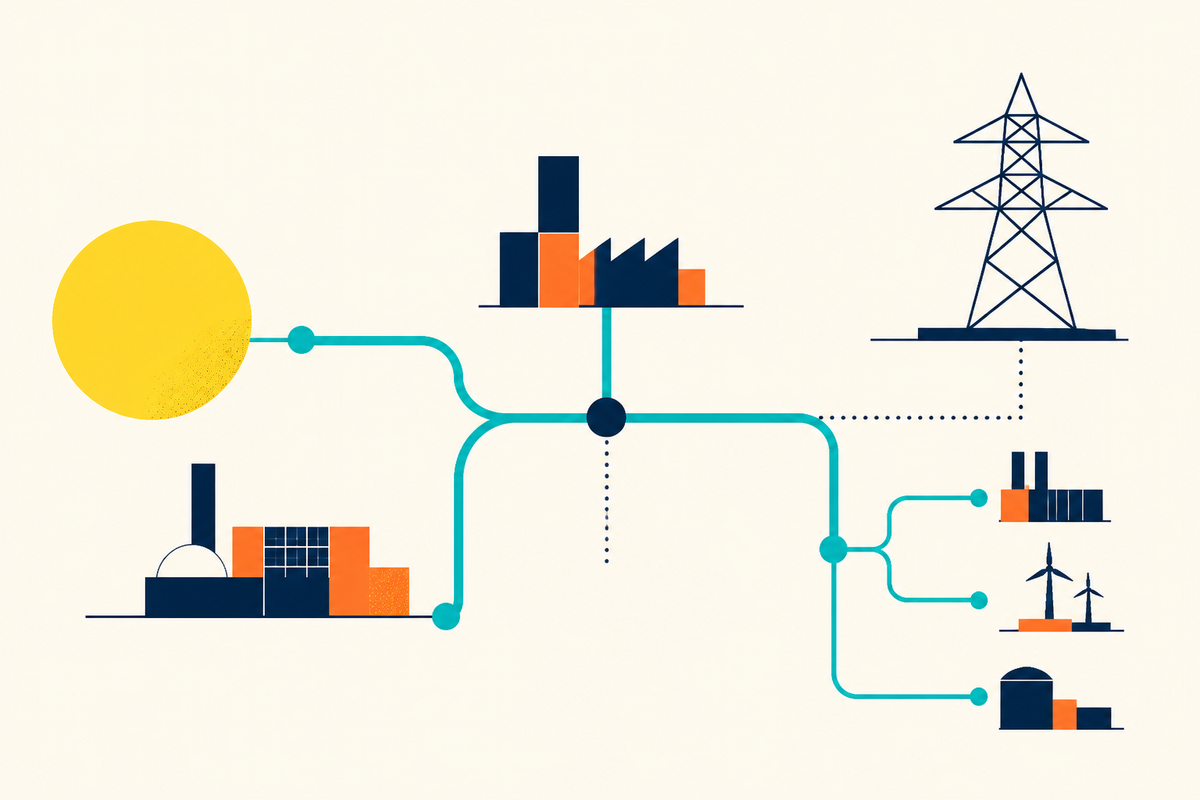
EIP was designed around that gap between a promising technology and a purchase order. The New York-based investment firm brings utilities and industrial companies into its funds as strategic limited partners, then connects them with entrepreneurs across the portfolio. Those incumbents supply capital, but also something rarer: operational problems worth solving, feedback from the field, pilot sites and, when the fit is right, commercial contracts.
Founded in 2015, the firm now says it manages more than $4.5 billion, works with more than 75 corporate partners and employs over 100 people across offices in the United States and Europe. Its strategies range from seed venture capital to growth equity, private equity and credit. The common product is a network built to move energy technology out of the slide deck and into infrastructure.
The staff reflects the proposition. Founder and managing partner Hans Kobler previously led energy technology investing at GE Equity and built a sensor company that went public. Co-founders Lindsay Luger and Michael Donnelly brought technology-investing and industrial experience; co-founder Joshua Feldman built the legal, compliance and operating machinery. Around them, EIP has assembled engineers, market researchers, former utility executives, policy specialists, investors and company operators. The mix is intentional. Evaluating a novel battery is one job. Understanding the interconnection queue, manufacturing plan, procurement cycle and customer economics that surround it is another. The firm's culture, at least as it presents itself, rewards people who can move between those conversations without confusing a technical breakthrough for a finished business.
The customers hiding inside the cap table
Most venture firms can introduce a startup to potential customers. EIP makes those customers part of the architecture. National Grid, Xcel Energy and Southern Company participated in the first closing of its original fund. Later partners have included Duke Energy, FirstEnergy, Microsoft and a wide range of utilities and industrial operators. The firm calls this its coalition model.
That distinction matters because energy is not a frictionless software market. A utility may need to understand how a product affects safety, reliability, ratepayers, regulators and existing systems before it signs. A startup may not know who owns the problem, which budget pays for it or how a trial becomes a fleet-wide deployment. EIP's commercialization and research teams can translate between the two sides.
The model has a flywheel quality. A successful deployment makes the corporate network more useful to the next startup. A larger portfolio gives the strategic partners a wider view of technical change. Each contract produces information about what buyers will actually adopt, not merely what investors find fashionable.
“Innovation at this scale doesn't happen in silos.”Hans Kobler, founder and managing partner
A fund family built around different kinds of risk
EIP is often described as a climate-tech venture firm, but that label misses the range. Its Flagship strategy focuses on commercially validated companies at an inflection point, including growth and mid-market private equity opportunities. Frontier moves earlier, backing deep-decarbonization technologies that may still carry scientific, manufacturing or market risk. Its portfolio has included long-duration storage company Form Energy, clean-hydrogen developer Electric Hydrogen, low-carbon cement maker Sublime Systems and fusion company Zap Energy.
Flagship
Growth and mid-market businesses ready to scale across energy production, distribution, software and services.
Frontier
Seed and early-stage science aimed at the stubborn emissions in industry, fuels and power.
Elevate
Early backing and credit for companies led by or serving groups underrepresented in climate finance.
Europe + Credit
A transatlantic climate portfolio plus flexible debt for more established energy businesses.
Elevate adds another problem to the map: who gets funded. The $111.9 million strategy backs companies and funds led by or focused on underrepresented and underserved groups. European funds give EIP a base for moving technologies between markets. Credit funds provide secured debt, unitranche and mezzanine capital to companies that may be too mature, too asset-heavy or simply ill-suited for another venture round.
This breadth is also the business model. EIP raises pools of capital from strategic and institutional investors, charges asset-management fees and participates in investment performance. Portfolio companies receive financing; limited partners seek risk-adjusted returns, technology intelligence and access to innovation. The platform sits between them, turning relationships into a service that can make the funds more useful than capital alone.
The metric after the meeting
Coalitions are easy to announce and hard to make productive. EIP's most revealing measure is not the number of introductions it hosts. It is what happens afterward. The firm's 2025 impact report said its platform facilitated more than 300 new contracts between portfolio companies and strategic investors during 2024. Cumulative bookings enabled by the network exceeded $3.4 billion.
Those figures are reported by EIP and should be understood as bookings the firm says its platform helped enable, not revenue earned by EIP itself. Still, they point to the practical problem the model is trying to solve. A pilot is interesting. A repeat contract tells you the technology has survived contact with a customer.
The firm also measures climate outcomes. Its 2025 report said portfolio companies had cumulatively avoided 53.7 million metric tons of carbon-dioxide equivalent since 2018. EIP publishes its methodology, including ownership-weighted calculations, because claiming credit for a portfolio company's entire impact would exaggerate the investor's role. The exercise remains full of assumptions, but the willingness to show the arithmetic is more useful than a green adjective.
What the portfolio is really selling
The companies are diverse, but their customers share a need to make physical systems perform better. Dragos protects industrial control systems from cyberattacks. Arcadia organizes utility data and energy-management workflows. Enchanted Rock develops onsite power and microgrids. FLO builds electric-vehicle charging networks. Aeroseal seals leaks in buildings. Other portfolio companies work on wildfire detection, grid analytics, heat pumps, geothermal systems, batteries, carbon management and low-carbon industrial materials.
For a utility, the value can be lower operating cost, improved reliability, better customer service, stronger cybersecurity or a way to integrate more renewable generation without destabilizing the network. For an industrial buyer, it may be cheaper heat, cleaner production, better energy data or a credible route to emissions targets. For a founder, EIP can help identify the buyer, pressure-test the product and navigate an industry where credibility accumulates slowly.
The competitive set shifts by strategy. Breakthrough Energy Ventures and Lowercarbon Capital are prominent alternatives in climate venture. Congruent Ventures and Clean Energy Ventures invest at early stages. Galvanize Climate Solutions spans venture and real assets. Corporate venture units offer direct industry access, while infrastructure and private-credit managers serve later-stage needs. EIP's difference is not that none of those firms has corporate relationships. It is the attempt to institutionalize a large buyer network across several forms of capital.
Now the grid has to feed the machines
The latest phase of EIP's story is less about the old debate over whether climate is fashionable and more about electricity demand. AI data centers, advanced manufacturing and broad electrification are asking the grid for more power. Utilities must add generation and transmission while keeping service reliable and bills tolerable. In October 2025, EIP closed Flagship Fund III at $1.36 billion, about 40 percent larger than its predecessor and the firm's largest pool yet.
That timing reframes climate technology as an operating necessity. Grid-enhancing software can defer expensive construction. Long-duration storage can make more generation usable. Flexible data-center loads, onsite power and predictive maintenance can reduce stress on existing assets. Cleaner production remains part of the mandate, but affordability, reliability and resilience now sit in the same sentence.
“The customer network can be more defensible than the checkbook.”The lesson inside EIP's model
The model still has tensions. Corporate partners can move slowly. Strategic priorities change with regulation, commodity prices and political cycles. A coalition does not guarantee a sale, and a large fund must find large outcomes. Technologies that touch the grid can require years of proof and substantial capital. EIP's answer is not to remove that complexity. It is to bring the people living with it closer to the investment decision.
That may be the firm's most useful idea. Climate investing is often narrated as a hunt for inventions. EIP treats it as a deployment system. The scientist, utility engineer, procurement lead, regulator, lender and growth investor all occupy different parts of the journey. Put enough of them in a repeatable network and the first customer meeting becomes less accidental. In energy, where equipment lasts for decades and trust moves deliberately, that is not a small advantage.