A hyperloop vehicle and a new employee’s first week would make an odd pair at a business conference. At Daybreak Ventures, they belong on the same portfolio page. Add a surveying drone, charity fundraisers and energy data, and the assortment starts to look less like a sector bet than a collection of jobs that need doing. Someone has to test the transport system. Someone has to make the software useful. Someone has to help the business reach its customers.
That is the interesting proposition behind this Dutch investment and venture-support company. Daybreak’s offer combines money with coaching, business development and digital implementation. The firm, based in The Hague, invites entrepreneurs to describe both their business and its challenges. There is an appealingly practical assumption inside that invitation: ambition is easier to help when it comes with a specific problem attached.
Its portfolio also supplies a reason to keep the language grounded. Some of these ventures address everyday operating frustrations. Others take on infrastructure that requires years of development. Their public histories include a product demonstration, a service becoming freely available and the bankruptcy of a transport developer’s operating entity. The distance from useful idea to durable business can be considerable.
Seven names, several kinds of work
Daybreak lists Hardt Hyperloop, People Marketing, Rockstart, ASIF Ventures, Atmos UAV, Pace Lab and NetAnders. Read across those names and a pattern emerges: the firm is interested in the machinery around change as well as the invention itself. Its portfolio includes organizations that train people, explain data and help other entrepreneurs obtain their first backing.
That makes its market position a blend of investment and operating support. A founder comparing options could otherwise assemble help from an angel investor, a coach, a business-development adviser and a digital agency. Daybreak puts those capabilities within one proposition. The attraction is the possibility of connecting decisions about money with decisions about what to build and sell.
A successful test still needs a business
Hardt makes the stakes tangible. In September 2025, the transport developer reported that its vehicle had reached 85 km/h and completed a lane switch at the European Hyperloop Center in Veendam. The test took place inside a 420-meter facility. Hardt said it had conducted more than 750 test missions since its first successful test there the previous year.
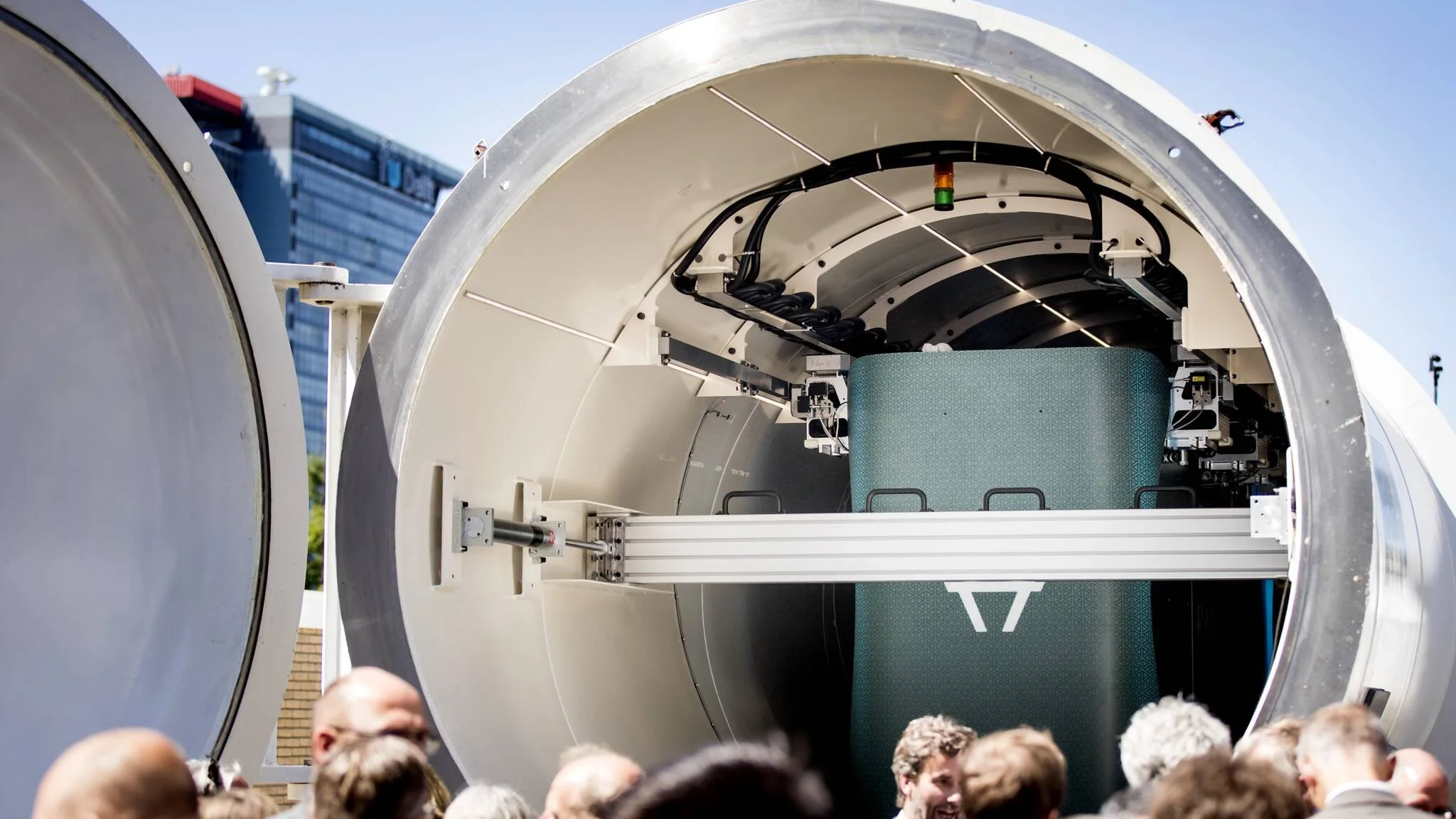
The engineering changes were concrete: a 45 percent reduction in bogie weight, 50 percent more thrust and integrated magnetic guidance and propulsion. A switch matters because a transport network needs vehicles to choose routes. Hardt’s design uses no moving parts in the switching infrastructure. The demonstration answered a development question; the proposed longer routes remained future steps.
There was a substantial bill behind the testing environment. A Hardt Growth Forum presentation put investment in the European Hyperloop Center at approximately €10 million. That figure describes the facility, rather than Daybreak’s contribution or the price of a commercial route. It is a useful measure of the resources required before a passenger can buy anything resembling a ticket.
Then came a different announcement. On March 4, 2026, Hardt Group confirmed that a court had declared Hardt B.V., one of its operating entities, bankrupt. A trustee was appointed, and the group said it was exploring ways to continue the entity’s activities. This was a specific corporate development, not a declaration that every part of the group had ceased to exist.
For anyone reading an investment portfolio, the sequence is instructive. Technical progress and financial survival answer different questions. A better vehicle can still require more testing, certification, infrastructure partners and committed customers. A milestone deserves attention on its own terms; it cannot carry the whole commercial argument.
A lane-switch demonstration inside a 420-meter facility.
Accelerate155m
Switch100m
Stop
The drone has a more immediate assignment
Atmos UAV brings a different rhythm to the portfolio. Its Marlyn surveying system combines vertical takeoff with fixed-wing flight. The practical idea is straightforward: get airborne where a conventional runway would be awkward, then collect aerial data over the survey area. The equipment serves professional mapping work rather than the casual pursuit of a picturesque holiday video.
A published Marlyn Cobalt specification sheet calls for a two-by-two-meter takeoff and landing area and lists a five-minute setup time. It gives a maximum flight time of 50 minutes, dependent on environmental conditions, and describes in-house flight-planning and geotagging software. Those details matter because the useful product is the whole field workflow: planning, flying and bringing back usable data.
The same document makes the operating boundaries visible. Atmos advises against flying in fog, rain or snow and specifies temperature restrictions. For a surveying team, that is part of the buying decision. A drone earns its place through the work it can reliably complete under the conditions where that work happens.
When the energy data became free
NetAnders offers another route from business idea to public use. In October 2018, Gasunie described an application developed by its subsidiary for FrieslandCampina. It used information about solar panels and wind turbines, alongside weather data, to calculate renewable generation associated with the dairy cooperative’s members. An abstract energy-transition ambition became something people could inspect.
The underlying challenge was visibility. Renewable production is distributed across roofs, farms and other sites; turning it into a coherent picture takes both modeling and presentation. Developer Dycon’s account of the related Energieopwek application describes an expansion beyond solar, wind and biogas to additional energy sources, with refreshed information and views by day, month and year.
On March 21, 2024, Gasunie and TenneT launched the Nationaal Energie Dashboard. The service brought together historical, current and forecast energy data, available for download and through an API. Gasunie said RTL 4 and Weeronline were already using the data for energy-weather reports. The potential audience had grown beyond someone commissioning a particular dashboard.
NED’s customer guidance explains the organizational change: NetAnders ended its activities, while its data-services team and customers moved to the new operation. Services became free. Existing users were asked to accept updated terms and change the name in their API query from NetAnders to NED. Even a major institutional transition can arrive at a developer’s desk as a small edit to a request.
The stated reason for free access was broader participation in the energy transition, from large companies to students and individuals. That is a change in the service’s economics, rather than evidence of a change in Daybreak’s investment philosophy. For users, the copyable opportunity is concrete: explore the dashboard’s data before building another collection process from scratch.
New employees, meet the merchandise shop
Pace Lab’s contribution is smaller in scale and pleasantly specific. In a June 2019 industry interview, co-founder Redeëet Negate presented Pace Onboarding as software for helping employees settle into an organization. It combined learning, digital signing, surveys, social features and progress tracking with something more playful: an online merchandise store.
Employees could earn credits by completing onboarding steps and use them for branded merchandise. The intended customer was an organization with a continuing flow of new hires that wanted consistent, manageable induction. The demonstration framed onboarding as both an administrative process and an introduction to the employer’s identity.
There is a useful design lesson here, though the mechanism deserves to be tested rather than admired from a distance. Rewarding completion can make the next step visible. It does not by itself tell an employer whether a recruit understands the job. Anyone borrowing the idea should pair progress measures with evidence that employees can actually perform the work.
People Marketing addresses the human side from another direction. Its recruitment site describes training, coaching and flexible working arrangements for sales promoters. Its project list includes charities such as War Child, Alzheimer Nederland and Oxfam Novib. This places face-to-face fundraising alongside the portfolio’s technical businesses, with recruitment and daily execution central to the service.
Backing the people who back founders
Rockstart and ASIF introduce another layer. Both support entrepreneurs themselves. Rockstart’s current offer combines investment, mentors and market introductions across Energy, AgriFood and Emerging Technology, with support extending from pre-seed toward Series B. Its inclusion gives Daybreak’s portfolio a connection to an organized founder-support community.
ASIF occupies a more narrowly defined starting point. Founded by students in 2017, it backs student and recent-graduate founders connected to the University of Amsterdam and Vrije Universiteit. Its website reports investment in 25 startups. An April 2019 account described a €1 million fund and a €25,000 convertible loan to sustainable-fashion website Project Cece. Those are ASIF figures, not Daybreak fund statistics.
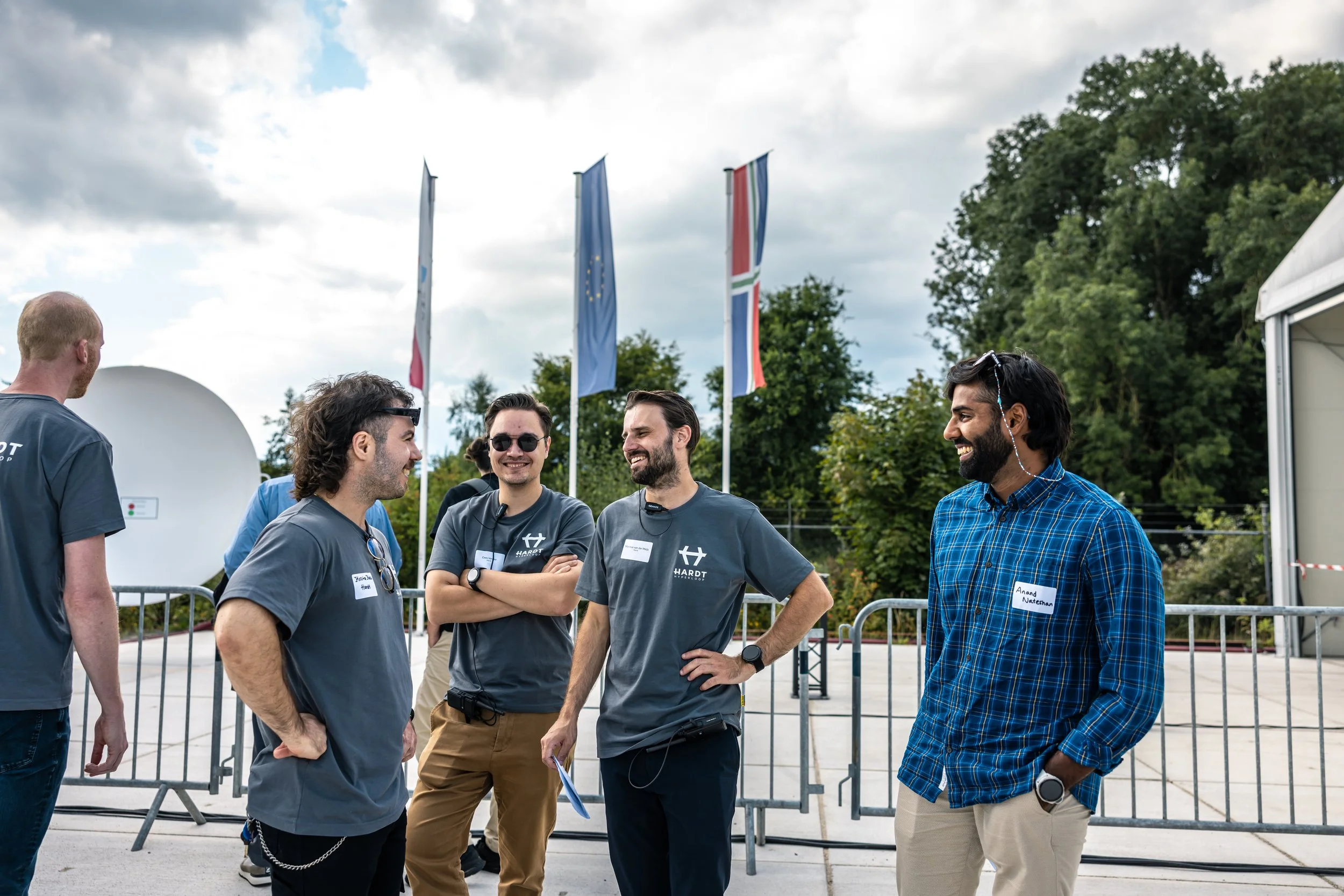
Bring the obstacle, not just the ambition
“Send us a description of your business and its challenges”
Daybreak Ventures
For a prospective founder, the sensible response to that invitation is a brief account of the customer, the problem, what has already been tried and the next result the team needs to achieve.
That last detail gives a conversation somewhere to go. A product prototype, an introduction to a buyer and coaching for a founder are different assignments. State which one matters now, who will own the work and how progress will be recognized. Treat that as a practical way to use the offer, rather than a promise about how Daybreak selects ventures.
The portfolio’s variety is most useful when it sharpens those distinctions. A student’s first round, a new employee’s induction and a transport demonstration each need a different kind of support. Daybreak’s proposition invites founders to identify the missing piece. The quality of the match will depend on how precisely both sides can name it.