Brian P. McVeigh had been going to the January industry gathering in San Francisco for more than a decade. There was, however, one small omission in his attendance record. He had never entered the official JPMorgan conference itself. The meetings he needed were happening elsewhere. As business anecdotes go, it has the advantage of being funny without requiring a punchline. The conference was the reason to come to town. The people were the reason to stay busy.
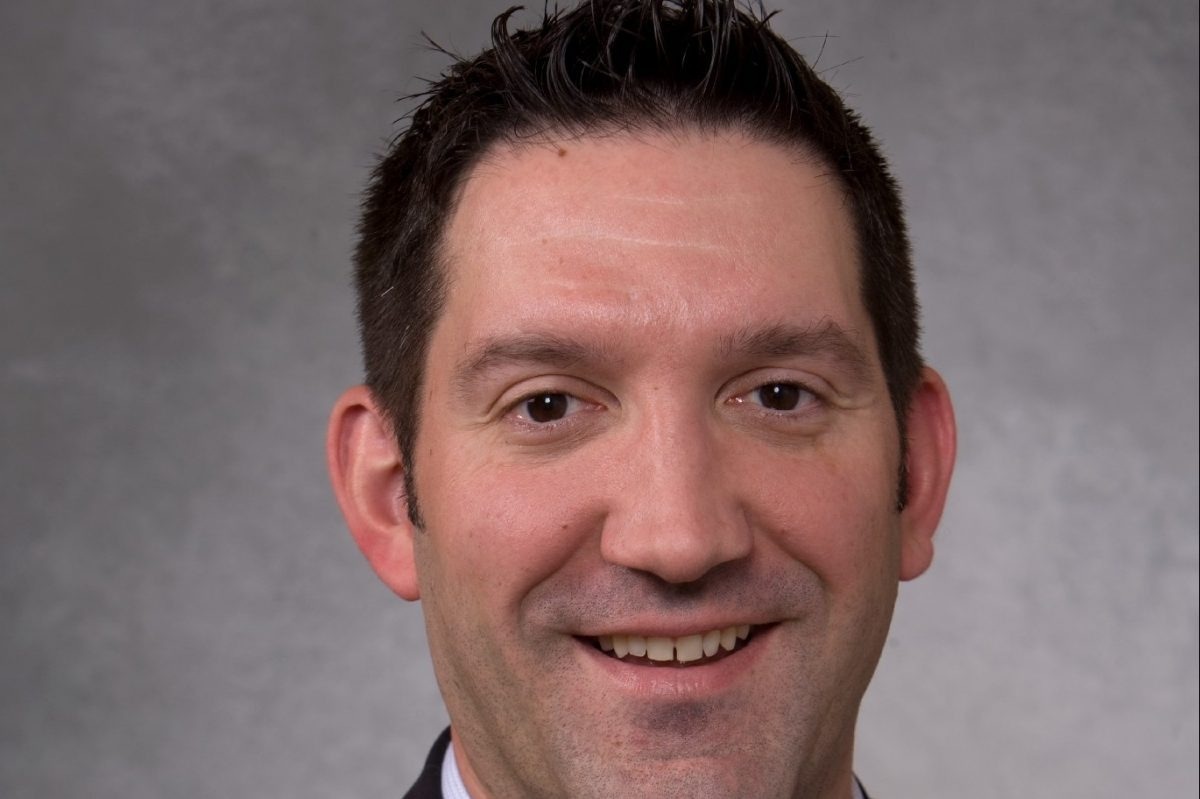
That detail belongs near the beginning of McVeigh’s story because so much of his career concerns the arrangements around an enterprise: who joins it, who funds it, who partners with it and who agrees to what. He is now chairman, chief executive officer and co-founder of Code Biotherapeutics. Before taking on those responsibilities, he spent a quarter-century inside GSK, eventually leading worldwide business-development transactions and investment management.
His route into that world began with a college internship. There is something pleasingly unceremonious about the starting point. The later titles are long enough to require a generous business card. The first job required being a student.
An education that stayed near home
McVeigh’s education makes a compact tour of the Philadelphia area. At La Salle University, he earned bachelor’s degrees in accounting and finance. He followed them with an MBA concentrated in finance at Villanova. Further study took him to Saint Joseph’s for a post-MBA certificate in pharmaceutical marketing and to Wharton at the University of Pennsylvania for a certificate of professional development.
Four institutions, several disciplines, a remarkably consistent region. The qualifications also extend beyond university: he is a Certified Public Accountant, Certified Management Accountant and Certified Licensing Professional. Accounting asks what the numbers mean. Management accounting connects them with operating decisions. Licensing concerns the terms on which one organization can use what another owns. These are practical subjects for someone whose working life would involve bringing organizations into agreements.
The Philadelphia connection runs beyond the classroom. When he took the chief executive role at KBP Biosciences, he spoke publicly about wanting to help grow the region’s biotech community. The ambition was both personal and professional. His subsequent work would connect him to an international investment firm, but the regional reference point remained visible.
- La SalleAccounting + finance
- VillanovaMBA in finance
- Saint Joseph’sPost-MBA marketing
- WhartonProfessional development
Twenty-five years inside the machinery
GSK gave McVeigh a long apprenticeship in how a large organization works. His responsibilities crossed finance, marketing, corporate functions, research and development, and business development. That range matters to the shape of the career. A transaction can look different from each department’s chair. The budget, the commercial plan and the proposed agreement all have to belong to the same company by the time the discussion ends.
The progression was gradual. From 1992 through 2004, he moved through roles of increasing responsibility. He then held directorships involving transactions, ventures and merger strategy. Vice-president roles followed. From October 2011 until November 2017, his remit covered worldwide business-development transactions and investment management.
By then, he had personally led the assessment and negotiation of more than two dozen significant transactions. Among the acquisitions were Sirtris Pharmaceuticals, Domantis and Genelab Technologies. His global team’s remit was wider still: he provided oversight and advice on more than 100 business-development transactions. The distinction between his own negotiations and the team’s total is part of the achievement. Managing the people making agreements is a different job from making every agreement yourself.
His investment responsibilities brought another set of relationships into view. The portfolio included equity interests in collaboration partners and commitments to venture funds. This put him in contact with the people allocating capital as well as those seeking it. For a future founder, those are useful seats from which to observe a room.
“I’ve never once actually set foot inside the JPMorgan conference itself”
Brian McVeigh, 2016
The San Francisco anecdote catches that working world in miniature. His team used its packed meeting schedule to encounter companies, investors and potential partners. An official conference badge could explain why everyone was in the same city. It could scarcely explain the whole business of getting them together. The work had spilled into the surrounding hotels, where the calendar carried more authority than the programme.
The move to the smaller table
Leaving GSK changed the scale of McVeigh’s responsibilities. He became chief executive and a board director at KBP Biosciences in December 2017, serving until April 2018. The appointment accompanied plans to establish a Philadelphia-area headquarters for a company with roots in China. The task involved connecting an existing organization with an American base and prospective collaborators.
It was a brief chapter, which is worth keeping brief in the telling. His next appointment was effective May 29, 2018: chief business officer at Zafgen. He reported to chief executive Jeff Hatfield. The job brought together corporate strategy, business development and new-product planning.
Even the working arrangement at Zafgen reflected his regional ties. The company was based in Boston, while his appointment allowed him to work primarily from Pennsylvania and travel to headquarters regularly. It is a small logistical detail, but careers are made out of those as well as titles. Geography had to fit the job.
His Zafgen appointment also made explicit the need to balance a full-time executive position with outside responsibilities. The employment terms allowed board service with approval and an advisory role with IP Group. Such provisions are easy to pass over in a career story, yet they describe a real organizational problem: an executive may bring connections from several institutions while still owing a particular company his working time. The agreement put those boundaries in writing. It is another glimpse of the administrative architecture beneath the public title, where reporting lines, travel arrangements and outside commitments all need a place. The offer letter had to accommodate a working life that already involved more than one organization.
At Zafgen, he participated in the company’s July 2018 follow-on offering, which raised $69 million in gross proceeds. In 2020, he led the merger with Chondrial Therapeutics that formed Larimar Therapeutics. Financing and merger work demand different decisions, but both leave a company with a changed set of possibilities and obligations. His smaller-company chapter involved both.
- 1992-2017GSK / finance, transactions and investment management
- 2017-2018KBP Biosciences / chief executive and director
- 2018-2020Zafgen / chief business officer
- By July 2020Code Bio / co-founder and executive chairman
- April 2021Code Bio public financing announcement / chairman and CEO
A founder on both sides of the financing conversation
By July 2020, McVeigh was identified as a co-founder and executive chairman of Code Bio. That same month, 4BIO Capital announced his appointment as a US venture partner. The London-based firm wanted to strengthen its American presence. His experience and Philadelphia network were part of the reason it gave for bringing him aboard.
These overlapping roles put him in two kinds of conversation. At an investment firm, the question is which company deserves backing. At the company, the question includes how to organize that backing into a business. McVeigh’s current affiliations still include 4BIO, Code Bio and the chairmanship of Genisphere. The titles place him across investment, governance and day-to-day executive responsibility.
Code Bio’s public financing launch arrived in April 2021 with a $10 million seed round. 4BIO and UPMC Enterprises co-led it. New Enterprise Associates and Takeda Ventures were among the other participants. The announcement identified McVeigh as co-founder, chairman and CEO, and described 4BIO’s involvement in the start-up process as well as the financing.
The governance changes were concrete. Dima Kuzmin of 4BIO, Rob Lin of UPMC Enterprises, Ed Mathers of NEA and Victor Stone of Takeda Ventures were named as board appointees. An investor list can look like a row of logos. Here it also meant people joining the company’s decision-making structure. The relationship continued after the money arrived.
In June 2022, Code Bio announced a $75 million Series A led by Northpond Ventures. New investors included Amgen Ventures, Hatteras Venture Partners and UCB Ventures, alongside existing backers. Diana Bernstein of Northpond was to join the board. The financing also covered expansion of manufacturing and operations, putting organizational work alongside the company’s other plans.
Announced round sizes in US dollars. Bars share a common scale.
The work after the handshake
McVeigh also appears in public as someone asked to discuss the business of building companies. In September 2022, he promoted a panel he would moderate on innovative partnerships, with executives including Sabrina Johnson, Jason Kelly and Jennifer Petter. In February 2023, he joined Doug Carlson and Mike Tusche for a podcast panel about early-stage venture fundraising.
Those subjects fit the documented career closely. Partnerships require organizations to make room for each other. Fundraising requires a company to explain what it intends to do with someone else’s capital. His professional record has repeatedly put both questions on the agenda. He later presented Code Bio at the 2023 BIO convention and promoted another company presentation in October 2024.
There is no need to make the internship sound prophetic. A student starting work in 1992 could hardly have carried a complete plan for the next three decades. The visible sequence is interesting enough: financial training, a long corporate career, responsibility for transactions, smaller-company leadership, then founding and investing.
What changes across that sequence is who has to answer the next question. The negotiator has terms to settle. The investment manager has a portfolio to oversee. The chief executive has an organization to run. McVeigh’s present title gathers several of those responsibilities into one line. After years spent helping determine what companies would agree to, he now helps determine what his own company will do next.