Scott Nissenbaum quit a full-time job to take a six-month internship. Eleven years later, he finally left venture capital to start a company of his own. A temporary position had become a profession, and then the profession had become something he was willing to give up. His career contains a useful warning for anyone who insists on knowing exactly where an internship will lead.
He has described those changes as calculated risks: accepting a smaller immediate position in exchange for a different future. The interesting word is calculated. There is nothing especially romantic about surrendering a salary or becoming responsible for a startup. The numbers still have to work. So do the people. Opportunity, in this telling, comes with an invoice.
Today Nissenbaum is president and CEO of Ben Franklin Technology Partners of Southeastern Pennsylvania. His work concerns entrepreneurs making their own versions of that bargain. They have technology, ambition, and a reason to believe a business can exist. He helps run an institution that supplies early capital and connections, with a particular interest in what those businesses will mean for Philadelphia.
A shorter title, a longer education
Before venture capital, there was commercial mortgage financing. Nissenbaum started a business while he was an undergraduate and used it to help pay for his MBA. Finance was already practical work by the time it became his graduate qualification. He earned his bachelor’s degree at Penn State and his MBA at Saint Joseph’s University, both in finance.
At Novitas Capital, he spent eleven years investing in young technology businesses. The firm was a $235 million family of early-stage funds. His work included fundraising and board responsibilities, with companies ranging from Traffic.com to EZ Prints and ImageTree. These were different businesses, each with its own product, customers, and problems. A board seat provided a continuing education after the investment decision.
He also took that experience into a classroom. In 2007, he taught Wharton’s graduate venture-capital course. That is an agreeable pairing: explaining the logic of investing to students while working with companies whose development could be rather less orderly than a syllabus. Teaching gives a subject chapters. Running a company has a habit of rearranging them.
The internship matters because it introduces a pattern that continued. Nissenbaum did not describe his career as one enormous wager. He described a sequence of smaller moves, each requiring him to accept uncertainty and learn from the result. The next move would take him from evaluating other people’s plans to answering for one himself.
“It wasn’t one risk.”
Scott Nissenbaum, on his career decisions
The trees had a balance sheet
Finite Carbon turned his attention to forests. As its co-founder and president, Nissenbaum worked on a business that helped landowners develop carbon offsets. The commercial proposition depended on keeping trees standing and accounting for the carbon they stored. For a finance professional, a forest could hold more than timber value. Getting paid for that other value required an entirely different chain of work.
In 2009, he was explaining the company’s model from Wayne, Pennsylvania. Evaluating a project could be expensive: he put a typical cost near $200,000, with large tracts potentially costing more than $1 million. Finite Carbon supplied capital for the process and took a share of the offsets after a project was registered and approved. Its payment depended on getting the project through.
The practical steps were substantial. A forest inventory had to become a carbon model and management plan. A project needed a suitable registry and protocol, independent verification, and eventually buyers. The team combined finance with forestry expertise, including Sean Carney, Matt Delaney, Sterling Griffin, and Robert Verratti. Nissenbaum had previously chaired ImageTree, a forest-technology company, so the subject arrived with some professional connections already attached.
This part of his career makes the later investor easier to understand. He had encountered a market in which an appealing idea still needed measurement, procedure, money, and a customer. A tree cannot hurry a registration process because a founder has a compelling pitch. The business had to accommodate the world as it actually operated.
Philadelphia gets another kind of fund
Ben Franklin announced Nissenbaum’s appointment as chief investment officer in March 2016, effective February 29. He had already served on its Technology Advisory Committee for IT investments. He also brought experience working on debt financing with Hercules Technology Growth Capital and Merion Investment Partners. Joining the staff continued an existing relationship with the organization.
RoseAnn Rosenthal, then president and CEO, pointed to his experience with companies, venture-capital knowledge, professional relationships, and commitment to the region. Those attributes describe a job that extends beyond selecting investments. A young company can need help with financing, introductions, and decisions long after its first check has arrived. The institution needed someone familiar with several parts of that work.
In February 2019, EPAM announced it would anchor the initial $15 million close of the GO Philly Fund. The new regional fund was designed for seed and early-stage technology companies and announced with a $50 million target. That target described an ambition for fundraising; it was not a statement that the full amount had already been collected.
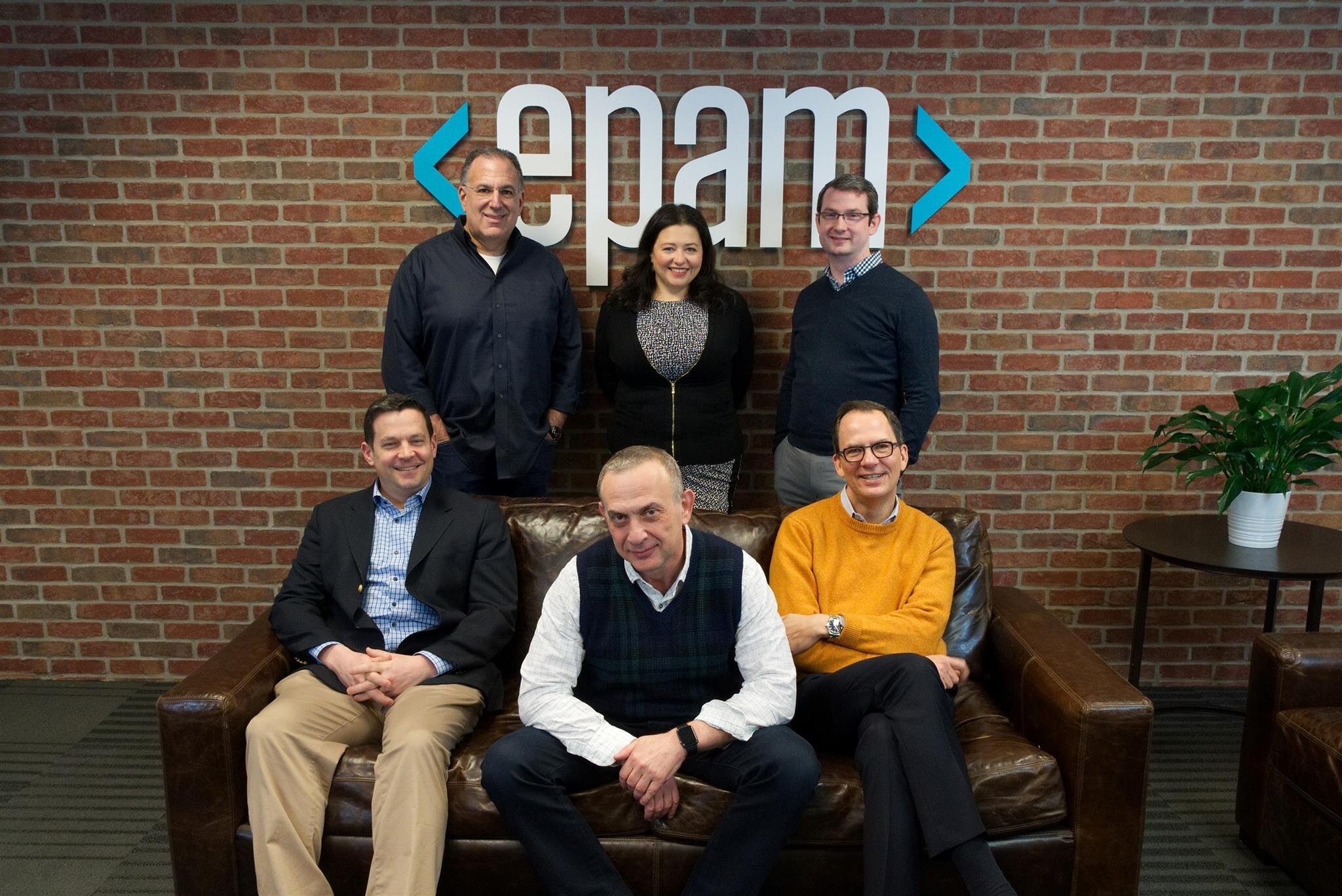
For Nissenbaum, who helped launch Ben Franklin’s first for-profit fund, this added another way to bring capital to the region. EPAM’s participation linked a local investment effort with an established global technology business headquartered nearby. The photograph of the teams together has the familiar furniture of a corporate announcement. Behind the sofa and smiles sits a practical question: who will put money into the next set of companies?
The next check is a different problem
When Rosenthal’s succession was announced in June 2020, Nissenbaum was named to become president and chief operating officer that July, with the CEO transition planned for January 2021. Rosenthal had led the organization for twenty-five years. Taking over meant inheriting an institution built through other people’s work, partnerships, and trust, rather than beginning with an empty desk.
His own record by the succession announcement included helping expand the portfolio by more than one hundred companies, refining investment processes, and managing co-investment partnerships. These are less photogenic accomplishments than a ribbon cutting, but they affect how an organization handles the next founder through the door. Process can determine whether experience becomes useful to somebody else.
That same year, Nissenbaum, Rosenthal, and marketing executive Jason Bannon were included among Philadelphia’s RealLIST Connectors. The recognition concerned people who linked others in the local technology community. It offers a useful description of the work: knowing people has value when those people can be brought into a conversation that moves a business forward.
In an October 2025 interview, Nissenbaum identified a persistent funding gap. He estimated that Philadelphia companies raised about 80 percent of their Series A and Series B capital from outside the region. Seed support could help a company begin. The next stages often required a much wider search. In his account, supporting portfolio businesses meant spending considerable time helping them make those next connections.
An investor returns to the unit price
At the 1PHL Startup Summit during Philly Tech Week in 2026, Nissenbaum joined Brett Topche and Ellen Weber for a discussion moderated by Sylvester Mobley. The panel considered the decisions and missteps involved in raising venture capital. Its themes included execution, a clear route to profitability, and the need for durable relationships with investors. A clever product still had to become a functioning business.
The event put him among other people working on the same regional problem from different institutions. It also returned to a familiar tension in startup life: a technology can occupy all of a founder’s attention while the arrangements that keep the company alive receive less. Fundraising brings those arrangements into view, sometimes rather abruptly.
His July 2026 article, The Economics of Tokens, approached AI through another familiar habit: identifying the unit around which a market operates. In introducing it, he recalled mortgage securitization, the dot-com cycle, RFID, carbon credits, and blockchain. Tags, tons, transactions, and tokens supplied different ways of asking what a new market costs.
That continuity is more revealing than a list of fashionable sectors. He has moved between several markets, yet his published explanation returns to measurement. With carbon, the unit was a ton. With AI, he turns to tokens. The technology changes, and an investor still needs a way to examine the economics underneath the enthusiasm.
A city measured in continuing businesses
Ben Franklin’s 2025 impact report supplies a concrete view of the organization he leads: $6.5 million approved across twenty-eight companies and a portfolio of 188 active businesses. It recorded 259 jobs created and 2,036 retained, alongside $521 million in capital leveraged by the portfolio. These are organizational and portfolio results, reflecting founders, staff, partners, and investors working together.
The report also describes a move to Center City Philadelphia. Nissenbaum presented the new location as a way to be closer to entrepreneurs, universities, investors, and partners. Geography remains part of the work even when a company’s market is much larger. An introduction can happen online; an institution still chooses where to put its door.
Outside work, his public biography lists three children, lacrosse, racquetball, Philadelphia sports, and an enthusiasm for Penn State. These are ordinary loyalties beside a career spent considering unproven businesses. The person asking what comes next also has teams he follows without requiring a pitch deck.
The six-month internship looks different from this end of the story. It began as a change in his own prospects. His current work involves helping other people find room to build theirs. There is no tidy finish to that task. Another company needs a partner, another funding round needs an introduction, and another promising idea needs enough time to become a business.
Ben Franklin’s 2025 organizational and portfolio figures.