Backstage Capital has a wonderfully inconvenient answer to the claim that venture investors cannot find enough promising founders from underrepresented groups: a portfolio. Its website counts 200 companies. Finding people to back, it turns out, was possible. Financing the organization doing the backing proved considerably harder.
That tension makes the Los Angeles firm worth watching. Founded by Arlan Hamilton in 2015, Backstage invests in businesses led by women, people of color, and LGBTQ+ entrepreneurs. Its proposition is commercial: investors who repeatedly search the same circles can miss valuable companies. Backstage built a business around looking elsewhere, then encountered its own version of the fundraising problem.
There is an origin story, a crowdfunding experiment, an accelerator spanning four cities, and a management partnership. There are also retrenchments. Read together, they offer something more useful than a tidy founder legend: a view of the distance between identifying an investment opportunity and building a firm that can keep pursuing it.
The people were already there
Hamilton arrived in venture from the music business, without the conventional résumé of a fund manager. She built Backstage while experiencing homelessness. Her biography made the story unusual; the investment argument was straightforward. A founder’s familiarity to investors is a poor substitute for understanding the business.
At SXSW in 2019, she described the entrepreneurs she wanted to finance: “The people who I was describing existed already.” That observation is the useful starting point. Backstage did not need to manufacture entrepreneurial ambition among people excluded from familiar networks. It needed to find their companies, evaluate them, and secure capital to invest.
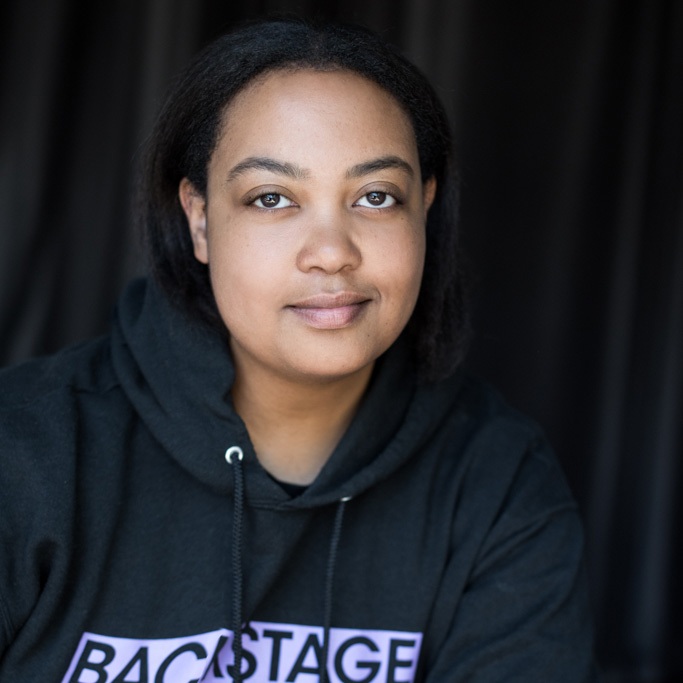
Its branding carries traces of her earlier career. Portfolio companies are Headliners. The team is Crew. The newsletter is The Mixtape. In an industry fond of naming funds after mountains and Greek concepts, there is something pleasantly literal about giving the entrepreneurs top billing.
The vocabulary also describes the relationship the firm wants to have with founders. Capital is part of the offer; introductions, advice, and a visible association with an investor are part of it too. Those benefits become especially relevant when a founder lacks the informal network that supplies other entrepreneurs with their first meeting.
A portfolio, not a single industry
Backstage’s organizing principle is who gets considered. Its holdings span consumer businesses, software, health, education, and hardware. The portfolio directory includes A Kids Company About, a children’s media and commerce business; Dollaride, focused on communities underserved by public transport; and Freeman Capital, offering financial planning and wealth services.
That range matters. A diversity-focused investor is not automatically a specialist in one product category, nor must every portfolio company sell an explicitly social-impact product. The business still needs customers. The founder still needs an explanation of why those customers will buy, how the company will grow, and what investment can accomplish.

Backstage sits among early-stage funds, angel networks, and accelerators competing to spot promising businesses before they become obvious. Its difference is an explicit founder-focused search and a community built around it. A generalist fund might encounter the same company; Backstage has made seeking overlooked founders part of its public mandate.
The firm consequently serves two constituencies. Entrepreneurs want financing and useful help. Investors want exposure to companies capable of producing financial returns. The mission connects them, but it cannot erase the demands on either side. A compelling founder story must eventually become a durable business, and a fund’s investment thesis must survive its own expenses.
What the first check could buy
Backstage’s published historical FAQ describes investments usually around $100,000, often joining rounds with terms already established. It lists several financing instruments, including convertible notes and priced equity. These are investments, not grants. The economic cost to a founder depends on the agreement and the ownership ultimately issued.
The accelerator made the exchange particularly concrete. Its launch offer was $100,000 for 5% equity. Over three months, participants were to receive mentorship, resources, and connections that helped them reach a meaningful business milestone. The first cohort included 24 companies across Detroit, Los Angeles, Philadelphia, and London.
The geographic spread was part of the design. Local facilitators could help founders navigate the place where they were building, while the wider organization could introduce people beyond it. Backstage’s stated accelerator values emphasize both local ecosystems and global networks. The program page currently lists applications as closed, so those historical terms are not a standing offer.
For a founder reading the story today, the practical move is to identify a specific next milestone before approaching any investor. A check is easier to discuss when it pays for a defined experiment, hire, or product release. Backstage’s founder resources and portfolio can help entrepreneurs understand its interests; they should check the relevant opportunity before building a fundraising schedule around it.
The fund had a fundraising problem
By 2019, an early constraint was visible. A planned $36 million fund focused on Black women founders failed to come together. Axios reported that Hamilton said two anchor investors had fallen through, while a separate $5 million operating arrangement with the Renault-Nissan-Mitsubishi Alliance also failed to materialize. Backstage cut costs and emphasized its accelerator model.
The sequence is instructive: commitments at the top of the financing chain affected what the firm could do below. Discovering founders does not produce a management budget by itself. Nor does publicity automatically persuade the institutions and wealthy investors that finance venture funds to commit money.
In 2021, Backstage pursued another route through a Republic crowdfunding offering. It raised approximately $5 million for the management-company business. Republic lists 6,749 investors in the campaign, which closed that April. This gave members of its audience a way to participate in the firm’s economics.
The distinction is essential. An interest in a venture manager is different from owning shares directly in each startup it supports. Backstage Crowd, its syndicate, was another arrangement again: participants could choose individual deals. The firm’s public materials also directed non-accredited investors toward selected crowdfunding opportunities hosted by third parties.
By June 2022, Backstage had reduced its staff from 12 people to three, after narrowing its investment activity to existing portfolio companies. The reduction showed how much pressure remained. A firm can have a long list of investments and still face a shortage of money to employ the people supporting them.
Later that year, KingsCrowd described a different initiative: Backstage’s $3 million Flex Fund II. The published plan called for roughly 30 early-stage investments, with $100,000 checks, a one-time 5% management fee, and 25% carry. Those dated terms provide a useful example of how specific vehicles turn the broader mission into a portfolio and an economic agreement.
The business behind the mission
Backstage’s public filing describes income from management services and investment-related profit sharing. That creates a timing problem familiar to venture firms: operating expenses arrive regularly, while investment proceeds depend on events that may take years. A growing portfolio can create more work well before it produces cash.
The crowdfunding issuer’s 2022 financial statements, included in its 2023 annual report, contained a going-concern note tying continued operations to additional financing and profitability. That is a dated disclosure about a particular entity. It also helps explain why the way Backstage finances itself belongs in the same story as the companies it finances.
Finding the founders and financing the fund are separate jobs.
The central tension
For someone trying to copy the approach, the transferable idea is a disciplined search where others have spent less time looking. The harder requirement is financing the search, the diligence, and the years of support afterward. A large audience can be helpful. It cannot be entered into an operating budget as committed capital.
A bigger partner, a different job
In December 2024, Hamilton announced that she would move into a chairperson and advisory position. The accompanying partnership with 360 Venture Collective proposed a significant stake in Backstage’s management entity, shared operations, and additional capital. Inc. reported that Hamilton described the transition as something she had been considering for some time.
The announcement also set out a proposed $200 million fund for 2025 and a shift away from micro-funds toward more concentrated conviction in opportunities with routes to acquisition or public markets. That figure describes the announced plan. It should not be read as a completed fundraise or as money already invested.
The operational relationship continued to appear in public during 2026. Backstage promoted 360 Venture Collective’s fellowship, advertised to begin August 10, with work involving investment research, fund operations, and portfolio support across a platform including Backstage and BuenTrip Ventures. It is a concrete example of the broader working arrangement.
Hamilton’s stated ambition was to build an institution that could continue beyond her. The partnership changes who carries the work without abandoning the original population of founders. It also acknowledges that selecting companies and running an investment organization require different kinds of capacity.
Backstage’s approach depends on founders building businesses suited to venture investment, investors prepared for long holding periods, and sufficient resources to support a portfolio. Where those conditions are absent, an inclusive investment mandate cannot compensate. The enduring question is whether the firm can finance enough time for the companies it found to prove what they can do.