Before Leslie Feinzaig had a venture fund, she had a company that investors kept declining to fund. Venture Kits made games that taught children entrepreneurial skills. She had built a product, found users, and done the work of turning a conviction into something people could actually buy. The meetings still ended without a check. More traction, she was told. Elsewhere, people with little more than an idea appeared to be getting money.
Her first explanation was personal. Work harder. Improve the pitch. Become the person the room expected. Feinzaig had already crossed countries, earned degrees, and worked in technology; self-improvement was familiar territory. But conversations with other women suggested a different explanation. The same responses kept coming back to founders who had never met one another. Perhaps the pattern deserved as much scrutiny as the pitch.
In February 2017, she launched a Facebook group with 24 CEOs called the Female Founders Alliance. She needed peers who understood the problem. There was no grand unveiling of a future financial institution. There was a woman trying to build a company, opening a place where other women could compare notes. In venture capital, introductions are valuable currency. She began circulating them.
The permission to take a risk
Feinzaig was born and raised in San José, Costa Rica. Before the American technology jobs and the investor meetings, her working life included managing a store and answering calls in a call center. She has described that period as choosing from the opportunities available. Ambition did not automatically produce an interesting job, let alone the freedom to create one.
Her education took her to the London School of Economics. In 2005, a full scholarship brought her to Harvard Business School. She earned her MBA in 2007. Those credentials opened doors, but immigration status still determined which ones she could walk through. A startup's potential mattered less if it could not support a visa. A promising career also needed permission to remain in the country.
Microsoft offered that kind of footing during the Great Recession. Her career also included strategy consulting and work at Big Fish Games and Julep. She learned to operate inside organizations with resources and established teams. At Microsoft, her responsibilities reached a scale rather different from the eventual basement startup: she has described managing products with a $2 billion annual budget and hundreds of people.
Receiving her green card in 2013 expanded her choices. She could pursue smaller companies with more freedom. By 2016, she had started Venture Kits. Its premise was direct: children should get to practice entrepreneurship. Problem-solving and initiative could be learned through play. The company eventually failed, a fact she has discussed plainly. Its lessons survived in the work that followed.
“I didn't decide to be a professional investor.”
Leslie Feinzaig, 2021
A room without an audience
The early alliance offered something useful precisely because everyone there was trying to build something. Founders could ask basic questions without performing competence for a potential investor. In a February 2021 conversation, Feinzaig described a private group restricted to founders, with investors, employees, and media outside it. A conversation changes when nobody present is deciding whether to finance you.
That space developed into practical help. The alliance arranged introductions to investors, journalists, and people with relevant expertise. Ready Set Raise, launched in 2018, added an accelerator. Feinzaig described small cohorts receiving sustained attention: business models examined, fundraising approaches rehearsed, and investor conversations practiced until the founders could handle questions with confidence. An introduction could get someone into the room; preparation helped once she arrived.
Her advice to founders has remained concrete. Find customers, even for an early version of the product. Show that the business can grow. Meet investors before money becomes urgent, then let them see progress over time. These are demanding instructions. Sympathy does not pay salaries, and a supportive community still needs to help a company survive outside the community.
There was also an increasingly awkward question. If the alliance was finding promising companies and preparing them for investors, why should other people always get the opportunity to invest? Feinzaig had built proximity to founders before she had a fund. The work of helping them had become a way of discovering businesses. Eventually, she decided to participate financially in the success she was helping arrange.
105 people on the other side of the table
In October 2021, the organization announced a $10 million venture fund and the Graham & Walker name. Feinzaig had initially aimed for $3 million. The eventual fund had 105 backers, including Bank of America, Carta, Court Lorenzini, and Adriane Brown. Two-thirds were women. Forty percent were investing in a fund for the first time. The person introducing new founders to venture capital had also brought new investors into it.
Shares of the fund's backers; groups overlap. These figures describe the first fund at its 2021 announcement.
The name supplies its own reading list: Katharine Graham, the Washington Post publisher, and entrepreneur Madam C.J. Walker. Feinzaig chose women whose businesses had already changed expectations about who gets to lead. At launch, the fund had made 11 investments in early-stage, women-led technology companies. The money turned a recommendation into a commitment. Graham & Walker would share the financial consequences of its judgment.
Fundraising also put Feinzaig back in a familiar position: making a case while someone else decided. The fund took two years to raise. Her experience as a founder had not exempted her from the slow work of earning investor confidence. The neat story of a Facebook group becoming a fund contains a less photogenic middle: repeated explanations, relationships maintained, and people who needed persuading.
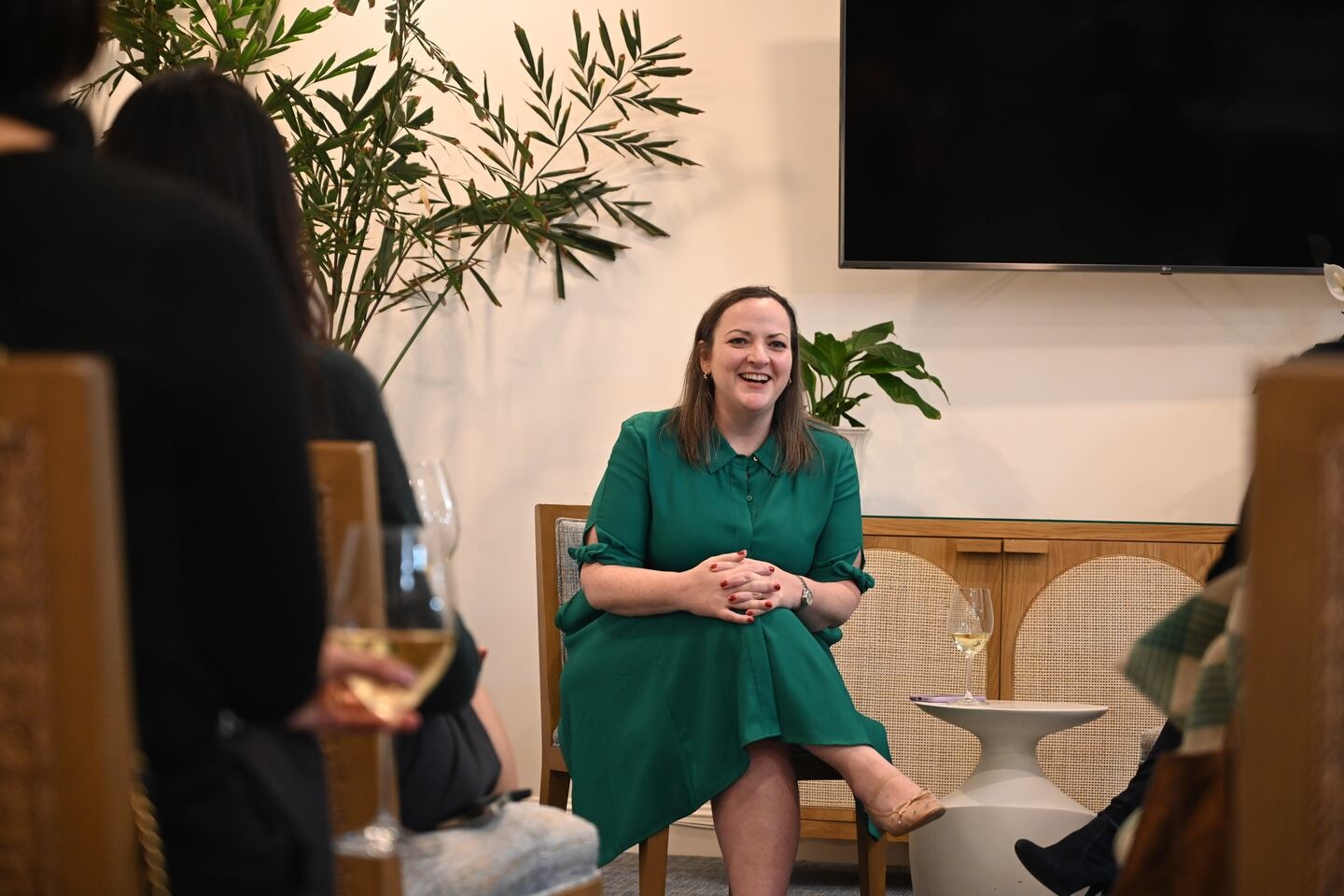
The update is part of the job
Her approach to working with founders places considerable weight on communication. Monthly investor updates create a record: what a founder said would happen, what happened, and what needs attention next. Feinzaig encourages founders to share problems while help can still change the outcome. Waiting until a problem is an emergency makes even a well-connected investor considerably less useful.
She asks founders to understand their numbers and keep investors close enough to help. It is practical advice from someone who has occupied both seats. A polished pitch can make a first impression. A series of candid updates gives the other person something more substantial to judge. Trust accumulates through ordinary follow-through, an activity that rarely gets its own celebratory funding announcement.
The firm now describes its focus as founders whose potential has yet to become a consensus view. That requires a particular discipline: forming a judgment before a crowded round makes the decision look obvious. At a 2026 venture summit, Feinzaig discussed that approach with Kelli Fontaine of Cendana Capital and Courtney Russell McCrea of Recast Capital. The firm's account emphasized staying focused on early opportunities and resisting growth simply for its own sake.
A Google Form enters politics
In 2024, Feinzaig applied her organizing habits to a different problem. Prominent technology investors were backing Donald Trump, and she objected to the impression that the industry spoke with one voice. She bought a web address, wrote a short pledge supporting Kamala Harris, and collected signatures with Google Forms. Friends and volunteers helped. A week was enough to turn an objection into something people could join.
By September, more than 850 venture capitalists had signed, representing over $300 billion in assets under management. That figure described assets managed by signatories, rather than campaign donations. Participants included Reid Hoffman and Mark Cuban. The coalition drew an investor who had spent years building founder relationships into a conspicuously public political role. It is now called VCs for Democracy.
The resemblance to the alliance's beginning is hard to miss. In both cases, Feinzaig saw people being described by a narrative they did not recognize, then gave them a way to respond together. The tools were ordinary: a group, a form, a website, a request to someone she knew. The consequential part was persuading people to put their names beside one another.
The playlist belongs to the children
At home in Seattle, Feinzaig has a husband and two daughters. The household offers a useful correction to any image of perpetual investor seriousness. Asked in 2021 what she was listening to, she named a song from The Lion King and explained that her daughters controlled the playlist. Her preferred footwear at the time was bedazzled Ugg boots. Apparently comfort and sparkle had reached an agreement.
She has named Dirty Dancing as her favorite movie and the Lauryn Hill version of “Can't Take My Eyes Off of You” as her karaoke choice. Away from work, she enjoys dancing, books, and family outings. These details belong to the same person who writes about venture economics. The investor's judgment and the parent's Disney soundtrack coexist without needing a productivity theory to explain them.
Her writing now appears in Venture with Leslie and in publications including Fast Company and Fortune. Recent subjects include AI-generated pitch decks, shifting investor appetites, and the reasons a venture capitalist decides to invest. In February 2026, she hosted a conversation with TimeCredit AI co-founder Ndonga Sagnia about navigating an acquisition, including decisions and transitions that funding headlines tend to leave out.
Feinzaig's stated ambition extends further than the next financing round: to change who leads the companies that eventually reach public markets. The route she has taken begins much earlier, with someone still building, still asking questions, and still waiting to be taken seriously. She knows that stage from experience. A founder opens a group to find help. Years later, another founder arrives, and she can offer a check.