Graham & Walker sounds like the sort of firm whose partners have occupied the same leather chairs since 1923. The names actually belong to Katharine Graham, the Washington Post publisher, and Madam C.J. Walker, the entrepreneur who built a beauty business for Black women. Neither founded this Seattle venture firm. Leslie Feinzaig did. The name makes a small, pointed joke about who people expect to find in charge of the money.
That expectation is also the business opportunity. Graham & Walker grew out of the Female Founders Alliance, a community assembled around the practical difficulty of getting a startup financed. Today, the organization has a fund, a library of founder resources and a calendar of gatherings. Its wager is that spending time with people overlooked by established networks can reveal companies worth backing before other investors catch on.
First came the wall. Then came the fund.
Feinzaig did not begin with a plan to become a venture capitalist. In an interview for the book Better Venture, she described trying to find a co-founder, raise money and hire people for her own company. Fundraising made the gender bias she had previously discounted impossible to ignore. She started adding women she met to a Facebook group. The community was initially a way to help herself.
Founded in 2017, the Female Founders Alliance developed into a network with introductions and an accelerator, Ready Set Raise. Helping founders prepare for investors also put Feinzaig close to businesses investors wanted to meet. At the 2021 fund launch, she made the case for taking a direct stake.
“We should be investing in these companies.”
Leslie Feinzaig / October 2021
She initially aimed to raise $3 million. The first fund reached $10 million, with 105 backers including Bank of America, Carta, Court Lorenzini and Adriane Brown. Two-thirds of those investors were women; 40 percent were investing in a fund for the first time. The October 2021 announcement formalized the change from arranging access to supplying capital.
The room is part of the product
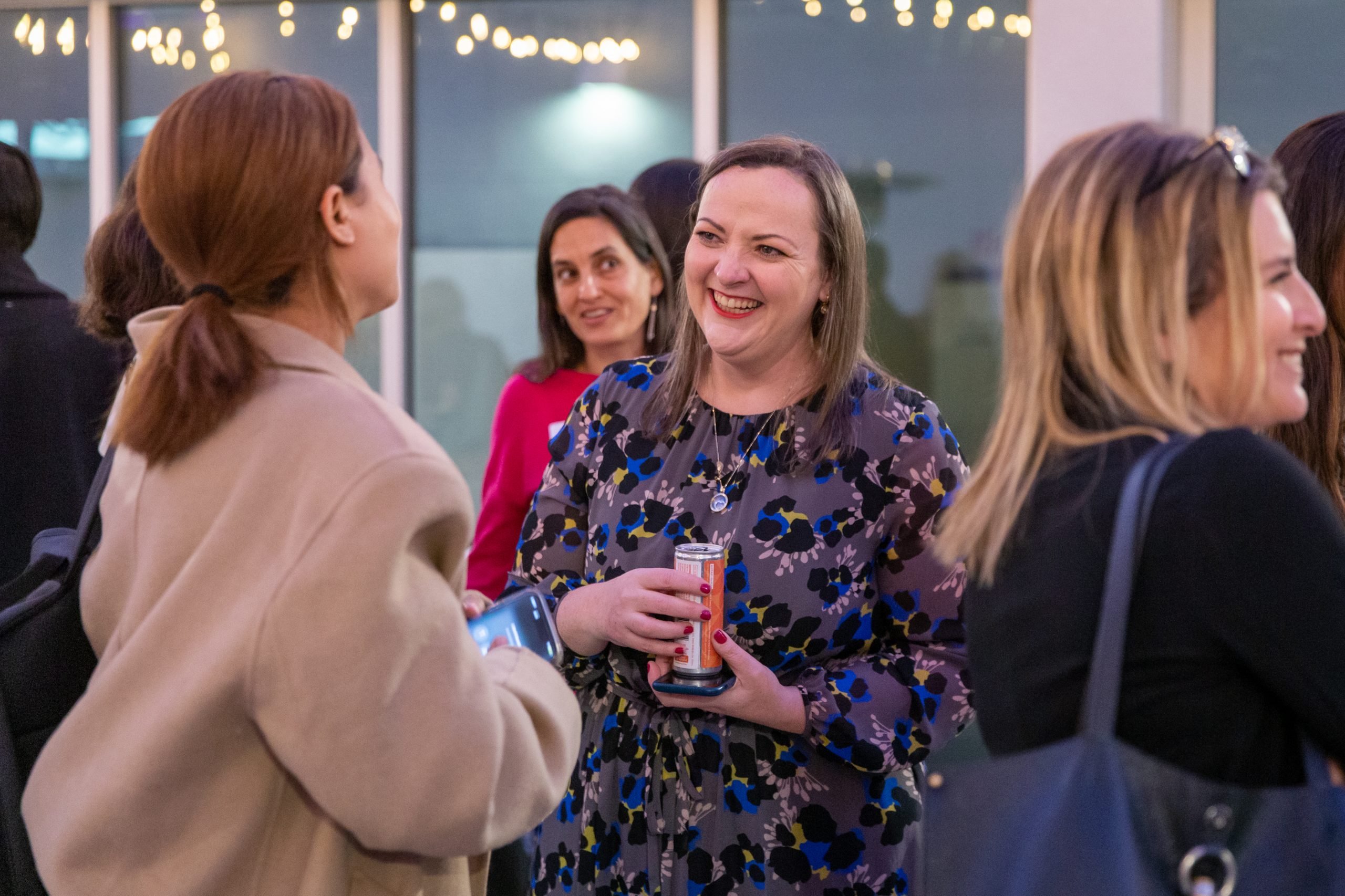
The fund serves two constituencies with different needs. Founders want money, useful counsel and introductions. Investors in the fund want access to companies that can produce financial returns. The founder community gives those interests a place to meet, while also serving entrepreneurs who may never become portfolio companies.
The Female Founders Alliance says more than 5,000 US-based female founders have benefited from its free resources, programs and community. Graham & Walker’s Founder Hub makes the support tangible: a live directory of funding opportunities, a resource library and educational sessions. Its Zero to One series begins with whether to seek venture money at all, then moves into capital types and fundraising mechanics.
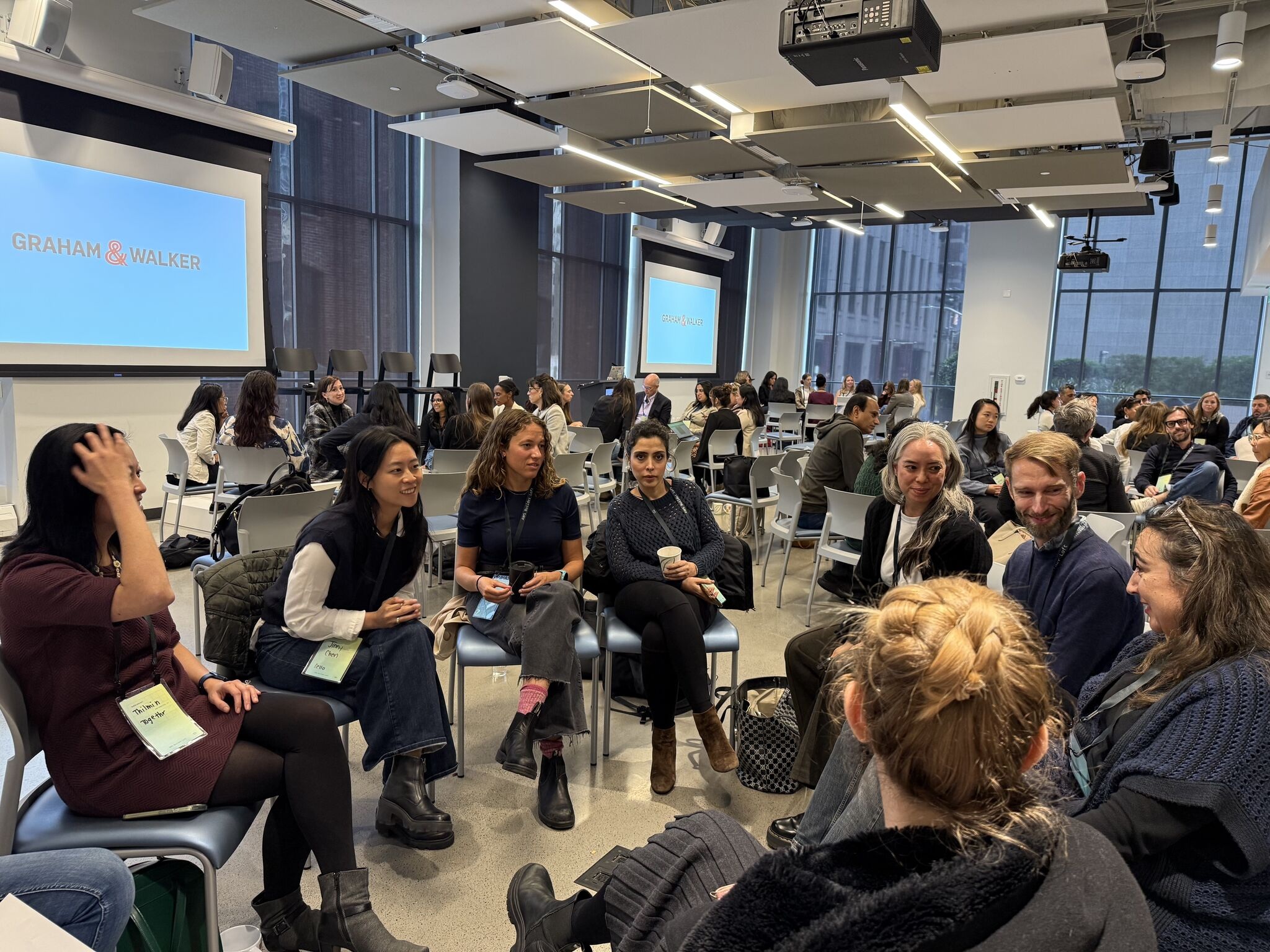
Founder Day supplies the face-to-face version. Graham & Walker reports bringing together more than 200 founders across four cities in 2025. Its New York recap describes a live pitch-deck teardown, small conversations with investors and sessions on AI and fundraising bias. The practical takeaway from the deck session: establish why the opportunity matters now, and put customer traction to work.
Who paid? AWS sponsored the New York event, making attendance free for participating founders. Cooley offered legal office hours, and P&T Knitwear provided the venue. The day ended with cupcakes and tea. The November West Coast events brought together more than 90 founders, with Rho, Antares Capital, Cooley and AWS named as supporters. Corporate sponsorship pays for specific access; selection still determines who gets into the room.
Freight appointments and fictional worlds
The current investment brief covers software-led businesses from pre-seed through seed+, with checks of $100,000 to $400,000. The firm pays particular attention to care, health equity, the circular economy and human connection. Those themes leave room for very different products.
Take BiggerPicture. Founder Deema Adada worked at Coyote Logistics and Uber Freight before building an AI-powered system for automating freight appointments. Shippers, carriers and brokers need to coordinate movements; disconnected systems make that coordination harder. Her familiarity with the work is central to Graham & Walker’s account of the investment. The opportunity starts with an operational nuisance that compounds across a supply chain.
Unvale sits in another neighborhood entirely. It gives writers and illustrators a place to develop characters and stories while building an audience. Graham & Walker joined its 2024 pre-seed round alongside Antler, LongJump and GFR Fund. In January 2026, the firm reported daily active users had risen 60 percent over two months and more than 300 creators were joining daily without marketing spending. Those are company-reported operating signals, not realized investment returns.
The pairing makes the thesis easier to understand. A neglected market need can live at a loading dock or inside a teenager’s unfinished graphic novel. In an August 2026 interview, Unvale’s Casey Lawlor emphasized customer interviews and support tickets as work founders too often avoid. That is the connection between the two companies: knowing a customer problem well enough to build around it.
A supportive investor still expects an exit
Graham & Walker occupies the early end of the venture market, where angel investors, seed funds and accelerators offer different combinations of cash and help. Its distinctive pitch is the founder network that came first. The team explicitly treats that community as a source of investment opportunities. The expertise combines fundraising practice, familiarity with early company building and relationships accumulated over years.
The published values also set a tone. They favor integrity, empathy and patience with the awkward middle of building a business. One rule is admirably economical: “No a*holes allowed.” That is a statement of intent, of course. A founder choosing an investor still has to decide whether the behavior matches the language.
The economics remain venture economics. Money invested in a startup is expected to produce a return. Graham & Walker’s own introductory guide explains that a few large outcomes must carry a fund, and that an acquisition or IPO is the expected destination. Taking that money changes a founder’s obligations and potentially the governance of the company.
A useful business can therefore be a poor match. Someone who wants a steadily profitable company under long-term personal control may prefer another financing route. The firm also usually passes on hardware-heavy, capital-intensive, consumer packaged goods, life sciences and medical-device businesses. Its investment geography is the United States and Canada. Community warmth does not erase portfolio boundaries.
The cost also needs the right label. The $10 million first fund was pooled investment capital, not Graham & Walker’s sales. In March 2025, a filing indicated a $15 million target for Fund II. A target is an intention to raise money; it should not be counted as a completed fund.
The numbers that complicate the success story
A larger community cannot, by itself, prove that access to capital has become fairer. Graham & Walker’s June 2025 report, Forged in Fire, surveyed 180 female founders of venture-scalable startups across North America. Seventy-one percent said their most recent round was harder than expected. Seventy-five percent reported burnout.
Hard going. Still building.
Female Founders Alliance’s Forged in Fire report. North American respondents; overlapping responses, not shares of one whole.
The same respondents supplied reasons to keep going: 86 percent were using AI in their companies, and 72 percent felt confident about reaching their next milestone. The sample describes this group’s experience, rather than every woman building a business. Still, it exposes the limits of a story told only through new funds and event attendance.
The organization’s teaching has room for that contradiction. Its July 2025 guide starts by giving founders permission to question venture funding. At the New York event, an AI session focused on running a leaner business. Together, those choices suggest a broader definition of useful support: help entrepreneurs understand which resources will advance the company, including when outside equity is the wrong instrument.
Copy the follow-up, not the ampersand
The most transferable part of Graham & Walker’s approach is deliberately ordinary. Its February 2026 fundraising guide separates maintaining investor relationships from actually running a round. The first involves periodic evidence of progress: customers, hires, pilots and retention. The second concentrates meetings and asks for commitments within a defined window. Confusing the two can leave a founder fundraising indefinitely.
A workshop with Goodword made relationship management equally concrete. It covered weekly, monthly and quarterly follow-up rhythms, asking both parties before making an introduction, and providing context so neither has to guess why they are being connected. Readers can copy those habits without joining a fund’s portfolio. The essential condition is that there is real progress to report and a reason for each introduction.
For founders seeking Graham & Walker’s capital, the next step is its online pitch form. The firm says it aims to respond within two weeks. A solo founder can qualify; the team looks for relevant expertise and the ability to attract talent. An introduction is useful, but it does not substitute for evidence of customer demand.
Its August 2026 conversation with Life360 CEO Lauren Antonoff returned to a related point: useful products give customers a reason to tell other people. That is also a fitting test for the organization Feinzaig built. A community earns another introduction by making the previous one worthwhile. The check matters. So does what happens before someone asks for it.