The first cheque ought to be the happy ending. A founder has an idea, an investor believes it, and money arrives. Bikesh Lakhmichand learned to worry about the next scene. Could the founder sell? Would another investor follow? Could the company survive long enough for either answer to matter?
- 1337 Ventures backs early startups in Malaysia and Southeast Asia.
- Alpha Startups puts customer understanding and validation before fundraising.
- Its network connects education, investors and potential corporate customers.
That is the interesting thing about 1337 Ventures, pronounced “leet”. Beneath the hacker spelling sits a fairly stern proposition: an idea needs homework. The firm combines early-stage investing with a pre-accelerator, online education and corporate innovation work. Its distinctive feature is the space it occupies before a startup looks ready for a conventional investment meeting.
The cheque was the easy part
Founded in 2012, 1337 initially worked with government-backed capital. By September 2014, Lakhmichand had returned the unused portion of a RM5 million allocation and raised an undisclosed private pre-seed fund. Contemporary reporting described his reasons: moving faster, working across boundaries and addressing the funding gap between seed and Series A. The original backing was an allocation, rather than evidence of money successfully raised by its startups.
Alpha Startups had begun that May, helping teams move from a raw idea toward a validated minimum viable product. The distinction matters. Building something demonstrates that it can exist. Validation asks whether anyone has a sufficiently troublesome problem to want it.

The founder
Bikesh Lakhmichand
CEO & founding partner
In a January 2023 interview, Lakhmichand described two lessons: technical ability needed commercial ability alongside it, and a first investment needed a credible financing path afterward. Promising businesses had run short of money. His response included building angel connections, crowdfunding access and, historically, emergency loans.
“If you can’t sell it, then what’s the point”Bikesh Lakhmichand · Digital News Asia, 2023
The lesson a founder can borrow is uncomfortable and useful. A working product, a sale and a financeable company are separate achievements. Treating one as proof of the others can make the next surprise expensive.
The price is the work
Leet Academy, the education arm, offers a free Alpha Startups Online course alongside pitching and fundraising courses. It reports more than 6,000 founders taught, mentored and funded across Malaysia and Southeast Asia. That describes the broader education-and-support footprint; it is not a count of portfolio companies.
For the live pre-accelerator, the investment is also time. Cohort 68 is advertised as an eleven-week hybrid programme, beginning 18 November 2026, with fifteen contact days, assignments and mentoring. Applications close on 8 November. A founder has to fit the work around the work of running a company.
- 01ApplyExplain the problem
- 02TestChallenge assumptions
- 03RefineBuild the business case
- 04PitchMeet potential backers
Programme participation does not guarantee investment.
These are useful distinctions when comparing accelerators. Course access, mentoring, investor introductions and an actual investment are different things. A founder should assess the deliverables and the relevant people, then read the terms for that particular cohort. An old funding announcement is a poor substitute for a current offer.
A room is a product, too
There is a quicker entrance. Pitch Tuesday invites founders to apply with a deck, book a virtual session and present on Google Meet. The advertised half-hour includes introductions, a five-to-ten-minute pitch and questions. International founders can pitch, although the investment focus remains Malaysia and Southeast Asia.
Leet Launchpad tackles a related problem: being seen. The quarterly showcase, supported by Microsoft for Startups, puts selected companies before investors and industry leaders. Its fourth edition featured seven startups spanning factory intelligence, healthcare, legal technology, employee wellbeing and finance.
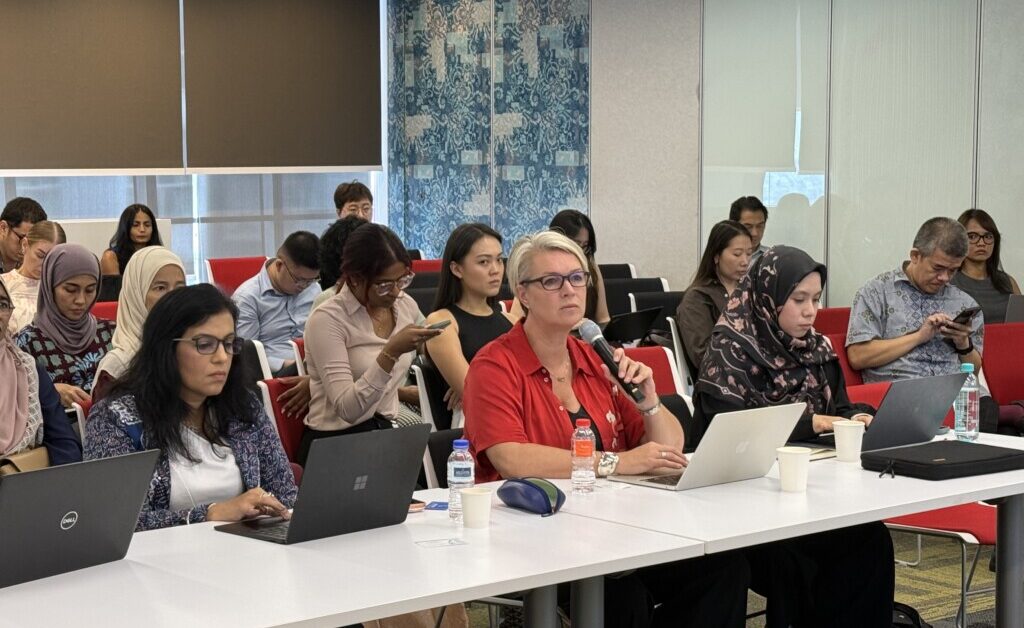
Corporate innovation work completes the commercial picture. The firm offers design thinking, workshops and startup matchmaking; published sprint testimonials include participants from Agrobank and UEM Edgenta. Its business therefore reaches beyond founders to organisations trying to solve operational problems. Those organisations may also be useful prospective customers for young companies.
The model connects activities that are often sold separately. Education helps surface investable teams. Equity investments offer potential returns. Corporate services connect the firm with business demand. Related company Leet Capital supplies an equity crowdfunding route for suitable businesses. This is an interpretation of how the pieces fit, rather than a disclosed revenue breakdown.
Different problems. Same homework.
INNO4HER makes the approach tangible. Its 2026 programme brought ten FemTech finalists from five countries to Microsoft Malaysia for a 31 March Demo Day. Microsoft for Startups and Epic Angels contributed access and expertise. Navo Health and MenSC Labs were named champions; Bosom won the audience vote.
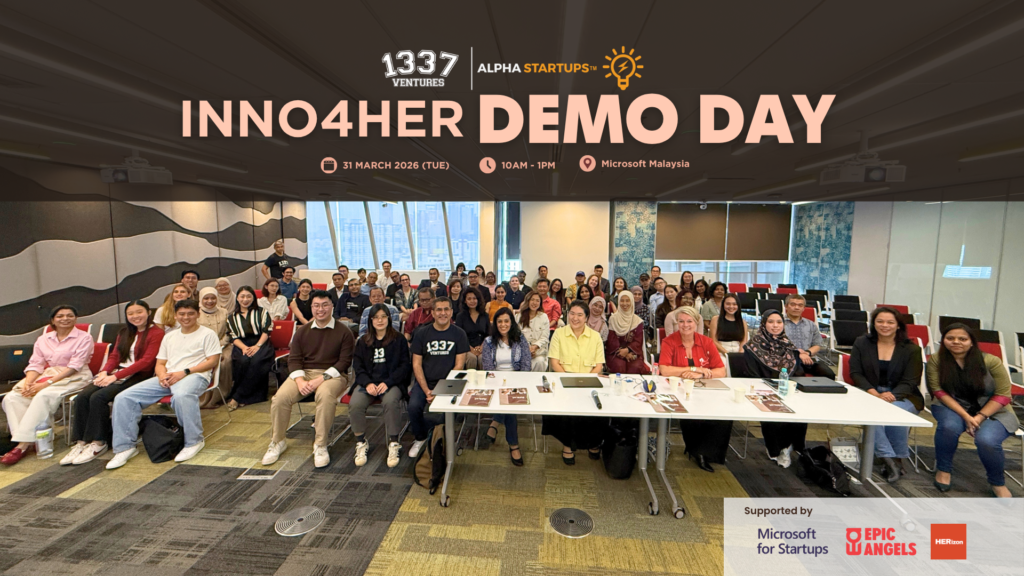
Navo Health works on interpreting fetal heart monitoring. MenSC Labs explores menstrual blood as a source for stem cell research. Bosom focuses on coordinated pregnancy and postpartum care. These are specific problems with different buyers, evidence requirements and routes to adoption. Sharing a stage does not make them the same business.
Try this before the pitch
A useful starting move is to name the assumption that would sink the company if it proved false. Then design a small test around it. The inference from 1337’s validation emphasis is simple: seek information that could change your plan, rather than applause that leaves it intact.
Fit still matters. Its current investment interests include AI, fintech, healthcare and industrial tools, but its programme explicitly distinguishes enabling technology from financing factories or wafer fabs. A capital-intensive plant needs a different investor. A workshop cannot replace clinical evidence, customer procurement or the cash needed to stay open.
For founders within that scope, the appeal is practical: learn the basics, test a proposition, meet relevant people and make a stronger investment case. The homework cannot promise a business. It can give a founder better questions before the bill gets bigger.