A working prototype can be a very expensive way to avoid talking to a customer. Startup Wise Guys has built a business around interrupting that habit. It finds early technology founders, invests in some of them and puts the uncomfortable commercial questions on the calendar: Who buys this? Why now? And can you explain the answer without opening another slide?
The offer has a price tag. Its flagship accelerator advertises up to €100,000 in convertible investment alongside a €35,000 program cost, plus a possible €250,000 follow-on investment. For a founder considering the deal, the useful question is whether the people, pressure and introductions justify both the cost and the time away from running the company.
That is a more interesting proposition than the usual accelerator promise of access. Startup Wise Guys is trying to turn technical ability into a business that can sell across borders. Its preferred territory includes places where capable founders have fewer international investors knocking on the door.
01 / The cheque comes with homework
The flagship’s published curriculum starts with company building and targets, moves through product and sales work, then reaches fundraising preparation. Mentors, workshops and individual sessions supply the instruction. Founders supply the business on which the lessons are tested. A pitch can improve in an afternoon; evidence of demand usually takes longer.
Entry requires more than enthusiasm: a working minimum viable product, a team and initial traction are central criteria. The format combines online work with in-person sessions, and participation requires a full-time commitment. This is a substantial claim on a young company’s scarcest resource: the founder who also answers support tickets, hires people and closes the books.
convertible investment
If the full €100,000 is invested and €35,000 is paid from it, €65,000 remains before other costs. This is arithmetic, not a quoted net payment or guaranteed offer. Follow-on funding is separate.
The comparison should include opportunity cost. A useful mentor can stop a team spending months on the wrong buyer. An irrelevant workshop can take the salesperson out of the only meeting that matters. The value depends on the match between the program and the company’s immediate commercial problem.
02 / Estonia was the starting point
Startup Wise Guys began in Tallinn in 2012. Historical company listings identify Herty Tammo, Mike Reiner and Jon Bradford as co-founders. Today its team page lists Tammo as CEO and general partner. The organization grew out of an Estonian startup scene already accustomed to looking beyond a small home market.
Its own evolution is revealing. The firm says it moved from B2C to B2B, then into specialist verticals. It describes listening to customers and adapting its programs as part of that process. The practical implication is straightforward: teaching a consumer app to attract users is a different assignment from helping a software company navigate a business buyer’s purchasing process.
Now its sector menu spans SaaS, fintech, cybersecurity, defence, sustainability, proptech and Web3. The unifying customer is the founder trying to build a scalable business. Sector expertise matters because a bank, a property owner and a defence organization have different reasons to say no, and different people authorized to say yes.
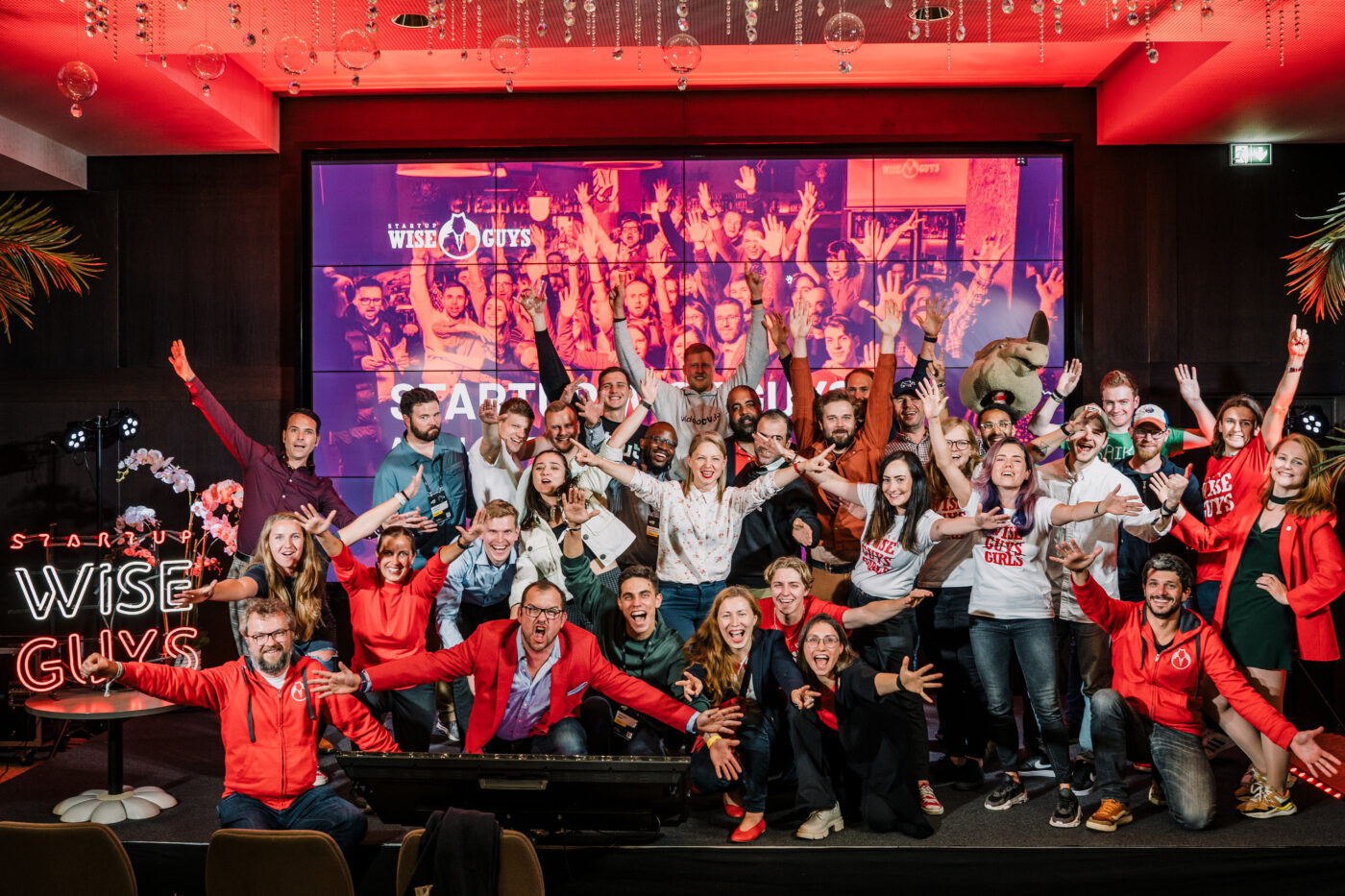
03 / Sometimes the first product is a team
For people earlier in the process, the firm sells Founders Club, a three-month online program. Participants can arrive without a settled idea or co-founder. Published enrollment fees are €1,000 plus VAT for individuals, €1,500 plus VAT for teams and €500 plus VAT for CTOs or developers. Homework alone is expected to take at least 12 hours a week.
The curriculum puts team formation and customer discovery before business modeling, prototyping and investor presentations. Investment remains discretionary. Its FAQ also makes clear that accepting an investment brings additional program costs; a place in the club is not an automatic funding commitment.
One July 2026 account follows Vinayak, Verner and Linda, who entered Cohort 19 separately and decided to work together. Their backgrounds covered analytics and growth, technical delivery, and founder operations. The concrete accomplishment was finding colleagues with complementary abilities and a willingness to make decisions together.
“At this stage, forming the team is the work.”
Linda / Founders Club 19 participant
By August’s graduation, 13 teams and solo founders presented. The firm reported prototypes, customer conversations and changes of direction. These are modest milestones with practical value. An abandoned assumption can spare a founder a much larger bill later.
Those changes of direction show a process that permits a change of mind before graduation. A founder can use that permission deliberately, treating an initial idea as something to investigate. The lesson a reader can copy is the sequence: test the partnership, investigate the buyer’s problem, then decide how much product to build.
Find the people
Complementary skills
Test the problem
Customer conversations
Build to learn
A small, testable product
Make the case
Evidence before the pitch
04 / Three different pots of money
Startup Wise Guys serves founders, but also investors whose capital it puts to work. Its investor page describes early investments across countries and sectors, followed by further backing for selected portfolio companies. That creates a continuing relationship after the accelerator ends, with the fund exposed to what happens next.
In February 2023, the firm announced a €25 million partial close against a €45 million fund target. Those figures describe investment capital. Separately, its 2023 review reported €6.69 million invested in 86 startups. Neither number measures the operating revenue of the accelerator business.
There is a third pot: money raised by portfolio companies from their own backers. The 2024 review reported more than €26 million in that category and four exits. Keeping these measures separate is essential. A portfolio fundraising headline says something about financing activity; it cannot, on its own, tell a reader what a fund’s investors earned.
Paid education and accelerator costs sit alongside the venture activity. Partner-backed programs add another layer. In 2024, Startup Wise Guys launched a Saudi construction technology fund and accelerator initiative with SEEDRA Ventures, backed by the National Technology Development Program. Its Growth Ukraine work has also involved the EBRD. Those partnerships place the firm between investors, founders and institutions trying to develop local technology businesses.
05 / The exits take longer than the classes
The portfolio supplies some recognizable endpoints. Climate Corporation acquired VitalFields in 2016. UiPath acquired StepShot in 2019. Pinterest acquired VOCHI in 2021. They demonstrate that companies in the network have attracted strategic buyers, although an acquisition announcement alone does not establish the return on an individual investment.
A more recent case is SensusQ. In July 2026, Startup Wise Guys reported the intelligence software company’s acquisition by Quantum Systems. It says it was SensusQ’s first investor, supported the team through its cybersecurity accelerator and participated in subsequent funding rounds.
The story illustrates why specialist experience can matter. SensusQ worked in defence, where procurement and security requirements make commercial progress demanding. The combination brought intelligence software together with autonomous aerial systems. Years of building and selling separate that outcome from the first accelerator sessions. A founder can learn a sales method quickly and still face a customer that buys slowly.
Startup Wise Guys’ press page reports more than 25 exits and over 440 portfolio companies. Those cumulative company figures establish scale, not the probability that a new applicant will achieve the same result. Selection, timing and individual markets all sit between participation and an eventual exit.
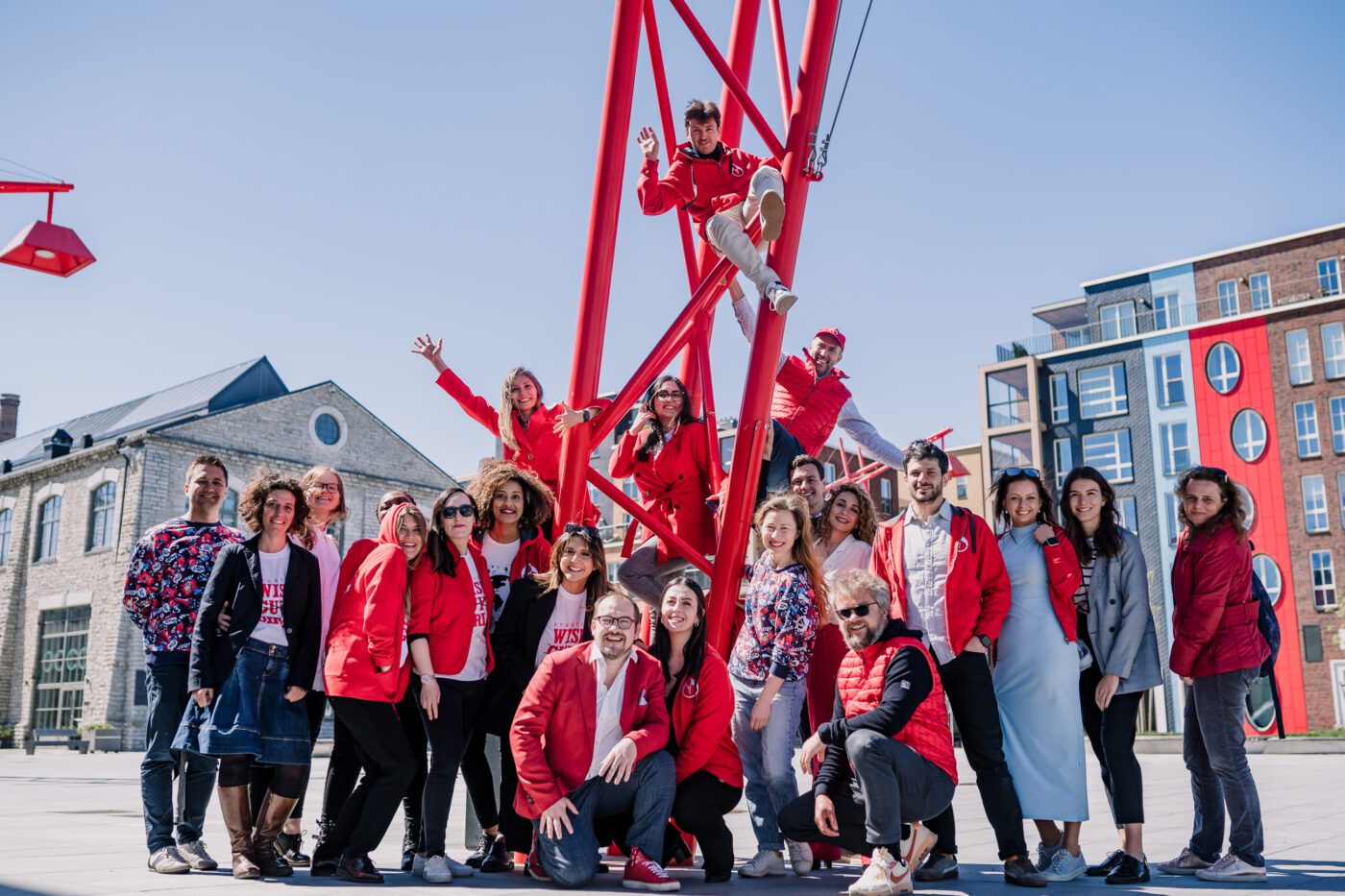
06 / A smaller cheque needs a specific reason
The obvious alternatives include Y Combinator and Techstars. YC advertises a $500,000 standard investment through two agreements, with 7% ownership plus additional equity determined later, and no participation fee. Techstars’ standard offer is $220,000, with a different investment structure and an Asia-Pacific exception. A founder comparing programs is comparing ownership terms, geography and services as well as cash.
Startup Wise Guys’ argument rests on its B2B focus, specialist programs and experience with overlooked markets. Its investor materials describe roughly 300 limited partners from more than 35 countries. For a team with little international exposure, that network may be valuable. For a company already selling reliably and raising competitively, the incremental benefit may be smaller.
The human element is part of the proposition. The company talks about saunas, cooking and dancing; its About page adds memes to the internal culture. Such details sound frivolous until a founder needs to admit that a strategy is failing. Familiarity can make an awkward conversation easier, though friendliness alone will not fix a weak product.
A useful way to assess the fit is to name the next obstacle precisely. Is it finding a co-founder, identifying the buyer, getting through procurement or preparing for fundraising? A founder unable to commit the time, or whose needs fall outside the program’s expertise, has a different problem to solve first. One takeaway from Startup Wise Guys is available before applying: put a customer conversation on the calendar, and decide in advance what answer would change your mind.
Follow the work
Explore the website, open programs, portfolio and company newsroom.
Find Startup Wise Guys on LinkedIn, X, Instagram, Facebook and YouTube.
Listen further: Cristobal Alonso on building for customers, a 2023 interview. Read the 2023 fund announcement coverage.