Herty Tammo’s father went on holiday, and the teenager got a taste of office life. There was administrative work to do. He did some of it. Before venture funds, accelerator cohorts and demo days, business was something happening close enough for him to help. His father had started a company in 1992, in the early years of Estonia’s restored independence. Three years later, they were establishing a business together.
Tammo would eventually identify a useful distinction in his own temperament: he enjoyed starting companies more than running them. There is a small occupational inconvenience in that discovery. A company, once started, generally insists on continuing. His answer was to help create Startup Wise Guys, an organization whose recurring business is giving other people their start.
The doors came first
The family’s manufacturing history has a beginning that would be difficult to improve in a pitch deck. In 1995, his father, Raigo, shared pizza with a fellow passenger on a ferry to Finland. The conversation led to a visit to a Swiss steel-profile factory. The products were used for windows and doors. Tammer grew out of that connection, and Herty, still a student, initially led the business.
It is worth lingering on the product. Metal doors have customers, specifications, production schedules and consequences when something arrives late. They offer a fairly brisk introduction to the difference between enthusiasm and a business. Tammo’s later work with software founders came after this industrial apprenticeship, rather than replacing a blank page on his CV.
The family remained part of the picture. In 2020, it formalized a charter, agreeing arrangements before the next generation had to argue about them. Tammo explained the value of reaching agreement early. Family ownership combines trust with emotional entanglement; affection does not remove the need for rules. A company can survive a disagreement more comfortably when the participants have already discussed what they owe one another.
An investor goes back to school
Tammo began angel investing in 2007. His education included BBA and EMBA qualifications at Estonian Business School, followed by Kauffman Fellows Class 17, which he attended from 2012 to 2014. The fellowship put formal venture training alongside the practical task of launching an accelerator. He was learning a profession while helping build an organization that would teach another.
That combination matters to the shape of his career. A founder brings experience of making decisions with incomplete information. An investor has to apply judgment across several companies, with different teams and different ways to fail. The work calls for a network beyond the businesses one already knows. Tammo’s fellowship was part of that transition from operating individual companies to supporting a portfolio.
Three founders, and a bridge out of Tallinn
Startup Wise Guys began in 2012 with Tammo, Mike Reiner and Jon Bradford. Their backgrounds supplied different pieces of the project. Reiner brought experience from IBM and work in transformation and innovation. Bradford had built accelerator programs in Britain. Tammo was the local entrepreneur and lead investor. The proposition was to connect Eastern Europe’s technical talent with commercial knowledge and networks farther afield.
The early program made the route visible. It organized work into shaping a business, building the product and selling it, ending with demo days in Tallinn and London. The first two cohorts included companies from Estonia and elsewhere in Europe, as well as Chile. The bridge was international from the beginning, even when the office was in Tallinn.
An accelerator also has to persuade investors that the accelerator itself is worth backing. Tammo assembled 15 angel investors, with SmartCap as an institutional investor. Sharing the search and selection work made a larger portfolio possible. It also created a business with its own awkward early years. The people helping founders face uncertainty had to keep their own organization alive. There was homework on both sides of the desk.
- 1995Family enterprise
Tammer’s early years - 2007Angel investing
Backing other builders - 2012Startup Wise Guys
The accelerator opens - 2025CEO again
A return to leadership
The tuition runs the other way
By 2017, Tammo had an appealing way to describe the arrangement: a business school working in reverse, paying the students. At that point, the program offered €20,000 and three months to try building a company, with equity going to the accelerator. The phrase was amusing because it inverted a familiar bill. The underlying exchange remained serious.
He described a developer whose employer granted unpaid leave to join the program, then even paid a bonus while considering an investment in the new venture. The relationship stayed open if the idea failed. It is an unusually civilized departure story. Someone could attempt a company without requiring the old employer to become the villain.
The curriculum covered sales, presenting, market analysis, legal work and business models. Those subjects can sound dry until a founder needs to sell something on Thursday. The school’s practical advantage was that the student arrived with the assignment already attached: a company that needed to work.
Who will still be working together?
Tammo’s investment questions have long returned to founder quality. In 2014, he was asking how teams worked together, how deeply they knew their business, and what experience and connections they brought. The ambition had to travel, too. A scalable company needed a “global goal from day one.” Estonia was a place to begin, with a market beyond it in view.
His own portfolio crossed those boundaries. Alongside traditional businesses, he discussed investments in advertising company Smart AD, ticketing provider Ridango and the Mexican ticketing startup Reserbus. He also acknowledged that his exposure to angel investments exceeded the conventional allocation he cited. The industrial businesses helped support the riskier part of the portfolio.
By 2020, he was describing a preference for teams whose skills complemented one another, with commercial ability alongside technology. A founder who would not listen presented an obvious difficulty for an organization selling education. Confidence may secure the meeting; the capacity to learn determines what can happen during the months afterward.
“We like to be the first ticket.”Herty Tammo, 2020
At the time, he said the accelerator reviewed more than 500 projects a year and selected 40 to 50 to support. The business required repeated choices, rather than a single inspired discovery. Getting in early meant judging people before a mature company could do much of the explaining.
per year
for support annually
Figures Tammo described in July 2020; a historical snapshot of the work, rather than today’s intake.
Some introductions require a passport
The international network occasionally produced an absurdly literal form of accompaniment. Tammo recalled jogging in New York’s Central Park with Taavi Rõivas and members of an Estonian delegation. US security personnel ran alongside them, with Estonian bodyguards ahead and behind. Even an investor’s morning run, it seemed, could acquire a substantial supporting team.
The travel had a practical purpose. On visits to Japan, the United States, Denmark and Sweden, he sought fund investors and opportunities for portfolio companies. He also valued the relationships among Estonians travelling together. A delegation could introduce a future mentor or investor before anyone reached the destination’s meeting room.
Japan supplied a useful warning about assumptions: he came away understanding that the family-office investment structure he sought was not organized there as he had expected. Going abroad could change the plan rather than merely advance it. A market becomes more legible when someone explains how business is actually done.
Back on the factory floor, back in the chair
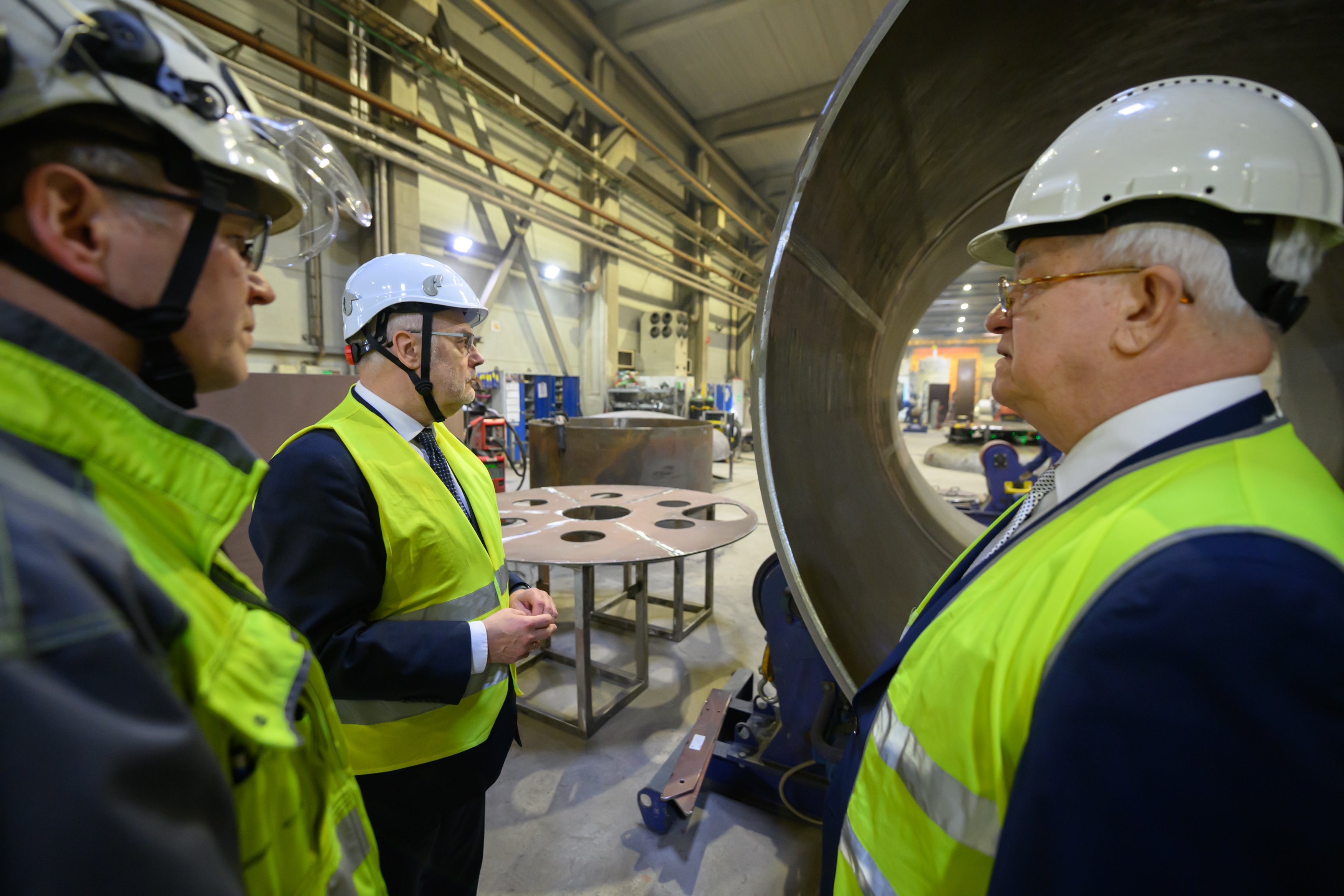
The industrial chapter continued alongside the accelerator. On March 17, 2025, Tammo joined Raigo and Anti Tammo as Estanc board representatives during a visit by President Alar Karis. The agenda included production digitalization, exports and the competitiveness of Estonian companies. Before the tour, the president watched the safety video, as other visitors did. Some introductions still begin with instructions about the factory floor.
That July brought a change at Startup Wise Guys. Following Cristobal Alonso’s departure after almost a decade as CEO, Tammo was reported as returning to the role. Priit Uustulnd was named the new COO and partner. The organization’s current team listing identifies Tammo as CEO, Co-founder and General Partner. The founder who liked beginnings had another management assignment.
The accelerator has widened its footprint across Europe and Africa and developed specialized programs. Its own account emphasizes continued contact with founders, mentors and investors. For Tammo, the work now includes leading the organization that supplies that contact, alongside his role in choosing and supporting businesses. The school needs someone to run it, too.
A decoration, and another first step
In 2026, Estonia awarded Tammo the Order of the White Star, Class V, recognizing his contribution to entrepreneurship. Estanc’s announcement identified him as chairman of its supervisory board. The honour put an official marker on a career that reaches from manufacturing to founder education, with several kinds of company in between.
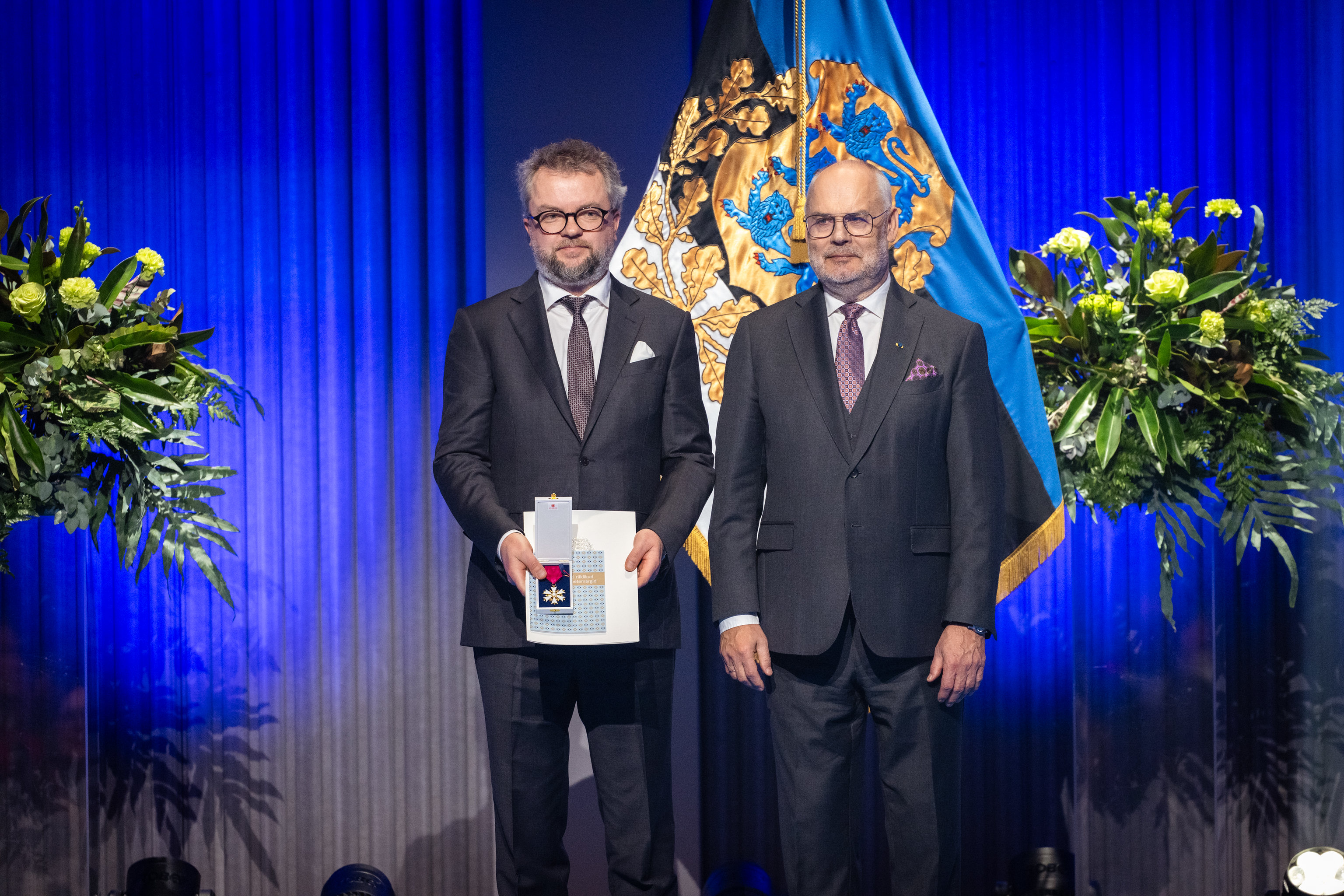
The ambition remains expressed in human units. In a 2026 message celebrating the recognition, Startup Wise Guys quoted his call to encourage more founders to take their first step. It is consistent with the office work he tried as a teenager and the classroom he later helped finance: give someone a chance to do the work, then see what they can build.
A metal door is finished when it meets its specification. A founder’s education is harder to sign off. There is another customer to understand, another partner to work with, another market whose habits refuse to match the plan. Tammo has made those unfinished lessons his business. The next student arrives carrying a company.
Continue the conversation
- Startup Wise Guys: team and programs
- Herty Tammo on LinkedIn
- The personal journey: a conversation with Spirit X
- Angel investing: the 2014 conversation
- Teams and first cheques: the 2020 interview
- Business trips and the Central Park run
- Watch: the 2012 Profit Show interview
- The Order of the White Star announcement
- Inside the early accelerator, 2013
- The Tammo family’s written agreement