A startup can have a working product and still be locked out of the room that matters. The buyer is somewhere inside a bank. The investor wants evidence of demand. The founder has another pitch deck. TheFactory, an Oslo accelerator and early-stage investor, has built its business around making those people meet before the startup runs out of time.
That sounds modest beside the grand language of venture capital. It is also a concrete job. TheFactory puts founders through structured programs, introduces mentors and corporate partners, and invests through funds and angel vehicles. Its homepage now reports more than 600 startups accelerated and more than 90 investments. Those are company-reported activity figures, not a measure of how many founders built profitable businesses.
The interesting question is what happens between admission and an investable company. At TheFactory, the answer changes with the program: a free general accelerator, a longer sports-technology course, or a defence-and-security initiative that teaches investors as well as entrepreneurs. Anyone shopping for startup help should pay attention to those differences. The logo stays the same; the bargain does not.
A bank meeting was the original product
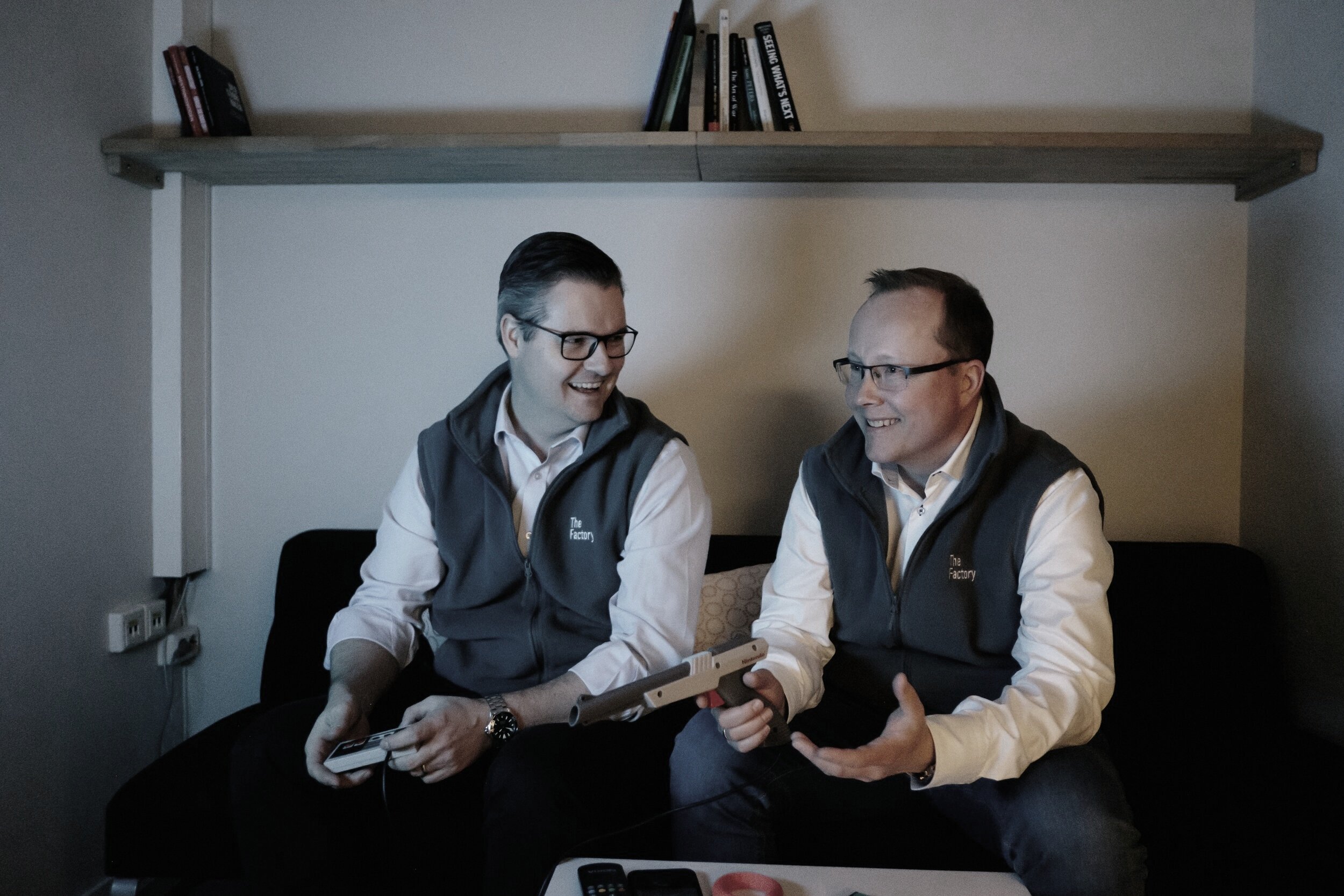
TheFactory dates its founding to 2015 and its first accelerator to 2016. Its early focus was fintech and insurance technology. The opportunity was local and specific: Norway lacked a fintech-oriented accelerator, even as investment in the sector was building across the Nordics. Ingar S. Bentsen founded the business; its current investment site also identifies Hans Christian Bjørne as co-founder.
The founders’ own account describes a parent company started with NOK 600,000, followed by additional owner funding and unpaid work in the first year. Before it could help other companies become sustainable, the accelerator had its own bills to cover. That detail makes the origin more useful than an awards chronology: organizing a startup community required capital and labor before the community could sustain the operation.
Specialization gave the introductions a purpose. In its earlier proptech pitch, TheFactory said work with industrial partners had helped startups make first sales or arrange pilots. Its stated response was to concentrate on industry verticals where those connections could be useful. That is a more practical proposition than promising access to a large address book. A property company needs someone willing to try its product in a building.
The same logic explains where the company fits in the market. A founder could approach an angel directly, join an incubator, or apply to another accelerator. TheFactory combines those functions with sector relationships. The advantage depends on whether those relationships reach a particular startup’s buyers. A famous mentor with no connection to the customer’s problem may be pleasant company and little more.
Three routes, three different bargains
GründerAcademy is the accessible starting point. The current offer is a free three-month program for early-stage Norwegian startups, running in spring and autumn across Oslo, Bergen, Stavanger and Kristiansand. It targets fields including fintech, proptech, retail, business software and impact. Workshops and feedback are meant to move participants toward market and investment readiness.
For a founder, the useful output is a set of decisions: which problem deserves attention, which customer to approach, and what evidence an investor will expect. Attendance alone cannot settle those questions. The program supplies a setting in which founders can test their answers, meet people outside their immediate circle and revise the business before raising more money around the wrong assumptions.
Advertised as free
Potential equity + program fee
Commercial investment model
Sportstech Academy takes six months and uses a camp-based format. Run with Igloo Innovation, it covers sales, fundraising, growth and international expansion. Its definition of sport is broad enough to include club administration, fan engagement, rehabilitation, wearables and recreation. The customer might be an athlete, but it could just as easily be the person trying to run the club.
Its economics also differ. Participating companies may receive an equity investment, with part paid back as a program fee. That makes the cash available to build the business a different number from the investment announced. For a founder comparing offers, both the ownership surrendered and the money remaining matter. Six months of support should be evaluated against the specific commercial progress it could enable.
Read the cheque in two parts
TheFactory’s historical Angels documentation makes that distinction unusually tangible. It describes investments of NOK 100,000 to NOK 500,000 for stakes of 5% to 12%, with selected participants invoiced 30% of the investment for the accelerator. Those are historical terms, not a price list for today’s programs.
A NOK 100,000 investment
After program feeNOK 30,000
Program participation
Illustrative arithmetic using the published historical 30% fee, before other costs. Not a current offer.
The broader business combines partner-supported programming, fee-bearing specialist support and ownership in startups. The investment side runs angel vehicles and funds. Its published overview lists the Norway fund at NOK 16.37 million and fully invested across 17 companies. That money belongs to an investment vehicle; it is not funding raised to run TheFactory itself.
The arrangement serves several constituencies. Founders want help and capital. Investors want access to companies while they are still young. Corporate partners want contact with emerging businesses and technologies. Those interests can reinforce one another, but they are not identical. A founder’s practical task is to establish what the program delivers, what an investment buys, and which decisions remain theirs.
The support after the stage lights
TheFactory’s alumni proposition extends beyond graduation. Its earlier accelerator page describes continuing access to the network, and a testimonial from Intrava’s then-COO, Nikolai Tornøe Narvestad, credits the company with further customer and investor introductions after the program. That is a customer endorsement published by the provider, rather than independent evidence of results across every cohort. It nevertheless identifies something applicants can ask alumni about directly.
“TheFactory offers an impressive collection of motivated people that will kick start your business idea.”
Torbjørn Sortland, Safe Design
Company-published testimonial
Its investment criteria are packaged as HERO+ and CORE+. Behind the energetic names sit fairly sober concerns: commercial prospects, execution, market reaction and the size of the opportunity. A founder can copy that preparation without joining anything. Show what customers have done, explain what the team has delivered, and make the case that the market is worth pursuing.
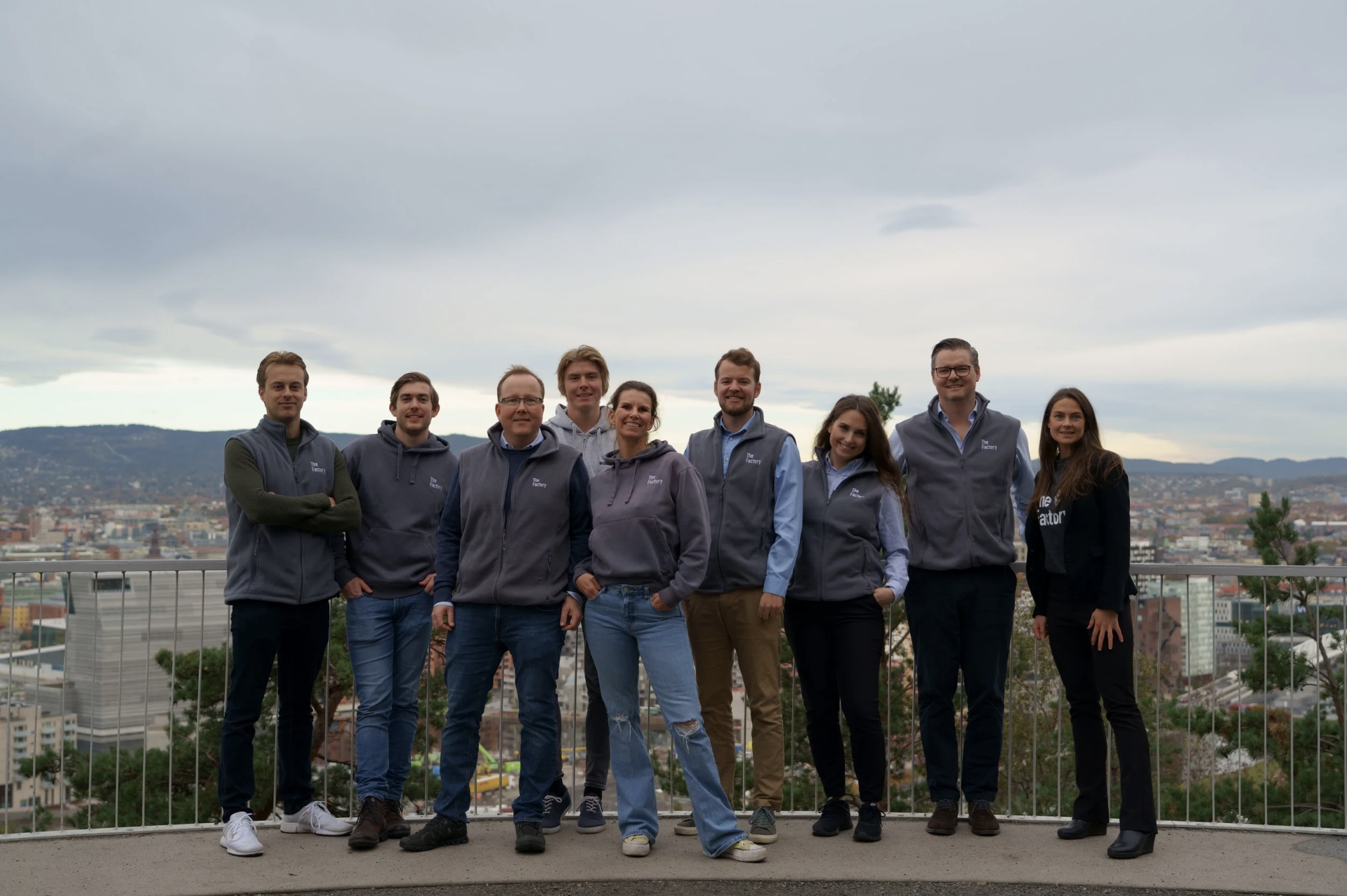
The portfolio offers a glimpse of how widely the model travels. Its listings include The Coring Company, which develops digital tools for construction, exploration and mining, and Sirken, a platform for reusing construction resources. There is also Superclub, a football-management board game. An early-stage portfolio can contain both industrial software and people gathered around a tabletop, plotting to beat their friends.
Twenty-four companies came with a classroom
In October 2024, TheFactory acquired Startup Norway’s portfolio of 24 companies and the rights to Angel Challenge, an investor-education concept that had been dormant since 2022. The deal added existing holdings and a way to bring more people into early-stage investing. It widened both sides of the company’s business: the companies receiving support and the people learning to supply capital.
The surrounding news was less celebratory. The next day, Shifter reported Startup Norway’s bankruptcy filing. That was the seller’s failure, not TheFactory’s. The sequence is a reminder that organizations supporting entrepreneurs have business models of their own. A busy calendar and a useful network do not automatically produce an operation that can pay its way.
Now the room includes defence buyers
In January 2026, TheFactory’s next direction became explicit: defence, security and technology with civilian and military uses. Bentsen told Shifter that geopolitical change and European rearmament helped motivate the move. The company was also returning to a model that closely couples founder programs with investor participation. Its subsequent company update records the accelerator’s opening at Haavind on March 23.
The twelve-week DefSec program targets areas such as secure communications, autonomous systems, sensors, cyber security and critical infrastructure. Workshops cover product validation and market preparation, ending in a presentation to relevant investors. Haavind adds legal expertise; the associated investor program is intended to help participants understand the sector before choosing companies through a shared investment vehicle.
The shift also exposes the limits of the method. In a sensitive industry, an introduction still leaves the work of validation, procurement and compliance. A twelve-week program can prepare a company for those tasks; it cannot make the buyer’s requirements disappear. TheFactory’s opportunity is to bring the right expertise into that process early enough to change what founders build and how they sell it.
For an applicant, the lesson is concrete. Start with the next obstacle, then choose the program. Ask which buyer or expert you need to meet, what evidence you should bring, and how much cash will remain after the terms are applied. TheFactory’s proposition is strongest when those questions have specific answers. The room matters because of who is in it - and what happens after the meeting.
Keep the conversation going
Visit TheFactory · Explore GründerAcademy · Meet the portfolio · StartupBeat Magazine · StartupBeat Podcast