Before there was a $300,000 offer, there was a room full of developers and an awkward question: who would pay for the companies they might build? Santiago Zavala had found entrepreneurship through organizing developer communities. The talent was close enough to meet. The capital was considerably harder to persuade.
- 500 LatAm backs early technology companies across Latin America.
- Its 2024 offer increased from $80,000 for 8% to $300,000 for 10%.
- Its current pitch combines capital, strategic support, and Silicon Valley access.
That mismatch is the useful starting point for understanding 500 LatAm. A promising founder can be visible to everyone in a local community and almost invisible to the people writing checks elsewhere. The distance is partly geographical. It is also a distance between what someone knows firsthand and what an investment committee can comfortably believe.
A fund built from the room outward
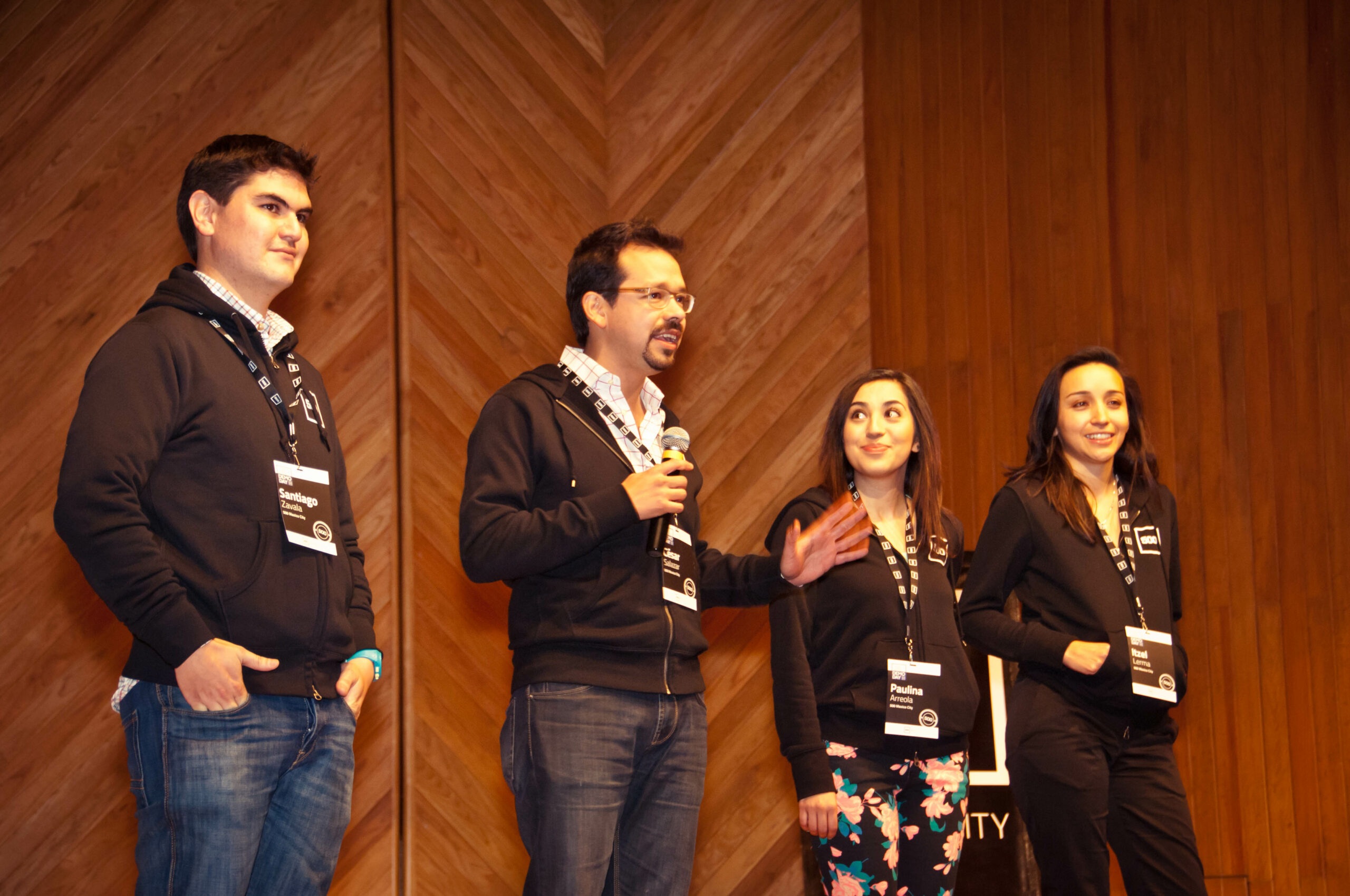
Zavala’s account of the beginning is refreshingly short on financial pedigree. Mexican.VC launched in 2011 with backing from 500 and other angels, investing in seven companies. “We had never worked at a fund, we had never raised capital,” he recalled. In 2012, Mexican.VC joined 500, bringing Zavala and César Salazar into the firm as Mexico venture partners.
The first thing that did not work smoothly was the connection between local founders and outside investors. In his anniversary interview, Zavala described American investors struggling to understand the market and assess its startups. The response was practical: organize investment closer to the people building the companies. Local knowledge could supply some of the confidence that a distant investor lacked.
The check grew. The calendar changed.
The operation developed a cohort program called Somos Lucha. Its legacy application page offered four months of remote work, mentoring, and fundraising preparation. Then, in February 2024, the firm announced a different arrangement: larger investments and support tailored to individual companies. The stated objective was more runway, better business foundations, and clearer evidence that a product had found its market.
The arithmetic deserves attention. The published check became 3.75 times larger, while the ownership percentage rose by two points. That comparison explains why the headline number is attractive. It does not tell a founder how much of the company will remain after later rounds, or whether the money will be spent well.
For a hypothetical startup spending a net $25,000 a month, $300,000 represents twelve months before fees, new spending, or changes in revenue. At $50,000 a month, it represents six. The example is deliberately ordinary. Runway is a spending decision expressed as time; a larger check can disappear surprisingly quickly when a founder mistakes permission to experiment for permission to hire everyone.
The current application page adds three weeks at the firm’s San Francisco headquarters to its advertised capital and strategic support. It also displays a July 31, 2026 deadline, already past at this profile’s publication. Founders should check the next opening and the actual offer rather than treat an older announcement as a standing contract.
The work between the investment rounds
500 LatAm’s constituency has two sides. Founders need money and operating help. Limited partners supply the fund capital and seek investment returns. Portfolio companies are investments, rather than conventional customers purchasing a software subscription. The business depends on ownership stakes eventually producing value; the mentor session is part of the work that might make that happen.
IDB Lab describes Seed IV’s support in concrete operating terms: product development, recruitment, monetization, customer acquisition, international expansion, and additional fundraising. These are useful precisely because they are unglamorous. An introduction cannot repair a product nobody returns to. A pitch deck cannot settle whether the price covers the cost of delivering the service.
Runway is a spending decision expressed as time.THE FOUNDER’S ARITHMETIC
A regional investor with a global network occupies an interesting position among the alternatives. Founders can seek angels, another seed fund, an accelerator, or growth financed by customers. 500 LatAm’s proposition combines familiarity with Latin American markets and access beyond them. The value of that combination depends on the question being asked: a customer-acquisition problem requires different help from an introduction to a foreign investor.
For founders comparing those choices, a useful exercise is to name the next decision before naming the preferred investor. Is the company trying to find its first repeatable sales channel, recruit a technical leader, or enter a second country? Ask who will help with that decision, how often they will meet, and what evidence will count as progress. A famous network is easy to describe. A working relationship takes a little more interrogation. The answers make competing offers easier to compare without pretending that every dollar arrives with the same help attached.
The network has to do some work
In September 2025, IDB Lab announced $2 million for Seed IV, targeting roughly forty early technology companies, including emerging ecosystems such as Guatemala, Ecuador, and Uruguay. This was capital committed to a venture fund, rather than revenue earned by 500 LatAm. Confusing those numbers would make the business look richer and explain it less accurately.
There are also ways into its orbit beyond an investment application. Descubre.vc gathers regional startup news and directories. Release Before Ready events give builders time to work, exchange help, and demonstrate what they made. The event name contains a serviceable instruction: let another person encounter the thing before you have polished every explanation of it.
A useful rejection, an expensive wrong fit
The most copyable practice is modest. In its 2024 announcement, 500 LatAm encouraged rejected applicants to return after making progress, noting that some eventual investments began with a rejection. A founder can turn feedback into one observable test: improve retention, demonstrate repeat purchases, or show that delivery costs fall. Then return with the result. Progress gives the next conversation something new to discuss.
This approach suits companies whose technology can support substantial growth and whose founders accept shared ownership. A profitable neighborhood business may need neither international expansion nor a venture investor’s expectations. Even for an eligible startup, more capital cannot establish demand by itself. The worthwhile bargain is enough time to discover what customers need, with people nearby who will notice when the answer changes.
500 LatAm · Investment offer · Team newsletter · Founder essays · Descubre.vc · Builder events
LinkedIn · X · Instagram · Founder conversations on YouTube · Release Before Ready video