In 2011, a delivery business in Amman supplied a small but revealing piece of evidence. Wheels Express had joined Oasis500 only three months earlier. Its chief executive said revenues had tripled after training and an initial $15,000 investment. Then came another investment agreement, this time with outside backers. The important event was the sequence: learn something, put money to work, become a proposition someone else could fund.
- Oasis500 invests early and helps founders prepare for what follows.
- Its original offer combined training, incubation and an equity cheque.
- By February 2026, it reported 193 backed startups.
- Its fourth fund seeks more than $20 million for another generation.
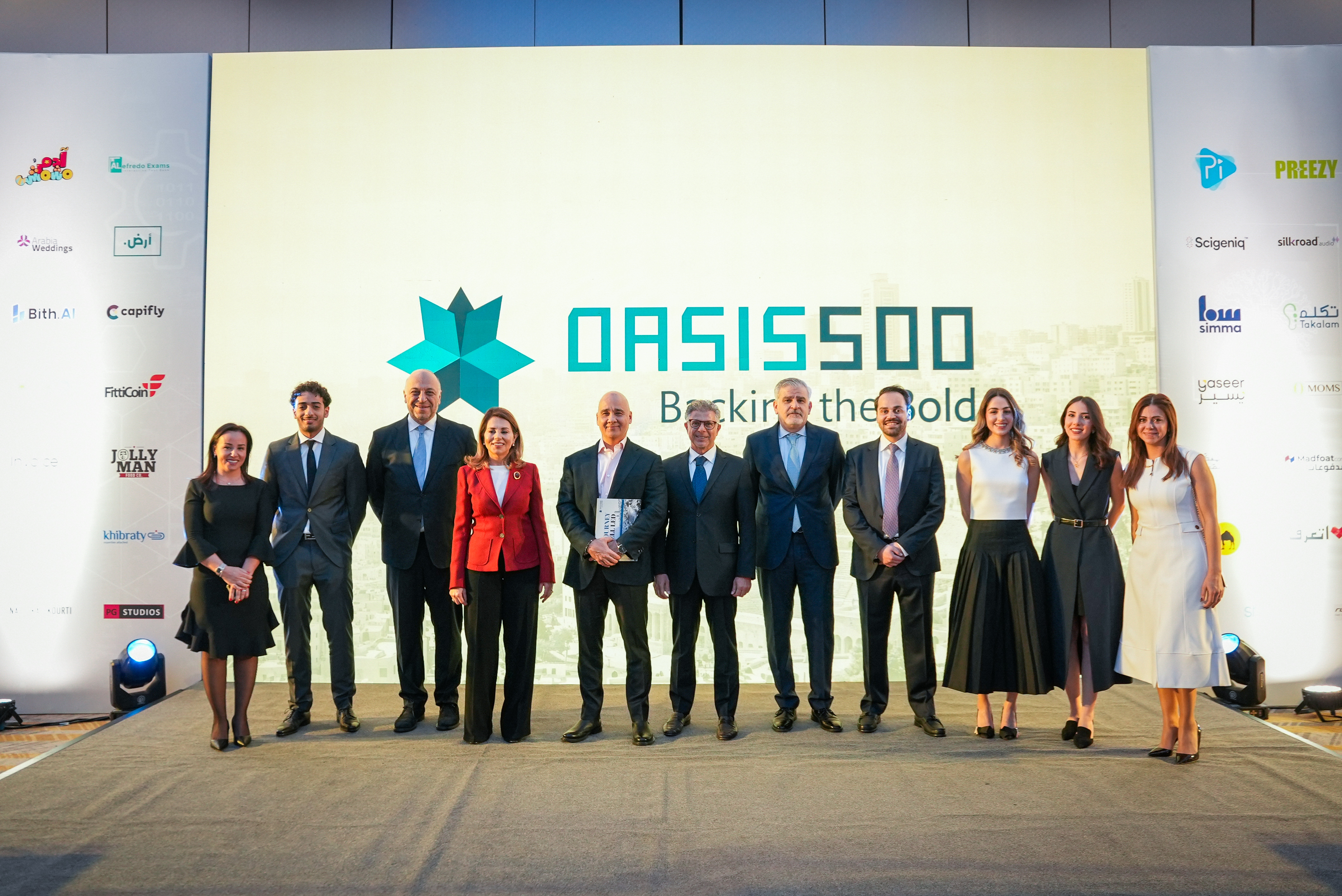
That sequence helps explain Oasis500 better than the usual photograph of entrepreneurs standing beside a sponsor’s logo. The company occupies a difficult stretch of the startup economy: the interval between an interesting idea and a business that can persuade strangers to commit serious money. In that interval, a founder may need a budget, an introduction or somebody willing to ask an uncomfortably basic question.
A small cheque with a large assignment
Oasis500 began in 2010, initiated by the King Abdullah II Fund for Development and partners under King Abdullah II’s vision. Usama Fayyad, formerly Yahoo’s chief data officer, became its founding executive chairman. Co-founder Karim Kawar brought experience as an entrepreneur and investor. The name carried an unusually explicit ambition: launch 500 startups in five years. Even the stationery had a target.
The early proposition was concrete. A July 2010 announcement described six days of free entrepreneurship training. Successful candidates could qualify for JD10,000 in funding, roughly $14,100 at the time, for a two-month incubation period. Oasis500 would receive 10% equity. A smaller subset could receive further investment. Mentoring, legal advice, internet and hosting accompanied the money.
Those were historical terms, rather than a price list for applicants today. Still, they reveal the bargain. Founders traded ownership for capital and a structured opportunity to improve. Oasis500 accepted the possibility that the idea, the team or the market would disappoint. The training was also a way to observe people before committing further resources. A polished application could get a hearing; it could not perform the work.
The pitch was only one of the lessons
Consider the curriculum. At its Beirut bootcamp in 2013, Oasis500 offered five days of training and ten workshops. Participants covered business models, teams, technology marketing, growth and when to launch. Group work gave entrepreneurs an opportunity to hear how other people interpreted their problems. This was education with a commercial deadline: eventually, somebody had to explain why a customer would buy.
Fayyad’s investment explanations were similarly specific. In a 2011 interview, he pointed to Jamalon’s scalability, Curlstone Studios’ distinctive product and diversified business model, and MadfooatCom’s clear problem and vision. The companies did different things. Their common qualification was an argument for becoming a larger business. A good idea could be local; its growth plan needed more room.
Here is where Oasis500 fits in the market. Founders can also approach angels, regional accelerators such as Flat6Labs, or venture funds with different sector and stage preferences. Oasis500 combines an institutional investor’s equity stake with practical founder support. Its particular usefulness lies in connecting those activities: business development should make the company easier to finance, while financing should give the business time to develop.
- 01First capitalBuy time to test.
- 02Hard questionsRefine the business.
- 03Next investorFinance further growth.
The shortage after the first yes
What went wrong with the broader accelerator proposition? Fayyad was warning about startup hype by 2013. More accelerators did not automatically mean enough funding options, or investors equipped to evaluate young companies. Oasis500 introduced a larger investment track that year, offering up to $500,000, with average tickets described as $200,000 to $300,000. The bottleneck had consequences for the design of the programme.
The fund sequence shows further adaptation. Oasis Ventures I began in 2010; Oasis Creative Industries followed in 2015. Oasis Ventures II launched in 2019, focusing, according to later reporting, on companies with greater commercial maturity and demonstrated product-market fit. A programme built around getting ideas started was also learning how to support businesses that had survived their first encounters with customers.
In July 2024, ISSF increased its commitment to Oasis Ventures II from $3 million to $5 million. The accompanying announcement reported 36 supported startups, 36% led by female founders, and $27 million in external financing. The additional money would support selected stronger performers. That is a consequential change in emphasis: a fund needs reserves for progress as well as an appetite for beginnings.
“Their support went far beyond capital.”Shawkat Shegem, Toolmart founder
Four funds, and a wider map
By February 2026, Oasis500 reported investments in 193 startups, more than $135 million in follow-on funding, and a collective portfolio valuation of approximately $243 million. Portfolio operations reached 22 countries. These figures describe an investment ecosystem; they do not establish realised fund returns. A company’s estimated worth and money returned to investors remain different achievements.
Fundraising target for Oasis Ventures III.
Its third numbered venture fund is its fourth fund overall.
The new fund, Oasis Ventures III, launched that February. June brought a new chief executive, Khalil Haddad, and a reshuffled board chaired by Suhair Al-Ali. Later that month, an agreement with SM Capital established a framework for co-investment and connections across MENA, Europe and the Mediterranean. The next round of company building would need a wider circle of prospective backers.
A founder can copy part of this approach immediately: test a business model before decorating a pitch, ask which assumption could undo it, and prepare for the next financing decision while spending the first cheque. The conditions matter. A business with no convincing route to scale may suit another kind of capital. Advice needs willing participants; introductions need interested investors; a prototype needs customers. Oasis500 can help arrange the encounter. The customer retains the deciding vote.