Before Co Ventures had a name, a website, or a single LP, Maxine Minter was already doing the job. In the lobby of The Assembly - a female-first co-working space in San Francisco - she was writing $2,500 cheques into pre-seed startups because that was the amount she could put to work without needing anyone's permission. The tickets were tiny. The learning was not. Each investment was a hypothesis, a relationship, a front-row seat to how founders think when the product doesn't exist yet and the market hasn't confirmed anything.
That period produced something more valuable than returns: a philosophy. Maxine calls it "belief capital" - the idea that what founders need most at the earliest stage isn't just money, but someone who believes in the vision before there's any evidence they should. Belief, infrastructure, networks. In that order.
When she launched Co Ventures in April 2023, she became Australia's first solo female General Partner to raise and lead a venture fund. The milestone matters, though not primarily for the reason it usually gets cited. The real significance is what the fund does, not the demographic record it set.
Why Australia, From San Francisco
The geography is intentional. Maxine has lived and worked in San Francisco long enough to understand what Australian founders are typically missing: not talent, not ambition, not ideas - but access. Access to the networks that can take a company from Sydney or Melbourne to a global customer base. Access to investors who've seen what scale actually looks like. Access to founders who've already done it.
Co Ventures deploys A$150,000 cheques into software-led companies with at least one Australian founder. Hardware, biotech, and anything requiring deep regulatory navigation are explicitly out of scope - not because Maxine doesn't appreciate those categories, but because the fund's edge lies in backing software businesses where velocity matters and where her network creates concrete, near-term value.
"The theme of my journey so far has been standing on the shoulders of giants. I've been very grateful to be shown different ways for how to think about and approach angel investing and, from that, forge my own path."
- Maxine Minter
The plan is to deploy Fund 1 across approximately 33 companies - roughly one per month - and stay close throughout. "Invest first, stay close" is how the fund describes its posture. Not hands-on in the micromanaging sense, but present: in the pitch refinement, in the introductions, in the moments when founders need a sounding board who has operating experience and investor perspective at the same time.
The Venture Partners Network
One of the more distinctive features of Co Ventures is the ecosystem Maxine has assembled around it. The fund's Venture Partners - hand-selected operators and founders who add direct value to portfolio companies - include people who built Linktree, Mr Yum, and Eucalyptus from scratch. These aren't names attached to a website for credibility; they're founders who have navigated exactly the path that Co Ventures' portfolio companies are attempting.
The fund also runs a sidecar syndicate for LPs, and a community syndicate through Aussie Angels that allows smaller check-size angels and operators to invest alongside Co Ventures in individual deals. This layered capital structure means portfolio companies get not just one GP's attention but a coordinated network of people invested in their success - financially and operationally.
Check Size
A$150K
Per company, pre-seed
Fund Stage
Pre-Seed
Before traction, at belief
Focus
Software-Led
Australian founders, global scale
Launched
April 2023
Fundraising began Sept 2022
Before the Fund: Three Careers, Simultaneously
The straightforward narrative of Maxine's career - lawyer, then founder, then investor - undersells what was actually happening. She was rarely doing one thing. She was a technology lawyer at one of Australia's biggest firms who was teaching disruptive legal tech courses while building companies as a cash-flow mechanism to fund travel. The travel was real, but so was the ambition; she just hadn't yet figured out which specific form it would take.
Stanford provided some clarity. Both the Law School's Masters in Law, Science and Technology program and Stanford's Graduate School of Business Ignite program gave her the vocabulary and the network to articulate what she was already doing intuitively. She'd studied law in three countries - Australia, Denmark, France - before landing in San Francisco, which is either evidence of restlessness or a very deliberate education in how different systems think about the same problems. Probably both.
Co Lab, the executive coaching platform she founded in January 2021, is the clearest bridge between her operating life and her investing life. It matched founders and CEOs with executive coaches - a product she designed because she understood from personal experience that the external coach relationship, when it works, is the one conversation a founder can have with full candor. Co Lab reached $100K+ in revenue before Maxine turned her attention fully toward the fund.
Before Co Lab, she was at Fairshake - a company backed by First Round and Box Group - as an early operator. Each stop built the pattern recognition that a good pre-seed investor needs: what founders look like when they're operating well, what infrastructure actually helps versus what just sounds helpful, which problems are permanent features of early-stage company building versus which ones solve themselves with time.
"I've never been able to just do one thing. And I always found in doing one thing, I was worse at that thing because I would get bored."
- Maxine Minter
The Intellectual Dimension
Maxine is vocal about something that rarely gets discussed directly in conversations about women in VC: the intellectual side. The discourse, she has argued, tends to focus on structural barriers and representation metrics, when what would actually change the ecosystem is more visible female voices articulating investment theses, debating market dynamics, writing about mental models for early-stage evaluation.
She has referenced the need for a "feminine answer to Bill Gurley and Naval Ravikant" - not as a way of copying their particular style, but as an acknowledgment that the public intellectual tradition of VC has been shaped by a narrow set of voices, and that the missing perspectives aren't just demographically different but substantively different in how they think about risk, founder relationships, and long-term value.
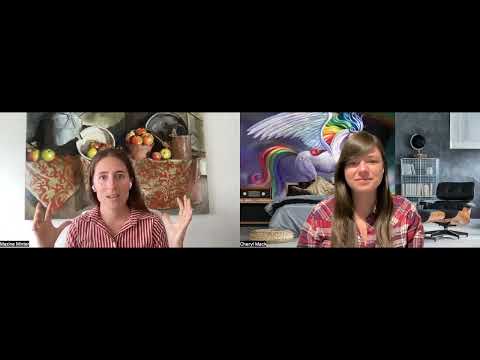
The First Cheque podcast, which she co-hosts with Cheryl Mack from Aussie Angels on the Day One Network, is partly an attempt to build this publicly. Each episode explores how founders and investors navigate the earliest stages of funding - the conversations that usually happen behind closed doors, or not at all.
Venture Partners
Linktree Founders
Mr Yum Founders
Eucalyptus Founders
Ambience Founders
Ground-Floor Operators
Exited Founders
Value-Add Angels