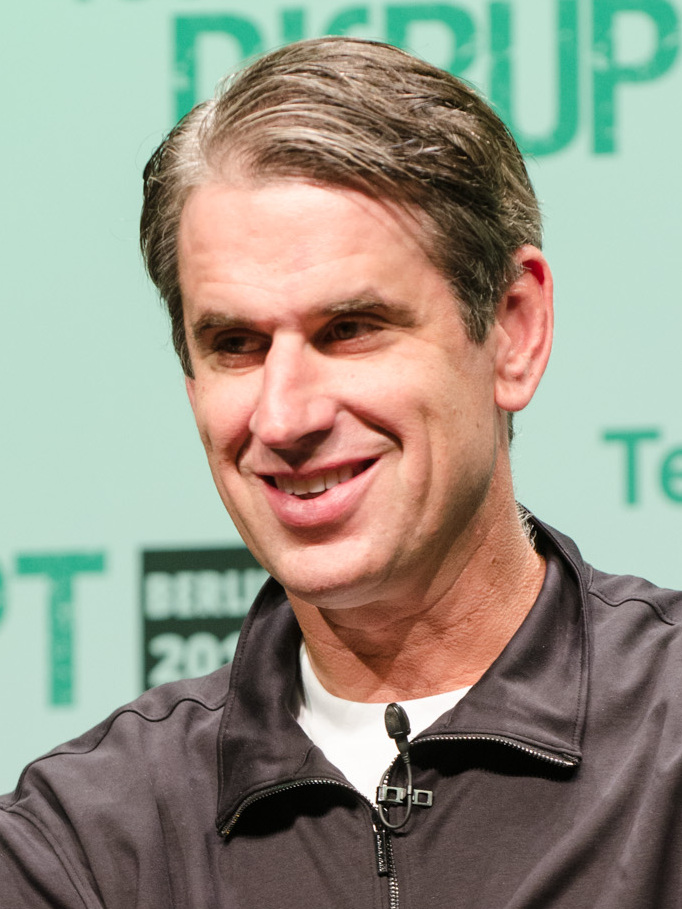
The Man Who Bet on Black Cars
In 2011, a venture capitalist from Dickinson, Texas, wrote an $11 million check for a black-car company that had no cars and was losing money in two cities. He had a swipe key to its office. He ate lunch with its founder. He flew to see it operate in Chicago. His partners at Benchmark Capital thought it was a cab company. The venture capitalist thought it was something else entirely.
He was right. The company was Uber. The investor was Bill Gurley.
But the Uber story - as big as it became - is almost the wrong story. Gurley had already been the analyst on Amazon's IPO in 1997 when the company was considered a novelty bookseller. He had joined Benchmark in 1999, one of Silicon Valley's smallest and most disciplined firms, and built a portfolio that included GrubHub, OpenTable, Zillow, Stitch Fix, and Nextdoor. He consistently appeared on the Forbes Midas List. He won TechCrunch's VC of the Year award in 2016. He wrote a blog called Above the Crowd that became required reading for anyone who wanted to understand how technology companies actually create - or destroy - value.
The blog title is a joke and a truth. Gurley is 6'9". He has always stood above the crowd. The question was whether he saw farther from up there.
You can't make money with a consensus accurate prediction.
- Bill GurleyThe answer, the numbers say, is yes. But the Gurley story is not just about the picks. It is about the framework behind the picks - a mind trained on Wall Street equity research, sharpened by years reading company filings, and pointed squarely at a question most investors avoid: why does this business actually make money, and for how long?
From 486 Chips to Billion-Dollar Checks
John William Gurley was born on May 10, 1966, in Dickinson, Texas - a small town south of Houston, the kind of place where ambition has to be imported or invented. He played basketball seriously enough to make the University of Florida's men's team, graduating with a computer science degree in 1989.
His first job was engineering at Compaq Computer. Not sales, not finance - engineering. He worked on 486/50 processors and multi-processor servers, the unglamorous plumbing of the early PC era. The technical training stuck. When Gurley later analyzed technology companies on Wall Street, he could read a spec sheet as fluently as a balance sheet.
At CS First Boston, he covered the companies he'd spent years building hardware for: Dell, Compaq, Microsoft. He was named to the Institutional Investor All-American Research Team in 1995 and 1996. In 1997, he led the analyst team on Amazon's IPO - a bet that most of Wall Street considered speculative. He was 31 years old.
After a stint as a partner at Hummer Winblad Venture Partners, Gurley joined Benchmark Capital in 1999. Benchmark was unusual: a small partnership with equal stakes for each partner, no senior/junior hierarchy, and a philosophy of genuine board engagement. It suited his temperament exactly.
Above the Crowd: Writing as Thinking
Gurley's blog, Above the Crowd at abovethecrowd.com, is not a newsletter with a subscription form and a sponsor. It has no author photo, no call to action, no merchandise. It publishes infrequently - sometimes months between posts. When it does publish, the finance and technology world stops to read.
The posts are long. The analysis is deep. The framework is consistent: Gurley cares about sustainable unit economics, the difference between growth and value creation, and the danger of companies that confuse one for the other. In 2012, he wrote a definitive analysis of Amazon's use of free cash flow. In 2015, he published a warning about Silicon Valley's burn-rate culture - the essay that contained the phrase "dead unicorns" that would become a meme.
We have moved into a world that is both speculative and unsustainable. At some point you have to wonder whether the whole thing just falls apart.
- Bill Gurley, 2015At SXSW in 2015, he said it out loud without naming names: there would be dead unicorns. The room did not entirely believe him. Then 2016 came, and then 2022, and the people who had dismissed the warning updated their priors. Gurley, to his credit, did not say he told them so. He had already moved on to the next analysis.
Uber, Travis, and the Board Drama Nobody Saw Coming
The Uber investment is the one everyone remembers, but the texture of it matters. Benchmark led the Series A at a pre-money valuation of roughly $4 million in 2011. The company operated in San Francisco and was experimenting in one or two other cities. It had a founder - Travis Kalanick - who was ferociously ambitious, deeply competitive, and allergic to conventional governance.
For years, the relationship worked. Gurley became the most engaged investor on Uber's board. He had a swipe key to headquarters. He gave counsel; Kalanick built. The company grew at a rate that was, by any historical standard, absurd. By 2015, it was one of the most valuable private companies on Earth.
By 2017, the fray had become a rupture. A cascade of scandals - sexual harassment allegations, regulatory fights, a leaked video of Kalanick berating an Uber driver - had destabilized the company. Gurley, representing Benchmark, became the central figure in the effort to have Kalanick replaced as CEO. The confrontation was described in Mike Isaac's book Super Pumped as a kind of boardroom coup - not a hostile one, but a necessary one.
One day after Kalanick resigned, Gurley resigned from Uber's board. Benchmark's investment, made at roughly $4 million pre-money, was by the time of Uber's 2019 IPO worth an estimated 100 times that. The industry consensus was that Gurley had done the right thing - and had lost a friend in the process.
In 2022, Showtime dramatized the story in Super Pumped: The Battle for Uber. Actor Kyle Chandler - Coach Taylor from Friday Night Lights - played Bill Gurley. Gurley found the experience surreal.
The Companies He Backed
Benchmark under Gurley was not a spray-and-pray fund. It was disciplined. Each partner took a concentrated number of board seats and spent real time at the companies. The hits reflect a consistent thesis: platforms with strong network effects, businesses where the economics improve as they scale, and founders who understood their markets at a structural level.
The exits track record is exceptional: OpenTable was acquired by Priceline; JAMDAT Mobile was acquired by Electronic Arts; Vudu by Walmart; Shopping.com by eBay. Uber went public in 2019. GrubHub, OpenTable, Zillow, and Stitch Fix all achieved major public market exits. By any measure, the Benchmark partnership during Gurley's tenure ranked among the most successful venture funds in history.
The Framework in Quotes
"If you invest in something that doesn't work, you lose one times your money. But if you miss Google, you lose 10,000 times your money."
"Have strong opinions, but loosely held."
"It's really hard to run a business against somebody who is not acting as if it were in business."
"If one asserts that buying customers below what you charge them is a corporate strategy, this is an arbitrage game. Arbitrage games rarely last."
Austin, Books, and Stepping Back
Sometime around 2023, Bill and Amy Gurley sold their house in San Francisco and moved to Austin, Texas. They had talked about it since before Silicon Valley. It was, he said, an "unofficial agreement." Austin offered what San Francisco increasingly didn't: restaurants worth eating at, live music that felt local, and streets you could actually walk.
Gurley stepped back from active investing at Benchmark. He will not participate in the firm's next fund. He remains involved with his existing portfolio companies - the work of a general partner does not stop when a company is still private, and some of his companies are still growing. But the pace of new deal-making has changed.
In February 2026, he published Runnin' Down a Dream: How to Thrive in a Career You Actually Love (Penguin Random House). The book is a New York Times bestseller. It took almost ten years to write - not because Gurley is slow, but because he wanted to get it right. The thesis is not about venture capital or technology. It is about how anyone, in any field, finds work they are genuinely built for and then builds mastery within it.
I have written my first book! A passion project of almost 10 years, Runnin' Down a Dream aims to give people both the motivation and the methods for thriving in a career they actually love.
- Bill Gurley, announcing the book on X/TwitterThe book's six principles - chase your curiosity, hone your craft, develop mentors, embrace your peers, go where the action is, always give back - read like the autobiography of someone who followed each one and got lucky, or got good, or both. Gurley's career started with computer chips in Houston, ran through Wall Street, and ended up backing the companies that changed how a generation ordered food and hailed a ride. Along the way he kept writing, kept thinking, and kept telling anyone who would listen that the numbers never lie, but the stories people tell about them sometimes do.
Kyle Chandler played him on television. The real Gurley is harder to summarize: a contrarian who found consensus on the best opportunities; a mentor who ultimately confronted his most famous protege; an analyst turned investor who never stopped reading the fine print; a Texan who went to Silicon Valley and then, eventually, came home. At 6'9", he was always going to stand out. What he chose to do with the view is the interesting part.