A startup can get remarkably far before discovering that nobody wants to buy what it has built. The prototype works. The slides sparkle. The founder has learned to say “addressable market” without blinking. Then comes the awkward question: who, precisely, will sign the purchase order? Zest Group has organised a business around the distance between that presentation and that signature.
- The proposition: early-stage capital, acceleration and introductions to corporate partners.
- The entry point: an eight-week Scouting Ticket with €10,000+ in cash inside an advertised €35,000 package.
- The test: can portfolio successes support a group whose operating business still loses money?
Created through the April 2024 merger of Digital Magics and LVenture Group, Zest combines startup investing with corporate innovation work. Founders need money, advice and customers. Established businesses need new technology and help deciding which young suppliers deserve a trial. Zest places itself between them. Its attraction is the possibility that each side can solve a problem for the other.
01 / Two predecessors, two sides of the table
The dates tell a useful story. Digital Magics began in 2003; LVenture Group in 2013. Zest’s 2024 birth therefore describes a merger rather than a fresh start. The legal transaction absorbed Digital Magics into LVenture, which took the Zest name. Experience, investments and relationships arrived with the furniture.
The group organised its work through two operating subsidiaries. Zest Investments handles early-stage investing and portfolio development; Zest Innovation works on corporate innovation and venturing. One looks for founders worth backing. The other helps companies collaborate with startups, develop internal entrepreneurial projects and build the processes to make innovation useful.
There is a practical distinction here from an investor offering capital alone or a consultancy selling advice alone. Zest can participate in the young company’s upside while working on the established company’s adoption problem. That combination is its market position. It also creates a demanding job: the startup’s urgency and the corporation’s decision process must eventually agree on a calendar.
02 / Eight weeks to find the customer
For an aspiring founder, the current Scouting Ticket is a concrete starting point. Zest describes approximately eight weeks spent testing product, market and first customers. Applicants can be solo founders and can arrive before incorporation, with an idea or prototype. The selection process examines the founder, team, problem, solution and market.
The money deserves a careful reading. The offer advertises an initial €35,000 investment package, including €10,000+ in cash. A package value and a bank balance answer different questions. Zest calls the ticket an investment and shares the terms during selection. A founder should ask how the cash, services and ownership or investment instrument fit together before accepting.
“We’re not looking for perfect business plans. We’re looking for founders.”
Zest’s Scouting Ticket invitation
Support covers business models, going to market, fundraising and execution. Further investment depends on evidence of potential and traction. The useful habit to copy is simple: give an experiment a deadline, speak to prospective customers and let their responses alter the plan. Eight weeks can expose a mistaken assumption before it becomes an expensive office tradition.
03 / The partners have jobs to do
Zest’s sector programs make the corporate connection less abstract. Magic Mind, developed with Fondazione Compagnia di San Paolo, concentrates on artificial intelligence. Its showcased startups have included clinical-note software, tools for managing software spending and AI-generated fashion photography. These are attempts to solve identifiable work problems, rather than demonstrations of technology in search of an occupation.
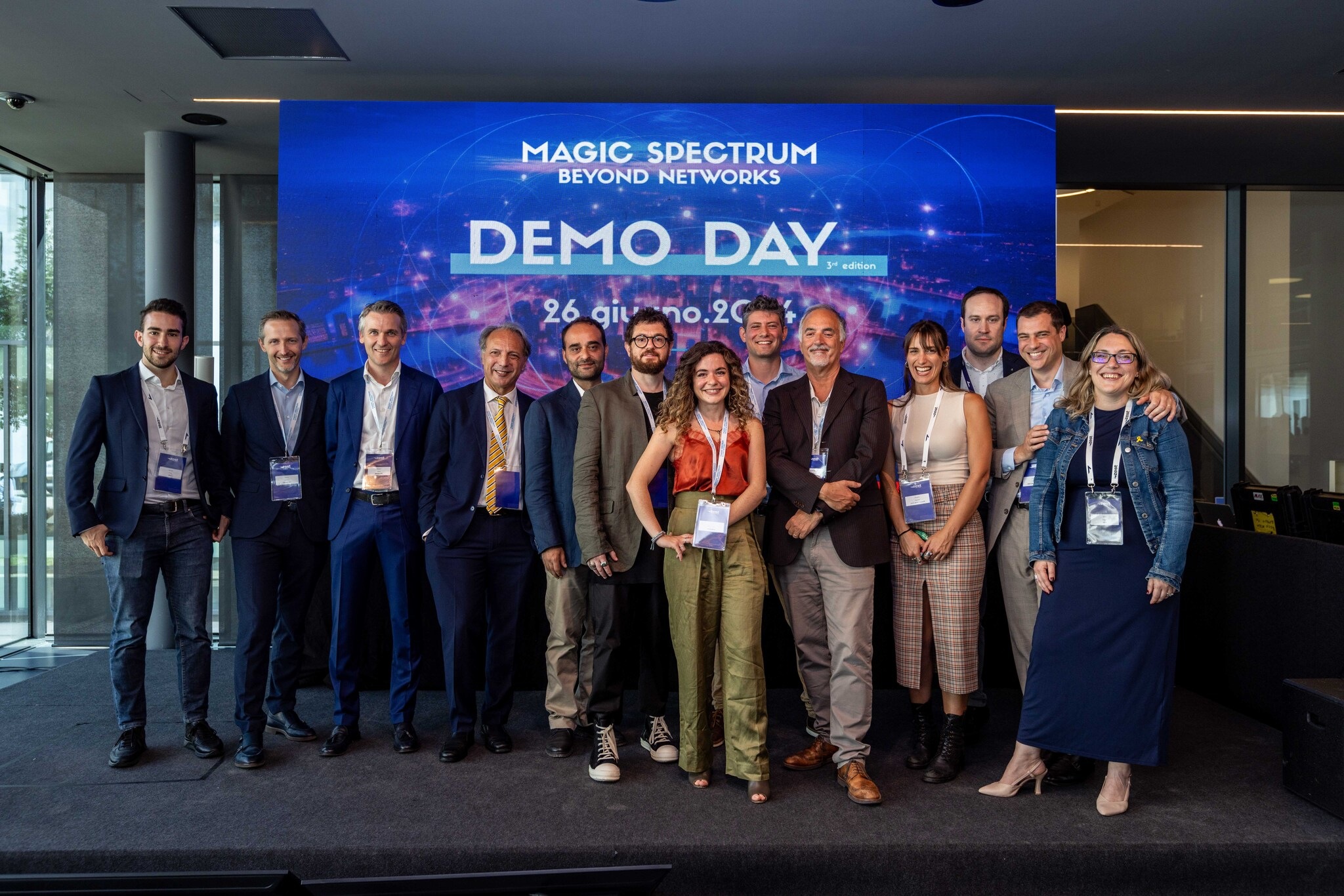
Magic Spectrum tackles ICT, IoT and connectivity. Its third-edition announcement reported 20 participating startups across three years, collectively raising more than €6.5 million. Partners included Cisco, Inwit, Iren and Reale Group. Industrial partners contribute a route toward real applications; technical partners contribute expertise. A name on a partner list still needs to become a useful conversation.
Other routes include Apside, the joint venture with Intesa Sanpaolo, and Open T with Tinexta. Their stated endowments are €15 million and €5 million respectively. Apside targets post-seed companies with validated products. The distinction matters: a founder still testing whether the problem exists needs different help from a company preparing to expand a product customers already use.

04 / The awkward arithmetic
Zest’s own economics supply a necessary interruption. Successful exits and a profitable operating organisation are separate achievements. In its March 2026 annual release, the group reported 2025 revenue and other income of €9.697 million, operating costs of €10.961 million and an operating EBITDA loss of €640,000. The adjusted 2024 comparison showed a €4.142 million operating EBITDA loss.
The first-year difficulty was the cost of running the combined business. Reporting on 2024 described a reduction plan launched in the second half, targeting roughly €1 million in annual savings. By 2025, lower costs were visible. That response is more informative than guessing at a private change of heart: management’s observable course correction was to reduce the bill.
Different measures, same six months. Exit cash is not operating profit.
The September 2026 release keeps the picture mixed. Recurring operating EBITDA improved by €486,000 year on year, while total operating EBITDA remained negative at €863,000. The group reported over 229 active portfolio startups at June’s end. A sizeable portfolio supplies opportunities; it also requires continuing work and patience.
05 / A new fund, a familiar test
In July 2026, Zest and Eureka! launched Z_One, targeting €55 million for early-stage AI Applications and UrbanTech investments. Zest committed €5 million and acts as sponsor and advisor; Eureka! manages the fund. The €55 million figure is a fundraising target. It should not be mistaken for a completed raise.
The launch also moved the people: Luigi Capello relinquished the group CEO role to work on the fund, remaining a Zest board member. Marco Gay became CEO, and Marco Giovannini became non-executive chairman. For founders, the enduring question is fit. This model requires a scalable business, willingness to test assumptions and a useful match with potential partners. A local business seeking ordinary lending, or a founder unwilling to revise the pitch after customer feedback, has a different problem to solve.