A new food ingredient can have an excellent laboratory result and still have nowhere to go. Someone must manufacture it, test it in an actual product, agree to buy it and finance the awkward months in between. Eatable Adventures has made that stretch of road its business. The Madrid company operates where food science meets the factory calendar, bringing startups together with manufacturers, investors and public institutions.
Its Italian accelerator, FoodSeed, supplies a useful opening scorecard: 21 startups accelerated and backed, more than 50 industrial pilots, and €10.2 million raised in follow-on funding, according to Eatable’s published case study. Those numbers describe activity and financing, rather than a portfolio of finished commercial successes. Even so, they ask a better question than the usual accelerator photograph: what happened after everyone left the stage?
Founded in 2015, Eatable combines three businesses that often sit apart: innovation consultancy, startup acceleration and venture investment. Its proposition is that food companies need help finding usable technology, while technology companies need help becoming usable suppliers. A meeting can start that process. A production trial gives it something to argue about.
FoodSeed’s reported results across its first three years. Pilots are trials; funding is capital raised.
A kitchen-school detour, then a bigger appetite
The origin has an appropriately culinary wrinkle. In a 2021 retrospective interview, journalist Beatriz Romanos recalled meeting José Luis Cabañero at a Madrid foodtech gathering in July 2015. He brought experience in technology businesses and a recent spell at Le Cordon Bleu. “Quiero montar una aceleradora,” he told her: “I want to build an accelerator.” The ambition arrived before the name.
Cabañero, now CEO, and co-founder Mila Valcárcel, managing partner, lead a company whose interests have widened beyond its early hospitality focus. In that interview, Cabañero described opportunities throughout food production, retail and restaurant operations. He also pointed to the pandemic as evidence that the food system needed to evolve with greater attention to sustainability. That is a documented change in emphasis, rather than a tidy tale of one failed venture producing an overnight revelation.
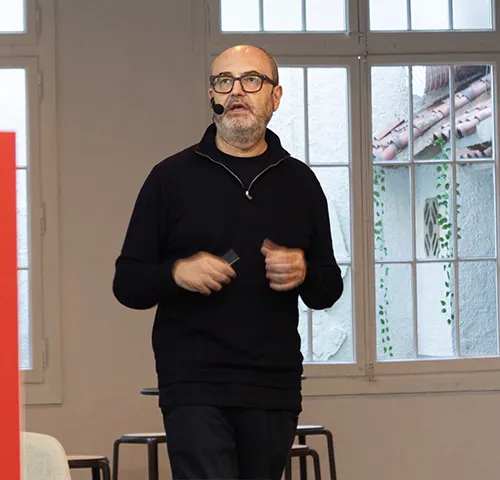
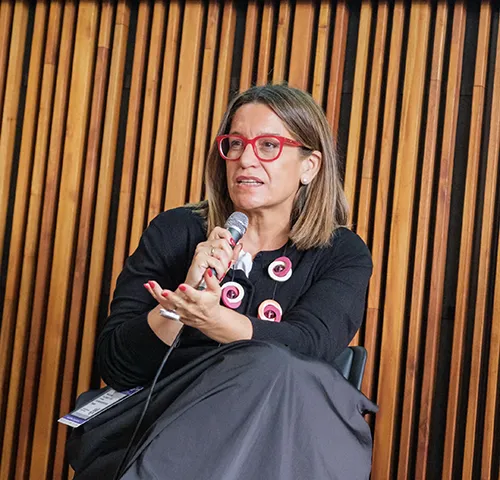
Today, Eatable describes a team of food scientists, engineers, investment specialists and former founders. Its stated working principle is compact: “We test in real conditions, scale what holds up, and own the result.” That is the culture it advertises. The interesting test is whether its programs make the handoff from technical enthusiasm to commercial responsibility easier.
Italy supplies the proving ground
FoodSeed began in 2023 within CDP Venture Capital’s national accelerator network, with Fondazione Cariverona and UniCredit among its promoters and co-investors. Eatable operates the program and also invests. The launch announcement put the initiative’s resources at more than €15 million, connecting financial backing with an Italian food industry capable of testing what the startups were developing.
The problem identified in Eatable’s case study came before a sales team could fix it. Startups emerging from strong research lacked industrial validation and suitable capital to reach the market. FoodSeed’s intervention was to run the accelerator, arrange trials with industrial partners and help companies become more credible candidates for subsequent investment. The weak connection was between experimentation and adoption.
For the fourth cohort, FoodSeed advertises six months of tailored support, weekly follow-up, €250,000 in equity investment per selected startup and possible follow-on investment of up to €500,000. Equity is a meaningful part of the price: a founder is entering an investment relationship. The larger follow-on amount is a possibility for selected performers, not an automatic second payment. The 2026 call is closed.
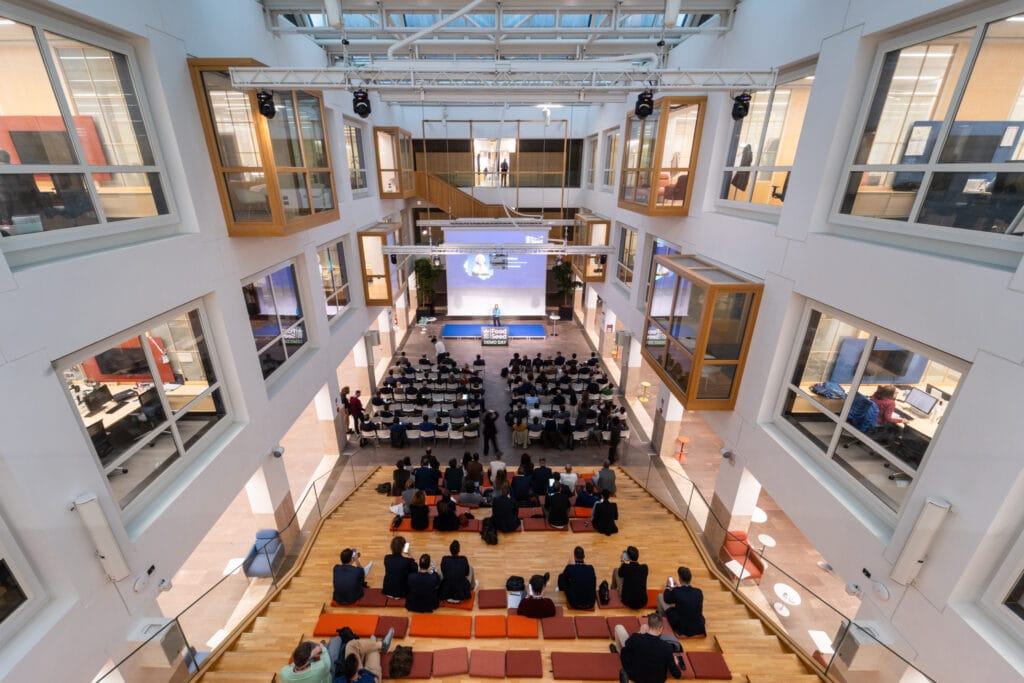
That progression has a recent example. In July 2026, Eatable announced it had co-led a €2.3 million seed round in FoodSeed participant Nous through its investment vehicle Accelera Ventures, alongside dsm-firmenich Ventures and CDP Venture Capital. Nous is commercializing Koncentra, a botanical functional ingredient. The announced work includes further clinical studies and supply-chain expansion. Funding here buys another stage of development and market preparation; it does not settle every scientific or commercial question.
Read the euros before adding them
Eatable’s own investment story requires careful bookkeeping. In January 2024, it announced Europe Foodtech Acceleration Fund I SCSp, a €30 million vehicle, alongside €6 million of initial investments in nine projects. FoodNavigator subsequently reported that 50 percent of the vehicle had closed. Announced size, committed capital and money deployed describe different stages of a fund’s life.
Three views of the same financing effort. Do not add them together. Closed amount calculated from the reported 50% of €30m.
The earlier €50 million Evolution announcement belongs to its own historical context. In November 2021, Cabañero said 40 percent had been committed. Treating these announcements as an €80 million pot available today would outrun the evidence. Neither should be confused with financing raised by Eatable’s operating company or with its revenue.
The business model combines corporate and institutional services with accelerator operations and startup equity investment. The investment side depends on how portfolio companies develop; the services side involves designing and running innovation work for organizations. For a prospective customer, the useful exercise is to define the assignment precisely: a search for technology, an industrial trial, a deployment project or a continuing program.
A dairy company investigates the next milk
Mylkcubator gives the corporate work a memorable shape. Launched with Pascual Innoventures in 2021, it focused on cellular agriculture and fermentation technologies for the dairy value chain. The unusual customer was an established dairy business interested in scientific approaches that could change how dairy ingredients are produced. Eatable helped provide the incubation structure and startup connection.
The original program described a six-month journey covering cell-based, fermentation-based and enabling technologies. Its technical premise was specific: milk’s functional proteins offer an entry point for alternative production methods. That makes the project more focused than a general invitation to invent “the future of food.” It gives researchers a category, an industrial audience and a reason to test particular applications.
By September 2024, Pascual’s program had broadened into areas including egg components, coffee, fats and cocoa. Pascual was extending its investment across the first three editions to €2 million, according to Cinco Días. The expansion shows a dairy-led experiment reaching into neighboring ingredient problems. For another incumbent considering something similar, the copyable move is to define the technical question closely enough that a startup can actually answer it.
The buyer needs a job to do
Eatable’s corporate offer now includes a 120-day validation sprint, technology scouting and what it calls venture clienting: helping established businesses work with startup solutions. Its deployment services emphasize an accountable business owner, performance measures and a route into the customer’s operations. The customer is buying assistance with a business problem, such as finding a technology worth testing or getting a validated approach adopted.
Agrofood BIC illustrates the shared version of that search. Five Italian food companies sought a structured way to find new opportunities together. Eatable designed international scouting and a portfolio-management framework. Its case study reports more than 400 startup applications and two strategic investments. A common search can gather possibilities for several companies, while each eventual project still needs a commercial purpose.
A production trial gives scientific promise something practical to answer to.THE INDUSTRIAL TEST
The broader market offers alternatives including Rockstart, Plug and Play and Techstars. Eatable’s particular combination centers on agrifood expertise, industrial access, investment and public-private programs. A founder should compare those connections against the company’s immediate obstacle. The most relevant accelerator for a packaging experiment may be the one that can arrange the right manufacturing trial.
Madrid to Bogotá, with homework
Governments and regional institutions are another customer group. Eatable designs and operates hubs intended to connect research, industry, startups and finance. Its Colombia Agrifood Innovation Hub names the Bogotá Chamber of Commerce, Universidad de La Sabana, Alianza Team and Compensar among its partners. The case study reports engagement with more than 200 startups and describes a response to previously fragmented innovation efforts.
Raíces brings the cross-border element into a startup program. Its second edition, announced in June 2026, offers 16 weeks with in-person bootcamps in Madrid and Bogotá, €100,000 of initial investment and potential total investment up to €1 million. ICEX, AZTI, the Bogotá Chamber of Commerce and Bimbo Ventures are named partners. The published June application deadline has passed; this is a program to follow for subsequent opportunities.
The practical attraction is reciprocal access: Spanish startups can test with Latin American companies, while Latin American founders gain connections in Spain and Europe. Eatable reports that the first edition selected five startups and developed around 15 pilots. Shared language can ease introductions. The program still has to help each business establish that its technology fits a particular customer and market.
Make the next trial count
A founder can use Eatable to seek industrial validation, refine a business model and meet investors familiar with food technology. A corporate team can commission scouting or deployment work. A public institution can seek help coordinating a hub. Eatable directs startups through official program applications and says it does not review pitch decks by email. Choosing the correct entrance is the first practical step.
The transferable lesson is to design the next decision before starting the experiment: identify the user, agree what evidence matters and give someone responsibility for acting on it. That approach is less useful when a technology is too immature for a meaningful industrial trial, when the prospective buyer has no capacity to adopt it, or when the founder’s financing cannot accommodate development time. Introductions cannot remove those conditions.
Eatable’s most persuasive story therefore sits in the details: a defined ingredient challenge, an investor connected to an accelerator, a manufacturer willing to run a test. The company’s future will be judged by how often those arrangements lead to products that customers keep buying. Foodtech needs the laboratory result. Then it needs a second order.
Follow the work
Explore Eatable Adventures, its startup programs, FoodSeed and news and research.
Follow on LinkedIn, Instagram, X and Facebook. Watch the TodoStartups interview with Cabañero.