Consider the predicament of a financial startup that needs a bank. The software works. The pitch is polished. Yet the person who can approve a partnership occupies a different world, with different obligations and a calendar that seems designed to repel strangers. Finnovista has made a business out of this distance. Its interesting asset is the relationship between people who have something to build and institutions with the resources to help them build it.
- Founders get investment expertise, acceleration and routes into financial institutions.
- Corporates get help finding startups, defining opportunities and running pilots.
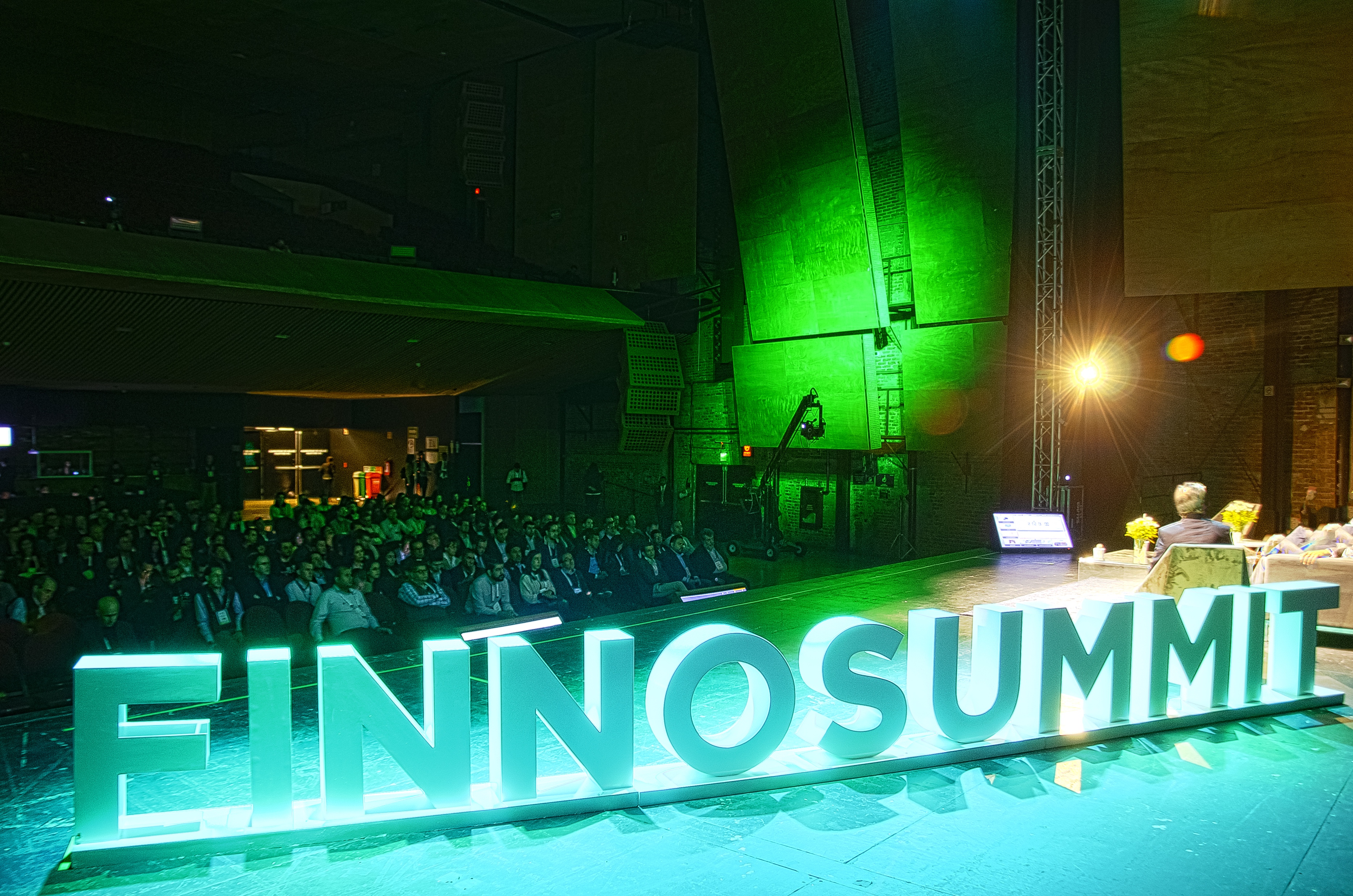
- Investors and policymakers get country research; the wider industry gets FINNOSUMMIT.
The meeting before the money
Fermín Bueno and Andrés Fontao began their joint journey in 2013. Bueno brought technology and investment experience; Fontao had worked in mobile banking and fintech expansion. They also created FINNOSUMMIT that year. A gathering came before a fund. That sequence explains much of the company: first bring the relevant people together, then discover what they can accomplish with one another.
Experience did not immediately confer authority. In a 2024 interview, Bueno identified early credibility as the central obstacle. Partnerships with recognized organizations helped establish trust. His account makes the young firm’s problem unusually concrete: finance is regulated, and a promising newcomer needs more than a persuasive introduction to itself.
“Credibility was the number one challenge”
Fermín Bueno, co-founder, speaking in 2024
The company’s present structure preserves that early logic. Events create encounters. Research makes an unfamiliar market legible. Corporate programs give those encounters a commercial assignment. Investment supplies capital and a continuing relationship. Read separately, these look like four businesses. Read together, they describe several ways to make the same introduction useful.
A map you can actually use
In 2016, Finnovista began publishing its Fintech Radar reports. They map national markets and examine the trends shaping them. Financial institutions, investors, technology companies and public bodies use them to plan innovation and partnerships. There is an appealing practicality here. Before asking which startup deserves attention, establish which startups exist and what they do.
The reports also reveal how the conversation changes. The Mexico 2026 edition, presented with Mastercard and Galileo Financial Technologies, identified 795 Mexican fintech startups. It reported that 77% integrated artificial intelligence into operations, while 80% already collaborated, or were working toward collaboration, with traditional banks. Those are findings about the surveyed ecosystem, rather than Finnovista’s own customers.
The implication is worth considering. A founder may tell a story about replacing an incumbent while depending on that incumbent for distribution or infrastructure. Finnovista’s own manifesto explicitly argues for balanced partnerships, especially in infrastructure and embedded finance. Its business makes sense in a market where the old institution and the new company often need each other.
Ten startups, three months, many doors
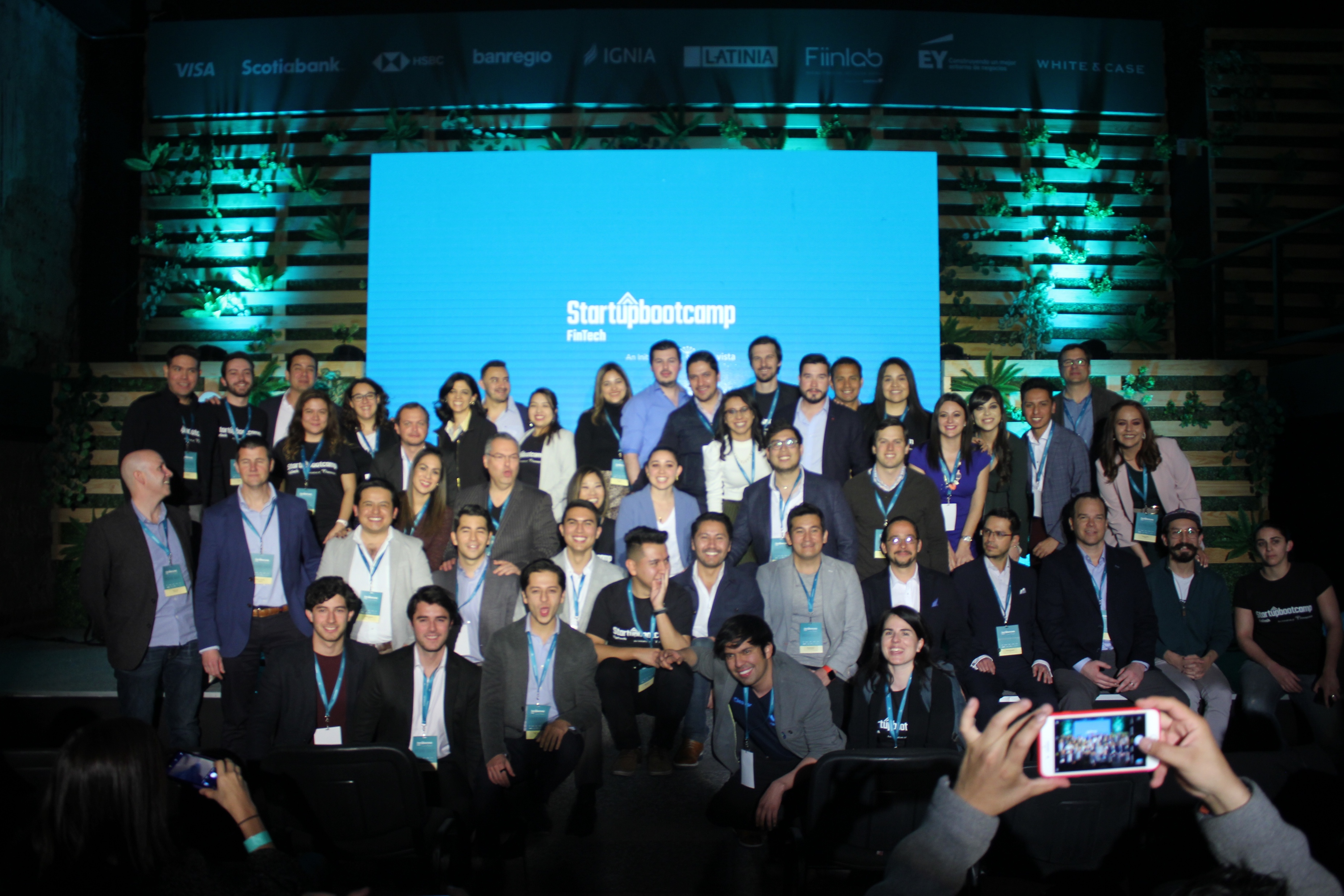
Finnovista formed its Startupbootcamp alliance in 2016; the Mexico City program arrived in 2017. Its published model describes three intensive months for ten early-stage startups, with seed funding, workspace and access to 400 mentors and industry experts. Named corporate partners include Visa, Scotiabank, HSBC Mexico and Banregio. These describe the program’s established design, rather than an invitation to a currently open cohort.
The value becomes clearer in alumni accounts. Prometeo’s Ximena Aleman describes adjusting commercialization for Mexico and validating the product in another market. Atrato’s Juan Casián recalls an introduction to a debt fund that later financed the company. Dapp’s Antonio Pelaez describes connections with banks and Visa. These company-published testimonials are individual experiences, but their common subject is revealing: access to people who could change the next step.
There is a separate scaling program for businesses with initial funding and validated models. The distinction matters. A company still discovering its customer needs different help from one trying to cross a border. In the third Scale FinTech cohort announced in 2019, six companies were selected from 127 applications. Getting into the room was itself a selective process.
The corporation has homework, too
Finnovista’s corporate innovation work starts with opportunity mapping and extends through startup pilots, scaling solutions and venture building. For a bank or insurer, the problem is often choosing a useful experiment. A list of exciting startups is easy to admire. A pilot with a defined business objective is easier to evaluate.
Its commercial activities therefore sit across consulting engagements, sponsored programs, event tickets and venture investment. The categories explain how the business operates without pretending that every relationship has the same price. The 2020 Visa Everywhere Initiative offers a concrete historical example: ten finalists received a three-week virtual immersion program, including pilot-planning workshops, and three prizes totalled $50,000. Access was organized around an assignment.
The introduction needs a destination
Finnovista.vc focuses on pre-seed and seed companies in Spanish-speaking Latin America, typically before product-market fit. Its first fund, launched in 2017, is fully invested according to the firm’s published strategy. Bueno’s investment thinking has evolved toward embedded finance: financial functionality delivered through infrastructure and other businesses’ customer experiences. That broadens the possible partnerships beyond the familiar bank-and-startup pairing.
Compared with choosing only a fund, an accelerator or a conference, Finnovista offers several routes into the same specialist network. Its differentiation is that combination. The reader’s copyable lesson is modest: identify the commercial bottleneck, then organize the people and information needed to address it. An introduction without an objective can become an expensive exchange of pleasantries.
That approach depends on willing partners and something worth testing. A network cannot supply customer demand, and venture-oriented support suits founders pursuing scalable companies. Finnovista’s most useful promise is consequently specific: help the entrepreneur reach people and resources that a financial product needs. The clever code still matters. So does getting the right person to look at it.
Follow the conversation
Finnovista · FINNOSUMMIT · Read the Radars · The founder interview
LinkedIn · X · Instagram · Facebook · Watch FINNOSUMMIT talks