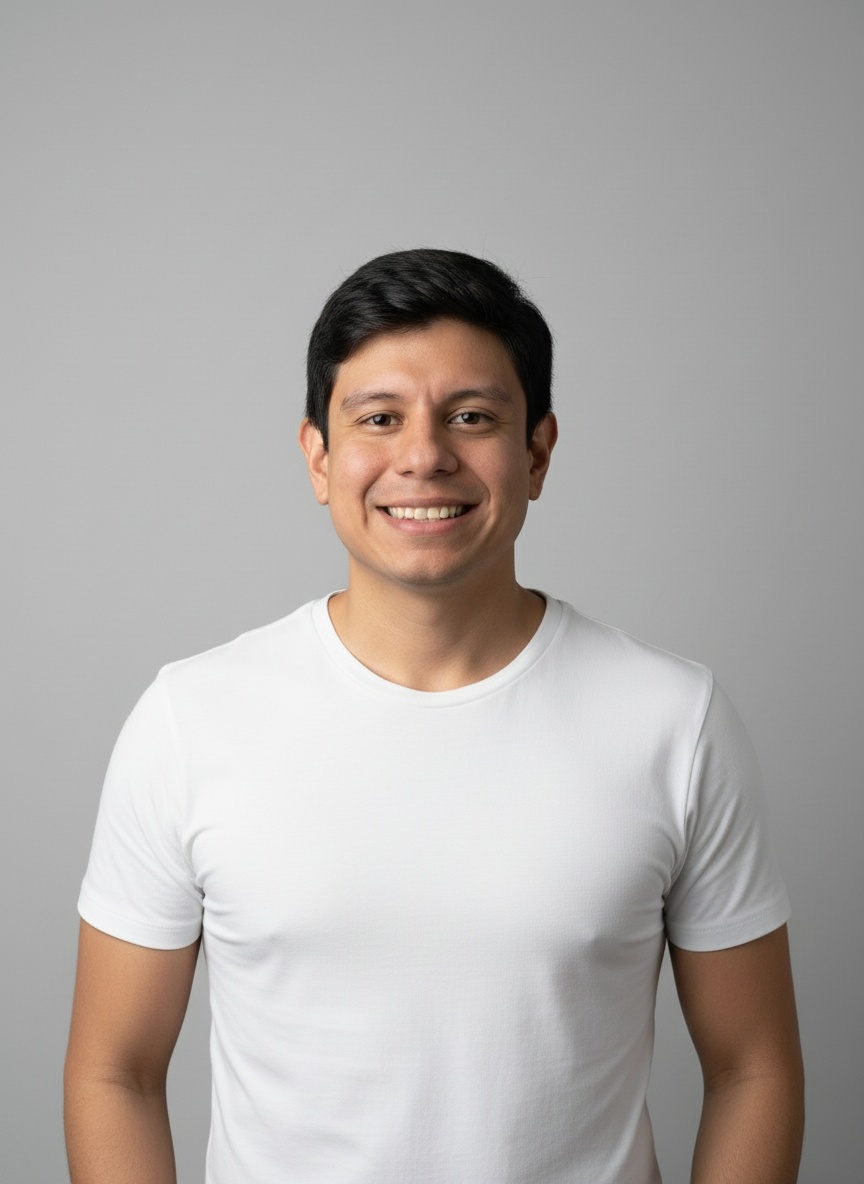
The device was designed to stop people from sweating. Controlled electrical stimulation applied to the skin, a precise current doing what no deodorant could. Tony Cueva Bravo built it in Peru, pitched it in Chile, and walked away from both competitions with prizes and $57,000 in funding. Then he built something else entirely.
That pivot - from medical hardware to venture capital - isn't as strange as it sounds once you understand how Tony thinks. Both disciplines require the same underlying skill: reading systems. A human body's sweat glands. A continent's payment infrastructure. The question is always the same: where is the bottleneck, and what unlocks it?
Today, Tony Cueva Bravo is a Venture Partner at Hustle Fund, one of the most active pre-seed investors in the United States, writing checks into the earliest-stage startups he can find across Latin America, Asia, and Africa. He is also, simultaneously, the founder of Emerging Fintech - a weekly newsletter and podcast that reaches 2,500+ banking executives, fintech operators, and venture investors who want to understand what's happening at the frontier before everyone else does.
The best fintech bets in the next decade won't come from San Francisco. They'll come from markets where the existing system is so broken that builders have no choice but to start from scratch.
- Tony Cueva Bravo, Investment Thesis
The path from Lima to San Francisco ran through Seoul, Ann Arbor, and Santiago. In 2015, Tony attended the MIT Global Entrepreneurship Bootcamp in South Korea - one of those rare programs that doesn't teach you a framework so much as it removes the psychological ceiling you've built for yourself. He came back describing a "360-degree turn." That's not hyperbole. He spent the next decade proving it.
At the University of Michigan, where Tony completed his Master's in Biomedical Engineering, he also began his venture career at Dorm Room Fund - the original student-run venture fund, backed by First Round Capital. He was learning to invest while learning to engineer, which turns out to be an excellent combination. Engineering teaches you to think about systems under constraint. Investing teaches you that the constraint is usually not what the founder thinks it is.
The Rebill chapter is instructive. Tony joined as Head of Business Development when the company was still establishing itself as payment infrastructure for Latin America - the "Stripe for LatAm" shorthand that stuck. He drove 50% month-over-month growth and closed multiple enterprise deals. The number matters less than the method: he found the bottleneck (enterprise adoption), designed the unlock (direct BD motion), and executed. Same playbook he now brings to founders as a fractional operator through Orbis Capital.
What separates Tony from the average fintech commentator is that he doesn't just observe - he maps. His Latin America Fintech Market Map 2024 circulated widely in venture circles, generating the kind of engagement that happens when someone has done the actual work of tracking every relevant company in a space. His articles on the "Fintech Premium Effect" - the idea that embedding financial services can dramatically boost a company's valuation multiple - aren't theoretical. They're field notes from someone actively evaluating deals through this lens.
The three markets Tony focuses on - Latin America, Asia, Africa - share a structural characteristic: existing financial infrastructure was either absent, insufficient, or actively exclusionary when fintech founders arrived. That creates both the problem and the opportunity. In markets where the incumbent is a state bank with a six-week loan processing time, a startup offering 48-hour approval is not competing at the margin. It's rewriting the rules of the game.
His investment thesis at Hustle Fund clusters around a few convictions: infrastructure plays ("picks and shovels" in fintech tend to win regardless of which application layer succeeds), B2B lending using alternative data (the underwriting edge is still largely untapped in emerging markets), and open banking platforms that can wire together fragmented financial ecosystems. These aren't trend bets. They're structural arguments about where value will accumulate as financial services digitize.
The newsletter and podcast are not marketing. They're how Tony thinks out loud - and they've attracted an audience of people who are paid to think about the same problems. Banking executives read Emerging Fintech. So do the founders Tony might back. So do his competitors. He doesn't seem bothered by the last group. Mapping a space and writing about it publicly tends to make you more formidable, not less. The best analysts are the ones who can synthesize across sources, and you only get good sources if people trust you.
Peru doesn't produce many venture investors. That's the fact Tony doesn't belabor but that shapes everything about his perspective. He has lived in the markets he invests in. He knows what it feels like to build something in a country where the infrastructure assumes you'll fail, where capital is scarce and the system offers little amnesty for first-time founders. He knows because he was one. The $57,000 he raised from two startup competitions was real money that he actually deployed toward a product that actually existed. The empathy is earned.
What comes next is what Tony calls the "Selection Imperative" - a thesis that in emerging markets, portfolio diversification is a strategy for mediocrity. The best outcomes come from precision: the right team, the right market timing, the right problem, the right infrastructure moment. In fragmented ecosystems with less data and fewer comparable companies, pattern recognition matters more than coverage. Tony has been building that pattern recognition for a decade. He's only getting started.