A venture capitalist can put money into your company. The more useful trick is putting the right person in your path. Investible has built its business around that second transaction: a customer introduction, an experienced operator, somebody who has already wrestled with the problem currently eating your weekend. The cheque opens the relationship. A club helps populate it.
The Sydney-based firm pairs managed venture funds with Club Investible, a syndicate whose members can invest in individual startups alongside those funds. Its website reports more than 250 members and more than 150 companies backed across the broader business. That makes its central proposition easy to picture: a professional investment team with a much larger address book attached. Meet the firm.
First came the people. Then came the fund.
Creel Price and Trevor Folsom were business partners before they became venture partners. They founded Blueprint Management Group in 1998 and sold it in 2008 for a nine-figure sum, according to Investible’s account. Folsom moved into technology investing; Price pursued entrepreneurship education, including work on the Branson Centre’s curriculum in South Africa.
An investor community began taking shape around 2010. Investible incorporated in 2014, and its first venture fund followed in 2018. The sequence matters. The network existed before the pooled fund, giving the business a way to connect investors and founders that did not begin with a fund subscription form. Folsom’s early backing of Canva and Ipsy belongs to those angel-investing roots. The founding story.
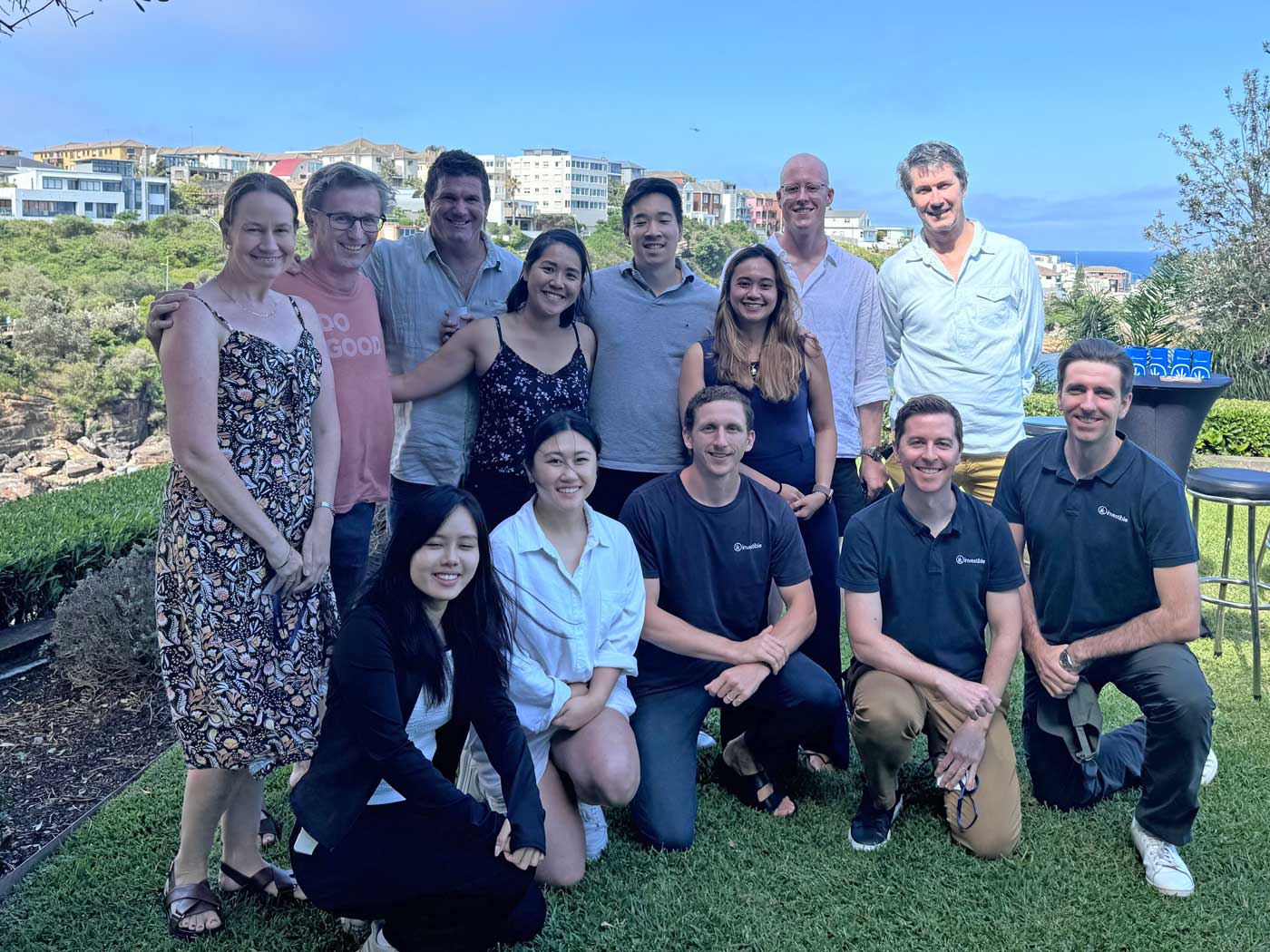
Today, Charlie Ill is listed as CEO. His background includes investing across several regions; the team also brings startup, finance and operational experience. Price leads the associated Greenhouse climate business, while Folsom chairs Investible. The firm’s public culture centres on understanding founders through experience. Its team biographies give that claim some texture, though a biography is hardly a substitute for asking a portfolio founder how an investor behaves when a quarter goes badly. Meet the team.
A club with a job to do
Club members can refer businesses, review curated opportunities and contribute after an investment. They may provide introductions or take advisory roles; the model includes incentives for certain contributions. The syndicate also appears as a single entity on a startup’s cap table. For a founder, that is an appealing piece of administrative compression: access to several investors without giving each one a separate line in the ownership register.
Entry is restricted to eligible sophisticated or wholesale investors. Members generally also become limited partners in an Investible fund, although exceptions are possible. Pooled funds offer a managed portfolio; the club lets members choose additional individual exposures. Those choices still need buyers when investors want to sell. The possibility of transferring a holding is different from a liquid market. How the club works.
That puts Investible between familiar alternatives: a managed VC fund and a more individual angel-investing experience. It is not alone in backing founders early. Blackbird, for example, also prefers initial investments at pre-seed, seed or Series A and emphasises its founder community. Investible’s distinguishing feature is the explicit pairing of fund management with continuing deal-by-deal participation. A founder comparing firms should inspect who actually shows up to help. Blackbird’s approach.
The screening tool behind the relationships is a proprietary, 16-factor Investibility Index. Investible describes it as a data-informed framework with the founding team at its centre, and says it uses tools including Fingerprint for Success to understand teams. The practical idea is to make the assessment repeatable. For a founder, that suggests preparing evidence about the people building the company as carefully as evidence about the product. A structured process can organise judgment; it cannot turn a young business into a predictable outcome. The diligence framework.
The cheque has a scale
Investible publishes a typical initial cheque range of A$250,000 to A$1.5 million, with flexibility either side. Its generalist approach favours B2B and software-as-a-service businesses and excludes biotech. Most first investments are at pre-seed or seed, although the broader entry mandate extends to Series A. Australia, New Zealand and Southeast Asia are its main hunting grounds, with room for opportunities elsewhere.
For a founder, the practical entry point is an online pitch. The published process promises a response within two weeks, then sketches introductions, diligence, an investment committee and terms. Its illustrative schedule reaches funding discussions around week five; circumstances can alter that timetable. Getting a meeting starts an assessment, not a countdown to guaranteed cash. Pitch and process.
The fund figures describe a different pot of money. Investible lists its second generalist fund at A$51.6 million and its climate fund at A$32.7 million. These are investment vehicles, rather than financing rounds for the management company. The business pools investor capital and puts it to work in startups. Its economic purpose is to produce investment returns through those holdings. The fund structure.
Investible’s reported 2024 activity. Deal count and company count measure different things.
That distinction between categories is useful throughout venture capital. Investible reported four full exits and four partial exits in 2024, alongside those 44 investments. An exit count records activity, not the size or quality of a return. Its annual review nevertheless shows a business doing more than opening new positions: older holdings were also reaching transactions. The 2024 review.
Climate gets its own room
Investible’s climate strategy spans six areas: energy; buildings and cities; food and agriculture; transport; industry; and land and forest use. It employs a dedicated team and draws on specialist advisers. That organisation makes sense for a mandate crossing software, hardware and scientific development. An energy-storage business and a software subscription can both be startups while asking very different questions of the investor. Inside the climate strategy.
There is a physical expression of the idea, too. Investible incubated Greenhouse, a climate hub occupying 3,800 square metres in Sydney’s Salesforce Tower. The City of Sydney supported the hub with A$31 million. Investment NSW describes a community connecting climate businesses with international opportunities, including a Clean Tech to Singapore export stream. The public backing belongs to the hub; it should not be mistaken for a venture cheque written to one startup. Greenhouse in Sydney.
The regional ambition extends beyond Singapore. In October 2023, Investible and Mandiri Capital Indonesia signed a term sheet for a proposed joint climate fund, with plans for up to 30 percent of investments in Indonesia. The announcement tied Australian research and Singapore’s commercial connections to Mandiri’s Indonesian relationships. It offers a specific picture of what cross-border support could mean, while remaining a proposal rather than proof of a completed fundraise. The Mandiri proposal.
University research supplies another route. A partnership announced in December 2024 combines Investible with UNSW’s TRaCE commercialisation program. Its design includes a buy-back mechanism intended to recycle university funding into future companies. DeCarice, which develops hydrogen-diesel hybrid technology, was an early co-investment example. Alongside financing, the company benefited from research support and commercial introductions. The TRaCE partnership.
By February 2026, Investible described CounterCurrent as its third investment through that scheme. The company develops vessel-specific navigation guidance using ocean conditions. The round’s stated goals included turning pilots into contracts and expanding operations to 10-25 vessels. Those are useful milestones because they distinguish a promising model from a product that shipping customers will pay to use. CounterCurrent’s next steps.
Eighteen months can change the conversation
For founders wondering what persuades an investor, SPEC Toolbox offers a concrete example. In January 2026, Investible’s climate fund announced it had co-led the company’s A$3 million pre-Series A with Black Nova. The software connects structural engineers with information and tools for specifying sustainable building materials, starting with mass timber.
Investible said it had followed the company for 18 months, during which annual recurring revenue increased 13-fold. Its investment note describes an awkward existing workflow: engineers juggling spreadsheets and fragmented supplier information while manufacturers struggle to see how their products get specified. That is the operational failure the product addresses. The investment account does not establish that Investible previously rejected the business. It does show how a relationship accumulated commercial evidence. The SPEC Toolbox investment.
The lesson is refreshingly unglamorous. Keep a record of what you told an investor, what you delivered and what customers did next. A useful update makes the change visible. Revenue growth, repeat usage and paid deployments answer different questions; choose the measure that tests your particular business. Sending another attractive deck is easy. Giving someone a reason to revise their assessment takes work.
“Don't think that until you raise capital you can make a business. In actual fact, turn it inside out.”
Trevor Folsom · Day One interview
Next stop: oncology. Then orbit.
The generalist mandate remains broad. In March 2026, Investible announced participation in Lumonus’s A$28 million round, calling it Fund 3’s first investment. Lumonus builds software for oncology workflows. The round total describes the combined financing, not Investible’s individual contribution. Fund 3’s first investment.
Its second announced investment, in July, was Outlier Space, a company developing autonomous satellites for manufacturing materials in orbit and returning them to Earth. Investible joined a round led by GD1. Together, the two announcements show how far a generalist fund can travel without changing its basic instrument: buying an early ownership stake in a technology business whose commercial future remains unfinished. The Outlier Space investment.
These examples also clarify the conditions that make the proposition useful. Founders need ambitions and financing requirements that suit venture investment. Investors need the ability to hold uncertain, long-duration positions. A network helps only when its expertise matches the problem and somebody acts on the introduction. Investible has arranged the funds, the club and the specialist relationships. For each startup, the revealing question comes after the welcome email: who picks up the phone?
Follow the next investment
Explore the portfolio, read new investment notes, or follow Investible on LinkedIn, X and Facebook.
Watch: Building an angel investment portfolioInnovation Bay panel with Trevor Folsom