The Story
A dating app for founders and the investors who should already know them
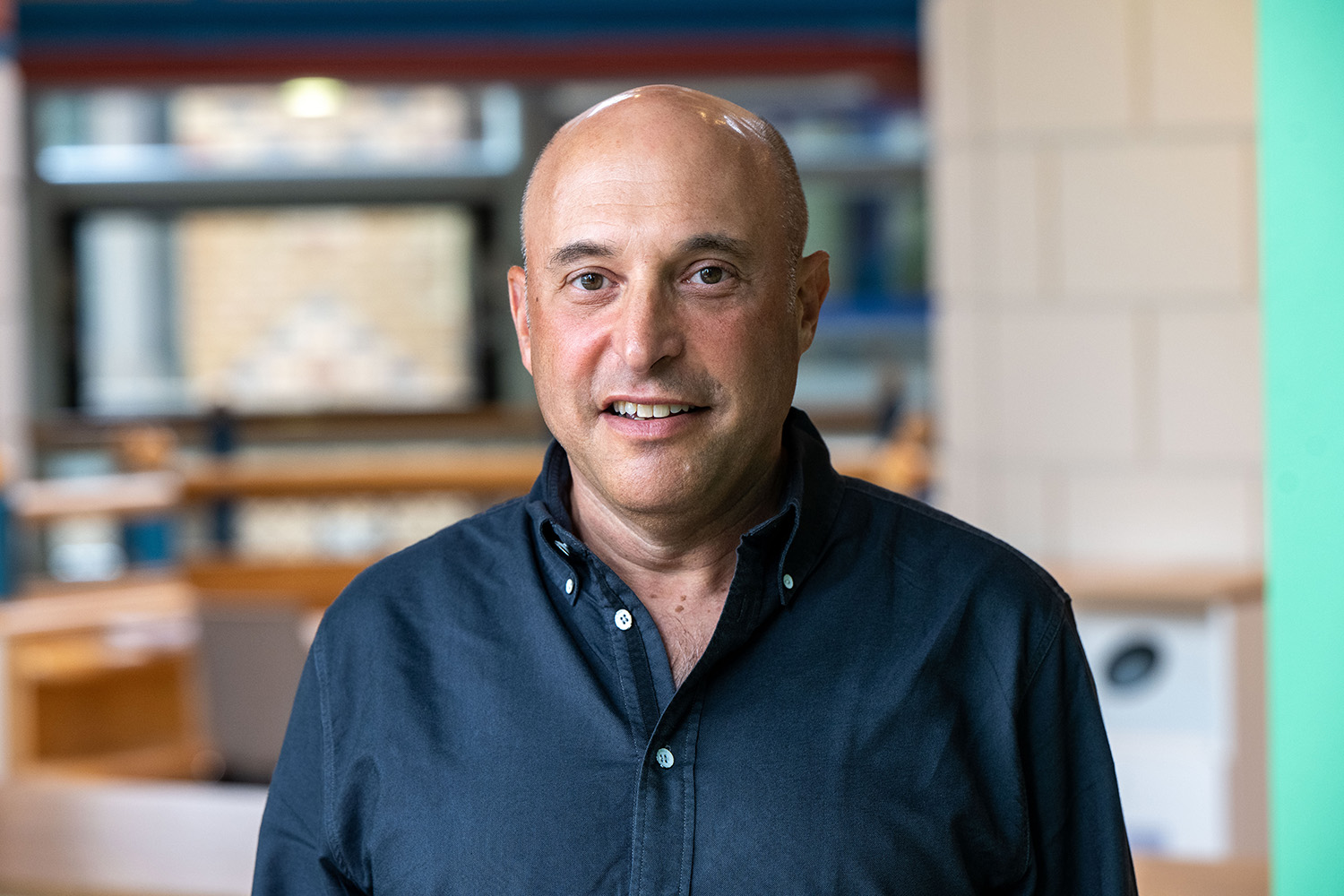
Simon Glass runs a company he likes to call the eHarmony of the venture community. The line is half a joke and entirely serious. Qodeo, the platform he founded and leads as CEO, does not hand out money, does not run auctions, and is emphatically not a crowdfunding site. It does something quieter and harder: it tells a founder in Durham or Lagos or Singapore which of 1,500 venture and private equity firms is actually likely to say yes - and then gets them in the room.
That is the whole bet. Venture capital, for all its talk of meritocracy, still moves on warm introductions and proximity. If you went to the right university, worked at the right startup, or drink coffee in the right three postcodes, the system finds you. If you did not, the system mostly does not. Glass built Qodeo for the second group - diverse, regional and female founders who have the company but not the contacts.
"Qodeo marks the end of the needle-in-a-haystack approach to finding investment."Simon Glass, founder & CEO, Qodeo
The platform pairs cold, quantitative data scraped from public sources with something rarer: proprietary qualitative intelligence gathered through in-person interviews with leading VC and PE firms, run in conjunction with teams from more than two dozen leading business schools. The interviews teach the algorithm what a fund actually wants - stage, sector, geography, the unwritten preferences a website never lists. Then smart matching does the introductions. Investors get in free. Founders pay for premium market reports. The result, Glass argues, is fewer wasted pitches on both sides of the table.
It is a strangely human product for a man who spent a chunk of his career in the most spreadsheet-heavy corners of finance. And to understand why Qodeo exists, you have to rewind through one of the more unlikely CVs in fintech.
Before Qodeo
Rock concerts, an iron ore mine, and a long way around
Glass graduated from St Catharine's College, Cambridge in 1989 and did not march straight into a bank. He went into the arts. He ran charity rock concerts and an arts and media production company, and was named an established producer by The Times. It is the kind of opening chapter most finance executives quietly delete from the bio. Glass keeps it - because the through-line of his whole career is putting the right people in the same room and watching something happen.
A career change pulled him back to Cambridge for an MBA at Judge Business School around the turn of the millennium. From there he crossed into venture capital at Amadeus Capital Partners - the Cambridge firm that was the first backer of ARM Holdings, the chip designer whose architecture now sits inside most of the phones on earth. He later traded the Fens for Western Australia, teaching entrepreneurship, innovation and strategy at the University of Western Australia Business School, before joining Westpac Institutional Bank as head of business.
The banking years were not small. Glass led over $400m in originations across securitization, asset finance, M&A and project finance. He worked alongside the CFO of Roy Hill on the roughly $9bn project finance for what became the world's largest private iron ore mine. He also, somewhere in all this, found time to write for the Financial Times. Few people can claim a byline in the FT, a producing credit, and a megamine on the same page.
"Corporate finance is very much forward-focused - but most systems out there are focused on historic reports."Simon Glass on the gap that became Qodeo
That observation is the hinge of the whole story. Sitting on both sides of the table - as a VC chasing deal flow and an operator chasing capital - Glass kept noticing the same waste. Entrepreneurs burned weeks identifying who might fund them. Investors drowned in mismatched inbound and still missed good companies, especially the ones outside their networks. The tools meant to help were all looking backwards, at what had already happened, instead of forwards, at the match that could.
So in 2012 he built the tool he wished he had. The Qodeo beta launched in November 2013 with exactly one investor on board - a former contact from his Westpac days who took the first leap of faith. By early 2015 the platform tracked roughly 15,000 organizations and was averaging a few thousand page views a month. A decade on, those numbers have multiplied: 17,000+ organizations, 1,500 VC and PE firms holding over £550bn, and a two-sided network of 20,000-plus founders and 7,400-plus investors spanning the UK, US, Australia, Singapore, Switzerland and Japan.
The Mission
Democratizing venture, out loud
Glass does not describe Qodeo as a marketplace. He describes it as a campaign. The company runs Democratizing Venture summits, a partner program - law firm Cozen O'Connor signed on in 2025 as its first law firm partner - and a steady drumbeat of workshops aimed at demystifying how money actually moves. In April 2025 he returned to Cambridge Judge Business School to lead a Masters in Finance class and deliver Qodeo's "fundraising mythbusting" workshop, eleven myths that founders, in his telling, almost always get wrong.
The focus on diverse, regional and female founders is not a marketing veneer bolted onto a neutral product. It is the reason the product is shaped the way it is. On The Purse Podcast in early 2026, Glass walked through the mechanics of unconscious bias in early-stage investing, the stubborn gap in who angels and VCs actually back, and why a matching engine - blind to the warm-intro hierarchy - can move the needle where good intentions have not. He is careful, and consistent, about what Qodeo is not. Think LinkedIn, he says. Think a dating app. It makes founders aware of the investors who fit. It does not write the check.
"Building a globally scaleable business is a challenge. It's scary. But it's also incredibly exciting."Simon Glass
There is a tidy symmetry to it. The man who once put bands and audiences together, then companies and capital, then a mine and $9bn, has spent the last decade-plus building software that does the same thing at scale: introductions that actually close. Qodeo is run across three cities - London, West Palm Beach, and Durham, North Carolina - which says something about both its ambitions and its founder's appetite for crossing time zones to make a match.
Glass is, by any measure, an unusual fit for the fintech founder archetype. No teenage coder origin story, no garage. Instead: three Cambridge degrees, a corporate finance grounding from London Business School, a producing credit, a megamine, and a conviction that the most valuable thing in venture is not capital but the right introduction at the right moment. He turned that conviction into a company. The needle, he insists, no longer has to hide in the haystack.
By The Numbers
A career that refuses one lane
Capital Simon Glass has helped set in motion
Bars scaled for illustration. Figures self-reported by Qodeo and public profiles.