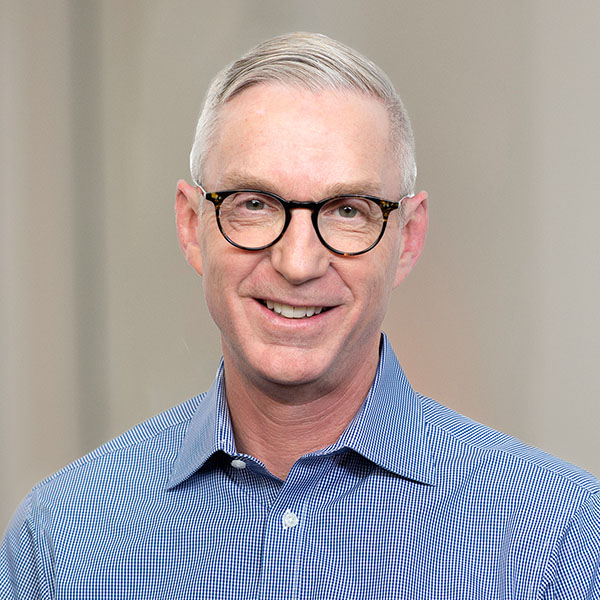
An operator, not a lab coat
The standard origin story for a cancer-company CEO usually starts at a lab bench. Tom Soloway's starts somewhere else - in finance, operations, and the machinery that turns promising science into a company that can survive long enough to test it. His undergraduate degree, from the University of Southern California, is in Entrepreneurial Studies. His graduate degree is an MBA in finance from Georgetown University. In an industry crowded with PhDs, that background is unusual, and it shaped how he works.
Soloway spent more than 25 years in the life sciences before taking the top job at T-knife Therapeutics, and he collected nearly every senior operating title along the way. He began on the investing side as a principal at Montreux Equity Partners, a venture capital firm backing early-stage healthcare and life sciences companies. That vantage point - watching which young companies made it and which ran out of runway - would inform the rest of his career.
From venture capital he moved to building. He co-founded Transcept Pharmaceuticals, first as senior vice president of operations and chief financial officer, later as executive vice president and chief operating officer. He then became chief financial officer of Ascendis Pharma, the biopharmaceutical company built around its TransCon technology platform, before joining the gene therapy company Audentes Therapeutics as executive vice president and chief operating officer. Each stop added a piece: how to raise money, how to run operations, how to steer a company through the awkward stretch between science and product.
Taking the knife
On January 19, 2021, T-knife announced Soloway as its chief executive officer, appointing Camille Landis as chief business and financial officer on the same day. T-knife was, and is, an unusual company. Its science traces back to Berlin - specifically the Max Delbruck Center for Molecular Medicine and Charite University Hospital - and rests on a proprietary humanized T-cell receptor mouse platform designed to generate T-cell receptors that can recognize cancer. The premise is simple to state and hard to execute: engineer a patient's T cells to find and kill solid tumors.
That "solid" part is the whole challenge. The cell therapies that made headlines over the past decade largely treated blood cancers. Solid tumors, which Soloway notes make up roughly 90 percent of newly diagnosed cancer cases, are a different problem. They surround themselves with an immuno-suppressive environment that wears down the very immune cells sent to attack them. T-knife's answer is to make the cells tougher.
Soloway describes the process in plain language. The company, he says, "supercharges" its T cells - engineering them to be both potent and durable inside hostile terrain. It is the kind of description that translates a dense scientific idea for the people who fund it, and translation is a large part of a biotech CEO's job.
Berlin heart, San Francisco wallet
One of the more revealing decisions of Soloway's tenure is what he did not do. As T-knife expanded into the United States and raised American capital, the obvious move would have been to consolidate everything stateside. He kept the company's "center of gravity" in Berlin instead, planning early proof-of-concept studies in Germany and Europe while banking and business development stretched to San Francisco.
His logic is that capital and science no longer need the same passport. Investors follow good data wherever it is generated, and T-knife's data is generated in Berlin. The result is a genuinely transatlantic company - European research anchored by American financing - held together by an executive comfortable on both sides of the balance sheet and the ocean.
Capital efficiency as a strategy
If there is a single thread running through Soloway's public comments, it is discipline about money. He talks about staying "highly focused and capital-efficient," about remaining "lean" and "agile." Coming from a former venture investor and serial CFO, these are not throwaway phrases. They describe a specific bet: that a smaller, sharper company that spends carefully can carry a hard scientific idea further than a sprawling one that spends fast.
The strategy met its first real test in late 2025, when T-knife filed a clinical trial application for the Phase 1 ATLAS trial of TK-6302, a "supercharged" PRAME-targeted TCR-T therapy, with the study expected to begin in the first half of 2026. For a company Soloway took over in early 2021, reaching a first-in-human filing while staying deliberately lean is the clearest evidence yet of the playbook working as designed.
Whether the science ultimately delivers is a question only the clinic can answer. What Soloway has built in the meantime is the thing that gives the science a chance: a focused, funded company with the runway to find out.