The most revealing number in Egypt Ventures’ recent history belongs to somebody else’s accounts. In November 2025, GlobalFoundries bought InfiniLink, a semiconductor startup with engineering roots in Cairo, for $48 million. Egypt Ventures had backed the business. A public-supported investor, an Egyptian chip team and an American semiconductor manufacturer had arrived at the same transaction.
The purchase price, disclosed in GlobalFoundries’ annual filing, belongs to the acquisition as a whole. It should not be mistaken for Egypt Ventures’ proceeds. Even with that distinction, the deal supplies something more substantial than another pledge to encourage entrepreneurship: a buyer for technology developed by a company the investor helped finance.
Egypt Ventures’ larger wager is that Egypt can produce more businesses capable of reaching such customers. Since its establishment in 2017, it has pursued that ambition through direct startup investments, backing for accelerators and funds, and introductions to established corporations. The chip exit is the sharpest recent illustration of that approach. It is also a useful place to start asking what the money actually does.
GlobalFoundries’ purchase price for InfiniLink.
Acquisition value, not Egypt Ventures’ investment return.
A chip designer finds its customer
InfiniLink worked on an unglamorous constraint behind a very fashionable industry: moving data. AI infrastructure needs connections that can carry enormous volumes of information without consuming an unreasonable amount of power. InfiniLink’s specialty is optical connectivity, using silicon photonics to help move that information with light.
Its funding announcement in March 2025 put the round at $10 million, with MediaTek, Sukna Ventures, Egypt Ventures and M Empire Angels among the backers. The money was intended to advance integrated optical engines for the next generation of AI data centers. That is a specific engineering assignment, with a specific class of customers, rather than a general promise to sprinkle AI on an existing product.
GlobalFoundries explained the commercial fit when it announced the acquisition. InfiniLink brought design expertise in high-speed connectivity chips, optical transceiver chipsets and silicon photonics. Those capabilities complemented the buyer’s manufacturing and photonics operations. Egypt Ventures’ investment had reached a business whose technology another semiconductor company wanted to incorporate into its own offering.
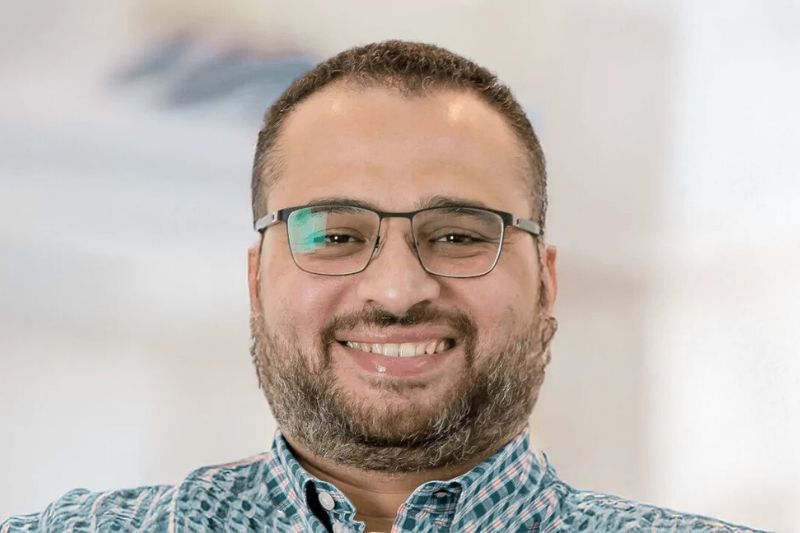
In the firm’s exit announcement, CEO Abdelrahman Mansour argued that financing falls short of the country’s semiconductor talent. His argument locates the constraint in capital availability. The transaction supports a narrower, concrete conclusion: this particular engineering team built capabilities that attracted both outside investors and a strategic buyer.
Public money, more than one front door
Egypt Ventures began in September 2017 with reported paid-up capital of EGP 451 million. The institutions associated with its establishment included the Ministry of International Cooperation, the Saudi Fund for Development, the General Authority for Investment and Free Zones, and NI Capital. Its origin was institutional, with a mandate to encourage investment in Egyptian businesses.
Two people help explain the organization’s early shape. Shehab Marzban is described in his professional biography as its initiator and founding chairman. Heba Ali served as founding managing director before moving to lead Endeavor Egypt in 2021. Their backgrounds place the company at the intersection of investment practice, development policy and entrepreneurship support.
That combination matters because the company’s work extends beyond selecting individual startups. It has also invested in organizations that select, finance and support other founders. Falak Startups and EFG-EV Fintech operate with their own teams and identities; Egypt Ventures is a limited partner in Flat6Labs Cairo Fund. One institution can therefore reach businesses through several investment teams.
Separate investment routes. Different teams doing the selection and support.
This also explains why its website’s description of more than 20 portfolio startups should not be read as contradicting the government’s January 2024 report of more than 205 startups reached historically. The wider figure includes direct and indirect investment. Counting companies on a portfolio page and counting businesses reached through intermediaries answer different questions.
The accelerator has its own engine
The partners are more than names on a diagram. At the end of 2018, EFG Hermes and Egypt Ventures launched EFG-EV Fintech. EFG’s subsequent annual report described separate investment programs serving seed and early-stage startups as well as more established businesses, combining finance with advisory services. A specialist financial-services partner brought an industry connection to the investment process.
Flat6Labs offers another view of the machinery. In May 2021, its FAC Egypt fund announced a second close that increased the fund from EGP 50 million to EGP 207 million. Its Cairo program had by then completed seven cycles, invested in 62 startups and trained more than 350 founders. These were Flat6Labs program results, achieved with a group of investors that included Egypt Ventures.
The same announcement increased the program’s seed offering to as much as EGP 1.5 million, with up to EGP 3 million in follow-on funding for selected companies. Those are historical program terms, not a current Egypt Ventures price list. They show the practical point of an intermediary: a repeatable process for getting founders through initial investment and toward another financing decision.
For a government-backed company, this structure offers a way to support several approaches to investing. It also makes attribution more demanding. The work of a fund manager, the money of its backers and the execution of a startup all contribute to an outcome. A sensible reading leaves room for each.
Payroll, sensors and a small-business loan
The portfolio resists a tidy consumer-app label. Paynas provides HR and payroll services for smaller businesses, with payroll cards, financing options and employee benefits. It was fully acquired by valU in 2022. Si-Ware develops sensing technologies, including components, devices and software. InfiniLink addressed connectivity inside advanced computing infrastructure.
These companies sell different things to different buyers. Their presence together suggests a useful interpretation of Egypt Ventures’ market position: technology is a means of changing business operations, whether the work happens in a payroll department, a sensing system or a data center. The firm names fintech, healthtech, education technology and e-commerce among its areas of interest.
Flend brings the story back to financing. In July 2025, the digital SME lender announced a $3 million seed round combining equity and debt. Egypt Ventures led the equity portion, with other participants including Camel Ventures, Sukna Ventures, Plus VC and Banque Misr. Debt came from MSMEDA and local banking partners.
The structure deserves attention. A lending company needs resources to build and operate its business, alongside funding that supports lending activity. Flend planned to expand embedded financing through digital platforms serving SMEs. Egypt Ventures was backing a business that could, in turn, help other businesses obtain finance. That is a different relationship from lending directly to every shop or supplier using the service.
A hospital opens another door
Money can finance a product. Access to a working industry helps determine where that product belongs. Egypt Ventures’ Corporate Partnership Initiative, reported in November 2024, began with Cleopatra Hospitals Group. The stated aim was to connect startups with the resources, infrastructure and networks of established companies.
For a healthtech founder, the attraction is straightforward: proximity to an organization that understands healthcare operations. For the hospital group, startups offer potential new tools and services. The announcement described an intended exchange of capabilities, rather than completed clinical deployments or a guaranteed procurement pipeline.
This is a useful extension of the investor’s stated approach to portfolio support. Egypt Ventures says it helps with operations, strategy, expansion and introductions. The corporate initiative gives that promise a named counterpart. It moves the discussion from how much a startup can raise toward who might help it develop and sell something useful.
“Egypt has world-class semiconductor talent but remains undercapitalized.”
Abdelrahman Mansour
CEO, Egypt Ventures · InfiniLink exit announcement
What the next founder can borrow
Egypt Ventures is most relevant to founders building technology-enabled businesses with room to grow. Its direct audience is those companies and their management teams; its wider network includes fund managers, co-investors and corporate partners. An entrepreneur approaching it is proposing an investment relationship, not buying a standard service package.
The portfolio suggests a practical way to prepare that conversation. Identify a painful problem, show who will pay to solve it, and explain what additional capital changes. InfiniLink had an engineering challenge and an identifiable industrial market. Paynas had a recurring business function to improve. Flend had a financing service distributed through business platforms.
There are alternatives in the market. Sawari Ventures invests in technology companies across North Africa and also backs Flat6Labs. Camel Ventures focuses on fintech and offers venture capital and venture debt. Their overlap with Egypt Ventures illustrates a market in which investors can compete for opportunities and still finance companies together. Egypt Ventures’ distinguishing feature is the combination of government backing, direct investments and support for investment intermediaries.
Founders can also distinguish the help they need. A first institutional investment, an accelerator program, a specialist co-investor and a corporate introduction solve different problems. Egypt Ventures’ structure makes that distinction worth considering before sending a pitch. Its official contact channel is a starting point; the substance is a business case that matches its investment interests.
The broader lesson for anyone copying the model is conditional. Independent investment teams need the judgment to select companies and the capacity to support them. Corporate introductions need a product that people want to use. Later investors and buyers need reasons to commit their own money. Public backing can make those encounters possible; it cannot substitute for them.
InfiniLink’s acquisition makes the argument tangible. A company developed specialized technology, attracted a financing group and found a buyer with a use for its work. Egypt Ventures helped fund that path. For the next founder, the most productive ambition is equally specific: build something another business has a reason to buy.