A working invention is an awkward beginning. Someone still has to decide who will buy it, recruit the people who can sell it and finance the months when the answer remains uncertain. AlbionVC has made that interval its territory. Its portfolio spans software that polices enterprise APIs, medical technology emerging from university research and robots dispatched into the ocean. The common problem is getting useful science and engineering into somebody else’s budget.
The London investor describes approximately £1 billion in venture funds and more than 100 realised exits across its history. Those are measures of its investment operation, not sales revenue. Its present ambition reaches across Europe, with an emphasis on deeptech, healthcare, finance and frontier intelligence. The interesting part is how it works across such different development schedules: a software founder chasing enterprise contracts needs a different conversation from a researcher preparing a clinical study.
A bank department with an escape plan
Albion’s origin helps explain the emphasis on staying power. Patrick Reeve established Close Ventures in 1996 inside Close Brothers. He later led the 2009 management buyout that created the independent Albion business. In an interview that year, Reeve described a bank increasingly interested in wealth management and private banking, and his own doubts about whether remaining captive to it made sense. The change followed a reassessment of where venture investing belonged.
There are consequently several legitimate dates in Albion’s story. The operating lineage begins in 1996; the LLP was incorporated in November 2008; independence arrived in 2009. Companies House records another change in June 2026, when Albion Capital Group LLP became AlbionVC LLP. Describing the firm only as the technology arm of Albion Capital now misses that legal update. Reeve, whose Oxford degree was in Modern Languages, remains listed as chairman.
Before there is a company to pitch
The UCL Technology Fund gives Albion a route into businesses unusually early. Managed in collaboration with UCL Business, it supports the commercialisation of university research through proof-of-concept work, licensing and company formation. In August 2020, its second fund announced a first close against a £100 million target, with cornerstone commitments from British Patient Capital and UCL. That figure was the target for a fund, rather than the amount raised by Albion itself.
By that announcement, the first fund had made 45 investments, including 27 that became spinout companies and programmes intended for licensing. This is a different starting line from waiting for a polished software business to present recurring revenue. The investor must assess both what the research can do and the organisation that might eventually carry it into the market.
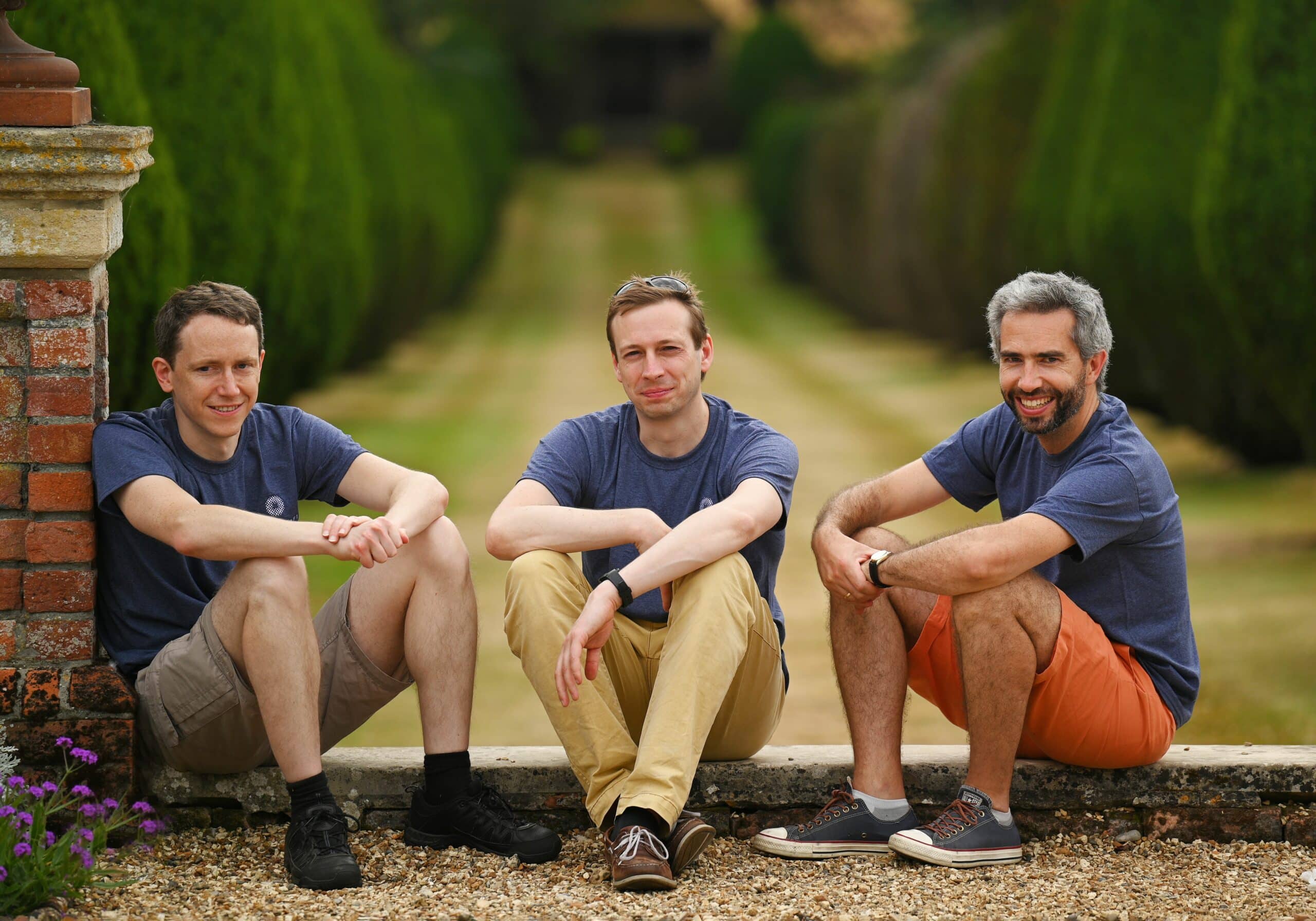
Echopoint Medical makes the process tangible. Albion funded its initial proof of concept in 2016, before the company was formed, and later led a £4.2 million Series A. The company uses fibre-optic technology for cardiovascular diagnostics. In a 2024 conversation, co-founders Malcolm Finlay and Adrien Desjardins described the value of bringing in a CEO and executive chair, alongside access to people who raised questions the academics had not considered.
“The UCL Technology Fund was transformative for us”
Adrien Desjardins · Co-founder, Echopoint Medical
The lesson is practical: speak to potential end users and understand their entire journey. A device’s technical performance is one part of adoption. Decisions about who leads the business, who uses the product and where it enters clinical work belong in the same discussion. Founders can borrow that discipline without having a university fund behind them.
The decade hidden inside an exit
For a less laboratory-bound example, consider Egress. Albion began its relationship with the cybersecurity company in 2014, through a £2.2 million Series A when the team numbered 12. KnowBe4 completed its acquisition in 2024. By then, Egress employed more than 300 people across seven locations. The elapsed time gives substance to an investor phrase that can otherwise mean almost anything: long-term support.
“It allows you to go on a journey,” Egress co-founder Tony Pepper says in Albion’s published testimonial. He also credits partner Ed Lascelles alongside the company’s technology and management. This is a founder’s endorsement, rather than an independent measurement of investor contribution, but the relationship has a visible beginning and end. Ten years is a sizeable slice of a working life.
People at the first Albion investment in 2014 and at the 2024 acquisition. Headcount is context, not a measure of investment return.
Albion’s April 2025 update put the proceeds associated with the Egress sale at £61 million. It also reported £167 million invested across 47 new and existing businesses during the three years to September 2024, alongside 17 profitable exits. These are selected portfolio outcomes, not a promise that every company will reach an acquisition. They do show why an investor needs to keep financing new work while earlier investments mature.
The product is money plus the next useful person
Albion’s service to founders combines investment with operating help. Julian Johnson, an operating partner with experience at companies including Oracle, Microsoft and Salesforce, advises on enterprise sales, pricing, territory planning and sales-team formation. His remit includes procurement and enterprise contracts. Those details matter because the friction between a promising demonstration and an approved purchase often sits outside the product itself.
Gravitee supplies a useful example of the market Albion targets. Its software governs APIs, event streams and increasingly AI agents, helping companies manage connections that would otherwise be scattered across separate systems. In May 2025, it announced a $60 million Series C led by Sixth Street Growth, with Albion participating. Albion partner Paul Lehair dates his first meeting with the team to 2020.
The funding announcement named customers including Michelin, Roche and Blue Yonder. These organisations buy Gravitee’s software; they are not thereby Albion customers. The distinction matters in a portfolio this broad. Albion finances the company building the tool, while the founders must persuade an enterprise that the tool deserves a place in its architecture and spending plan.
Other investors compete for those founders. Notion Capital, for example, concentrates on European business software and publishes its own research on scaling SaaS companies. Albion’s distinctive combination is the breadth between enterprise selling, clinical commercialisation and university research, supported by different funding vehicles. Whether that breadth is useful depends on the particular partner, the founder’s next problem and the expertise available when it arises.
Three pots of money, three different meanings
Albion manages third-party capital. The investment vehicles pay for management under their agreements; disclosed arrangements also include fees connected with portfolio investments. An Albion Development VCT report, for example, recorded £121,000 of arrangement and monitoring fees attributable to its investments in the first half of 2024. The economics are those of an investment manager, with terms that vary by vehicle.
On the founder’s side, taking equity capital means sharing ownership and agreeing investment terms. The amount raised is not a price list for Albion’s support. The £4.2 million Echopoint round and Gravitee’s $60 million financing describe whole company rounds, not necessarily Albion’s individual cheques. Treating every round as a single investor’s spending would badly distort the picture.
Albion VCT top-up subscriptions completed in April 2025.
Gravitee’s May 2025 Series C, raised from a syndicate.
Reported proceeds associated with the 2024 Egress sale.
On September 7, 2026, Albion opened a new £40 million VCT top-up offer, with capacity for a further £20 million. Opening subscriptions is a different milestone from completing a raise.
The VCTs offer another entry point: individuals can invest in listed vehicles holding private-company portfolios. Those shareholders are investors in the trusts, rather than regulatory customers of AlbionVC. Liquidity can be limited and capital can be lost. For a founder, the relevant question is which vehicle fits the business; for a shareholder, it is what the vehicle owns and how its terms work.
The bottleneck moves
Albion’s August 2026 Oshen update offers an unusually literal account of something breaking. During a Category 5 hurricane mission, gusts destroyed a robot’s wind sensor while the vessel continued reporting data. Oshen’s next problem was manufacturing: it had taken three years to build its first 15 C-Stars and was now producing 15 every six weeks. A $5 million round, led by Lunar Ventures with Albion participating, would help expand production and technical capability.
The lesson from that account is that successful testing changes the job. Once a machine works, repeatable assembly and delivery can become the constraint. A founder raising the next round should be able to explain what has been proved and which uncertainty now deserves the money. Yesterday’s impressive experiment is not automatically tomorrow’s operating plan.
In healthcare, the next constraint may be access to clinical settings. Albion’s December 2025 partnership with Harley Street Health District aims to connect startups with providers for co-development, pilots and evidence gathering. The proposed advantage is specific: introductions become a route to testing adoption in practice. Its value will depend on what the resulting projects demonstrate.
Borrow the questions, earn the answers
Albion also works on who gets access to these conversations. Its December 2024 account of the co-created Radia accelerator reported 25 women supported at the idea stage, leading to nine new companies. The programme is named after network engineer Radia Perlman. Company formation is an early outcome, not evidence of eventual investment returns, but it gives the initiative something concrete to count.
For founders considering Albion, the useful preparation is to identify the next expensive unanswered question. That might be clinical evidence, a first enterprise buyer, a leadership hire or manufacturing capacity. Then establish which person and which fund can help answer it. The firm’s website provides a pitch-deck submission route, while its market maps and founder interviews let prospective applicants examine its interests before approaching.
This approach requires a business capable of using outside equity productively. If the commercial opportunity cannot support the cost of development, patient funding only postpones the reckoning. If founders want to preserve all ownership, venture investment brings an obvious mismatch. Albion’s most instructive stories show the work in between: hiring the executive, learning the customer’s process, building the next batch. That is where invention starts earning its keep.
Follow the work
Explore AlbionVC, its investment philosophy and deeptech research. Follow its updates on LinkedIn and X, or visit Radia.
Watch: Echopoint’s founders on the route from lab to market ↗ Watch: Deeptech Mash with Dave & Seb ↗