Emergence Capital  |  San Francisco, CA

Gordon
Ritter

The investor who bet on cloud before "the cloud" was a word people used in polite company - and made $8 billion doing it.

$8B
Fund Returns
$1B
Fund VII (2025)
4x
Midas List
$35B
Veeva Mkt Cap
Founder & GP Enterprise SaaS AI Investing Princeton '86
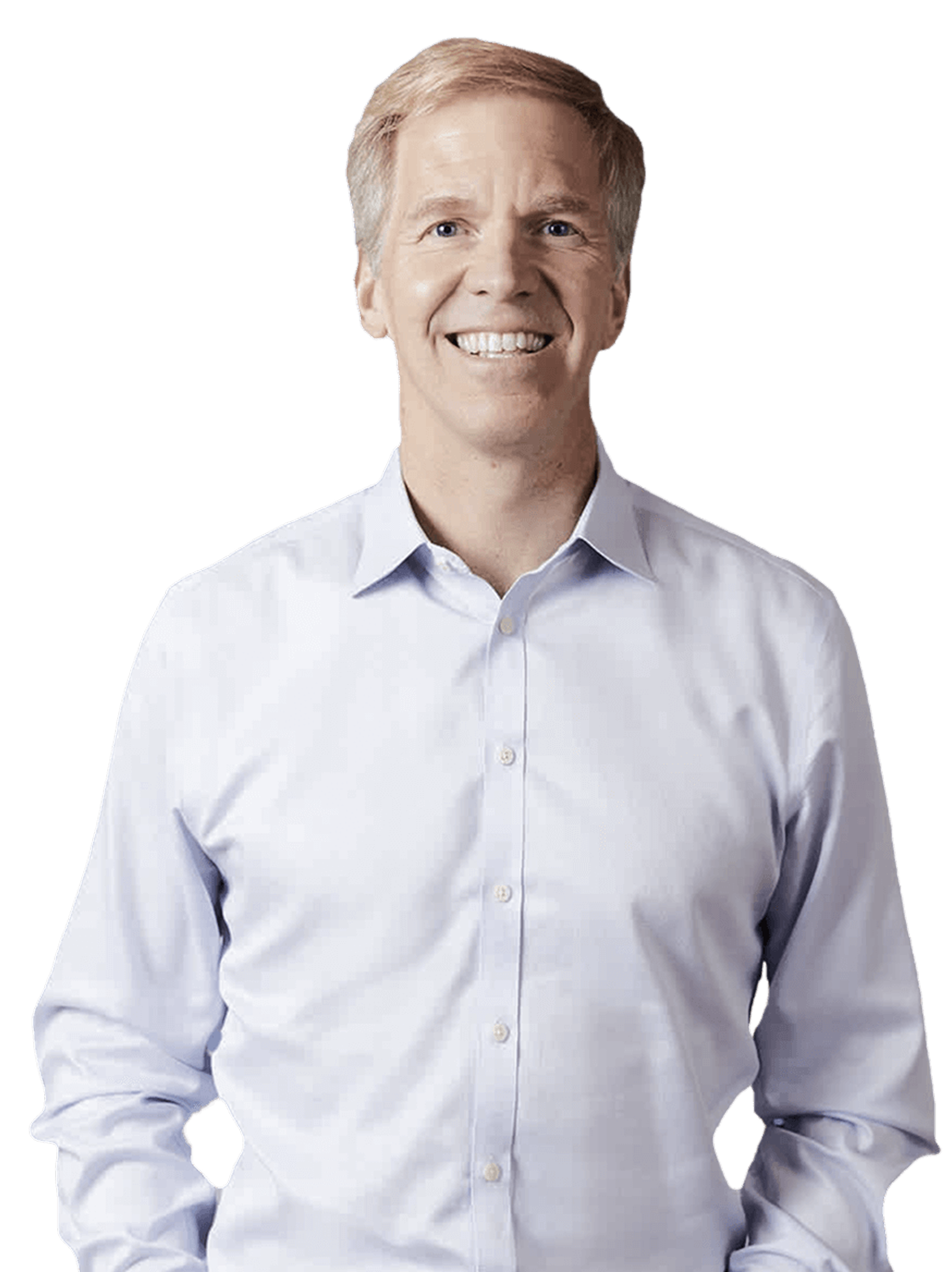
Gordon Ritter, Founder and General Partner at Emergence Capital
Emergence Capital — San Francisco
2003
Emergence Founded
$450B+
Portfolio Companies Value
10+
Boards Served Simultaneously
250mi
Ran Across Switzerland

The man who called the cloud - twice

In 2008, Gordon Ritter backed a pharmaceutical software company called Veeva Systems when it had 25 employees, less than $1 million in annual revenue, and zero brand recognition outside a narrow slice of life sciences. He didn't just write a check - he joined the board as chairman. Today Veeva trades on the NYSE at roughly $35 billion, and Ritter is still its chairman. That's not luck. That's a thesis held to conviction.

Ritter grew up moving between a Manhattan suburb and a small coastal town on the coast of Maine. His parents were both Life Magazine reporters - the kind of household where dinner-table curiosity is not optional. His father had a story tied to the Freedom Riders movement significant enough to land on the New York Times front page. Whatever instinct detects an industry before it knows it exists, Ritter may have absorbed it alongside his morning paper.

He went to Princeton, rowed heavyweight crew (after just two months of training), graduated with a B.A. in economics in 1986, and then - in a move that still defines his sensibility - chose the harder school over the safer one. Later, he left a Vice President seat at Credit Suisse to found startups, including Whistle Communications, which IBM acquired in 1999. He then led IBM's $3 billion Global Small Business division. For most people, that's a career. For Ritter, it was preamble.

What happened next reshaped enterprise software. In the early 2000s, before Salesforce was a verb, Ritter co-founded a SaaS cloud platform company with Marc Benioff - a company that became a foundational layer of what eventually grew into the Salesforce Platform. He wasn't just seeing the cloud coming; he was building one of the rooms inside it.

In 2003, with Jason Green and Brian Jacobs, Ritter co-founded Emergence Capital. The thesis was simple and at the time considered eccentric: the future of enterprise software runs in the cloud, delivered as a service, with no hardware on-premise. They backed Salesforce early. They backed Zoom before remote work was a mandate. They backed Bill.com, Box, Yammer, and Doximity. Portfolio companies collectively valued at more than $450 billion. Approximately $8 billion in realized fund returns. In March 2025, Emergence closed its seventh fund at exactly $1 billion, focused this time on AI-native enterprise software.

Ritter makes five to seven investments per year, maximum. He calls it a deep-partnership model - he sits on boards, makes introductions, and invests in companies for a decade or more. The selectivity is the strategy. "The right focus," he says, "is the constant that achieves unimaginable goals."

Away from the portfolio, his leisure activities have the same orientation toward extremity. He ran 250 miles across the Swiss Alps in a single endurance event. He has summited Denali (20,310 feet, North America's highest) and Aconcagua (22,838 feet, South America's highest). He competes in family ski races. There is a consistency here: he is drawn to things that most people decline to attempt.

In 2023, Princeton elected Ritter to its Board of Trustees, where he serves a four-year term through 2027 and is actively shaping the university's approach to AI education. He lives in San Francisco with his wife Amy and their four children, and supports organizations including the Golden Gate National Parks Conservancy, Common Sense Media, and the Center for Reproductive Rights.

On AI - the subject consuming every conversation in venture capital right now - Ritter is characteristically non-obvious. "There's so much automation going on with AI right now, but it's only going to go so far," he has said. "What's going to matter in the future is the human element, because everything else will be automated." For a man whose firm just raised $1 billion to invest in AI-native enterprise software, that's a revealing tension - and likely the exact tension that makes his bets worth watching.
"
What's going to matter in the future is the human element, because everything else will be automated.
Gordon Ritter  —  Emergence Capital

Bets that built industries

2003 - Early Stage
Salesforce
Emergence's first major bet - backing the SaaS model before enterprises trusted software they couldn't touch. The investment that put enterprise cloud on the map.
NYSE: CRM  |  $300B+
2008 - Series B
Veeva Systems
25 employees. Under $1M revenue. A pharma-specific cloud play that seemed niche to everyone except Ritter. He joined the board as chairman and never left.
NYSE: VEEV  |  ~$35B
2013 - Early Stage
Zoom
Backed when video conferencing was a commodity category with dominant incumbents. Emergence saw the enterprise-grade product difference before COVID made it obvious.
NASDAQ: ZM  |  $20B+
Early Stage
Bill.com
Cloud-based financial operations for SMBs - a bet on the digitization of back-office finance that the market eventually rewarded with a multi-billion dollar valuation.
NYSE: BILL
Early Stage
Doximity
The professional network for U.S. physicians - a vertical SaaS play in healthcare communications that proved the industry cloud thesis in yet another regulated sector.
NYSE: DOCS
Fund VII — 2024/25
Together AI & Physical Intelligence
The newest chapter: AI-native enterprise software. Together AI for AI infrastructure, Physical Intelligence for robotics AI - Ritter's thesis running forward into the next wave.
Fund VII Focus

How Ritter thinks about bets

Non-Consensus or Nothing

Ritter's track record - Salesforce, Veeva, Zoom - was built on backing ideas that looked wrong to most people. He approaches investing as a search for the overlooked obvious: the thing that is happening, that smart people are dismissing.

Deep Partnership Model

Five to seven investments per year. Board seats. Founder introductions. Decade-long relationships. Emergence calls itself a "high-touch, lower-volume" firm - Ritter built that approach before it had a name.

Industry Cloud Thesis

Before "vertical SaaS" was a category, Ritter was betting that the best cloud companies would be industry-specific. Veeva proved it. He wrote the thesis down in a 2015 TechCrunch article called "What Makes An Industry Cloud Leader?" The market caught up.

Culture as Moat

"Culture is everything," he has said. "It's what brings in and retains the best and brightest talent." He evaluates founders for the companies they build internally, not just the products they ship externally.

Human + AI, Not AI Alone

His current bet: AI will commoditize task automation, making the human element - adaptability, creativity, authentic connection - into the only sustainable competitive moat. He's investing accordingly.

Long-Term Conviction

He backed Veeva in 2008. He's still chairman. He backed Salesforce at founding. He held. The consistent pattern across 22 years: take a position you believe in and stay with it long enough to find out if you were right.

"
The right focus is the constant that achieves unimaginable goals.
Gordon Ritter

Fund VII:
The AI Bet

In March 2025, Emergence Capital closed its seventh fund at $1 billion - a significant jump from the $575 million Fund VI closed in 2021. The thesis: AI-native enterprise software is the next industry-defining category, the same way SaaS was in 2003.

The fund's early portfolio includes Together AI (AI infrastructure), Physical Intelligence (robotics AI), and Bolt.new (AI-native development). Emergence's pattern - find the category-defining companies before the category exists - is running again.

  • AI-powered enterprise workflows
  • Industry-specific AI solutions
  • Human-AI collaboration platforms
  • Data-driven enterprise intelligence
  • AI-native B2B software
$1B
Emergence Capital Fund VII
Closed March 2025

From Princeton to $450B in portfolio value

1986
Graduated Princeton University, B.A. Economics. Rowed heavyweight crew. Chose Princeton over Harvard specifically because it was harder.
1986 - early 1990s
Vice President at Credit Suisse. Found banking unfulfilling. Left to found startups.
Mid-1990s
Co-founded and served as President of Whistle Communications, an enterprise networking startup.
1999
IBM acquired Whistle Communications. Ritter led IBM's $3 billion Global Small Business division post-acquisition.
Early 2000s
Co-founded a SaaS cloud platform company with Marc Benioff, which became a foundation for the Salesforce Platform.
2003
Co-founded Emergence Capital with Jason Green and Brian Jacobs. Made early investment in Salesforce. Bet the firm on enterprise cloud.
2008
Led investment in Veeva Systems at 25 employees, under $1M revenue. Joined as Chairman, a position he holds today.
2015
Published "What Makes An Industry Cloud Leader?" in TechCrunch - laying out the vertical SaaS thesis before vertical SaaS was a category.
2023
Elected to Princeton University Board of Trustees (term 2023-2027), shaping AI and education curricula.
2025
Emergence Capital closes Fund VII at $1 billion, focused on AI-native enterprise software. The cloud bet continues - in a new form.

What Gordon Ritter actually says

"The right focus is the constant that achieves unimaginable goals."

"What's going to matter in the future is the human element, because everything else will be automated."

"There's so much automation going on with AI right now, but it's only going to go so far. Automation will be helpful, and then it will commoditize."

"Culture is everything. It's what brings in and retains the best and brightest talent."

"We need to think long-term about what will matter in the future."

"Trust and human oversight are non-negotiable in regulated sectors. Companies must earn industry confidence to succeed long-term."

The non-portfolio highlights

250

Miles run across the Swiss Alps in a single endurance event. The mountains did not win.

20,310

Feet. That's Denali, North America's highest peak. He's also summited Aconcagua in South America.

2

Months of training before becoming a top Princeton rowing recruit. Extraordinary rate of skill acquisition; has been this way since before Veeva.

2

Life Magazine reporters. That's his parents. Curiosity was the family trade long before venture capital was.

1st

Veeva was the first publicly traded Public Benefit Corporation. He helped make it happen as chairman.

$35B

Veeva's market cap, more than 15 years after Ritter backed it at under $1M in revenue. Time is a feature, not a bug.

How people describe him

Described by people who've worked with him as "relentlessly competitive" and "an animal" in the best sense - a person who applies the same intensity to a 250-mile trail run as to a Series B negotiation.

Non-consensus thinker Long-term oriented Relentlessly competitive Deeply curious Conviction-driven Endurance athlete mindset Loyal to founders Optimistically driven Hard-thing seeker Journalist's instinct