silicon-photonics
(42)
The Most Valuable Part of the AI Chip May Be the Road Between Chips
Celestial AI wagered that the next AI crisis would not be thinking, but traffic. Five years, more than $520 million in funding and one multibillion-dollar acquisition later, the road between chips has become the main event.

Darius Bunandar and the Art of Moving Light
He began with explosions, black holes and quantum-secure messages. Now Lightmatter's co-founder and chief scientist is trying to solve AI's less glamorous crisis: the costly distance between one chip and the next.

The Slow Beam Learned to Move in Parallel
Electron-beam lithography was always wonderfully precise and painfully slow. Multibeam's bet was that the beam did not need to become faster - it needed colleagues.
Egypt Ventures’ Bet on Chips Found a $48 Million Buyer
The government-backed investor helped finance InfiniLink before GlobalFoundries bought it. Behind that deal sits a broader experiment: using public capital to give Egyptian startups more ways to grow.

Mark Wade Bet on Light Before AI Needed It
Silicon photonics was once an anti-buzzword. Mark Wade kept building anyway - from a CAD server in his Berkeley apartment to a $3.75 billion company preparing optical chiplets for the AI factory.
Mario Paniccia Put Light on a Chip. Now He Is Teaching Machines Not to Get Lost.
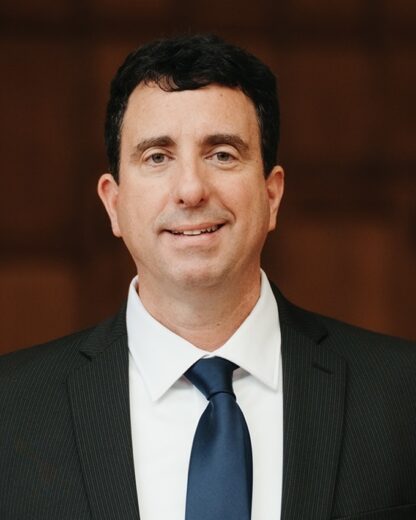
The former Intel Fellow spent decades persuading silicon to carry light. At ANELLO, he is using the same stubborn physics to help vehicles find their way when satellites cannot.

Rafik Ward and the Strategy of Light
Before AI made optics fashionable, Rafik Ward had already spent two decades translating tiny components into big strategic bets. At Lumentum, he is now helping decide where light goes next.

Cary Gunn Keeps Asking Silicon to Do More
The Air Force officer turned photonics founder helped move light onto chips, then carried the same insistence on small, fast systems into diagnostics and preventive care.

Lumilens Bet $50 Million That AI's Next Bottleneck Is the Wire
The two-year-old photonics company has a product inside a hyperscaler's live data centers and a plan to replace short copper links with light. Its harder bet is not merely designing faster optics - it is manufacturing them like semiconductors.

Ashish Vengsarkar Builds Networks Like Crosswords: One Connection at a Time
At Bell Labs, in startups and at Google, he learned to make light carry more of the world’s traffic. Now the nEye.ai CEO is applying three decades of optical-networking lessons to the physical limits of AI.

Adam Carter Is Turning a Photonics Lab Bet Into an Open Chip Business
After three decades selling the plumbing of the internet, Adam Carter is making a quieter bet: the next wave of AI infrastructure will be built by letting more companies put light directly on silicon.
The Tiny Box Carrying AI's Biggest Traffic Jam
InnoLight makes the pack-of-gum-sized optical modules that let AI clusters talk at 800 gigabits and beyond. Its real product is not light alone, but a practical escape route from bandwidth, heat and power constraints.

The Chip Giant That Quit the Nanometer Race - and Found Its Edge
GlobalFoundries walked away from the industry’s most expensive contest. Now its specialty chips sit inside phones, cars, factories and the optical plumbing of AI - a bet that useful can matter more than smallest.
Lumentum
The AI boom has a plumbing problem: copper cannot carry every conversation between millions of chips. Lumentum is turning light into the scarce infrastructure layer - one laser, transceiver and microscopic mirror at a time.
Teradyne
Most people never see a Teradyne machine, yet its testers stand between ambitious chip designs and the devices we trust. Now the 66-year-old Massachusetts company is applying the same factory-floor discipline to AI hardware, advanced packaging and robots that work beside people.

Coherent Corp.
AI may live in software, but it moves through light. Coherent makes much of the physical kit - from laser chips and specialty materials to complete optical links - that lets data centers, factories and scientific instruments work at speed.
Accelight Technologies, Inc.
Accelight Technologies (ATI) is an ISO-certified ODM founded in 2017 that designs and manufactures high-speed optical connectivity products - transceiver modules from 100G to 1.6T, active optical and electrical cables, passive optical modules, and optical amplifiers - for hyperscale data centers, AI computing infrastructure, and telecom carriers. With R&D centers in Wuhan Optics Valley and Silicon Valley and manufacturing in China and Thailand, ATI positions itself as a supply-chain-secure alternative for cloud and AI networking optics.

Neurophos
Neurophos is an Austin-based photonics startup building an Optical Processing Unit (OPU) that uses light instead of electrons to run AI inference. Spun out of Duke University and the Metacept incubator, the company packs more than a million micron-scale metamaterial optical modulators - roughly 10,000x smaller than conventional photonic elements - onto a single chip to perform the matrix-vector multiplication at the heart of large AI models. It positions the OPU as an energy-efficient, drop-in alternative to GPUs for data-center inference, and raised a $110M Series A led by Gates Frontier in January 2026.
Cspeed
Cspeed is a Palo Alto optical semiconductor startup building silicon photonics and high-density III-V laser array technology to replace copper interconnects inside large-scale AI clusters. Founded in 2022 and led by serial semiconductor entrepreneur Sanjai Kohli, the company targets the data-movement bottlenecks that limit 'scale-up' AI infrastructure, aiming to deliver fiber-optic connectivity dense and cheap enough for high-volume datacenter deployment.

ANELLO Photonics
ANELLO Photonics is a Santa Clara, California semiconductor and navigation company that builds SiPhOG, described as the world's smallest high-precision silicon photonic optical gyroscope. By shrinking fiber-optic-class gyroscope performance onto a chip, ANELLO delivers inertial measurement units (IMUs) and full inertial navigation systems (INS) that keep vehicles, drones, ships and robots positioned accurately when GPS/GNSS signals are jammed, spoofed or simply unavailable - across land, air and sea. Founded in 2018 by silicon-photonics pioneer Dr. Mario Paniccia and MEMS/inertial-sensor veteran Mike Horton, the company serves defense, maritime, aerospace, agriculture, construction, mining and autonomous-vehicle markets.

Ayar Labs
Ayar Labs is a San Jose-based semiconductor company building optical input/output (I/O) technology that moves data between chips using light instead of copper. Its silicon-photonics chiplets - the TeraPHY optical engine and the SuperNova multi-wavelength light source - are designed to be co-packaged directly with GPUs and other processors, letting AI and high-performance-computing systems scale across thousands of accelerators with far higher bandwidth and far lower power than electrical interconnects. Spun out of a DARPA-funded university research effort, the company raised a $500M Series E in 2026 with backing from NVIDIA and AMD.

Lumotive
Lumotive is a Redmond, Washington optical-semiconductor company that turns beam steering into a chip. Its patented Light Control Metasurface (LCM) technology uses thousands of tunable liquid-crystal optical resonators etched into a CMOS die to steer light electronically - no moving parts - powering solid-state LiDAR, 3D sensing, and, soon, optical switching for AI data centers. Spun out of Intellectual Ventures and Bill Gates-backed metamaterials research, the company sells programmable beamforming chips like the LM10 to sensor and systems makers rather than building full LiDAR units itself.

nEye.ai
nEye.ai (nEye Systems) is a Santa Clara semiconductor company building optical circuit switches (OCS) on a single chip. By fusing MEMS with silicon photonics and CMOS at wafer scale, its flagship SuperSwitch aims to move data between thousands of GPUs, CPUs and memory units with far less power and space than conventional electrical switching. Founded in 2020 by UC Berkeley photonics researchers and led by telecom-optics veteran Ashish Vengsarkar, the company raised an $80M Series C in April 2026, bringing total funding to about $152.5M as it scales foundry-based manufacturing for AI data centers.

OpenLight
OpenLight is a Goleta, California silicon photonics company building the world's first open silicon photonics platform with integrated lasers. Spun out of Juniper Networks in 2022, it licenses a validated process design kit (PDK) and designs custom PASICs - photonic application-specific integrated circuits - that combine lasers, modulators, amplifiers and detectors on a single chip for AI data centers, datacom, telecom, LiDAR and quantum computing.
Michael Wei
Michael Wei is the CEO of Accelight Technologies, a Pleasanton, California ODM that designs and manufactures optical transceivers, EDFA amplifiers, and passive fiber components for telecom carriers and AI data centers. He is an electrical engineer with three decades in the trenches of optical networking hardware, with earlier stops at Mitel, ADVA Optical Networking, Adaptix, Navini Networks, Schlumberger, and Invocon.

Opticore
Opticore is a photonic computing startup building optical processing units (OPUs) - chips that run AI workloads with light and waveguides instead of electrons. Spun out of research at MIT, USC and UC Berkeley, the company claims its photonic chips are up to 100x more energy efficient and offer roughly 25x the computing density of leading GPUs, using time-multiplexed computing to encode as many as a trillion parameters on a single chip. Opticore has raised about $14.5M to date to attack the energy and 'memory wall' bottlenecks of AI data centers.

Arago
Arago is a Paris and Palo Alto deeptech startup building a photonic AI accelerator that uses light instead of electrons to run AI workloads, targeting 10x lower energy consumption than today's leading GPUs at equivalent performance and cost while staying compatible with PyTorch and standard hardware ecosystems.

TeraHop
TeraHop is an optical solutions provider building high-speed optical transceivers and modules for AI clusters and data centers. Operating from Singapore, San Jose, Thailand and a new Texas plant, it ships 400G, 800G, 1.6T and emerging 12.8T-class optics. As the international-facing arm of Zhongji InnoLight - the world's largest optical-transceiver maker - TeraHop pairs high-volume manufacturing with R&D partnerships across NVIDIA, Marvell and Corning, and in 2025-2026 raised roughly US$517M with backing from Abu Dhabi's ADIA and Singapore's Temasek.
HyperLight Corporation
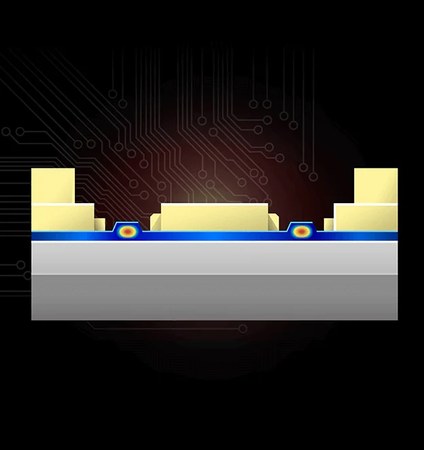
HyperLight is a Cambridge, Massachusetts company that designs and manufactures photonic integrated circuits on thin-film lithium niobate (TFLN), a material prized for ultrafast, low-voltage electro-optic modulation. A 2018 spin-out from Marko Loncar's lab at Harvard, the company built what it describes as the industry's first high-volume, qualified 6-inch TFLN manufacturing line - now expanding to 8-inch - and packages it as a modular TFLN Chiplet platform. Its modulator chips target the bandwidth and power-efficiency demands of AI data centers, telecom optical networks and high-performance computing, enabling 1.6 Tbps-class links at CMOS-level drive voltages.
SCINTIL Photonics
SCINTIL Photonics is a Grenoble-based, fabless silicon photonics company building the world's first single-chip, DWDM-native laser source for AI data centers. Spun out of CEA-Leti and founded by Sylvie Menezo, its proprietary SHIP (Scintil Heterogeneous Integrated Photonics) process integrates lasers, modulators and detectors onto one manufacturable chip - powering its LEAF Light light engine for co-packaged optics that promises roughly one-sixth the power consumption of conventional pluggable optics. The company raised a $58M Series B in September 2025 with participation from NVIDIA.