The first version of E2 Consulting Engineers fit inside one person. In 1988, Hersh Saluja was the founder, the engineer and, by arithmetic rather than metaphor, the entire staff. There was no sprawling org chart to study and no national platform to announce. There was technical work to do - initially in water and wastewater consulting - and a proposition as old as professional service: solve the problem well enough to be trusted with another.
Thirty-six years later, when Saluja accepted an EY Entrepreneur Of The Year award for the Bay Area, E2 employed more than 800 people across the United States. The distance between those two numbers is the obvious story. The more interesting one is what filled it: municipal water, transportation, federal facilities, environmental work, project controls, gas pipelines, electric systems, construction inspection and the thousands of unphotogenic decisions that keep infrastructure from becoming news.
Saluja built in a profession where a polished pitch eventually meets concrete, groundwater, regulation and gravity. His own technical background was unusually broad. Public biographies describe two master’s degrees, in civil engineering and agricultural engineering, while his professional record lists California registrations in both fields and an Environmental Assessor credential. His published areas of expertise include sediment transport, drainage, irrigation management, hydrological and hydraulic analysis, and groundwater hydrology. The vocabulary has very little sparkle. The consequences do.
The business of being trusted again
E2’s expansion reads less like a grand pivot than a set of adjoining rooms. The firm began with water work. By the early 1990s, it was involved in transportation and federal nuclear-facility operations. Later came a larger push into project management and utility services: project controls, construction support, inspection, pipeline integrity, power delivery and the software and data systems that now accompany physical assets.
That sequence matters because engineering-service firms do not scale on novelty alone. A client has to believe that the team can interpret a requirement, manage a field reality and document the result. Then the client has to believe it again on a larger assignment. E2’s public history is full of that repetition. Its relationship with SoCalGas began in project-management support for a pipeline-safety program. The company later moved from subcontractor to prime supplier in 2014, a step associated with 50 new hires and a Los Angeles office.
Saluja spoke about that relationship in the plain moral nouns of infrastructure: safety, integrity, collaboration and diversity. In another comment, he praised SoCalGas for mentoring diverse suppliers and called such commitment fundamental to minority-business success. E2 itself has been recognized as an Asian American-owned and minority-certified business. In a field built on prime contracts and nested teams, access is not an abstract virtue; it is who gets the chance to acquire experience that will qualify them for the next job.
“Growing a business from one employee in California to over 800 across the United States provides a sense of accomplishment that can’t be measured by profits and revenues alone.”Hersh Saluja, 2024
The rest of Saluja’s award remarks explain his preferred unit of measure. He pointed to hundreds of jobs in the communities where E2 operated, along with support for individuals, local organizations and small businesses. It is a revealing choice. Founders are commonly invited to treat head count as scale and revenue as score. Saluja turned the org chart sideways and described a local economy.
How the work widened
The progression also changed the kind of company E2 had to become. A sole engineer can carry expertise in his own head. An 800-person firm needs systems: safety management, scheduling, quality assurance, document controls, software, procurement and leaders who can translate a founder’s standards into ordinary decisions made far from the founder. In 2018, when E2 celebrated its 30th anniversary, it had already passed 400 employees. Doubling beyond that point required more than personal supervision. It required institutional memory.
The outside markers arrived intermittently. E2 ranked No. 2,432 on the Inc. 5000 in 2017, returned at No. 4,257 in 2024 and appeared again at No. 4,790 in 2025. The last listing recorded 60 percent growth over three years and placed the company between 501 and 1,000 employees. Rankings are snapshots, and engineering projects rarely obey the brisk rhythm of an annual list. Still, three appearances spread across eight years capture something useful: this was not a single contract’s lucky spike. The company could add new chapters long after its start-up years were over.
A public record with people in it
Saluja’s public footprint is spare for someone who ran a company of E2’s size. There is no stream of founder maxims, no personal content machine and no carefully serialized origin myth. The visible record is instead a collection of professional milestones and civic commitments. Caltech appears on his public LinkedIn profile. IIT Kanpur records list him as the benefactor of K.N. Saluja Scholarships awarded to students over multiple years. Heart to Heart Global Cardiac Care describes Hersh and Shalu Saluja as supporters for more than fifteen years, including funding three internships, hosting receptions and making ongoing contributions.
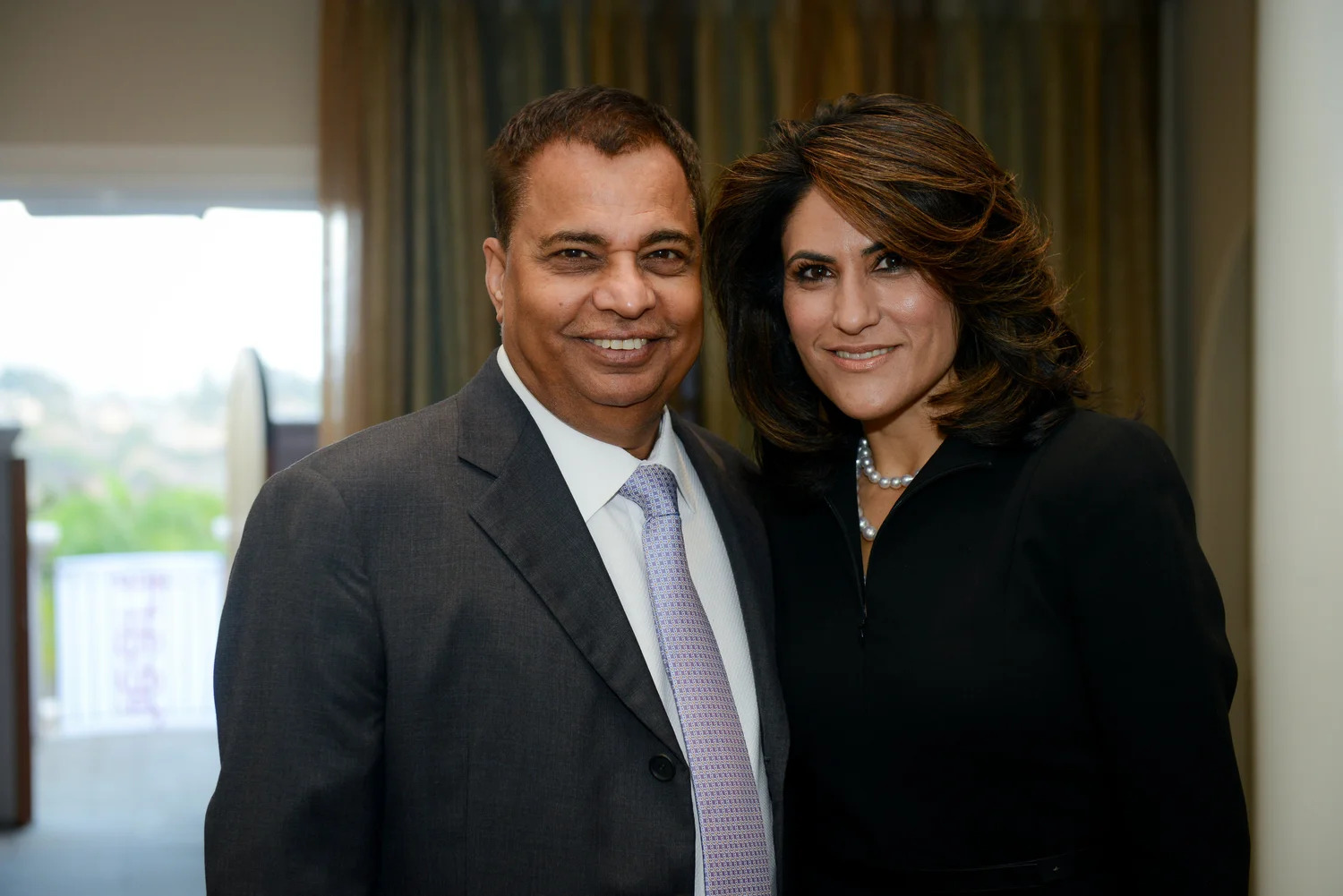
These facts do not supply a complete private portrait, and they should not be made to. They do show a recurring instinct: build capacity around other people. At E2, that meant jobs and supplier opportunities. At IIT Kanpur, scholarships. At Heart to Heart, internships and fundraising. The connection is not a slogan Saluja has advertised. It is simply the pattern his public actions leave behind.
The founder’s last load transfer
In June 2026, the structure around E2 changed. Guardian Infrastructure Services, a utility-focused platform backed by Energy Impact Partners, acquired the company. Terms were not disclosed. The logic was clear enough: North American utilities face sustained work in transmission, distribution, wildfire mitigation, undergrounding, substation modernization, pipeline safety and grid resilience. Guardian wanted technical depth; E2 had spent decades accumulating it.
Saluja described the partnership as a way to extend E2’s capabilities, reach and service offering while keeping its focus on customers and technical excellence. The language is consistent with his earlier comments because the problem was consistent too. Capital and geographic breadth are useful only if the institution remains trusted with consequential work.
The transaction also created the most delicate engineering assignment of Saluja’s career, though it came without drawings: moving a founder-built company beyond the founder-CEO role. By July, Greg Ricks had become chief executive. Saluja remained active as President of E2 Professional Services and strategic adviser. E2 said day-to-day operations and management would remain intact. The handoff was designed as continuity rather than disappearance.
The roles made the intended division legible. Ricks, whose background includes operations, workforce management and utility infrastructure support, would lead the combined Guardian organization. Saluja would stay closest to E2’s professional services, the part of the enterprise rooted in the technical trust he had spent decades earning. One leader could work on integration and scale while the other guarded continuity with employees, partners and clients. Succession is often described as a change in names. Here it looked more like a careful redistribution of responsibilities.
A founder’s succession resembles a load transfer: the structure must carry new weight without forgetting why it stood up in the first place.
That is a fitting final chapter for now. Saluja’s original business was himself: judgment, credentials and the willingness to be accountable for a result. Over 38 years, the difficult trick was to distribute that accountability across hundreds of people without diluting it. The Guardian chapter asks for the same maneuver one level higher. E2 must retain its relationships and technical habits while gaining the resources of a larger platform.
The world tends to notice infrastructure when it fails and founders when they shout. Saluja built in the opposite registers. His company worked on systems meant to be reliable enough to recede from view. His own public comments stayed close to staff, clients, safety, diversity and execution. Even the central achievement - one employee becoming more than 800 - arrives less as a victory lap than as an accounting of livelihoods.
There is something refreshingly unfashionable in that. E2’s long curve suggests that a durable company can be built by becoming useful in one domain, then earning the adjacent responsibility, then installing enough process for somebody else to deliver the promise. Do that for almost four decades and the tiny practice becomes part of the nation’s infrastructure workforce. Do it carefully enough and, when the founder finally passes the controls, the lights stay on.