The clue to Jim Murphy's new job is hidden inside an old whiteboard story. In the final quarter of 2013, Invenergy completed eight major financings and transactions across North America and Europe. More than $1 billion moved through a crush of year-end closings. Finance, legal, treasury, accounting, insurance, asset management and project teams kept the details moving while holiday calendars closed in. Nobody planned a celebration. They were still doing the work.
Murphy, then Invenergy's president, brought the group into his office. The completed deals went onto a whiteboard, one by one. Only after the list was visible did the team stop and register what it had pulled off. The scene is modest, almost aggressively so: a crowded office, a marker, a list. It is also an efficient portrait of the executive Murphy has become. He notices the system behind the result, respects the closing date and makes achievement legible only after the achievement exists.
On April 7, 2026, that same operator became CEO of Invenergy. Founder Michael Polsky moved to executive chairman. Jim Shield, another colleague from decades earlier, became president of Invenergy Power. Murphy had spent 25 years as Invenergy's co-founder and longtime president, and roughly 35 years working with Polsky. The announcement felt less like a coronation than a carefully structured succession: responsibilities clarified, partners still in place, the next closing already on the calendar.
An accountant learns to build
Murphy's route into energy ran through accounting. He earned a bachelor's degree magna cum laude from the University of Illinois and a CPA certification. He worked as a manager at Arthur Andersen, then as a vice president at The Deerpath Group. At SkyGen Energy, where he served as chief financial officer, he met Polsky. The partnership paired an engineer and energy entrepreneur with a finance executive who understood how risk, contracts and capital had to fit together before concrete could be poured.
SkyGen assembled a large portfolio of gas-fired generation and was acquired by Calpine in 2000. A year later, Murphy, Polsky and two other former SkyGen executives started Invenergy in Chicago. The initial opportunity was distressed natural-gas plants. Independent power had boomed, supply had run ahead of demand and electricity prices had fallen. Buying good assets in a difficult market was the kind of problem their combined commercial and engineering experience could parse.
Then conditions changed. Invenergy moved into wind, and later solar, batteries, transmission and manufacturing. This was not a sequence of costume changes. The technologies differed, but the work beneath them rhymed. Find a viable site. Secure permits. Connect to the grid. Arrange a customer. Structure capital. Build. Operate. Every task has its own clock, and each clock can stop the others.
One project · six interlocking clocks
Murphy once compared the business with real-estate development: each project has its own characteristics and its own financing. The comparison is useful because it removes the abstraction. A wind farm is not a ticker symbol. A battery does not arrive because a forecast says storage will grow. An infrastructure developer has to make several conditional agreements become true at the same time. Project finance is the choreography that lets physical work begin.
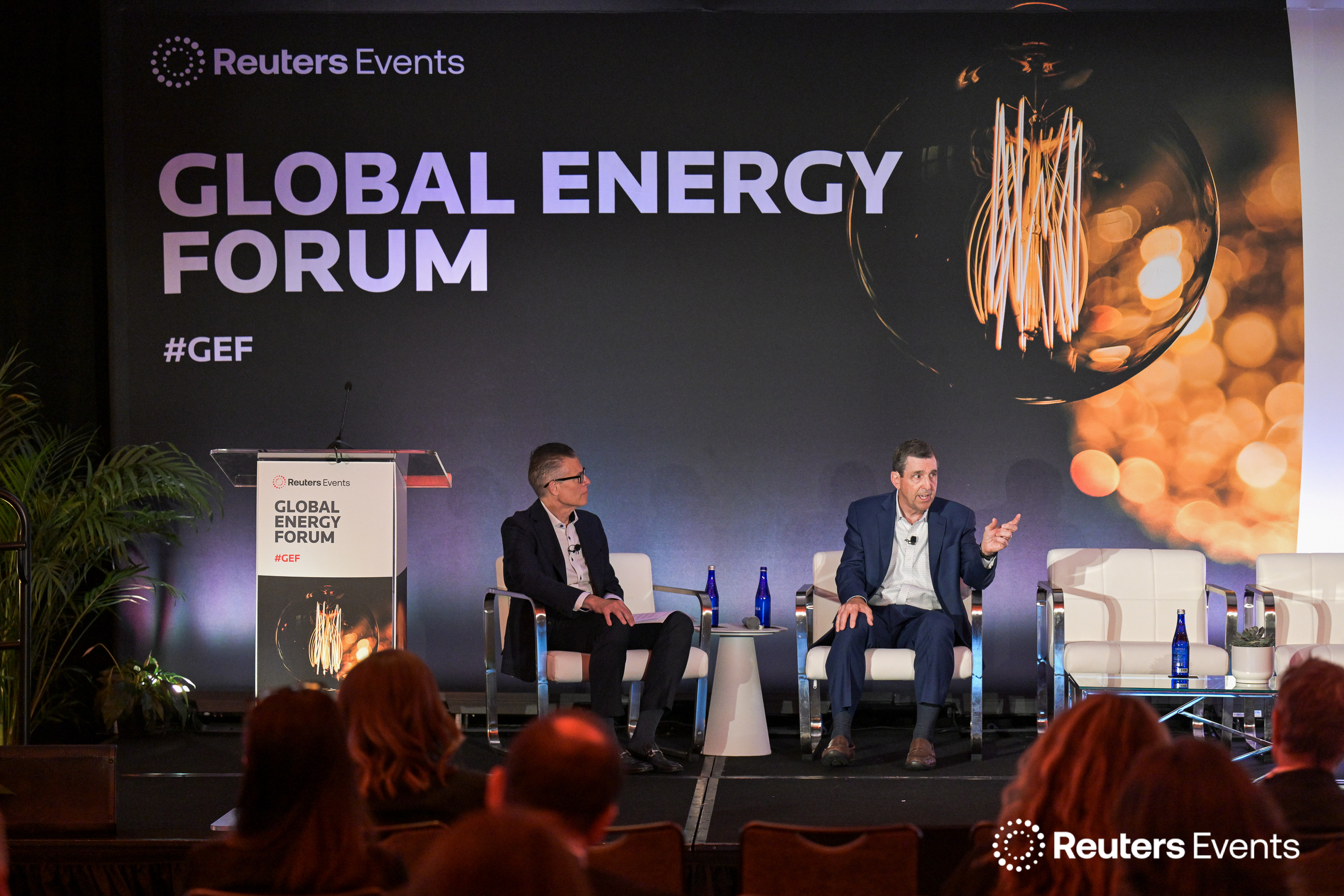
“It's all about relationships in this business.”Jim Murphy · Reuters Global Energy Forum, 2026
Trust belongs in the model
Murphy talks about relationships with the directness of someone who has priced their absence. In renewable tax-equity markets, a limited number of institutions do most of the work. In project lending, a counterparty may offer an attractive spread and still fail the more important test: will it help solve a problem when a permit shifts, a supplier slips or a deadline compresses?
Invenergy built a consistent circle of lenders it knew could execute. The company did not always run an auction to squeeze every deal to the lowest number. It preferred parties that had proved pragmatic and willing to solve problems, then went to them with a clear view of what the project needed. The goal was not just available money. It was money paired with enough trust to survive complexity.
That logic now scales far beyond a bank group. A power project may operate for decades, so Murphy counts customers, suppliers, investors and communities as part of the same long network. Transmission makes the point especially clear. A line must cross jurisdictions and properties, connect regions with different needs and hold public confidence through years of development. Grain Belt Express, the Invenergy project Murphy often discusses, turns relationships into literal infrastructure.
In 2025, Murphy called transmission the missing link in the energy equation. Generation can be built in many forms, but the grid must deliver it where and when demand appears. He argued for interregional build-out and for policy that stays stable across development, construction and operation. The phrase “policy certainty” can sound bloodless. In his telling, it is a practical condition for an asset whose life is measured in decades.
The portfolio refuses a slogan
Murphy's public case for Invenergy is deliberately multi-technology. The company grew out of natural gas, became a major wind developer and added solar, storage, transmission and domestic manufacturing. In a 2025 interview, he said Invenergy had completed 13 gas projects totaling about six gigawatts. He also argued that rising demand required all forms of generation and a grid capable of carrying them.
That breadth has become more visible as electricity demand rises with manufacturing, electrification and data centers. It also makes Murphy's job harder to reduce to an ideological label. His language is customer demand, capacity, reliability, affordability and commercial timelines. The aspiration is cleaner energy, but the method is to build a system that remains available when a customer needs power.
Illuminate USA captures the expansion of that method. Murphy chairs the board of the Invenergy affiliate, which began commercial production in 2024 inside a 1.1-million-square-foot facility in Pataskala, Ohio. By February 2026, he wrote that it had created more than 1,600 jobs and produced more than eight million solar panels. Invenergy had moved from financing projects that bought equipment to helping manufacture part of the supply chain itself.
Eight financings and transactions. More than $1 billion. The memorable artifact was not a trophy but the whiteboard where a tired team finally saw the total.
The same curiosity surfaced earlier in an unusually physical piece of financial problem-solving. Invenergy bought a bankrupt development designed for four gas turbines and four steam turbines. The team divided the facility, moved half the equipment to another project in Canada and even relocated completed structures. Two useful projects came from one distressed acquisition. On paper it was asset optimization. In practice it meant disassembling part of a power plant and finding it a better home.
A culture of useful responsibility
Murphy has described Invenergy's workplace in the same practical register: a flat structure, little appetite for office politics, quick responsibility and a fast pace. One revealing ritual was an employee-led monthly seminar, paired with a happy hour in the canteen. Colleagues gave 101-level lessons on their own corner of the company and connected it to the broader strategy.
It is easy to dismiss that as a pleasant internal event. In a company where permitting affects finance and interconnection affects construction, teaching coworkers what your group actually does is operational infrastructure. A flat organization only works if information travels. Responsibility only works if people can see the dependencies around it. The happy hour made the lesson social; the lesson made the company more legible.
Murphy now serves beyond Invenergy as well. He chairs Illuminate USA, sits on Reactivate's board and is a member of Energize Capital's investment committee. He is a director of the American Clean Power Association after serving as its inaugural board chair, and previously spent years on the boards of the American Wind Energy Association and the American Council on Renewable Energy. The network crosses projects, manufacturing, distributed generation, investing and policy.
“Execution is an underpriced asset in today's marketplace.”Jim Murphy · 2026
The handoff without the reset
When Murphy accepted the CEO role, he did not promise a new doctrine. He credited the company Polsky had led: deep market understanding, customer focus, disciplined decisions and trust earned through consistent execution. His own closing line was compact: stay focused, stay disciplined and execute.
Continuity can be a difficult story to sell. It lacks the clean theater of disruption. Yet continuity is exactly what long-lived infrastructure asks for. The grid must absorb new technologies without forgetting that electricity needs to arrive every second. A company must develop new leaders without discarding hard-won context. A 35-year partnership has value partly because so much judgment no longer needs to be translated.
The challenge in front of Murphy is not small. Invenergy enters its next quarter-century as customers ask for more power, faster; manufacturing and transmission have returned to the center of national energy strategy; and every project still lives inside local economics, permitting and trust. The portfolio will change because it always has. Murphy's bet is that the operating principles should not.
Some leaders want to be remembered for the idea on the first slide. Murphy's career points toward a quieter ambition: the plant runs, the line carries power, the partners return and the team gets to put another completed deal on the board.