A solar farm has a ceremonial life and an actual life. The ceremonial one contains hard hats, oversized scissors and a tasteful quantity of optimism. The actual one begins years earlier with land, permits, equipment orders, interconnection studies and a small parliament of lawyers. It continues for decades after the photographs, when the asset has to produce electricity, honor a contract and survive weather, markets and changing policy.
Paul Gaynor has spent his career in the actual life. The Boston-based CEO and co-founder of Longroad Energy is trained as a mechanical engineer, schooled in finance and practiced in the peculiar craft of taking a power project from possibility to operating fact. His résumé moves through GE, First Wind, SunEdison and Longroad, but the more revealing continuity is the work itself: sell the machine, understand the money, assemble the project, then remain accountable for what happens next.
This is entrepreneurship measured in megawatts rather than monthly users. The time horizon is rude to impatience. A good idea can sit in an interconnection queue for years. A change in equipment cost can rewrite a model. A permit delay in one office can turn into a financing problem in another. Every glamorous announcement rests on hundreds of unphotogenic agreements.
The engineer learns the capital stack
Gaynor graduated from Worcester Polytechnic Institute in 1987 with a degree in mechanical engineering. He went to work in power, initially selling plants for GE. The assignment offered a useful view of industrial reality: electricity arrives only after machines, customers and economics agree with one another.
He later moved to GE Capital and financed power plants. The switch from equipment to underwriting widened the aperture. An engineer can explain how a turbine works. A financier must explain why the future cash it is expected to generate deserves money today. Gaynor added an MBA in finance and economics from the University of Chicago, then held roles across energy and infrastructure businesses including PSG International, Singapore Power and Noble Power Assets.
In his telling, the turn toward renewables arrived less like destiny than opportunity. He has said he “stumbled into a more entrepreneurial opportunity” in 2004. That phrasing is pleasingly free of mythology. Careers often make more sense backward than they felt moving forward. His preparation, however, was unusually tidy: physical systems, financial systems and the ability to translate between them.
First Wind, then a second beginning
Gaynor co-founded First Wind in 2004 and became its CEO. The company developed, financed, owned and operated utility-scale wind projects from Maine to Hawaii, later adding solar. It was a useful proving ground for the whole sequence. In 2010, while testifying before Congress, Gaynor described a business focused not on a single clever component but on development, financing, construction, ownership and operation.
The distinction matters. A developer can create value by moving a project through uncertainty and then selling it. An owner inherits the consequences. Construction decisions become maintenance costs. A rosy production assumption becomes a missed number. Community relationships outlast the public meeting. Ownership turns institutional memory into an asset.
First Wind also gave Gaynor a public classroom. He returned to WPI in 2013 to explain how a wind facility moves from concept to operation and to offer students advice on renewable-energy careers. The visit connected the tidy diagrams of engineering school to projects scattered from Vermont to Utah and Hawaii.
“It is cost effective, clean, and uses no water. The net environmental benefits are significant.”Paul Gaynor on wind power, 2013
In late 2014, SunEdison and TerraForm Power agreed to acquire First Wind in a transaction valued at $2.4 billion. Gaynor entered SunEdison as an executive vice president, responsible for major utility development work. The chapter was brief. In 2016 he founded Longroad Energy with Michael Alvarez, Peter Keel and Charles Spiliotis, all former First Wind executives.
A reunion is not automatically a strategy, but in infrastructure it is close to one. These four had seen how one another behaved when a schedule slipped, a counterparty balked or a model met geology. Their shared experience shortened an invisible distance. They did not need to learn each other's definitions of finished.
The long road becomes the business model
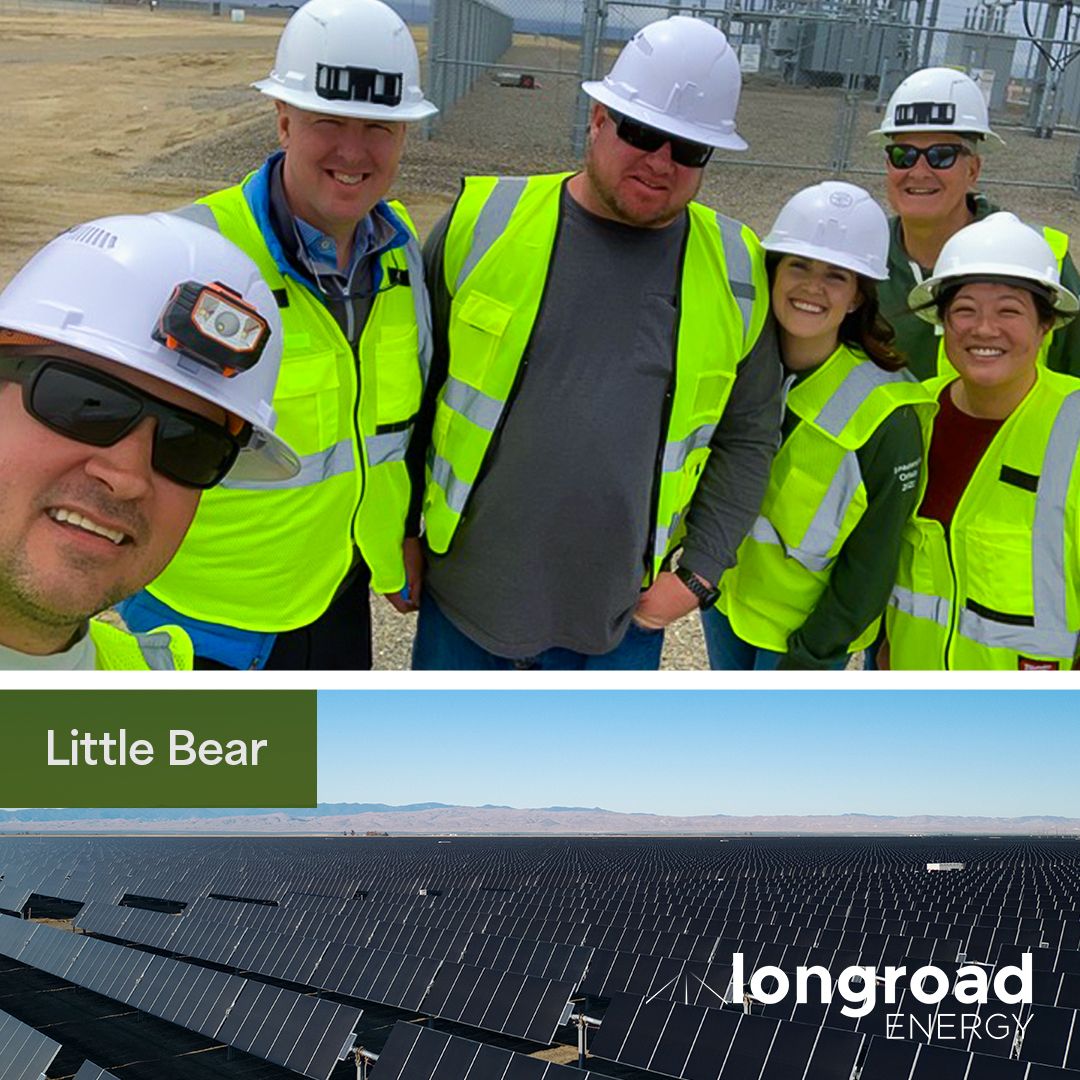
Longroad began with flexibility. It could develop a project, finance it, manage construction, operate it or sell it. That approach recycled capital and kept options open. Over time, the company shifted toward retaining more of what it built. The strategic move turned a development platform into a growing independent power producer.
The name now sounds almost suspiciously apt. Keeping projects means accepting a long chain of obligations: secure the site, earn local support, reach the grid, structure the power contract, buy major equipment, raise debt and tax equity, oversee construction, commission the plant and operate it. Solar modules and wind turbines may be manufactured. A functioning power asset is negotiated into existence.
By July 2026, Longroad said its operating portfolio had reached 5.8 gigawatts and that it was constructing 1.7 gigawatts of projects during the year. Its work spans solar, wind and battery storage. Storage changes the proposition by allowing energy gathered under the afternoon sun to answer demand later in the day. The power plant becomes less like a weather report and more like a schedule.
The portfolio kept moving
Publicly reported snapshotsGigawatts. *December figure combines operating and under-construction capacity, so it is shown as a directional milestone rather than a like-for-like comparison.
A business made of repeat relationships
Project finance rewards familiarity without permitting laziness. Each plant is its own complicated object, yet developers return to the same banks, equipment makers, contractors and power buyers. Keel has described the efficiency that comes from repeat relationships when a company needs to raise billions of dollars while controlling overhead. The lesson applies beyond energy: trust is not merely pleasant culture. Properly maintained, it lowers transaction cost.
Gaynor's public comments tend to redirect credit toward the organization. When Longroad marked its ninth anniversary, he wrote that he could not be prouder of the group and immediately added, “Let's go!!!!!” It is difficult to imagine a more compressed founder memo. Celebrate briefly. Resume moving.
The team orientation also appears in Longroad's 2026 leadership changes. Pete Keel became president while remaining chief financial officer; Michael Alvarez moved to chief risk officer; Charles Spiliotis became chief development officer; and operational and people leadership joined a broader executive group. Gaynor remained CEO, responsible for enterprise leadership, board accountability and strategy. The company described the change as an evolution beyond a founder structure. That is a quiet but consequential ambition: build an institution capable of outlasting its origin story.
A renewable project is a relay race in which every runner inherits the promises made by the last one.
Riding the solar coaster
Gaynor calls the industry's volatility the “solar coaster,” with wind and policy coasters running alongside it. The joke contains a management philosophy. Renewable energy is exposed to elections, interest rates, tariffs, supply chains, utility demand and grid rules. No chief executive gets to select only the pleasant variables.
In 2025, Gaynor said Longroad planned to add roughly 1.5 gigawatts each year and reach 10 gigawatts by the end of 2028. Those goals exist inside the stubborn physical world. Interconnection can take years. Battery supply chains can be reshaped by trade policy. A customer's approval process can delay a power agreement. Meanwhile, demand is rising from industrial activity and data centers, which have enormous and continuous appetites for electricity.
Longroad's response is not to pretend the variables disappear. It is to carry multiple technologies, projects and relationships; secure long-duration capital; and keep enough operating knowledge inside the company to adapt. In July 2026, the company explicitly added AI and data-center opportunities to the growth agenda. The novelty is on the demand side. The supply-side work remains reassuringly old-fashioned: find the site, reach the grid, finance the equipment and honor the contract.
There is something useful in Gaynor's path for builders far from energy. The product launch is often the least important unit of time. Durable companies design for the handoff after the handoff. They pair different kinds of fluency. They remember that a spreadsheet is a claim about the physical future, and the physical future enjoys edits.
The panels will weather. Turbine blades will need inspection. Batteries will cycle. Contracts will outlive the people who negotiated them. The clean-energy transition may be described in grand historical language, but it is delivered through accumulated acts of competence. Gaynor's career has been spent arranging those acts in the correct order, then making sure somebody stays to operate the result.