The Profile · Energy & AI
Maryssa Barron
She spent a decade closing clean energy deals the slow way. Then she built the software to do it faster - and named it BuildQ.
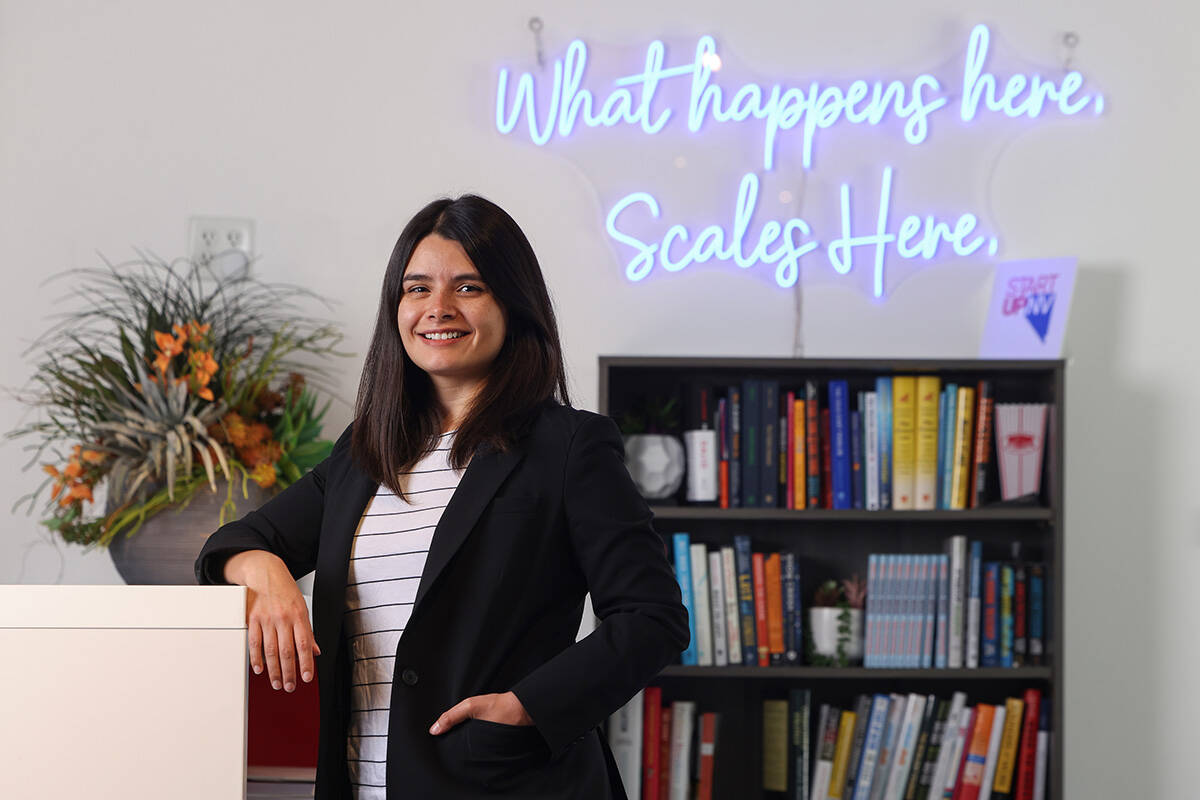
She spent a decade closing clean energy deals the slow way. Then she built the software to do it faster - and named it BuildQ.
Maryssa Barron runs BuildQ out of Las Vegas, and the pitch is disarmingly small for a company chasing the energy transition. Think TurboTax, she says, but for project finance. Every utility-scale solar farm, every battery storage array, every onshore wind project arrives buried in contracts, diligence files, and spreadsheets that live in fifteen different inboxes. BuildQ pulls them into one place and keeps the whole thing financing-ready from day one.
That is the unglamorous problem she decided to spend her career on. Not a flashy consumer app. Not a chatbot. The plumbing underneath billion-dollar clean energy deals - the part that breaks, stalls, and quietly bleeds money in legal fees and transaction delays. BuildQ is the AI-powered project intelligence layer that structures the data, automates the due diligence, and accelerates the deal. It serves developers, financiers, attorneys, and independent engineers on a single platform, which is a polite way of saying it forces a notoriously fragmented industry to read from the same page.
The numbers moved fast. Less than a year after the platform went live, BuildQ counted more than 300 projects, over 10 gigawatts of clean energy capacity, and north of $150 million in deal flow. Eight people. One founder who built the thing because she had personally suffered through the alternative.
"BuildQ solves a pain that I have actually lived and the industry needed," she puts it. That line does a lot of work. It explains why she did not pick an easier market, and why she is comfortable in a corner of the economy most software founders never see.
Assembles a single-source profile for utility-scale solar, battery energy storage systems, and onshore wind - so the data stops scattering across inboxes.
Uses AI to automate diligence, document management, and financing workflows, cutting legal costs and the delays that stall deals.
Powers real-time, AI-driven decisions for developers, financiers, attorneys, and engineers - keeping every project financing-ready from day one.
Before the gigawatts, there was a small apartment in rural Texas. Barron grew up in Section 8 housing, raised by a single mother - Dr. Candace Barron, a United Methodist minister who once worked part-time as a church secretary for about $6,000 a year while putting herself through college. The family leaned on Medicaid, food stamps, and housing assistance.
The family moved to Arkansas. She graduated from Little Rock Central High School and became, that year, the only person from Arkansas to head to Harvard. Then Stanford Law. Then a decade in energy. Then, in 2025, a Shark Tank-style pitch in Las Vegas that ended with more than a million dollars in checks.
"Nothing worth doing is easy," she says. "Do what you love."
Enters renewable energy as a broker and advisor, pioneering early power purchase agreements (PPAs) for clients including Starbucks and Microsoft.
Nearly a decade in the industry - moving from advisory into law and executive operations, eventually serving as COO at a global independent power producer.
Founds BuildQ while studying for the bar exam at Stanford Law. The platform launches.
Relocates BuildQ to Las Vegas; lands the first $100,000 from FundNV, a pre-seed venture fund.
Wins the AngelNV competition and raises $1M+ from affiliated funds. Appears on the Solar Maverick Podcast on AI and asset sales.
Read that timeline again and notice the overlap. She founded a company and studied for the bar exam at the same time - building a product while preparing to be admitted to practice law. Most people would call either one a full plate.
The throughline is the work she did before software. Early PPAs were the frontier of corporate clean energy procurement, and she was structuring them for some of the biggest brands in the world. Then the lawyer's seat. Then the operator's chair as a COO. By the time she sat down to build BuildQ, she had lived every role the platform now serves - the developer, the financier, the attorney, the operator chasing a missing document at 11 p.m.
"I love Las Vegas," she has said of her adopted home base. "It's been such a welcoming city." The city welcomed back, to the tune of seven figures.
At Harvard, Barron walked onto the men's heavyweight rowing team. She is four feet eleven inches tall. She became the coxswain - the person who sits at the stern, steers the shell, and barks the cadence that turns eight much larger people into one machine moving in a straight line.
It is the most on-the-nose metaphor a founder could ask for, and she knows it. You have to be decisive under pressure. You have to motivate and galvanize people mid-race. You have to get everyone rowing in the same direction. She has said the leadership skills map almost one-to-one onto running a company - and onto BuildQ's entire premise, which is getting developers, financiers, and lawyers to finally pull together.
A coxswain does not row. A coxswain makes the rowing count. That is roughly what BuildQ does for a clean energy deal: it does not build the solar farm, it makes the building bankable.
BuildQ exists for a specific moment. AI is driving an enormous surge in power demand, electrification is pulling more load onto the grid, and the clean energy projects meant to meet that demand still close at a maddeningly slow, expensive pace. Barron's wager is that the bottleneck is not steel or silicon - it is information. Get the data structured, get the diligence automated, and capital moves faster toward the projects that need it.
Her aim is to keep every clean energy project financing-ready from day one, stripping out the legal costs, transaction delays, and inefficiencies that slow the whole transition. It is a back-office crusade with a front-page stake: the speed at which the world can actually build the energy future it keeps promising.
She likes hard things. The record - Section 8 to Harvard, a coxswain's seat, a startup and a bar exam at once - suggests the walls have a habit of giving way.