He left a $3 billion renewables fund to go fix the spreadsheets. The clean energy grid runs on paperwork - so he built the operating system for it.
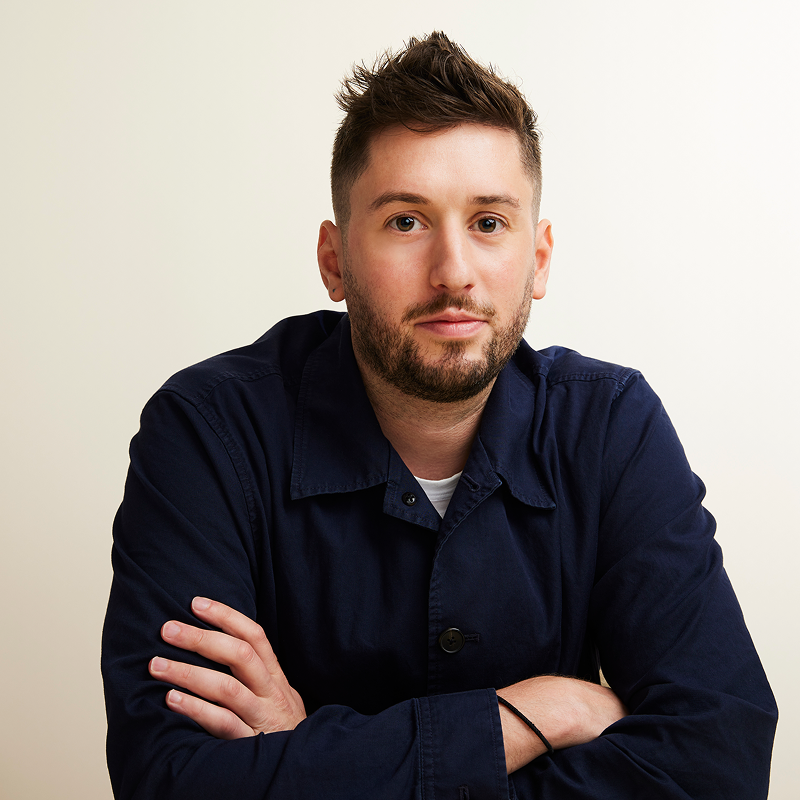
Jacob Sandry. The guy who thinks the boring parts of clean energy are the whole game.
In renewable energy finance, a single misread number can vaporize a $100 million deal. Jacob Sandry knows the math because he used to be the one walking into the room with it.
At 26, Sandry was standing in front of Goldman Sachs' investment committee recommending $500 million commitments on solar portfolios - no recourse, roughly 6% unlevered returns, zero margin for error. He helped grow Goldman's renewables fund from nothing to $3 billion deployed. The job taught him a brutal lesson that now sits at the center of his company: in this business, you do not get to blame the tool. "If I had a mistake in my model or my presentation and said, 'sorry, Claude did that' - immediately fired."
So when Sandry talks about artificial intelligence in clean energy, he is not selling magic. He is selling accountability. Euclid Power, the company he co-founded in 2021 with Ryan Guay and Brian DeMaio, takes the scattered, ugly reality of renewable project documentation - interconnection agreements, title reports, engineering files, financing models - and turns it into something a developer can actually transact on. In days. Not months.
It is worth pausing on how strange that origin is. The conventional path for a Goldman renewables banker is another fund, another mandate, a bigger checkbook. Sandry went the other direction and built a tool for the people doing the work he used to outsource frustration about. The instinct that a single misplaced assumption could unravel a portfolio did not leave when he left the bank - it became the founding constraint of the product. Euclid bills itself as an operating system for renewable energy teams, and Sandry means the phrase literally: the layer underneath everything else, the part nobody celebrates until it breaks.
The pitch is unfashionably specific. Most founders want to talk about saving the planet in the abstract. Sandry wants to talk about why roughly 60% of projects hit multi-month delays and 30% get cancelled outright, and how much of that is just bad data handling dressed up as bad luck. Euclid's promise is to be a single source of truth - the place where a portfolio's title reports, interconnection queue position, engineering files, and financing assumptions all agree with each other for once.
That sounds modest until you sit with the numbers. The country's largest developers, investors, and independent power producers now use the platform to run diligence and transact on portfolios in days instead of months. The bottleneck in the energy transition is rarely the panels or the batteries. It is the gap between how much capacity the industry can build and how fast capital can responsibly say yes. Euclid lives in that gap, and Sandry treats closing it as the whole point of the company.
"Developing, building, and financing renewable projects shouldn't be this hard."
Yale-trained, Goldman-forged, climate-obsessed. Sandry runs Euclid Power, a New York operating system that has gone from supporting 1 GW of renewables to more than 21 GW across 1,100+ projects - while raising $20M from Venrock along the way.
The clearest measure of Euclid is not its funding round. It is how much clean power runs through its system - and how fast that number moved.
A 21x jump in project capacity running through one platform. The grid is in crisis; Euclid's job is to make the pipe wider.
Plenty of startups promise AI that replaces the analyst. Sandry's bet is the opposite. In an industry where one error costs nine figures, the human stays - and signs their name to the output.
It reads thousands of pages of source documents and extracts the data that used to take a junior team weeks.
Human specialists check, correct, and stand behind the result. The AI is the exoskeleton; the person still lifts.
The deliverable comes with someone responsible for it - not a chatbot transcript to babysit.
"The grid is in crisis, but we believe in a future of reliable, affordable, and - yes - abundant clean power."
It is a contrarian position in a market that keeps insisting full automation is around the corner. Sandry's view is durable, not transitional. He argues AI-enabled services are not a stopgap until the models get good enough to remove the human - they are the product, because in workflows where a wrong answer costs a hundred million dollars, the accountable expert is the thing the client is actually buying. Capability is cheap. Someone willing to be responsible for the output is not.
Some founders bounce between industries until something sticks. Sandry never did. He has worked in renewable power his entire adult life - a straight line that started the day he left Yale.
He studied American Studies and Energy Studies in New Haven, an unusual pairing that says something about how he thinks: energy as a thing embedded in history, politics, and people, not just a thing in a circuit. His first job was at Generate Capital, working under Jigar Shah, one of the godfathers of clean energy finance. From there he went to Goldman Sachs' Renewable Power Group, where the $3 billion education happened.
The "a-ha" came on the inside. Deploying billions, Sandry and his future co-founders kept hitting the same wall: legacy technology, thin expertise, and unforced errors made the whole industry catastrophically slower than it needed to be. In 2021 they left to build the thing they wished they'd had. Forbes named him to its 30 Under 30 list in Energy the same year.
Five years on, Euclid has grown from three founders to more than 100 people, supported over $10 billion of project value, and - in April 2026 - acquired the AI diligence startup Thresh to deepen its bench. "In many ways," Sandry says, "it still feels like Day 1."
The September 2025 Series A put real weight behind that line. Venrock led the $20 million round, joined by HSBC Asset Management and existing backers including Spero Ventures, Toba Capital, Designer Fund, and Commonweal Ventures. For a company selling software-plus-services into a notoriously slow-moving sector, the round was a vote that the unglamorous middle of the energy transition - the diligence, the document wrangling, the transaction mechanics - is where a generational company can be built. Sandry has been clear about where the money goes: more capacity through the pipe, faster yeses, fewer projects dying in a spreadsheet.
What holds it all together is a temperament more than a technology. Sandry came up underwriting deals where being almost right was the same as being wrong, and that allergy to hand-waving runs through everything Euclid ships. The co-founding team - Ryan Guay as president and head of innovations, Brian DeMaio as COO and head of services, Kushal Dave as CTO - rounds out a bench that has actually deployed the kind of capital their customers manage. They are not outsiders building for an industry they read about. They are insiders who got tired of the friction.
B.A. in American Studies and Energy Studies.
First job out of college, working under Jigar Shah.
Renewable Power Group. Zero to $3B deployed.
Co-founds the company; becomes CEO. Forbes 30 Under 30.
Led by Venrock, with HSBC Asset Management and others.
Expands AI-powered diligence across the platform.
Honored in the Energy category as co-founder of a software platform built for renewable developers.
Led by Venrock, with HSBC Asset Management, Spero Ventures, Toba Capital, Designer Fund and Commonweal Ventures.
A 21x rise in project capacity since 2021, representing roughly $10B in total value.
Helped build the renewables investment fund from inception to three billion dollars deployed.
Folded an AI diligence startup into Euclid's suite of software and services in 2026.
Grew from three founders to a company of more than a hundred renewable-energy operators.
"If I had a mistake in my model and said 'sorry, Claude did that' - immediately fired."
"Developing, building, and financing renewable projects shouldn't be this hard."
"In many ways it still feels like Day 1."
"Accelerating the world's transition to renewable energy so we can decarbonize the planet as fast as possible."
He named the company in the spirit of Euclid - bringing first principles and order to chaotic project data.
He's not an engineer by training. He majored in American Studies and Energy Studies at Yale.
His first boss out of school was Jigar Shah, later head of the U.S. Department of Energy's Loan Programs Office.
His core thesis: in high-stakes industries, trust and accountability - not raw capability - are the actual product.
Sandry on the MCJ / Inevitable podcast, on building software for an industry where the margin of error is zero.