FortisBC has the sort of product people notice mostly when it stops. It moves natural gas, electricity and propane to more than 1.3 million customers across British Columbia. On a cold morning, its network can supply roughly half the province’s local energy need. There is no beta mode for that. A utility cannot ask a family in Kelowna to wait while the team patches the furnace supply, or tell a hospital in Trail that this quarter’s reliability experiment missed its target.
That constraint makes FortisBC more interesting than the average climate-tech pitch. The company is trying to change a live system while continuing to operate it. Its electric lineage reaches back to West Kootenay Power and Light in 1897. Its gas business grew through Inland Natural Gas, BC Gas and Terasen before the FortisBC brand united the story. Today, two legal utilities - FortisBC Inc. for electricity and FortisBC Energy Inc. for gas - share the name and an owner, Fortis Inc.
The unglamorous product: confidence
FortisBC sells energy, but the customer is really buying confidence: the burner lights, the meter is accurate, the line crew arrives, the bill can be explained. Residential users are the visible audience, yet the business also serves restaurants, apartment buildings, manufacturers, municipalities, institutions, farms, marine operators and heavy-duty fleets. It delivers service in 58 First Nations communities across 150 Traditional Territories.
The problem set is broader than supply. FortisBC maintains more than 51,600 kilometres of gas transmission and distribution lines, runs hydroelectric assets and power lines in the Southern Interior, operates two LNG storage facilities, answers outage calls and designs rebates that make insulation or efficient equipment easier to buy. It must plan for wildfire, winter peaks, population growth and equipment that may remain in service for decades. Every new idea arrives with an awkward chaperone: who pays?
That is FortisBC’s differentiator. A startup can invent a cleaner fuel. FortisBC can connect supply contracts, certified environmental attributes, pipes, meters, billing systems, safety rules and a million customer accounts. BC Hydro remains the main electricity alternative across much of the province, while municipal utilities serve local markets. For heating, the competition is less a single company than a choice among electricity, gas, propane, oil, biomass and building retrofits. In transport, LNG competes with diesel, renewable diesel, batteries and hydrogen. FortisBC sits where all of those systems collide with real infrastructure.
What exactly did they do?
Instead of betting on one perfect replacement, FortisBC built a portfolio. First, it put serious money behind using less energy. The utility says it will invest C$697.6 million in conservation and efficiency through 2027. Rebates, audits and commercial incentives are not cinematic, but avoided demand is often cheaper than new supply. A well-tuned boiler does not require a pipeline hearing.
Second, it began changing the gas mix. FortisBC launched a voluntary Renewable Natural Gas program in 2011, the first of its kind from a North American utility. RNG begins as biogas from manure, landfills or wastewater. Suppliers capture and clean it to pipeline quality. The physical molecule mixes with other gas in the continental network, while FortisBC tracks volumes and environmental attributes. Customers are buying verified displacement, not a private green molecule escorted to their basement.
Third, FortisBC bought options on technologies that are not ready for blanket deployment. Its Clean Growth Innovation Fund has committed roughly C$20 million to more than 65 projects since 2020. The next phase allocates about C$5.5 million annually from 2025 through 2027. Applicants are judged on co-funding, emissions reductions, customer cost benefits and team experience. The fund is supported by a C$0.40 monthly charge per gas customer. That detail matters: this is regulated experimentation with a visible price tag, not free corporate confetti.
A C$500,000 contribution helped UBC Okanagan equip its 2,000-square-foot H2LAB to study hydrogen and potential blending. A much smaller C$30,000 contribution supported a hydrogen fuel-cell Class 8 grocery truck used by Loblaw on Lower Mainland-to-Squamish routes. The truck brought Hyundai, HTEC, transport associations, Deloitte and governments into one test. FortisBC did not need to own every component. It needed access to operating data.
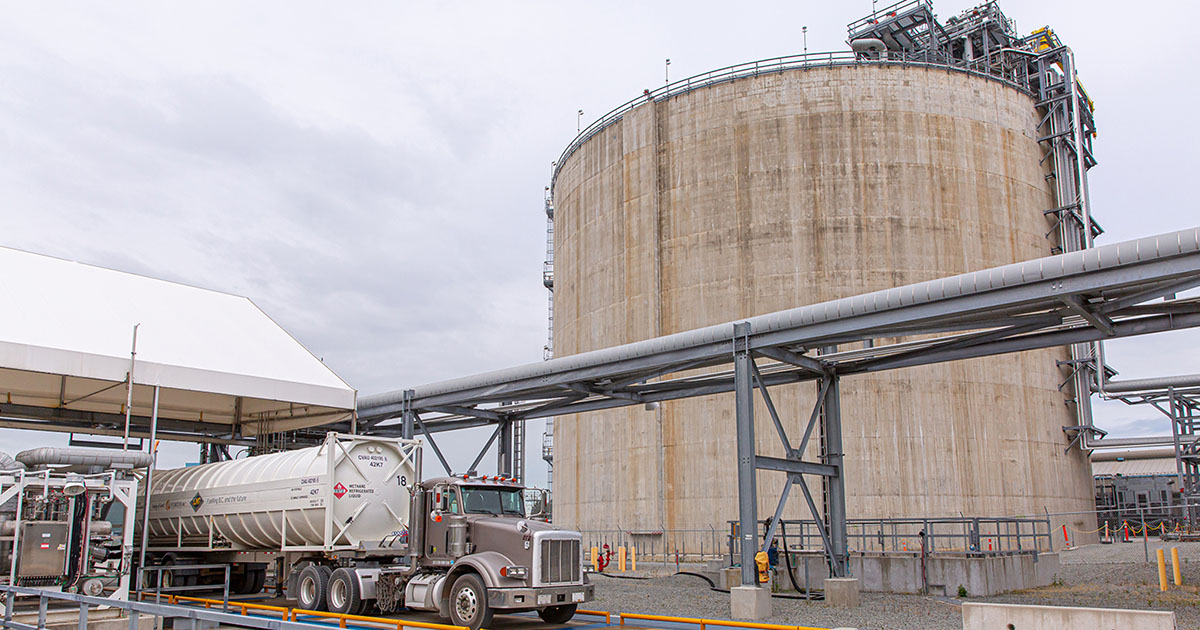
Fourth, it made an old storage asset do new work. Tilbury opened in 1971 to cover winter peaks. FortisBC later added truck loading and marine bunkering. By April 2026 it had completed 10,000 marine LNG refuelling events, using a truck-to-ship system that lets vessels take fuel onboard. The business case is not purely environmental - LNG remains a fossil fuel unless paired with renewable gas - but it can displace higher-emitting marine fuels and create a platform for lower-carbon blends.
What did it cost - and who pays?
FortisBC’s business model is regulated infrastructure, not SaaS. The British Columbia Utilities Commission reviews rates, operating frameworks and major capital projects. Approved assets enter a rate base on which the utility can earn a regulated return. Gas commodity costs are generally passed through without markup; delivery charges recover the network and its operation. Commercial services such as LNG can add another revenue stream. Parent company Fortis consolidates the results, which is why a clean standalone revenue number can be harder to read than the monthly bill.
The size of the bets ranges from thousands to billions. Efficiency carries the C$697.6 million commitment. The innovation portfolio has committed about C$20 million. The Eagle Mountain pipeline investment rose from an expected C$420 million to C$750 million, net of customer contributions, after commercial and construction agreements changed. In July 2026, British Columbia approved a cost allowance of up to C$2.2 billion for Tilbury Phase 1B, including a marine jetty and an equity partnership with the Musqueam Indian Band. The approval includes mechanisms intended to shield regular customers from project-related rate impacts. Those protections are not footnotes. They are the line between a commercial growth project and a captive-customer subsidy.
The 100% idea met the affordability test
In 2024, the regulator approved a system-wide RNG blend but rejected FortisBC’s proposal to serve all new residential gas connections with 100% renewable gas. The broader climate logic survived; the all-at-once product did not.
The useful failure
FortisBC wanted new residential gas connections to receive 100% RNG. The BCUC said no. The regulator was not persuaded that every piece of the proposal met the required tests, including the consequences for customers and the interaction with building policy. It did approve a system-wide blend and a revised voluntary option. By January 2025, the designated blend rose from 1% to 2%.
What changed the path was not an executive epiphany. It was evidence processed through regulation. FortisBC moved from a categorical product for new homes toward a smaller blend shared across the system, while continuing voluntary purchases and supply development. Elsewhere, the regulator rejected a proposed Okanagan gas expansion after questioning demand forecasts under climate and building policies. The message was blunt: historical growth is no longer enough to justify future pipe.
This is where the company’s strategy becomes credible and uncomfortable. FortisBC argues that pipes can carry renewable and lower-carbon gases, especially where electrification is difficult. Critics can reasonably ask whether scarce renewable gas should heat ordinary homes, whether upstream methane erodes LNG’s advantage and whether expanding gas assets creates decades of lock-in. The right scorecard is not the number of projects announced. It is verified emissions avoided per customer dollar, after methane, construction and opportunity costs are counted.
What can the reader copy?
The transferable lesson is portfolio design. FortisBC separates proven demand reduction from uncertain technology. It puts large regulated budgets behind efficiency, then uses smaller cheques to learn about hydrogen, biogas upgrading and freight. It asks partners to co-fund. It tests in universities and real delivery routes. It lets regulators impose stage gates before pilots become customer-funded infrastructure.
Founders can copy the same sequence without a regulator. Define the expensive scaling decision. List the uncertainties that could embarrass it. Design the cheapest field test for each one. Require a partner with skin in the game. Set the evidence threshold before results arrive. Then fund the next stage, change the design or stop. The boring phrase for this is disciplined capital allocation. The fun phrase is avoiding a billion-dollar personality test.
When the playbook stops working
Do not copy this under six conditions
- The installed asset cannot safely carry the new product without near-total replacement.
- Lifecycle emissions are not materially lower after leakage, production and transport are included.
- The pilot measures publicity instead of operating cost, reliability and customer outcomes.
- Captive customers absorb downside while commercial partners keep the upside.
- Incremental blending delays a cheaper, cleaner system that is already ready to scale.
- Policy, supply certification or customer demand is too unstable to support the asset’s useful life.
FortisBC also has an execution advantage most companies lack: scale, technical staff, regulated cash recovery and long relationships with communities. Its culture emphasizes safety, customer focus, collaboration, respect and progress. Employees often stay for decades. That institutional memory helps around dams and pipelines; it can also make a company defend the familiar. The innovation portfolio works only if experiments are allowed to contradict the infrastructure thesis, not merely decorate it.
The company’s place in the market is therefore peculiar. It is an incumbent gas distributor, a regional electric utility, an LNG logistics operator, an efficiency program manager and a buyer of future options. It is neither a pure clean-energy company nor a passive fossil utility. Its most important expertise is integration: making engineering, rates, safety, procurement, customer behavior and public policy agree often enough to build something.
The transition will not be won by a clever molecule alone. It will be won when the molecule arrives in sufficient volume, moves through safe equipment, survives lifecycle accounting, fits the rulebook and produces a bill customers can carry. FortisBC has not solved that equation. What it has built is a useful way to work on it in public - one blend, rebate, lab, truck and regulatory decision at a time.