There is a version of the energy business that never makes the magazine covers. No lithium, no hydrogen breakthroughs, no glossy battery gigafactory. Just a row of steel tanks somewhere off a farm road, quietly doing what a cow's stomach does - breaking down organic matter and letting off gas. Sevana Bioenergy has built a company around that unglamorous chemistry, and in the summer of 2024 it made a move loud enough that the rest of the industry had to look up.
The Boise, Idaho company designs, builds, owns, and operates large-scale anaerobic digestion plants. In plain terms: it captures methane from dairy manure, food scraps, and municipal sludge, then cleans that biogas into pipeline-grade renewable natural gas. The waste that would have rotted in a field or a landfill - emitting methane into the sky - instead gets fed into a sealed tank, where microbes turn it into fuel and a nutrient-rich soil product. Founded in 2017 by John McKinney, Sevana had spent its early years building digesters across farm country. Then it bought the largest organic waste-to-energy plant in North America out of bankruptcy, for $20 million.
What They Actually DoFuel from the stuff nobody wants
Anaerobic digestion is old technology - the biology has run inside animals for as long as there have been animals - but running it at industrial scale is an engineering problem. Sevana's plants take in organic waste streams and hold them in oxygen-free tanks where bacteria digest the material and release biogas. That raw biogas gets upgraded, stripping out carbon dioxide and impurities until what remains is essentially the same methane that flows through the natural gas grid. The leftover solids and liquids - the digestate - become soil amendments that go back onto farmland.
The company describes its own job in five words: "We convert organic waste to power progress." What makes the fuel valuable beyond its energy content is the accounting. Because Sevana captures methane that would otherwise have leaked into the atmosphere, the resulting RNG can be counted as carbon-negative on a lifecycle basis - it removes more greenhouse warming than it creates when burned. That distinction is what turns a waste-handling operation into an energy business with premium environmental credits attached.
The $20 Million MoveBuying the biggest plant after it broke
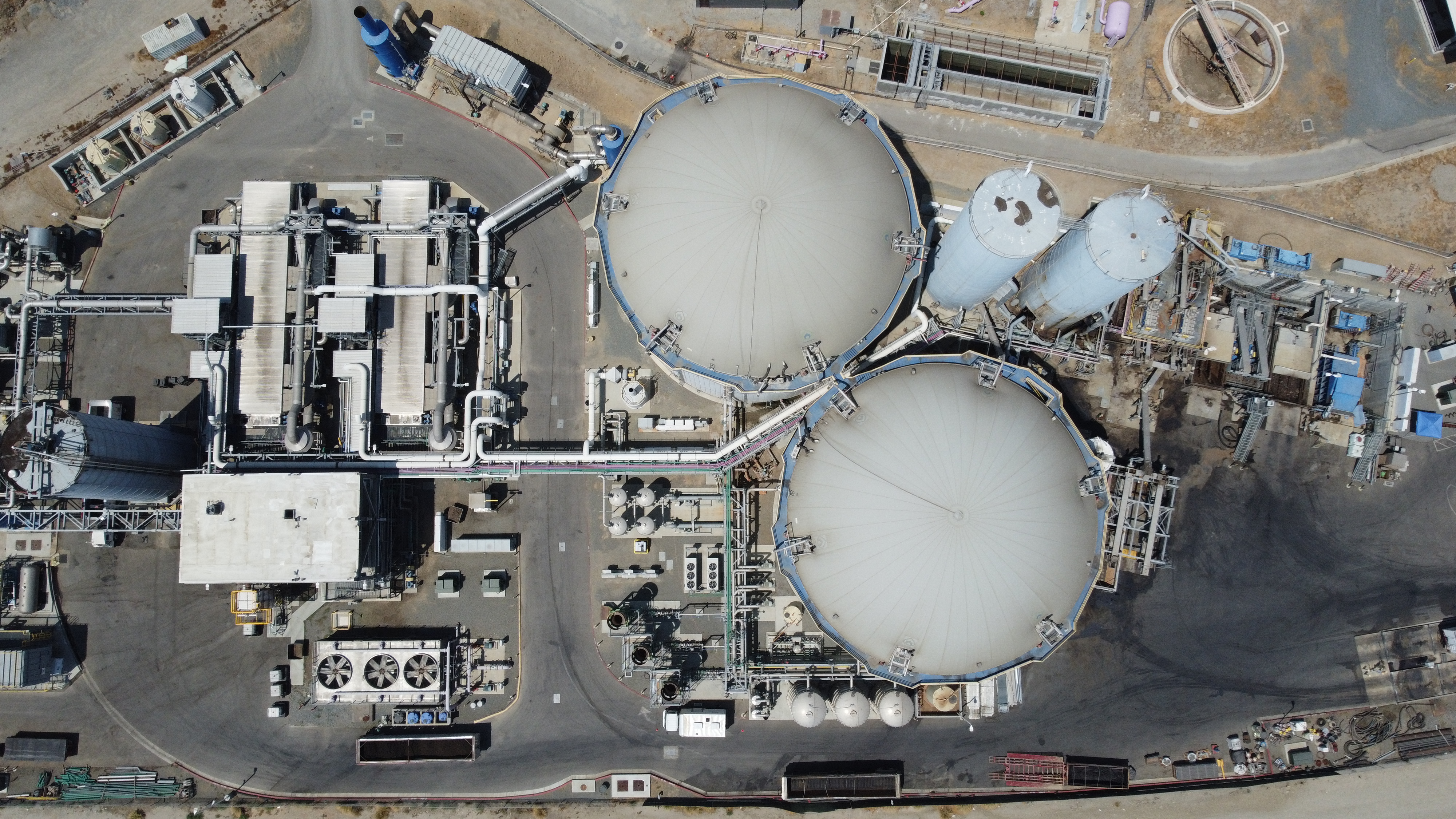
The Rialto Bioenergy Facility, east of Los Angeles, was supposed to be a showcase. Built by the Ontario-based firm Anaergia, it was engineered to process up to 1,000 tons per day of food waste and municipal biosolids and to produce roughly 1 million MMBtu a year of carbon-negative RNG - the emissions equivalent of avoiding more than 5.2 million gallons of diesel. On paper, it was the largest facility of its kind on the continent. In practice, it was a money pit.
A subsidiary of Anaergia filed for Chapter 11 in May 2023. The plant had underperformed badly; the company pulled it from earnings reports amid "substantial doubt" about its viability. Court records described roughly $42.9 million in net losses tied to the facility and a single recent month with about $15 million in cash against just $54,938 in gross income. Part of the problem was timing: California's SB 1383 organics-diversion law, which was supposed to guarantee a steady stream of food waste to feed the digesters, was slow to take hold, and bankruptcy restrictions kept the plant from scaling up even when material was available.
Sevana bought the asset through the auction process in June 2024 for $20 million - a fraction of what it cost to build. The bet is straightforward: the physical plant is sound, the previous owner's problems were about feedstock timing and operations, and California law is now pushing exactly the organic waste Rialto needs toward diversion. By November 2024 the company reported it had put more than $5 million into capital and operational improvements to restart reliable processing, and in early 2025 it was presenting progress updates to Los Angeles County solid-waste officials. The plan, in the company's words, is to "gradually ramp up throughput and RNG production."
Who Backs ItA teachers' pension and a manure company
The Rialto move only makes sense against the balance sheet behind it. In March 2023, Ontario Teachers' Pension Plan - one of the world's larger institutional investors - acquired a majority stake in Sevana and committed $250 million to develop RNG projects across North America. For a pension fund with a net-zero-by-2050 target, biogas is an infrastructure play: long-lived physical assets, contracted offtake, and environmental credits that reward exactly the emissions Sevana is capturing. Kirkland & Ellis, which advised on the deal, described it as a $250 million majority-stake investment.
That backing is the difference between a developer that builds one plant at a time and one that can move on a distressed $200-million-class facility the week it becomes affordable. At its founding, Sevana had already executed dairy and organics projects totaling more than 20 digester tanks across agricultural regions including Oregon, Idaho, and South Dakota. The pension partnership gave it the capital to keep building and to buy.
The PortfolioManure in the plains, food waste on the coast
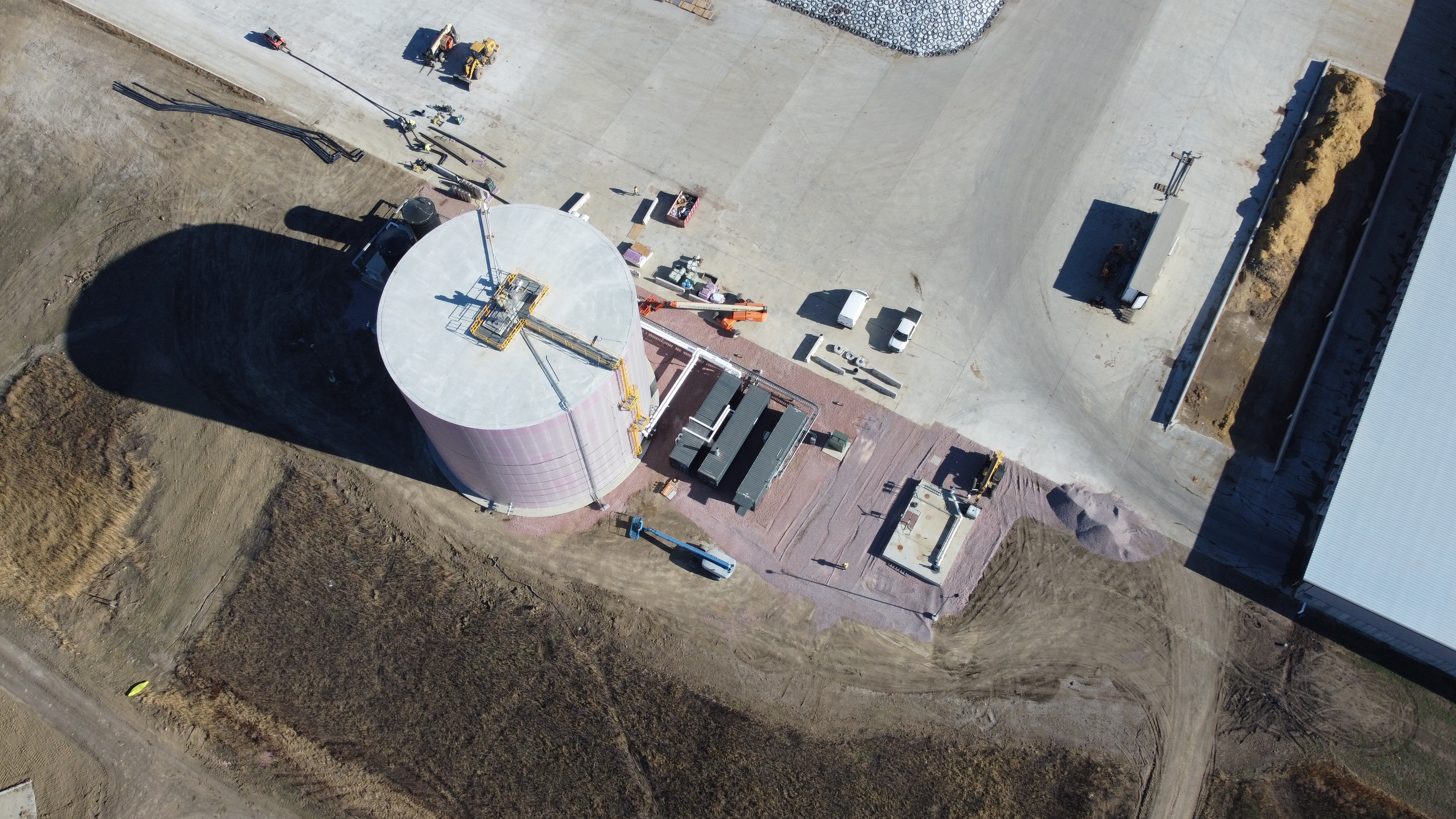
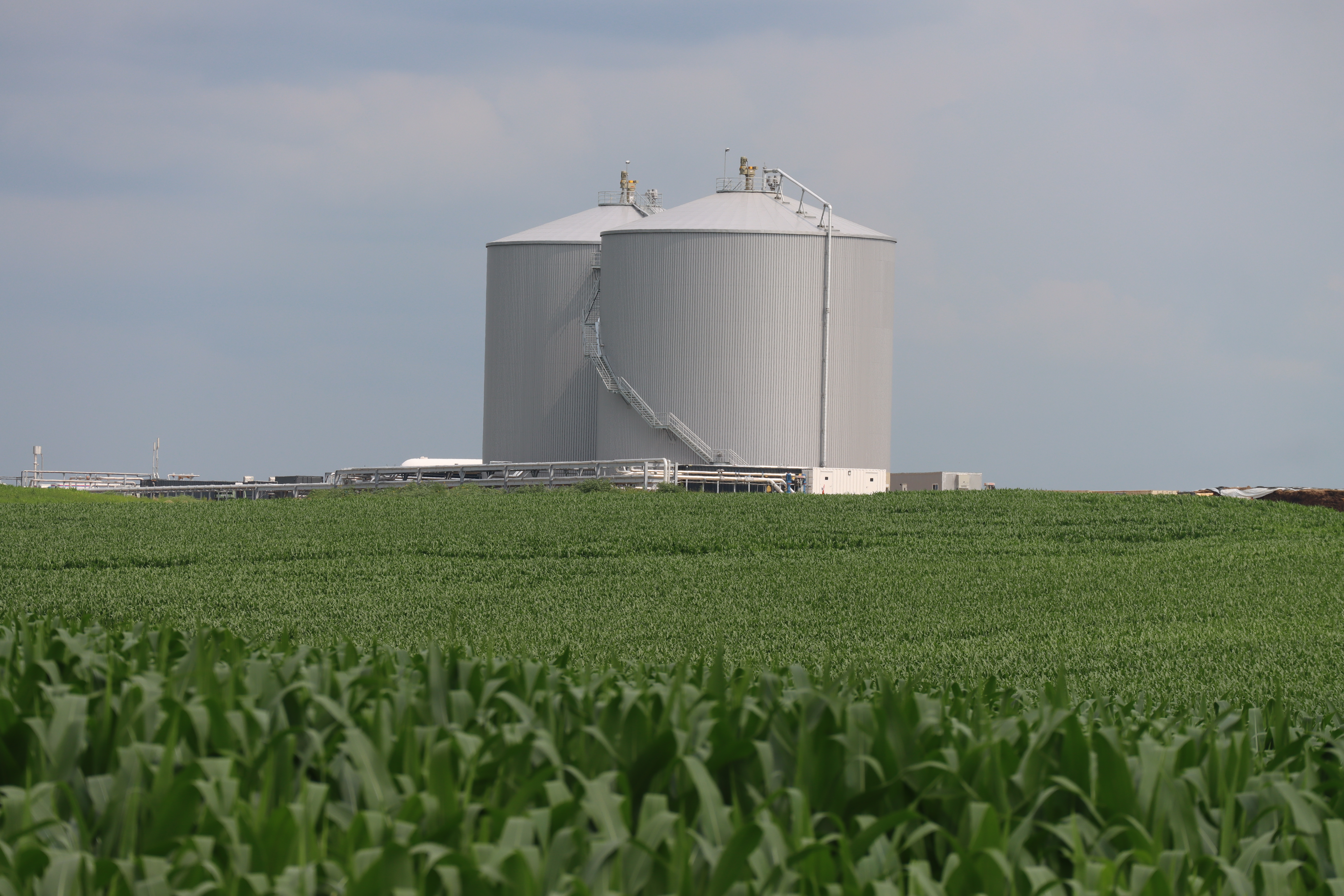
Sevana's operating footprint splits neatly into two feedstocks. On the agricultural side are dairy and livestock digesters: New Energy One in Idaho, the Moody, Brookings, and Lakeside facilities in South Dakota, and Prairie Valley Biogas in Kansas, which runs on swine manure. On the organics side sits Rialto, the outlier in scale, eating urban food waste and biosolids rather than farm manure. A further dairy-manure facility in the Western U.S. is listed as in development.
The company frames its capacity in aggregate terms: at full build-out across its projects, it points to figures on the order of 450,000-plus metric tons of CO₂-equivalent avoided each year and roughly 2 million annual MMBtu of RNG production capacity, drawing on a team it says carries more than 100 years of combined experience across 100-plus facilities in North America, Europe, and Asia. It uses European digester technology adapted to American farms.
The Business ModelThree ways to get paid for garbage
A biogas operator earns money from more than one direction, which is part of what makes the economics work. There is the RNG itself, sold into pipelines and transportation-fuel or electricity markets. There are the environmental credits - low-carbon fuel standard credits and renewable identification numbers - that carbon-negative RNG generates and that can be worth as much as the gas. There are tipping fees paid by cities and haulers who need somewhere to put their organic waste, particularly under mandates like SB 1383. And there is the digestate sold back as soil amendment. Sevana pairs ground-up development with opportunistic acquisition of assets it believes it can run better than the last owner.
Sevana at a glance
- Founded
- 2017, Boise, Idaho
- Founder / CEO
- John McKinney
- What it makes
- Carbon-negative renewable natural gas + soil products
- Feedstocks
- Dairy & swine manure, food waste, biosolids
- Majority backer
- Ontario Teachers' Pension Plan ($250M commitment, 2023)
- Flagship asset
- Rialto Bioenergy Facility, California ($20M, 2024)
- Team size
- ~17 employees
Where It FitsThe unglamorous middle of the energy transition
Sevana competes in a crowded but young field. Other RNG and biogas developers - Vanguard Renewables, Aemetis, Amp Americas, DTE Vantage, BrightMark, and Anaergia, the very company whose Rialto plant it acquired - are all chasing the same waste streams and the same credits. Its real competition, though, is the fossil natural gas already in the pipe. Renewable natural gas can move through existing infrastructure without new pipes or new engines, which is its quiet advantage and its ceiling: it is only as big as the waste available to feed it.
What is worth copying in Sevana's approach is not the chemistry, which is shared by the whole industry, but the discipline. Build steadily where feedstock is certain - dairies produce manure every day, forever. Then wait for the market to hand you a bargain. The Rialto plant failed under an owner who bet on a law that arrived late; Sevana bought it once the law was arriving on time and the price had collapsed. That is a playbook that works only under specific conditions - patient institutional capital, an operator confident it can fix what broke, and regulation moving in your favor. Take away any one of those and the same plant is just an expensive tank of gas.