A smart meter can count perfectly and still disappoint everyone. Its reading has to leave a wall, cross a communications network, reach the utility’s software and become a bill. Somewhere along that journey, a small failure can become a very large argument. Kimbal has built a business around keeping that conversation going.
- Kimbal makes the meter, the radio network and the software that collects its readings.
- Its buyers are electricity utilities and the companies implementing their smart-meter projects.
- Its useful lesson: fix the handoffs, including the ones involving people.
Twenty-four months to learn one lesson
In an early project, Kimbal supplied meters alongside a European integrator and a Korean solution provider. Implementation took 24 months, founder Ayush Sinhal recalled in a September 2026 interview. Changes required getting the parties together. The experience persuaded him to own the complete system. “I learned this the hard way,” he said.
That gives an otherwise technical product catalogue a plot. The company began in 2011 as Sinhal Udyog, producing metering solutions under the Crystal brand before adopting Kimbal. Its history records an Assam smart-grid project for 134,000 meters in 2019. By 2022, it reported more than 600,000 deployed smart meters across four Indian states, together with radio communications and collection software.
The proposition became clearer as the portfolio grew: the same organization would be responsible for making the box and getting its information somewhere useful. That is an attractive offer in a business where an accurate instrument can be undermined by an unreliable connection.
Four stages. Every handoff has to hold.
The meter borrows its neighbours
Kimbal’s Kushal meters cover household, commercial and industrial applications. The communications layer is where the story gets more interesting. Vayu, also described as KMesh, uses a self-forming, self-healing radio-frequency mesh. Devices pass information through neighbouring nodes, giving a reading alternative paths through the network.
Think of it as a neighbourhood passing messages rather than every house shouting at a distant office. Kimbal advertises service levels above 99% for its RF offering. That is a company performance claim; a buyer still needs to test the proposed network in the actual streets, buildings and meter densities it will serve.
ImGATI moves the gateway into the meter, combining RF mesh with cellular backhaul in a pluggable module. Kimbal says this can reduce dependence on standalone gateways by up to 90%. Fewer separate boxes also mean fewer separate objects to install and protect. The savings depend on the deployment.
At the receiving end, Vaani collects data, handles commands and reconciles missed readings. It supports different meter brands and both cellular and RF communications. Compatibility matters: utilities have installed equipment, billing systems and procurement histories. A new supplier must fit into that accumulated reality.
The expensive part can be the gap between two perfectly good components.
An editorial reading of Kimbal’s integrated model
Before replacing the meter, photograph it
In Assam, the immediate problem was billing. Kimbal’s case study describes roughly 2,000 readers manually reading more than six million meters each month. Replacing that estate with smart meters would take time. The existing process needed help sooner.
In January 2021, Kimbal integrated Samaksha, its computer-vision meter reader, with APDCL’s E-Suvidha billing application. Workers photographed displays instead of manually entering readings. The first phase covered one million meters; the company says statewide use followed in 2022.
By July 2023, Kimbal reported 85 million readings and accuracy above 95%. Its case study also records APDCL’s aggregate technical and commercial losses declining from 23.39% in 2019-20 to 18.09% in 2022-23. Samaksha was a contributor within a broader utility effort, so the entire improvement cannot be assigned to the app.
A 5.30 percentage-point decline during a broader modernization effort. Figures reproduced in Kimbal’s case study; not an isolated measure of the app’s effect. Bars use a zero-to-25% scale.
Samaksha’s commercial design is equally practical: pay as you go, with no upfront capital investment advertised. This offers a utility a bridge between its old equipment and its future network. It still requires field visits, readable images and a working connection to billing.
The factory, and the final reading
Kimbal sells hardware, communications and software to utilities and implementation partners. Its published relationships include IntelliSmart, Anvil Cables and Apraava Energy. Metering alternatives include Genus, HPL and Secure Meters. Kimbal competes through an integrated offering; it does not have the field to itself.
The Greater Noida Mega Plant opened in 2024. Kimbal describes automation, manufacturing traceability and accelerated environmental testing there. These are ordinary industrial disciplines with unusually visible consequences: the equipment eventually determines what a household is charged.
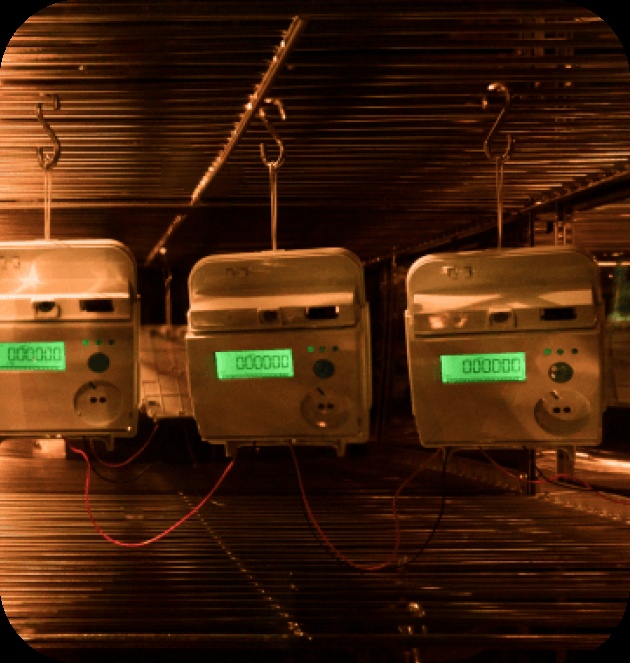
Yukti, its workforce and asset management application, takes the system into the street. Supervisors issue work orders and track crews; workers receive jobs on Android phones. Its Samaksha integration captures the old meter’s final reading during replacement. Lose that number, and a modern installation begins with an old-fashioned billing dispute.
Commercial properties can use Kimbal’s sub-metering to allocate consumption among occupants. Ojas EnergyWatch gives users consumption and billing visibility. Tarang, a power harmonics analyser, addresses electricity quality. The products follow distinct problems, from dividing a shared bill to identifying electrical disturbances.
A box with a software future
In November 2025, MicroEJ announced its partnership with Kimbal on Kimbal EI, an on-device software platform. Separating applications from hardware makes it possible to reuse software and add capabilities after installation. A meter on a wall can have a longer useful software life.
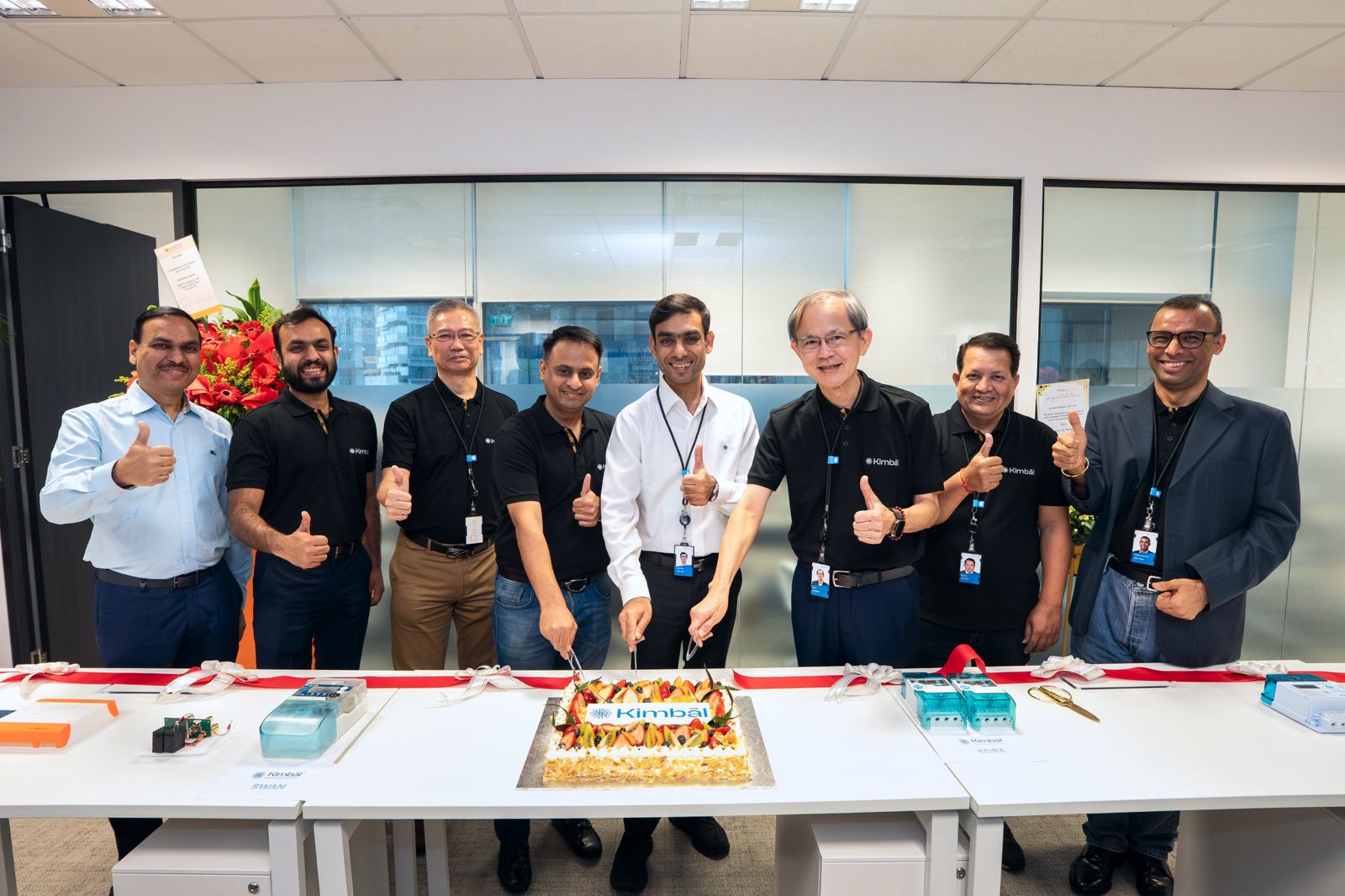
April 2026 brought a $22 million Series B led by GEF Capital Partners, with Niveshaay participating. The stated uses include power quality, energy management, battery storage, manufacturing and international expansion. A Singapore office followed in May, supporting a team of more than 30 across engineering, research and business development.
The lesson other builders can borrow is specific: follow the customer’s job past the boundary of your own product. Kimbal followed a reading from the meter into the network, the billing application and the installer’s phone. The opportunity was waiting between them.