Ayush Sinhal and his flatmates had their priorities. The internet bill was paid before the electricity bill. They were engineering students in Bengaluru, three people sharing a flat, with pocket money arriving each month. Power could wait. Then someone from the electricity distributor would disconnect the supply, and they would return from college to discover that their accounting policy had acquired a rather inconvenient flaw.
Finding the money suddenly took minutes. Restoring the connection took further effort. Sinhal remembers the episode as the beginning of a question about payment: if people who could pay were postponing it, how widespread was the problem? The flat provided a small, involuntary demonstration of the distance between using a service and settling its bill.
It is an appealingly unpolished beginning for an energy entrepreneur. Nobody in this story needs to be unusually virtuous. The students liked their internet. The utility wanted its money. The lights went out. Sinhal’s curiosity survived the reconnection.
The bill at the bottom of the pile
His education at Ramaiah Institute of Technology ran from 2008 to 2012. In 2011, while that education was still under way, he started the business that would become Kimbal. He now leads it from New Delhi as founder and CEO, working in an industry whose products most people meet without ever learning the maker’s name.
The meter is an excellent example. It occupies a wall, records consumption and acquires importance when the bill arrives. You might live beside one for years without considering its communications system. For Sinhal, the overlooked device became a way into a much larger business: helping electricity distributors understand what is happening across their networks.
There is a useful irony here. The student who put an electricity payment off went into a business concerned with the quality of electricity information. That connection gives his career a human starting point. It also makes the problem easy to recognise before the technical vocabulary arrives.
A company measured in years
The early company was Sinhal Udyog. Commercial production began in 2012 under the Crystal brand. Its subsequent milestones were the practical kind: a pilot, a production count, another utility project. In 2016, it won an Assam Power Distribution Company smart-grid pilot covering 14,000 meters. In 2019 came an Assam project for 134,000 meters.
Those numbers suggest the change in responsibility better than a slogan could. A pilot asks whether a system can work in a particular setting. A larger project asks whether the organisation can repeat that work, handle exceptions and keep the equipment useful. The difference occupies factories, field teams and many conversations that would make poor television.
The business adopted the Kimbal brand in 2023, following years of operations under Crystal. The newer name belongs to a company with a history of making things and deploying them. It is worth holding those two activities together. Manufacturing produces a device; deployment introduces it to the untidy circumstances of everyday use.
Sinhal’s career has therefore developed on a clock that includes production and public infrastructure. The elapsed years are part of the story. An electricity customer expects tomorrow’s service to work much as today’s did. A supplier trying to improve that service has to make change fit inside that expectation.
The box needs company
Kimbal’s offering includes smart meters, RF-mesh communications, head-end systems and consumer applications. Advanced Metering Infrastructure, usually shortened to AMI, connects these pieces so a utility can collect readings remotely and send commands back. The arrangement gives the meter a route into the systems that use its information.
In a mesh network, meters can relay data through other meters toward a gateway. The head-end system manages communication with the devices. Further applications can use the readings for billing, outage information and other utility operations. The physical box is the part you can point to; much of its usefulness depends on the company it keeps.
That is a revealing business choice. Selling a component gives a company a defined boundary. Offering an integrated system draws it into the relationships between components. The customer experiences the outcome of those relationships whenever a reading arrives, a command succeeds or an issue needs attention.
The engineering can sound abstract until you consider the alternative: somebody has to locate the problem between several suppliers. A meter, a network and an application may each have an explanation. The utility still needs an answer. Integration puts more of that obligation inside the supplier’s own organisation.
A meter with room to learn
In November 2025, Kimbal and embedded-software company MicroEJ announced a partnership for Kimbal EI, its Edge Intelligence platform. The plan puts a software foundation inside the meter, allowing new applications and capabilities to be deployed over the air. The product is designed to keep gaining functions after installation.
For Sinhal, this broadens the meaning of the device. The partnership’s announced uses include energy-demand forecasting, power-quality analysis and management of energy behind the meter. These are directions for the platform, each involving more than counting the units that appear on a bill.
A programmable meter also raises a plain commercial question: how much of tomorrow’s requirement can be met by equipment already in place? Replacing hardware is a substantial undertaking when devices are distributed across homes and businesses. Software that can evolve changes the options available to the supplier and the utility.
The shift connects two parts of his professional life. Kimbal has experience making and deploying meters. Its newer work asks what those installed devices can become. That gives the software ambition a physical setting: the wall, the wire, the gateway and the people depending on them.
The Australian classroom
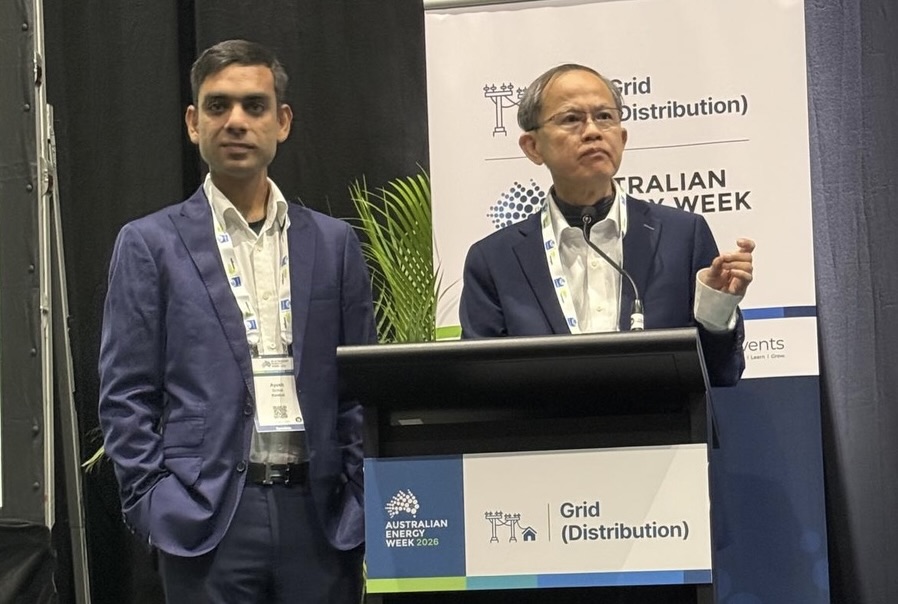
In June 2026, Sinhal stood alongside Kimbal’s chief technology officer, Dave Lee, at Australian Energy Week in Melbourne. Their session dealt with grid-edge intelligence, deployment, governance and changes in how utilities operate. The title sounded like a meeting agenda. The subject concerned how electricity networks adapt when activity becomes more distributed.
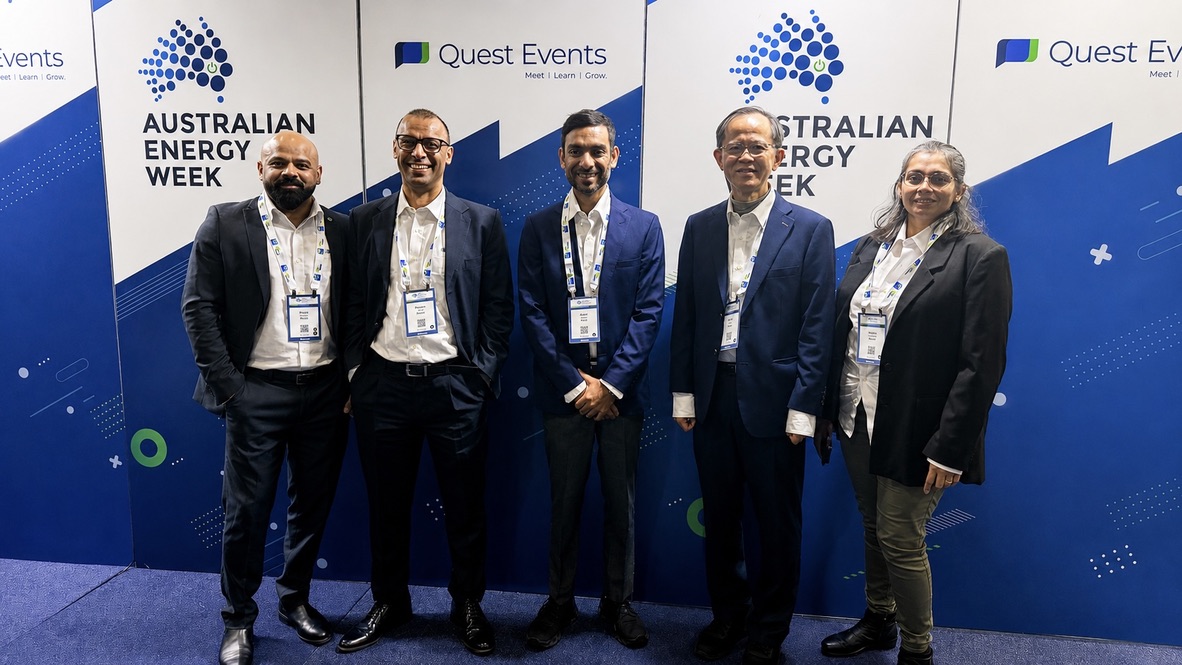
Australia offered a reason to travel beyond export arithmetic. Rooftop solar, batteries and electric vehicles make the household a more complicated participant in the electricity system. A home can consume power, produce it and store it. Equipment designed around that activity needs to understand more than a one-way delivery.
Lee joined Kimbal in 2025 with experience in the Australian market and in smart metering. His involvement gives Sinhal’s international work a connection to local industry knowledge. Entering a country means dealing with its actual utility needs, which have a habit of resisting the tidy assumptions in a presentation.
In July, Kimbal announced an Australia-New Zealand headquarters in Victoria. The investment was expected to create approximately 50 skilled jobs over three years. By July 2026, Kimbal had deployed 12 million smart metering endpoints worldwide since its 2011 launch. Those were dated measures of activity and intent, rather than a forecast of what every future project would deliver.
Smart metering endpoints deployed worldwide since launch. Deployment count as of July 2026.
The office turns an interest in the market into a continuing presence. For a founder whose early experience came from Indian deployments, Australia supplies another set of operating conditions. The value of that encounter will depend on what the company learns as well as what it sells.
Money with a longer clock
Kimbal’s 2026 Series B brought in $22 million, led by GEF Capital Partners with participation from Niveshaay. The announced uses covered power quality, energy management and battery storage, alongside AMI, manufacturing and international expansion. The funding supports a business moving into several related areas at once.
The earlier $5 million round in 2024 had also involved Niveshaay. Capital has become one part of Sinhal’s story, joining the production capacity, software and utility relationships built over the preceding years. It gives the organisation choices. It also makes the allocation of attention more consequential.
“The contract does not end at installation; it begins there.”
Ayush Sinhal
His argument about utility work centres on continuing accountability. He has described putting 40 per cent of Kimbal’s investment into newer businesses whose returns will take years. He wants the company to contribute to the energy transition in more than 100 countries within a decade. That remains an ambition, with the work of getting there still ahead.
The long horizon does have an everyday counterpart. Installed equipment needs support. Customers need people who understand it. A new feature has to reach a working system. These obligations are less photogenic than a funding announcement, but they are where a promise encounters its consequences.
Another kind of current
Away from Kimbal, Sinhal’s interests have a more personal scale. He visits animal shelters with his young daughter, enjoys the mountains and dreams of kayaking across the Brahmaputra. His leadership biography describes an approach influenced by “No Rules, Rules”, with trust and room for independent thought.
The river ambition offers a pleasant change of vocabulary after meters and head-end systems. It is also simply a wish, with no need to recruit it into a business metaphor. A father can enjoy taking his daughter to see animals. A chief executive can want a few days on a river. These details leave space for a life beyond the company.
The student-flat episode still makes a fitting place to leave him. A service everybody needed had fallen down the list until it stopped working. Sinhal went on to give that service years of attention. The bill that could wait turned out to contain a question that could keep him occupied for a very long time.