The drop-in doctrine
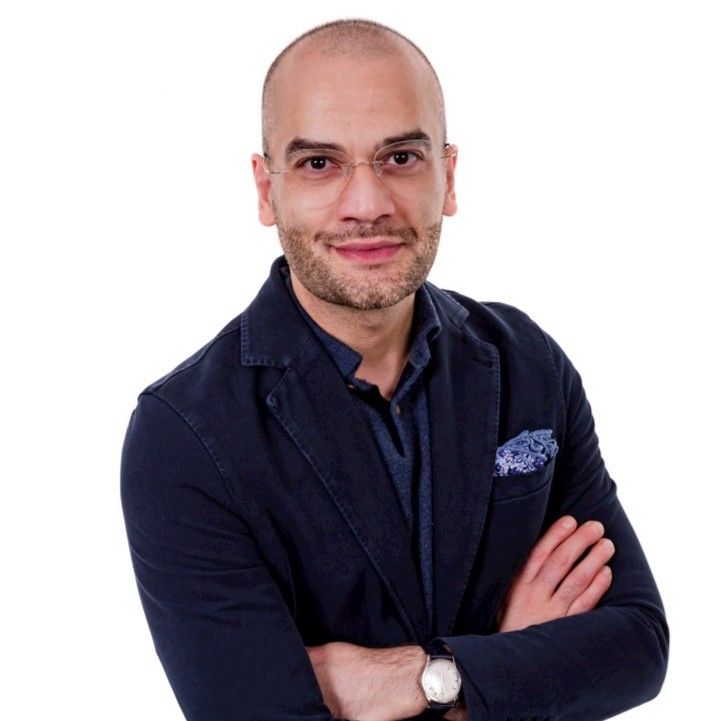
Shwan Lamei runs a software company whose product, if it works correctly, you will never see. Emulate Energy sits between a utility's dispatch system and the mundane hardware in your home - the heat pump, the wallbox in the garage, the battery pack bolted to the basement wall, the inverter next to the solar panels - and it decides, minute by minute, when those devices should draw power and when they should hold off. When it works, your bill goes down. When it works at scale, the Nordic grid stays balanced through a windless January evening. When it works commercially, a Swedish retailer gets to bid the aggregated flexibility of ten thousand households into an ancillary services market and collect a spread. It is a business that turns homeowners into unwitting members of a very large, very slow-moving trading floor.
Lamei is 20 years into a career that spent its first 15 doing something unrelated. He studied Industrial Engineering and Management at Lund University's Faculty of Engineering, with detours through Delft and the Technical University of Crete, and then he sold things. Brazed plate heat exchangers at SWEP, first as an area sales manager covering Middle Eastern markets, then as Director of Corporate Development. He then joined Dover Corporation in Massachusetts as Director of Shared Services, running a 45-person sales and marketing organization. The résumé reads like someone being carefully groomed for a general-management job at a mid-cap industrial. In 2020 he abandoned that trajectory and started a climate software company with his best friend of 30 years, whose postdoctoral research at MIT had provided the technical seed. Something about the calculation had changed.
The calculation, as Lamei tells it in interviews, is that two megatrends are colliding. Electrification is putting new load on the grid - cars, heat pumps, industrial processes that used to burn things - and renewables are putting variable, weather-dependent supply on the other side of the same grid. Both trends are unstoppable and neither of them cares about the other. Coordination has to be introduced by someone. Traditionally that someone was a gas peaker plant. Increasingly, in Lamei's business, that someone is your neighbor's water heater running an hour later than it normally would.
The Emulate product is not conceptually novel. Virtual power plants have been a slide in energy-transition decks for a decade. What Lamei has been selling, and what appears to be closing deals, is something closer to a philosophy of installation. Utilities, he has said, are risk-averse. Sales cycles are long. What utilities want is not the smartest algorithm. What they want is a drop-in solution - something that ships, connects to their existing customer base, works with hardware they did not choose and did not certify, and does not require them to rebuild their operations. Emulate's technology is described publicly as hardware-agnostic and API-first, and it aggregates across device types, which is the boring, correct answer to a boring, correct question about how you actually roll this out to a customer base of a million households.
The energy industry is very risk averse. Necessity is really the mother of innovation.— Shwan Lamei, on why utilities are moving now
A grid in four rungs
What Emulate's software actually does
Two founders, thirty years
Lamei is unusually candid, in the interviews he has done, about the origin of the company. "My best friend of 30 years is also my co-founder," he told Green Success Stories in 2021. The co-founder's postdoctoral work at MIT sat at the intersection of thermal storage and control theory. Lamei's contribution to the pairing is the part of a startup that early researchers usually underestimate: the sales conversations. The B2B channel. The multi-year enterprise deployment. Utilities do not buy the way that consumer apps get bought. Someone in the founding team has to have spent a decade selling into industrial customers before it stops being a mystery.
The result is a company with a Swedish engineering culture and an American commercial footprint. Emulate Energy is headquartered at Ideon Science Park in Lund, the same industrial campus that produced Ericsson mobile telephony and a generation of Swedish deep-tech spinouts. Its CEO, however, lives in Boston, where he moved in 2017 for the Dover job and never left. This produces an executive schedule that looks like a lot of red-eyes and a lot of Teams calls where somebody's morning is somebody else's afternoon. It also produces a plausible U.S. expansion story, since Lamei was already there.
The expansion has been happening. Emulate has picked up customers in Austria and Germany. It announced a partnership with NISC to bring DER management to American electric cooperatives. It has established, per its own materials, working relationships with most of Sweden's top energy retailers. And in April 2025 it closed a Series A of EUR 5 million (about USD 5.4M at the time; the Apollo record on file lists the round at 6.5M) led by Helen Ventures, the corporate venture arm of the Finnish utility Helen. Enpulse joined; the earlier backers Skellefteå Kraft and CC.VC followed on. The mix of financial and strategic capital is telling. Utilities buy from Emulate. Utilities also, increasingly, own pieces of Emulate.
Helen Ventures' Mikael Myllymäki, announcing the round, said the quiet part out loud: "Emulate makes demand-side management easy for utilities and their customers, which has allowed them to grow quickly on both sides of the Atlantic." The compliment is about product-market fit, and the compliment names the product feature that Lamei has been repeating for four years, which is "easy."
In any build versus buy situation, we buy - unless it is core.— Shwan Lamei, on Emulate's engineering philosophy
Career, in marks on a wall
Things he has said, in writing
Two megatrends
"There are two megatrends happening concurrently. One is electrification, mainly of mobility and heating. And the second is renewable integration."
Drop-in, please
"I think what the utilities need is a drop in solutions. They need simplicity - simplicity of deployment."
Buy unless core
"In any build versus buy situation, we buy, unless it is core."
DERs coming online
"The energy system is evolving rapidly. In the next decade, millions of distributed energy resources will come online."
Consumption first
"The most environmentally friendly thing to do is to minimize unnecessary consumption."
Tipping point
"I am very optimistic about the future - we've reached a tipping point - the energy transition will happen."
Small facts, filed without comment
Lamei's LinkedIn locates him in Boston. Emulate Energy's registered address is in Lund. This does not appear to bother anyone. He runs the company across a five-time-zone gap between the engineering room and the sales calendar, which is unusual for a Series A-stage climate company and completely normal for someone who spent the pre-founder decade in a globe-spanning industrial sales role.
He studied at three engineering schools across two continents, which is more academic mobility than the median Swedish M.Sc. graduate accumulates. He did his thesis at Volvo, worked briefly for Business Sweden as a market analyst, and then joined SWEP, a Lund-area heat-exchanger company, where he stayed for nearly a decade. The pattern is: an engineer who liked the commercial side, kept getting promoted into the commercial side, and eventually founded a company where the commercial side was the harder problem.
The technology thesis of Emulate has a slightly older intellectual pedigree than the pitch deck suggests. Turning a heat pump into a virtual battery is an idea that came out of academic work on thermal storage and demand response in the 2010s. Lamei's co-founder brought the MIT version of that idea. Emulate's contribution is not the concept but the productization - the API layer that talks to twelve different device manufacturers, the forecasting stack, the market-participation logic that stacks value across ancillary services and demand response and wholesale.
Anecdotally, from his interview with the Swedish American Chamber of Commerce podcast, Lamei is not a heroic-founder-narrative person. He describes himself, in one line, as "an engineer with experience in many verticals, both operationally and in management consulting." It is not the sentence a marketing team would write for him. It is the sentence he prefers.