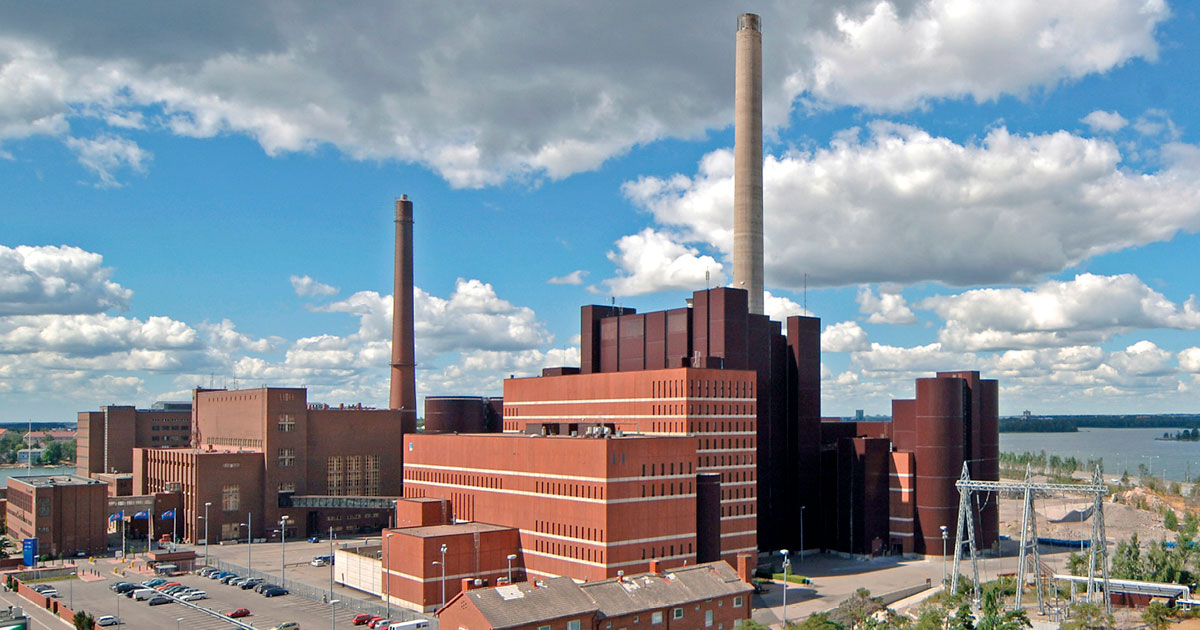
At 9 o'clock on an April morning, the retiring chimney at Helsinki's Salmisaari power station began puffing colored smoke into the sky. It was a little theatrical for a utility - and deservedly so. On April 1, 2025, Helen stopped burning coal. Three years earlier, coal had supplied 64% of its district heat. Now the ships stopped arriving, the burner went quiet and an energy system responsible for warming most of a northern capital had to prove it could live without its old anchor.
The proof arrived with rude timing. Helsinki's first coal-free winter brought unusually hard cold. Heat remained available without interruption through the worst spells; full-year district-heating reliability stayed above 99.9%. In 2025, emissions from heat production fell 56%, Helen's total direct greenhouse-gas emissions dropped from 1.3 million to 0.6 million tonnes of CO2-equivalent, and heating prices came down. This was not a lab demo. Hundreds of thousands of showers, radiators, offices and stairwells made up the test rig.
The product is the plumbing
Helen is an odd shape if you approach it expecting a tidy climate-tech startup. The City of Helsinki owns all of it. The organization traces its municipal beginning to 1909, employs an average of 706 people, and reported EUR 1.373 billion in 2025 sales. It sells electricity across Finland, operates Helsinki's power network, produces heat and cooling, trades energy, manages flexibility and serves households, housing companies, businesses and data centres. After Väre joined the group and merged into Helen in June 2026, the company became Finland's retail-electricity market leader.
Its unfair advantage is buried. More than 1,400 kilometres of district-heating pipe run under Helsinki. Roughly 95% of the city's properties use district heat. That network once distributed the output of big combustion plants. Today Helen treats it as a socket into which many smaller heat sources can plug. Outdoor air, wastewater and server rooms become feedstock. Electric boilers turn cheap power into hot water. Storage shifts production in time. Bioenergy and limited backup capacity cover conditions the newer kit cannot yet handle.
One network, many ways to make a warm room
That is the difference between Helen and an electricity retailer with a clever app. Helen can optimize across physical systems. A data centre buys clean electricity and cooling; its servers produce heat; heat pumps raise that waste to network temperature; apartments buy the result. When wind power is abundant, an electric boiler can soak up electricity that might otherwise earn a miserable wholesale price. A battery can sell fast response into reserve markets. The same assets solve several problems, if software and contracts make them cooperate.
What broke first was the old equation
Coal did not fail because it suddenly forgot how to boil water. Its surrounding economics and politics failed first. Fuel and emissions-allowance costs rose sharply. Imported energy became a security problem. Helsinki moved its climate deadline forward, and Helen decided to end coal years earlier than its former schedule. A centralized plant that looked dependable on an engineering diagram accumulated market, carbon and geopolitical liabilities outside the fence.
The replacement plan also had to learn humility. Wind and solar are cheap to run but weather-dependent. Worse for a generator, lots of wind arriving at once can crush the price that wind farms receive. In 2025, Helen said the price captured by its wind production fell even faster than the overall electricity market. Mild early-year weather weakened heat demand; severe cold later tested supply. The company did not change its mind about clean power. It changed the job description: generating clean megawatt-hours was insufficient. It needed controllable demand, storage, hedging and multiple heat sources.
Helen built a digital twin with Gradyent to see that platform more clearly. The first phase digitized pipes, plants, consumption areas and connection points. Data from up to 13,000 meters produced more than a billion observations. The goal was concrete: forecast demand, spot bottlenecks and test where a new asset would help before moving expensive steel. Customers now get their own smaller control surface through Oma Helen, which shows consumption down to 15-minute intervals. A Synergi-powered service can schedule more than 400 supported models of heaters, coolers and electric cars for cheaper hours.
The visible bill
Infrastructure transformation is capital with a hard hat. Helen recorded EUR 568 million in gross capital expenditure in 2024 and another EUR 424 million in 2025. One EIB-backed package alone totaled EUR 209 million: the European Investment Bank lent EUR 150 million to finance a new heat-pump plant and a coal-to-pellet conversion. A five-bank syndicate provided a EUR 500 million revolving credit facility for refinancing and liquidity. The 3H2 hydrogen pilot received EUR 8.25 million in Finnish investment aid.
The spending did not produce a neat, single substitute for coal. At Salmisaari, two electric boilers provide 100 MW of heat, a converted pellet plant provides 153 MW, and a 14 MW air-to-water heat pump can pull useful warmth from air as cold as -8°C. At Nurmijärvi, a large battery helps balance the national grid. The Niinimäki wind farm took Helen's wind portfolio beyond 900 MW. An Eiranranta plant is designed to harvest wastewater heat. Every component has limits; the portfolio is the feature.
This matters financially. In 2025, sales fell 10% as wholesale electricity prices softened and a mild start reduced heat volume. Yet operating profit rose 19% to EUR 189 million. Helen credited lower fossil-fuel and emissions-allowance costs for returning district heating to profitability. Clean infrastructure did not remove volatility - wind revenue suffered - but it shifted the business away from paying repeatedly for imported fuel and carbon permits.
A server room is a small volcano
Helen's most charming product may be heat recovery for data centres. Servers turn nearly all the electricity they consume into heat. Ordinarily, operators pay to throw that heat outdoors. In Helen's system, heat pumps lift it to roughly 85°C and the district network carries it to customers. Helen can invest in the recovery equipment and receive the heat, or buy qualifying excess heat from a data-centre operator that builds its own system.
The company has worked with Equinix on server heat since 2010. Its newer Telia project in Pitäjänmäki could eventually produce enough heat to match the demand of 28,000 two-room apartments as the data centre expands. The arrangement gives Helen a steady, non-combustion source; the operator gets cost-effective cooling and a better environmental story. Location is decisive. The servers must sit near enough to the network, and the heat must arrive at useful temperature and scale.
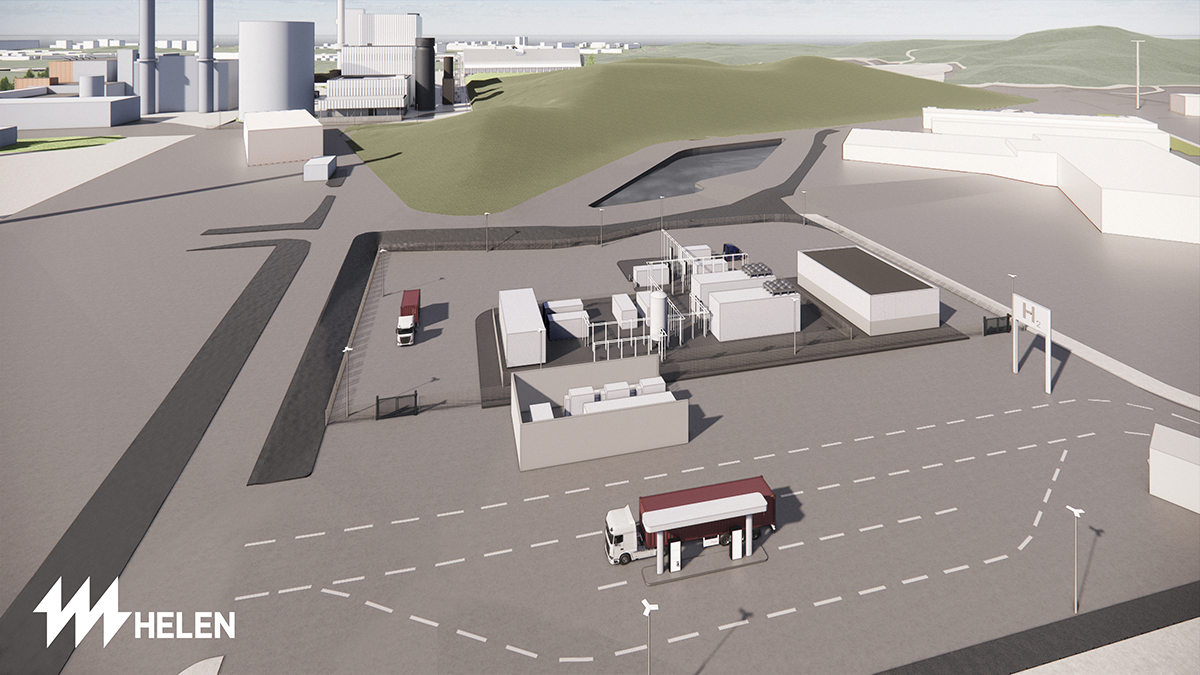
Hydrogen follows the same obsession with leftovers. The roughly 3 MW 3H2 Helsinki Hydrogen Hub is intended to make renewable hydrogen for heavy transport, initially through a filling station at Vuosaari. Helen plans to time production against hydrogen demand, renewable output and electricity prices. Waste heat goes into district heating, pushing projected total efficiency above 90%. The pilot is due to begin producing at the end of 2026, with the filling station planned for 2027.
Even the coal plant gets a second act
Retired infrastructure has become real estate for the next bet. Helen leased part of Salmisaari B to Finnish startup Steady Energy through 2028 for a small modular reactor pilot. There will be no nuclear fuel. An electrical resistor will stand in for the reactor core while the rest of the six-megawatt plant behaves like the proposed commercial design. Its test heat can still enter the network. Helen, meanwhile, is studying sites and suppliers for nuclear district heat or combined heat and power in the 2030s.
That choice reveals Helen's worldview. It is not loyal to a fashionable generator. It is loyal to reliable, controllable heat with falling emissions. The company targets carbon-neutral energy production by 2030 and an end to combustion by 2040. Heat pumps, boilers, storage and data centres are commercial now. Hydrogen and small nuclear are options being tested. Sustainable biomass bridges gaps, while marginal oil and gas capacity remains for security and price stability. The transition is staged because Helsinki cannot beta-test a missing radiator.
Reuse the expensive network. Helen changed what feeds its pipes before replacing the pipes themselves.
Design every asset for two jobs. Cooling makes heat, boilers absorb cheap power, batteries earn reserve revenue.
Measure the ugly day. Reliability through severe cold is more persuasive than annual renewable percentages.
Prune as well as build. Helen integrated Väre for retail scale, then agreed to sell EV charging to specialist Plugit.
What the reader can copy
The transferable playbook begins with an inventory, not a press release. Map every source of waste heat, every controllable load, every storage site and every customer cluster. Publish dated retirement targets. Finance a portfolio so one delayed technology does not hold the city hostage. Instrument the network. Price flexibility so customers benefit from moving consumption. Keep enough fallback capacity until the new arrangement survives its worst plausible week.
There is also a corporate lesson. Helen's 2026 moves drew a sharper boundary around its core. It absorbed Väre's contracts and energy services, where national scale can support expensive digital customer tools. It agreed to transfer electric-vehicle charging to Plugit, a specialist better positioned to expand that network. A transition company does not need to own every green-adjacent activity. It needs to know which capabilities make the central system more valuable.
When this blueprint does not travel
The economics weaken in spread-out cities without district heating, places with little clean electricity or usable waste heat, markets that do not reward grid flexibility, and organizations unable to finance assets for decades. Public ownership helped Helen coordinate city goals and patient investment. Dense Helsinki gave each kilometre of pipe many paying radiators. Copy the logic only after checking those conditions.
Helen's story is not finished and its remaining choices are not easy. Biomass still involves combustion. Electricity prices can be volatile. Wind can be weakest during cold, still weather. Hydrogen economics remain unsettled, and small nuclear must navigate regulation, siting and public confidence. Net debt stood at EUR 1.318 billion at the end of 2025. The honest attraction is not certainty. It is that the company has built optionality into concrete, water, software and contracts.
A century ago, Helsinki created its municipal electricity company because a smoky city needed safer, cleaner infrastructure. The modern version of that problem looks more complicated: carbon, geopolitics, volatile power prices, data-centre growth and winter reliability all occupy the same control room. Helen's answer is refreshingly physical. Keep the pipes. Invite more kinds of heat. Watch the meters. Close the coal plant only when the rest of the system is ready - then let the chimney have one last ridiculous morning.
Keep exploring